AS 1603 Fire Detection Alarm Components Guide
Quick Answer: AS 1603 defines the key components used in fire detection and alarm systems, from detectors and manual call points to control panels, sounders, and power supplies. For industrial, retail, and commercial sites across Australia, correct design and installation matters. Kord Fire Protection helps owners meet standards with practical, site ready solutions.
In the first place, AS 1603 fire detection sets out how systems should be built and what components must be used so alarms work when they matter most. And when they matter most, they do not care about office politics, dust levels, or that one “quick fix” someone did with a cable tie. They simply must perform. Because in industrial, retail, and commercial facilities across Australia, a fire alarm system is not a decoration. It is a safety instrument.
Next, this article breaks down the main components in AS 1603 standard fire detection and alarm system design. Then, it explains how correct integration reduces false alarms, supports reliable evacuation, and supports ongoing compliance. Finally, it shows how Kord Fire Protection can become a vital partner in turning a standard into dependable, real world performance. For sites reviewing broader compliance needs, Kord Fire Protection’s fire protection services can support practical planning, installation, and ongoing system performance.
What AS 1603 requires for fire alarm system components
AS 1603 focuses on the building blocks that make fire detection and alarm systems function as intended. In practice, it does not just say “use detectors.” It expects a coordinated system where every component plays its part, so alerts start fast, are heard clearly, and trigger the right actions.
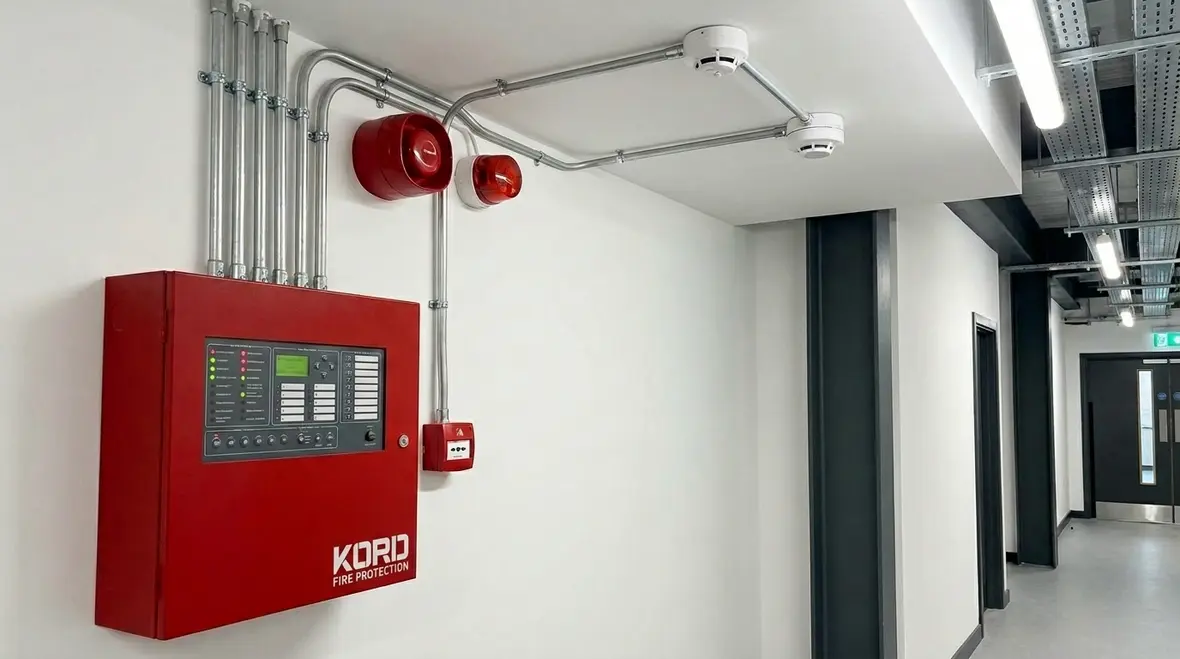
To be more specific, a compliant system usually relies on the following component categories, each with a clear role. Additionally, installers must consider how these parts communicate, how they get powered, and how they are tested over time.
- Detection devices that sense heat, smoke, or other fire related changes
- Manual call points for quick activation when people spot danger
- Alarm sounders and visual alarms to warn occupants
- Control and indication equipment that monitors, controls, and logs
- Power systems that keep the system operating during failures
- Cabling and interconnections that ensure signals travel reliably
- Auxiliary outputs for doors, lifts, fans, pumps, or other building control
And yes, if anyone ever claims that one device can “cover everything,” that person is either simplifying for comfort or they are about to learn a lesson the hard way. Systems work because components work together.
Why coordination matters more than any single device
That coordination is where many sites either gain reliability or inherit headaches. A detector may identify smoke quickly, but the outcome still depends on whether the panel interprets the signal correctly, whether notification devices activate in the right zones, and whether any linked building functions respond in the intended sequence. A good design treats the system as one connected safety network rather than a shopping list of parts.
How detectors support AS 1603 fire detection in real environments
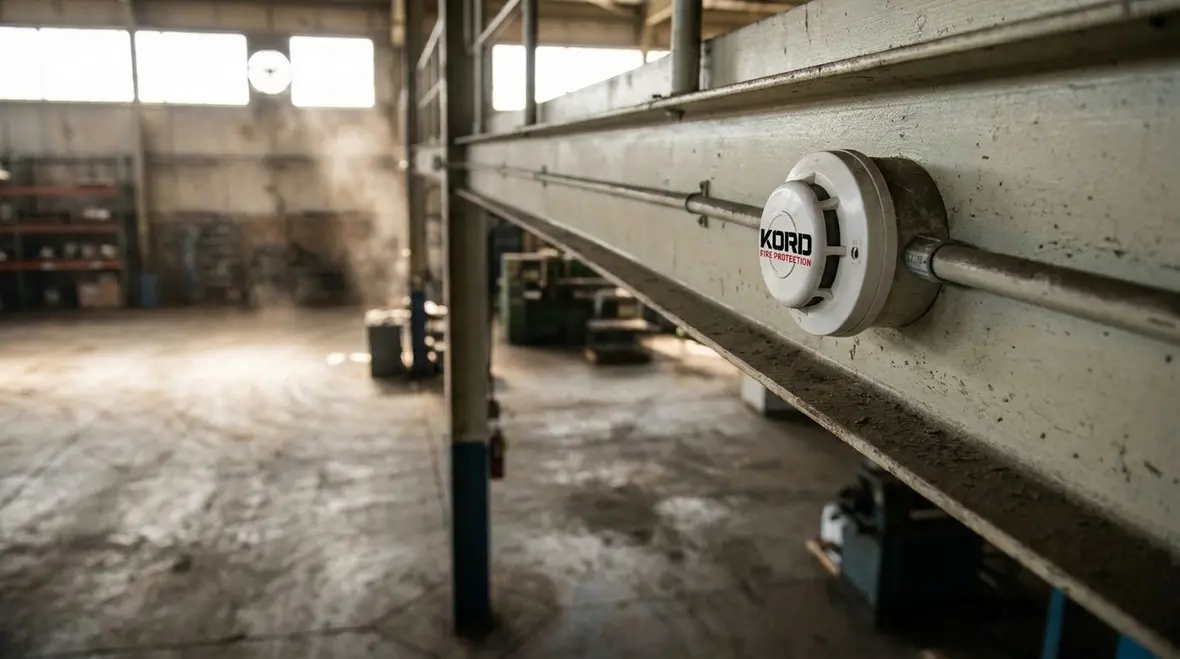
Detectors are the eyes and ears of the system. However, the right choice depends on what the facility actually looks like. A warehouse with airborne dust behaves very differently from a retail tenancy with cooking adjacent zones. Therefore, AS 1603 fire detection guidance pushes designers and contractors to select detectors that match the hazards and expected conditions.
Common detector types include smoke detectors and heat detectors. In some applications, flame detection or beam type detection gets used when line of sight and risk profile demand it. Moreover, the design must consider spacing, coverage, environmental factors, and how quickly the system should respond.
For industrial and commercial sites, two issues often show up during commissioning. First, sensitivity can get affected by dust, steam, or airflow. Second, detector placement can get changed after renovations, sometimes without updating the detection layout. As a result, proper design documents and site verification matter, and so do competent testing methods.
Kord Fire Protection typically supports these needs by mapping detection coverage to actual risk areas and by ensuring the installation matches the engineered plan. Consequently, the system detects early without turning every steam burst into an “emergency.”
Detector selection is about environment, not guesswork
This is where practical experience counts. The same detector that performs well in a clean office ceiling may become a nuisance in a dusty workshop or near a loading dock that sees sudden temperature changes. Matching the detection method to the environment reduces false alarms, protects productivity, and gives occupants more confidence that when the system activates, it is worth taking seriously.
Manual call points, sounders, and the evacuation message
Even the best detectors cannot replace human awareness. So manual call points play a key part in a compliant system, giving staff a direct way to raise an alarm instantly. In commercial and retail environments, where people may not know where the highest risk sits, quick manual activation reduces delay.
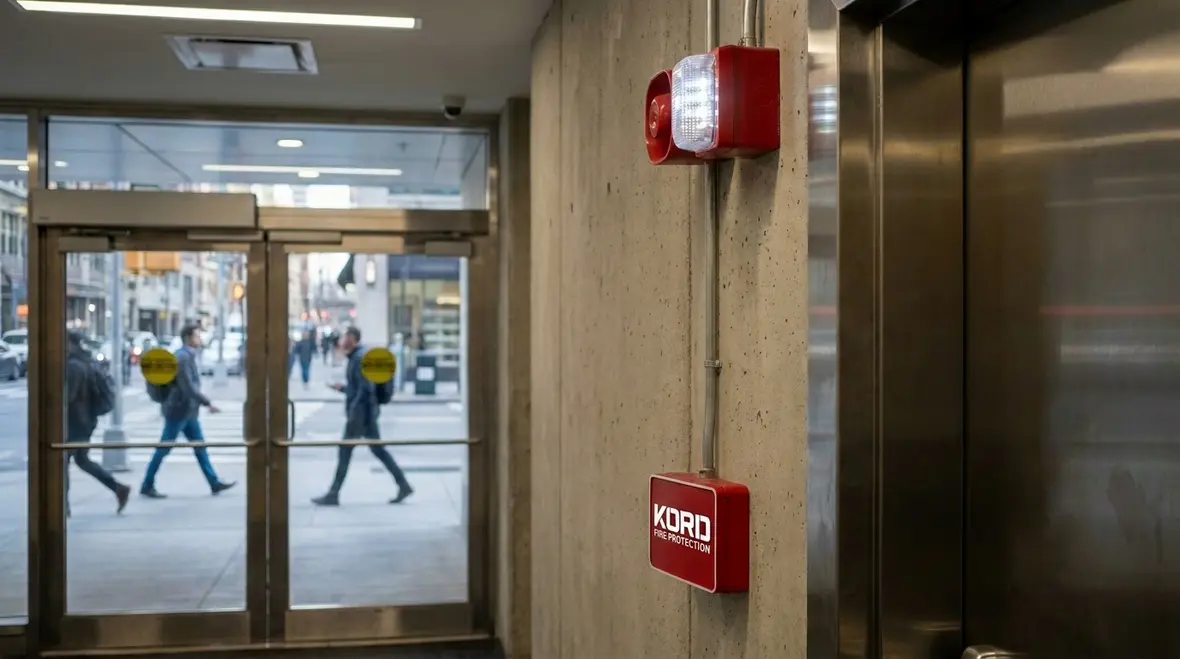
Then comes the alarm notification layer. Sounders and visual warning devices must deliver a clear message across the site. This means considering background noise levels, hearing protection zones, and areas with high ambient sound. Additionally, visual alerts help where hearing may be impaired or where noise makes audible warnings less reliable.
In larger facilities, phased alarms and zoning can support orderly evacuation. Yet, the system still needs a consistent, understood response. If the warning pattern causes confusion, the evacuation plan struggles. Therefore, Kord Fire Protection focuses on aligning alarm outputs with practical site procedures, rather than just meeting a theoretical requirement.
A clear warning is only useful if people know what it means
That sounds obvious, but it is where many evacuation strategies quietly fall apart. If occupants hear a tone and are not sure whether it means evacuate, investigate, or ignore the usual Tuesday chaos, precious time gets lost. Good system design supports a response that is not just audible, but understandable and consistent with training, signage, and site procedures.
Control panels and wiring that keep signals trustworthy
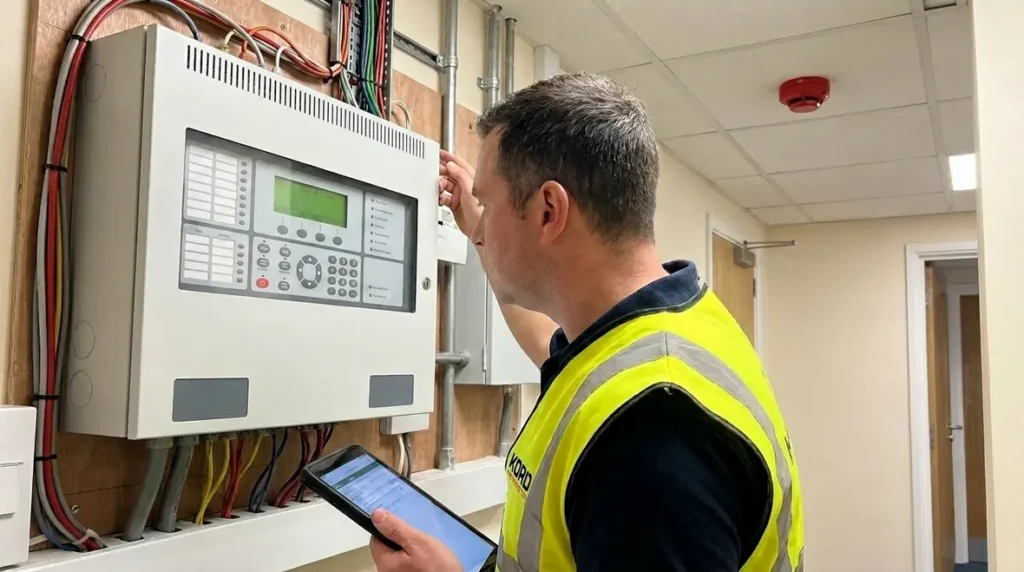
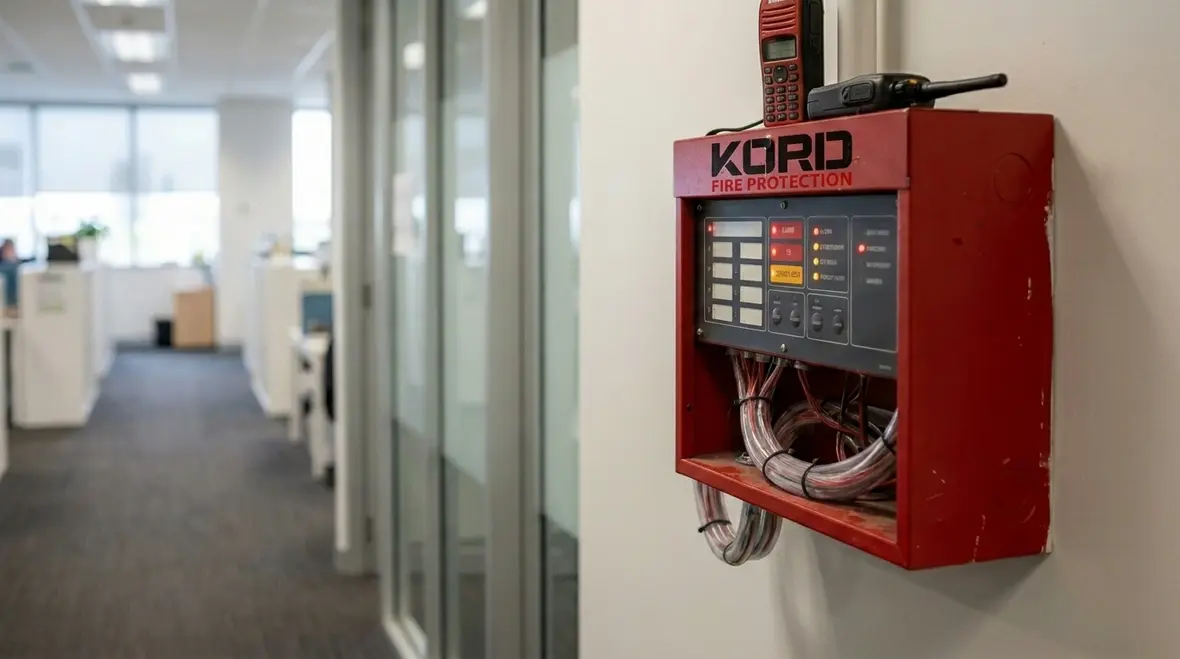
Control and indication equipment acts as the system’s decision maker. It supervises detector inputs, processes alarm signals, and provides local indications for status and fault conditions. If an interface fails, everything slows down. Thus, a careful approach to wiring design and installation helps prevent nuisance faults and missed events.
For AS 1603 fire detection aligned systems, wiring and interconnections need to support stable communication. That includes correct termination practices, route management, and ensuring fault monitoring works as intended. Additionally, installers must follow the standard installation discipline that protects system integrity during ongoing building operations.
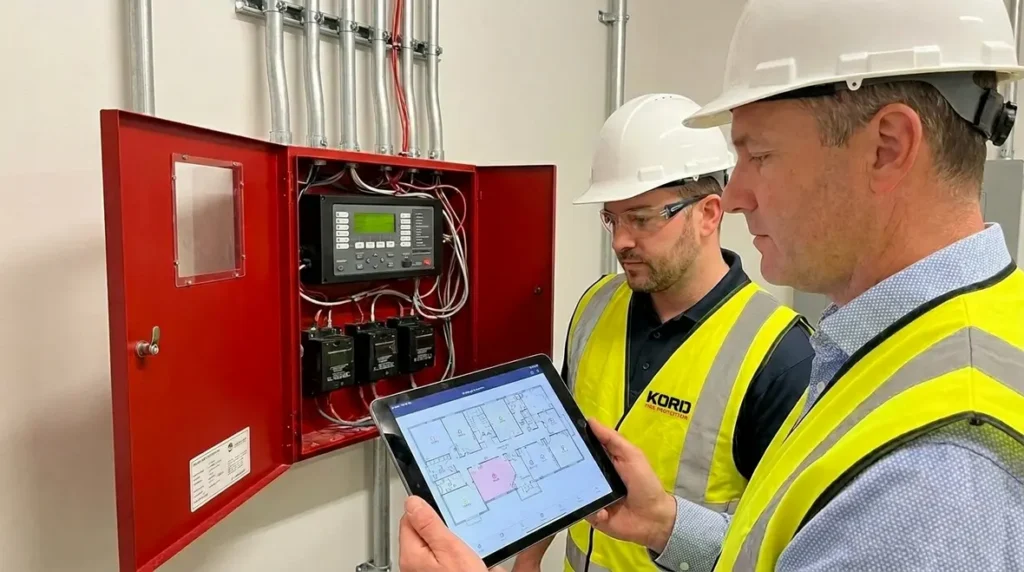
Equally important, documentation must stay accurate. Many sites add racks, partitions, signage, or new plant. Then, the original detector locations or cable runs can become outdated. As a result, Kord Fire Protection supports change control and documentation handover so the system you test is the system you operate.
Reliable wiring is boring until it is suddenly the whole story
No one gathers around to admire cable routing, supervision, or terminations. Still, these quiet details are often the difference between a system that behaves predictably and one that throws random faults at 4:47 pm on a Friday. Trustworthy signals depend on disciplined installation, accurate records, and not treating cabling like an afterthought.
Power supplies, fault tolerance, and system resilience
When power drops, a fire alarm system cannot blink and hope for the best. Therefore, resilient power supplies matter. Control equipment and notification devices rely on properly designed power systems and battery backup where required. In practice, this means the system remains active long enough for safe evacuation and response.
Additionally, supervision features help detect faults. A fault should trigger the right attention so maintenance teams can act before the next incident. However, fault handling must be accurate. If a site keeps receiving nuisance fault alerts, people stop treating alarms seriously. And that is how “serious safety equipment” becomes “that noisy box again.”
Kord Fire Protection supports resilient outcomes through commissioning, verification, and structured testing. Consequently, commercial and industrial teams get a system that performs under both normal operations and abnormal conditions.
To keep it simple, Kord Fire Protection helps owners avoid the common failure mode: a system that looks compliant on paper but behaves unpredictably in day to day conditions.
Integrating alarm outputs with facility control systems
Fire alarms often trigger actions beyond warnings. Auxiliary outputs can operate fire doors, fans, smoke control systems, pumps, lift controls, or other building functions. Therefore, integration must be planned so actions match the evacuation strategy and do not create new hazards.
Moreover, the integration must respect sequencing and interlocks. If fans start at the wrong time, smoke movement can worsen. If door hold releases do not trigger as designed, egress paths can be blocked. Consequently, the system must be tested with the expected responses in mind, not just powered up and declared “done.”
Kord Fire Protection acts as a partner here by working through site requirements, mapping outputs to building control interfaces, and supporting functional testing. In short, the standard becomes a living system that works with the actual facility, not against it.
Integration should support evacuation, not create surprises
This matters especially on larger sites where alarms are tied into multiple services. Doors, fans, lifts, and smoke control systems all need to behave in a coordinated way. If one output lags, misfires, or triggers in the wrong order, the result can be confusion at exactly the worst moment. Functional testing proves whether the intended cause and effect actually happens in the field.
Component summary and where Kord Fire Protection adds value
Core components in AS 1603 fire detection
| Where Kord Fire Protection adds value
|
FAQ on AS 1603 fire detection and alarm components
Conclusion: Make your fire alarm system dependable, not just compliant
In the end, AS 1603 fire detection is only as strong as the way the components are selected, installed, commissioned, and supported over time. Kord Fire Protection can help industrial, retail, and commercial sites across Australia build a system that works in the real world, not just on a checklist. If your facility needs a new installation, a major upgrade, or confidence in current performance, reach out to Kord Fire Protection today and get a clear plan forward.