AS 2118 Fire Pump Requirements for Warehouses in Australia
Quick Answer: AS 2118 sets practical rules for how fire pumps must be selected, installed, tested, and maintained for warehouse fire systems. For many sites, meeting these requirements is not just compliance, it is reliability. Kord Fire Protection helps businesses plan, upgrade, and keep pump systems ready when things get serious.
Warehouses run on momentum. Pallets move, shifts change, and forklift traffic never seems to stop. Meanwhile, fire protection has one job: stay ready, even when everything else is in a hurry. That is where AS 2118 enters the story. Within the first few lines, it is clear that AS 2118 Fire Pump Requirements for Warehouses aim to ensure pumps deliver the right pressure and flow at the right time, with proper controls and ongoing tests. In the sections below, the article breaks down how these rules show up on real sites, and how Kord Fire Protection becomes a vital partner in turning “paper compliance” into dependable performance.
For businesses reviewing broader site protection, it also helps to connect fire pump planning with professional fire protection services that support design, upgrades, testing, and ongoing maintenance across warehouse environments.
What AS 2118 demands from fire pump systems
First, AS 2118 does not treat fire pumps like a nice-to-have accessory. It expects a system built to perform under fire conditions, including the ability to start quickly and sustain water supply. As a result, the selection process covers more than pump size. It also considers how the system connects to the rest of the fire services, how it controls operation, and how it supports the required discharge.
Additionally, warehouses often involve complex layouts: long hose runs, high racks, and changing storage zones. Therefore, the design must match the hydraulics of the sprinkler or other fire protection system in that building. Put simply, the pump has to give the water where it is needed, with enough pressure to keep the system working as intended. And yes, sometimes people guess. Guessing is great for trivia nights, not for fire flow.
To stay aligned, owners and builders typically need evidence of correct design calculations, proper selection of pumps and controllers, and correct installation methods. Then, they must back it up with tests that confirm the system operates as required.
Why design intent matters in warehouses
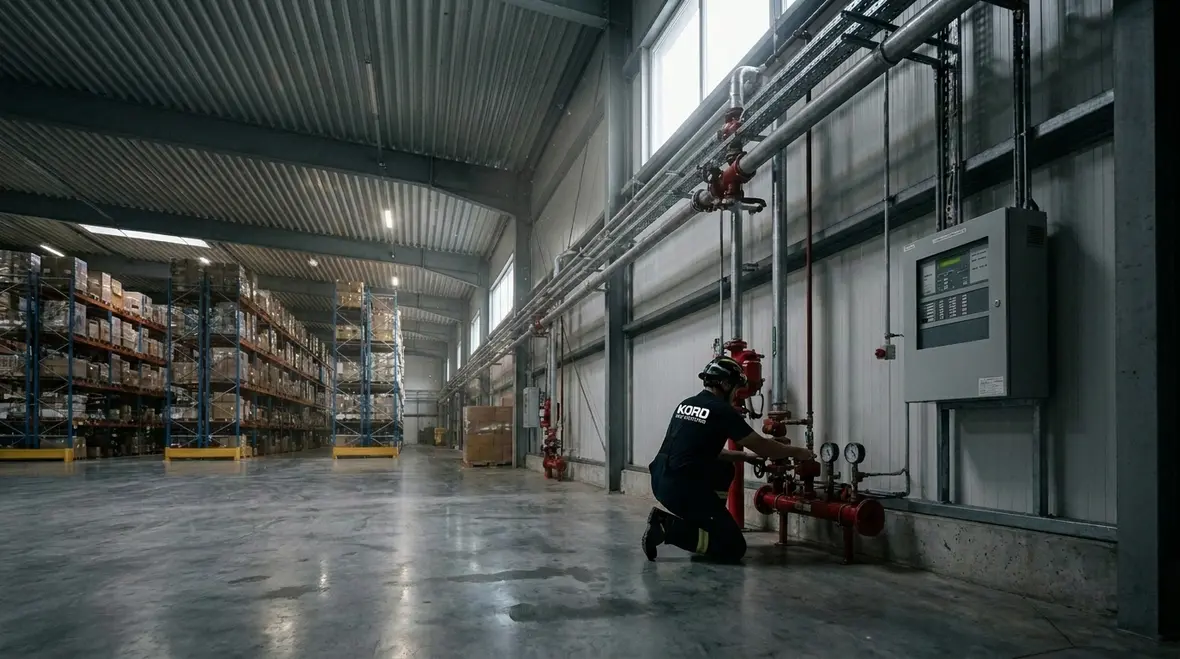
The phrase “meets the standard” can sound tidy on paper, but warehouses tend to challenge tidy ideas. Once storage patterns shift, access aisles move, or sprinkler coverage is reviewed against current use, the pump system has to support the site that exists now, not the one that existed during a drawing review months or years ago. That is why proper design intent matters. It ties the pump, the control arrangement, the water demand, and the building layout into one working outcome instead of four disconnected assumptions.
How warehouses affect pump design and performance
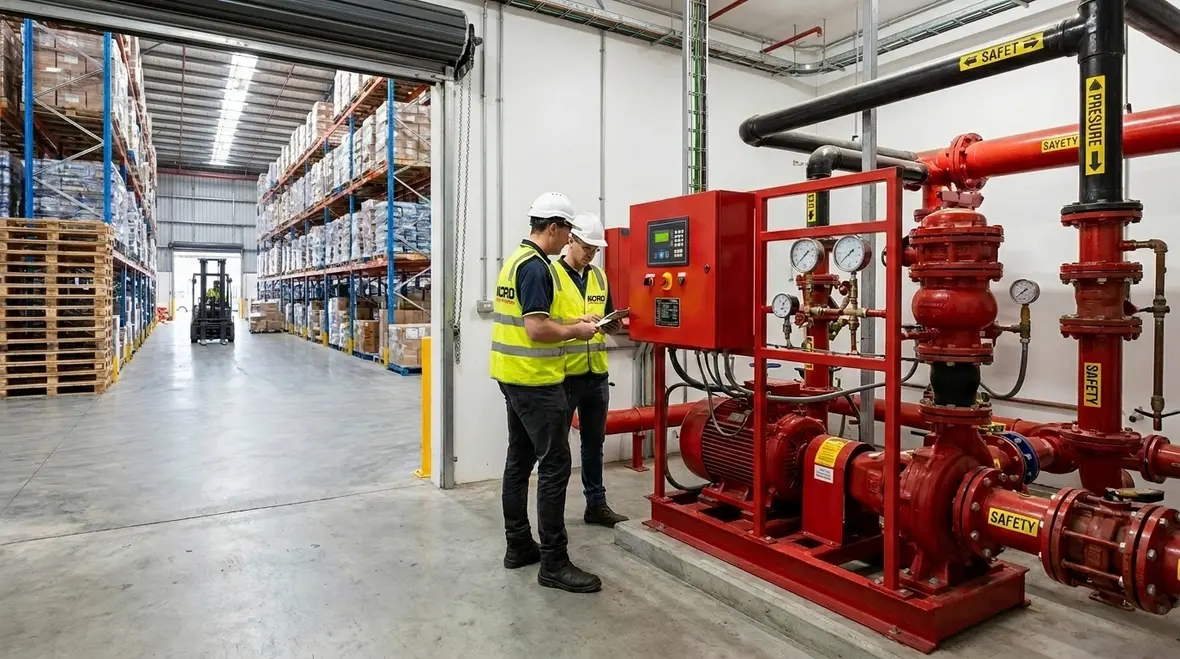
Warehouses are not just “big rooms.” They change the way water must travel, and that impacts what the pump must deliver. For example, floors can be uneven, pipe routes can be long, and ceiling heights can vary across zones. Even when the sprinkler system design looks standard, the pipe network and elevation changes can add friction and reduce available pressure.
In turn, this is why AS 2118 considerations matter. Since the pump must maintain the required flow and pressure, the design and installation must account for real warehouse conditions. Moreover, if a site later modifies storage racks, adds partitions, or changes usage, the hydraulic profile can shift. Therefore, fire pump systems should not be treated like a one-time install. They should remain matched to the building’s current operating reality.
Also, warehouses often keep operating through renovations. So, it helps when service teams plan shut-down times and isolate sections properly. Kord Fire Protection supports this type of practical scheduling, so upgrades do not turn the site into a “closed for the season” sign.
Hydraulics change faster than people expect
A few practical changes can quietly alter what a warehouse needs from its fire pump. Higher rack storage may increase demand. Longer branch runs may increase losses. Added partitions may change how services are distributed. Even routine tenancy updates can create small mismatches that become big problems during testing. That is why performance reviews matter so much. A pump that looked perfectly adequate at handover may need reassessment once the site evolves into its actual working form.
Choosing pumps and controls that actually meet the standard
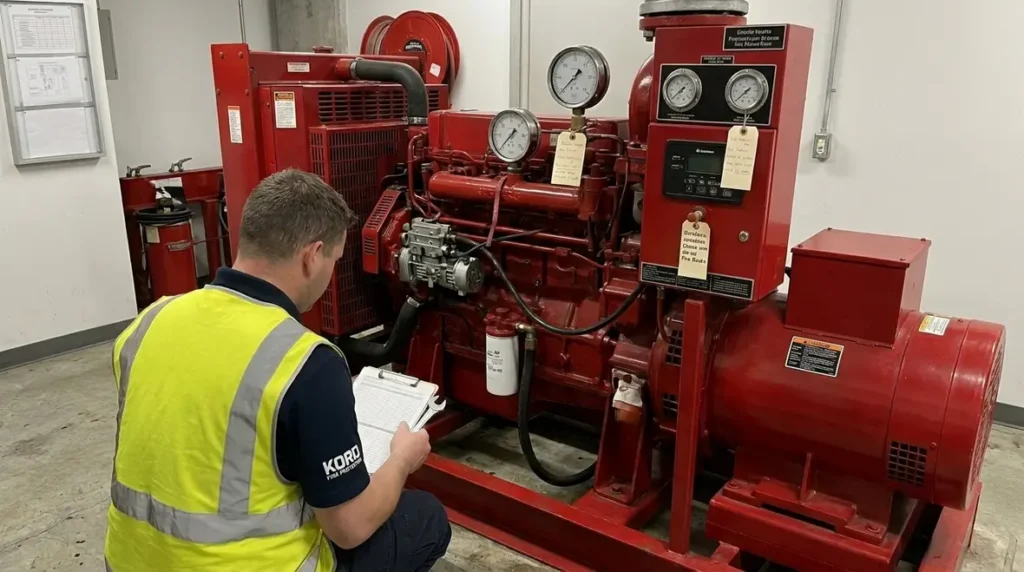
When a business chooses a fire pump system, it must consider both hardware and control logic. Under AS 2118 Fire Pump Requirements for Warehouses, the pump setup and controller duties matter because they drive how the system starts, stabilizes, and responds under demand. This means selecting pump types that suit the duty point and ensuring control components work as designed.
Typically, the project should address reliability details such as power supply arrangements, alarms and status signals, and the method used to start the pump when demand occurs. Equally important, the system needs protective features and safe operating behavior so the pump does not cycle incorrectly or fail silently.
At the same time, the installation must follow good workmanship practices. Piping alignment, correct valve placement, and properly installed sensors all affect performance. If someone rushes those steps, the pump may still spin, but it might not deliver the needed pressure at the needed time. Kord Fire Protection helps teams avoid that trap by treating installation quality and commissioning as part of the same outcome.
Controls are where reliability becomes real
People naturally focus on the pump because it is the star of the room, but controls are often the difference between a system that looks impressive and a system that actually responds properly. Start logic, alarm feedback, fault indication, and stable operation under demand all matter. If the controls are poorly configured or badly integrated, the system may produce a very confident hum right before disappointing everyone. That kind of drama is entertaining in movies, not in a pump room.
Commissioning and testing for ongoing confidence
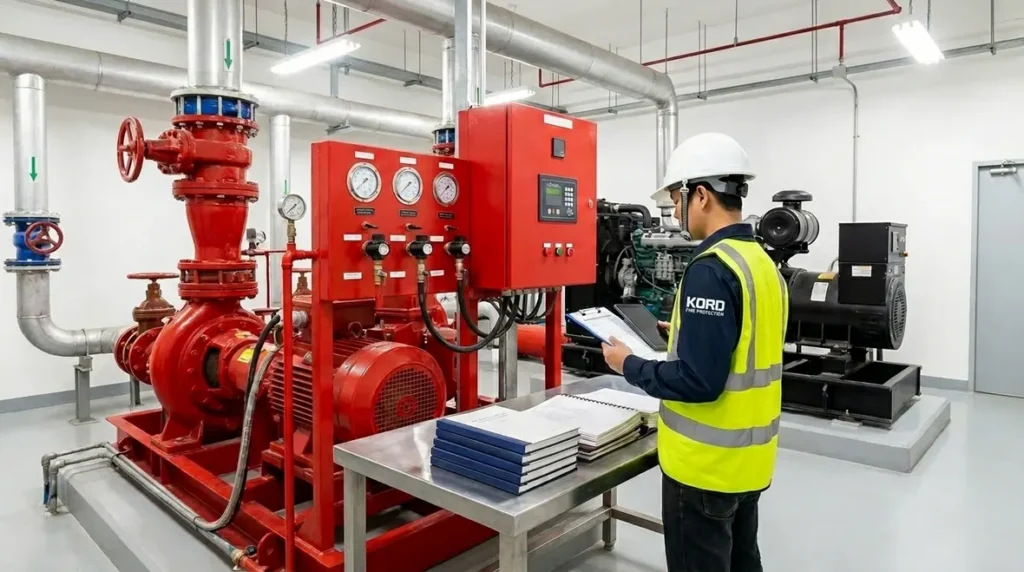
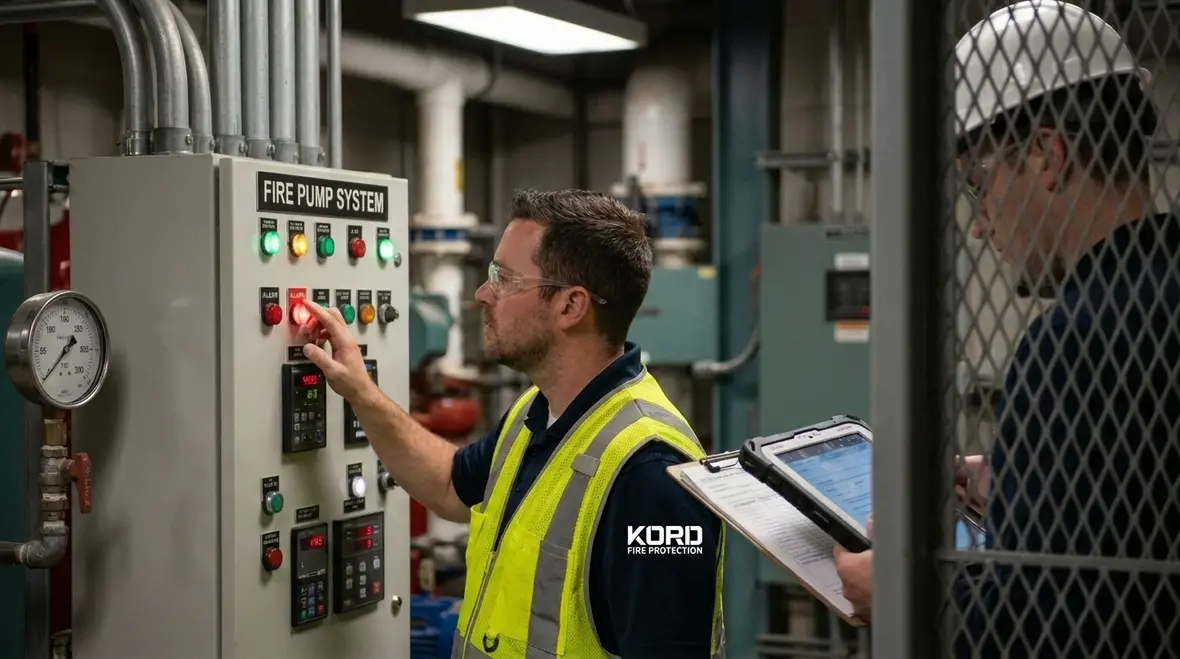
Once the system is installed, businesses should not stop at a “hand-over.” They should verify performance through commissioning and ongoing testing. AS 2118 standards support a testing approach that checks the system can start and operate under conditions that reflect real fire service needs.
In practice, this means teams review that the pump reaches the required performance, controls respond correctly, and alarms and interlocks function as expected. Then, the service plan must keep the system ready as it ages. Bearings wear. Valves can seize. Sensors drift. And a warehouse does not slow down just because equipment gets old.
Therefore, a good service program includes scheduled tests, documented results, and corrective actions when readings drift. Kord Fire Protection builds and maintains these service routines across industrial, retail, and commercial facilities throughout Australia, so the business can meet obligations with clarity, not guessing.
Common warehouse issues that trigger non compliance
Even well-intended projects can miss the mark. First, some sites install a pump based on assumptions rather than verified design intent. Then, during commissioning, they discover the hydraulics do not match the building’s actual demand. Others skip updates when the building changes. A new tenant layout, updated sprinkler zoning, or modified pipe runs can shift requirements.
Another common issue involves maintenance. If valve access is poor or documentation stays in a drawer, systems drift into “unknown condition.” That is when pumps can fail to start on demand or fail to maintain stable pressure. And when that happens, compliance becomes the least of the worries, because safety does too.
Finally, poor record keeping creates a hidden risk. Regulators and insurers want evidence. Staff want clear instructions. Fire contractors need data to troubleshoot quickly. Kord Fire Protection supports record-led service, so teams can find the right documents and history fast, instead of playing detective during an emergency.
The quiet risks that build up over time
Most non compliance problems do not arrive with sirens and dramatic music. They build quietly. A missed test here. An undocumented valve change there. A commissioning report that never gets updated after a layout change. Over time, the site drifts away from confidence and closer to guesswork. The trouble is that guesswork tends to look fine until the exact moment it absolutely cannot be allowed to fail.
Why Kord Fire Protection becomes a vital partner
A warehouse owner can hire a pump installer, but the business also needs a long-term partner who understands the full lifecycle. Kord Fire Protection brings that lifecycle approach. They help with planning, design support, upgrade pathways, commissioning oversight, and maintenance that keeps systems performing against AS 2118 expectations.
Moreover, Kord Fire Protection can align service work with operational needs across multiple sectors. Industrial sites often need staged works. Retail facilities may need tight after-hours schedules. Commercial buildings may require coordinated access with multiple trades. Kord Fire Protection treats these realities as part of the job, not a complication.
And yes, occasional jokes help because stress is real. Fire protection is serious, but planning can still be human. Nobody wants a “surprise” during a test, unless it is the kind that comes with a funny hat and a smooth passing result.
If the goal is to keep warehouse operations protected, then partnering with a team that can manage both compliance and performance makes business sense. Kord Fire Protection helps turn standards into systems that work when they matter.
FAQ
Call to action
Fire pumps do not earn trust by being installed once. They earn trust through correct design, solid commissioning, and reliable service over time. Kord Fire Protection helps warehouses and other Australian facilities meet AS 2118 expectations with practical guidance and clear documentation. If a system needs an upgrade, a service review, or stronger testing support, contact Kord Fire Protection today and get a plan that protects people, reduces risk, and keeps operations running.