AS 2419 Fire Pump Testing Requirements Overview
Quick answer: AS 2419 sets the testing and inspection expectations for fire pumps, including pump performance, flow, pressure, control systems, and documentation. When testing is done properly, it reduces risk, keeps compliance on track, and confirms the system will work when seconds matter and water is the main character.
In Australia, AS 2419 Fire Pump Testing Requirements Overview is not just paperwork, it is the backbone of safe and reliable fire pump operation. Early in a project or during routine compliance, facilities teams need clear guidance on what gets tested, how often, and how to prove performance under realistic conditions. Our focus here is to explain what AS 2419 expects, what common sites get wrong, and how a well-run service program protects people, assets, and brand reputation. After all, nobody wants their pump testing to read like a mystery novel where the villain is “unknown results.”
A disciplined maintenance program works best when it fits into broader fire protection services planning, because testing is far more effective when the pump, controls, and reporting process all speak the same language.
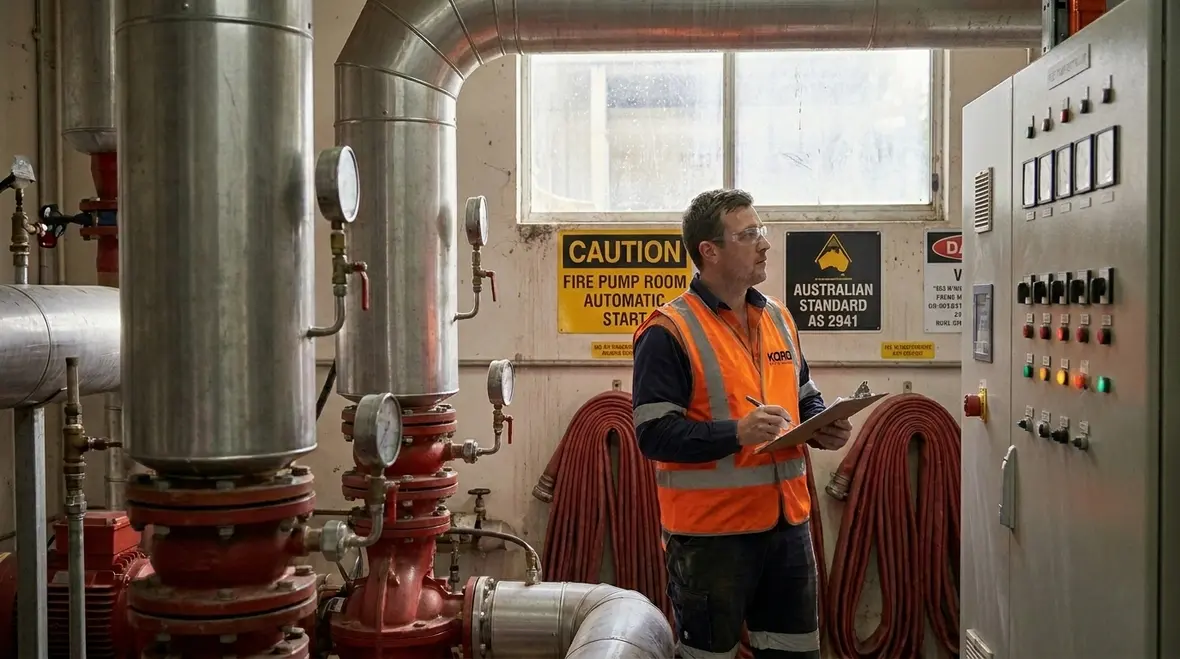
1) Why AS 2419 fire pump testing matters on real sites
Fire pumps sit at the point where theory meets reality. They do not care about intentions, they respond to pressure, flow, starting conditions, and control logic. Consequently, AS 2419 sets practical expectations so that stakeholders can confirm the pump can deliver the required performance when the alarm sequence demands it. This means facilities, engineering teams, and contractors follow a repeatable process rather than guessing. Then, if a deviation appears, they catch it early while fixes are still reasonable.
For industrial plants, retail centres, and commercial campuses across Australia, that reliability ties directly to risk management. Fire protection systems often share space with harsh environments, variable demand, and maintenance schedules that fight for time. Therefore, consistent testing acts like quality control for the “last mile” of water delivery.
Why real-world conditions expose weak points
A fire pump can look perfectly respectable on paper and still disappoint when test conditions become more realistic. Start signals, flow demand, pressure performance, and controller response all need to line up at the same moment. That is why testing is not a ceremonial checkbox. It is a structured way to prove the system can do the job under pressure, literally and metaphorically. On busy sites, that proof matters because emergencies do not pause to ask whether the paperwork felt optimistic.
2) What gets tested under AS 2419 and why it is not optional
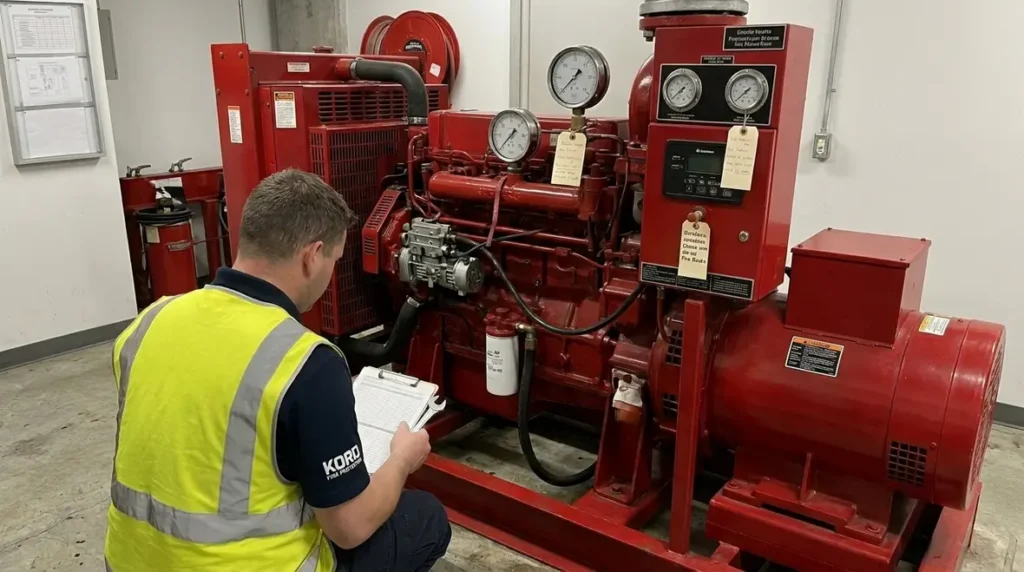
AS 2419 addresses more than basic start and stop. It expects verification of performance and control operation, including how the pump behaves under test conditions that reflect real fire service needs. In simple terms, it confirms the system does the job, not just that it runs.
Typically, a thorough fire pump testing approach covers items such as:
- Pump starting performance, including reliable engagement when the system demands
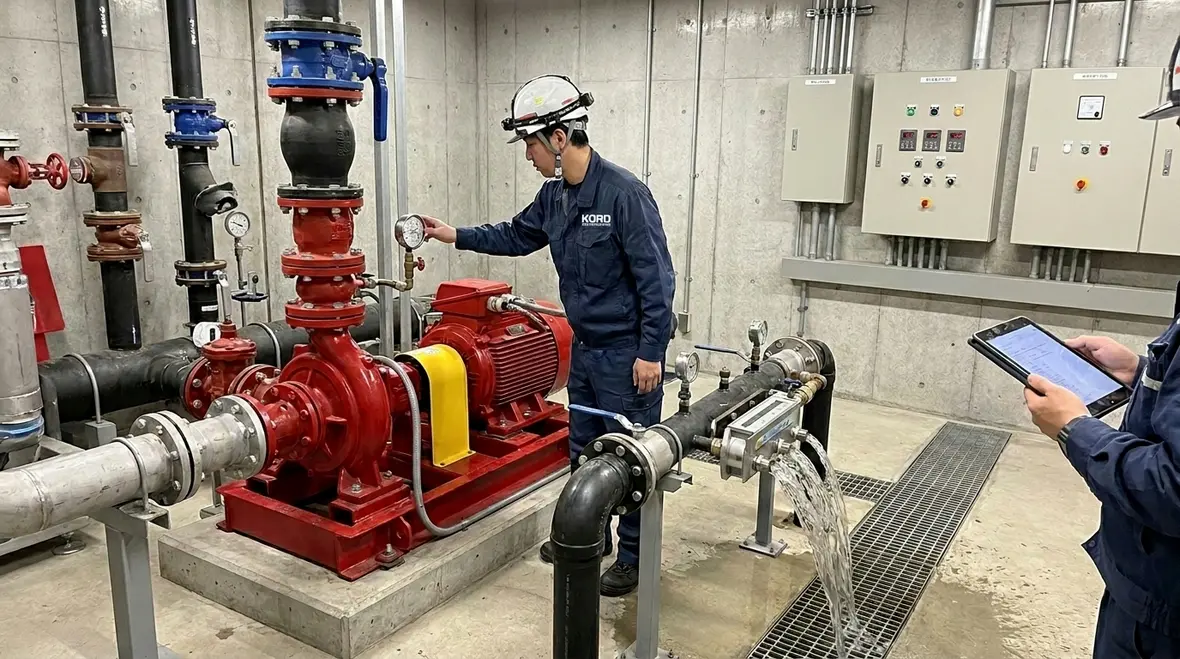
- Flow and pressure behaviour, so the pump reaches the expected outputs
- Control system checks, to ensure correct logic and safe sequencing
- Valve and interlock operation, because a closed valve can turn “ready” into “hope”
- Electrical and motor-related verification, where applicable, to confirm stable operation
- Documentation and reporting, so the site can demonstrate compliance and trace performance trends
Now, the fun part, if it can be called fun. Many sites discover that the pump performs well until a specific test mode shows a weakness. For example, a controller may start normally but behave differently during staged operation. Or a discharge valve arrangement may not respond the way the team assumed. As a result, testing under AS 2419 prevents “surprise failure” on the day it matters.
Performance testing is about proof, not optimism
This is where many misunderstandings start. Some teams assume that if a pump powers on, the hard part is over. It is not. Reliable fire pump testing asks whether the equipment reaches expected flow and pressure, whether the controls react correctly, and whether the broader system behaves in a stable, predictable way. If any part of that chain underperforms, the site inherits risk that looks invisible until an emergency gives it a spotlight.
3) How to prepare the site so testing stays smooth and safe
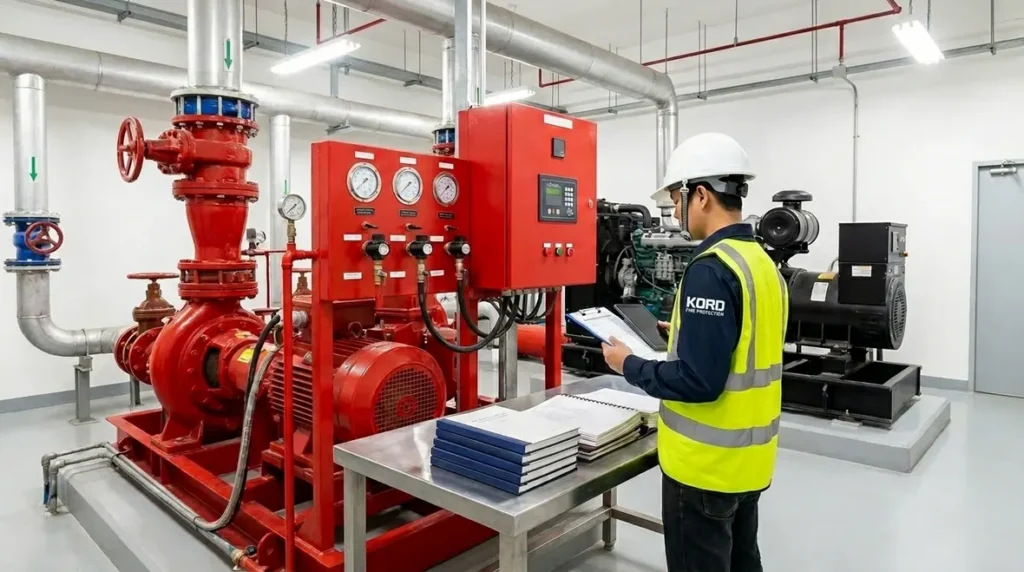
Preparation turns a potentially disruptive activity into a controlled maintenance event. First, the responsible team should confirm system configuration, access, and safety controls. Then they should schedule testing to align with operational needs, especially in busy retail and production environments. Furthermore, they should plan for water management, containment where required, and clear communication with site stakeholders.
Practical steps facilities teams can apply include:
- Reviewing pump records, so technicians understand previous results and known issues
- Confirming pump configuration, including set points, alarms, and access to controls
- Coordinating temporary operational impacts, so production and customer activities remain safe
- Confirming permits and isolation requirements, where site procedures require it
- Ensuring a clear reporting process, so outcomes become actionable, not just stored
And yes, communication matters. If people act like testing is a secret, then the site team will treat it like one too. That creates delays, confusion, and avoidable rework. In contrast, a prepared site helps everyone stay calm, even when alarms start acting like they have opinions.
Planning details that save time later
The smoothest testing days are usually the least dramatic because the groundwork was handled properly. Access is sorted, temporary impacts are understood, water discharge has been considered, and the right people know what is happening. That level of planning reduces friction and keeps the exercise focused on results instead of improvisation. It also prevents the classic maintenance surprise where everyone says, “We thought someone else had already checked that.”
4) What good reporting and documentation look like
Testing is only half the job. The other half is showing that the pump system performed as required. AS 2419 testing documentation should be clear, structured, and traceable, with results that stakeholders can review without decoding a technical treasure map. Then, if performance is outside expected ranges, the report should identify the condition, recommend corrective actions, and support follow up retesting.
In many facilities, the challenge is not the test itself, it is how fast the organization can convert results into action. Therefore, strong reporting should:
- Record measurements in a way that allows trend review over time
- Explain deviations in plain terms for both engineers and site managers
- Link results to compliance needs, so teams can prove what they did
- Support future planning, helping avoid emergency maintenance later
- Provide recommendations that are specific, practical, and testable
When documentation is done properly, facilities can reduce compliance stress. They stop “chasing certificates” at the last moment and instead operate with confidence, like someone who actually read the manual.
What useful reports do better than basic paperwork
A strong report tells the site what happened, why it matters, and what should happen next. It creates continuity between service visits, audits, and future decisions. Instead of storing information in a digital attic, it turns test data into something operational teams can use. That matters because compliance gets much less stressful when the record is organised, current, and easy to explain to everyone from technicians to management.
5) Why kord fire protection can be a vital partner for AS 2419 compliance
AS 2419 fire pump testing is a service that benefits from disciplined execution, clear communication, and a team that treats documentation as seriously as the hardware. Our company, kord fire protection, can become a vital partner by delivering testing programs that support industrial, retail, and commercial facilities across multiple states and environments.
Because each site behaves differently, a strong partner does not just “tick the box.” Instead, kord fire protection focuses on consistent methods, careful system checks, and reporting that helps decision makers act quickly. Furthermore, the team supports facilities leaders with guidance that reduces guesswork during audits and reviews.
What facilities teams often value most is continuity. When the same service partner understands the site history, then testing becomes faster, issues are identified sooner, and follow up actions are smoother. In other words, kord fire protection helps keep the pump story from turning into a sequel called “Why is it failing again?”
6) Common pitfalls during fire pump testing and how to avoid them
Even experienced teams can stumble. And when they do, it often comes from process gaps rather than lack of effort. For example, some sites rush scheduling, skip pre checks, or assume prior results mean the system will behave the same way today. However, conditions change. Valves get adjusted, controllers experience drift, and components age quietly like that one warehouse storage item nobody labels.
Common pitfalls include:
- Insufficient pre test inspection, which delays testing and creates incomplete outcomes
- Overlooking control logic, leading to start and sequence inconsistencies
- Neglecting valve positioning, which can alter flow and pressure results
- Weak water management planning, especially in operational facilities
- Reporting that lacks usable detail, which slows corrective action
To avoid these issues, facilities should treat testing as a structured program. They should plan, verify, test, document, and then act. That cycle keeps compliance steady and improves system confidence over time.
A repeatable process beats guesswork every time
The most common failures around testing are rarely dramatic technical plot twists. More often, they are the result of poor sequencing, incomplete checks, weak communication, or reports that do not clearly point toward action. A structured process solves more than one problem at once. It improves consistency, shortens follow-up time, and gives stakeholders a clearer sense of where the system stands. That is a much better ending than discovering a hidden issue during the worst possible moment.
Conclusion
Fire pump testing under AS 2419 is where reliability gets proven, not promised. When facilities schedule testing with a disciplined partner, they reduce compliance stress and improve confidence in real fire conditions. Our team at kord fire protection supports industrial, retail, and commercial sites across Australia with structured testing, clear reporting, and practical follow up. If a pump system is already on the schedule, the next smart step is to book your assessment and keep your protection plan current.