AS NZS 1850 Extinguishers Classification Testing by Kord
Quick Answer
AS/NZS 1850 sets the rules for how fire extinguishers in Australia and New Zealand must be classified, inspected, maintained, and tested. It supports safer performance when seconds matter. Kord Fire Protection helps organisations meet these standards with reliable servicing, records, and extinguisher readiness across industrial, retail, and commercial sites.
In the real world, a fire does not care about your schedule, your budget, or whether the extinguisher is “probably fine.” That is why AS/NZS 1850 extinguishers matter. This standard outlines how fire extinguishers are classified, and how they are tested so the units you rely on will perform when you actually need them. In other words, it turns “hope” into evidence.
Kord Fire Protection steps in as the vital partner many facilities forget to budget for until something goes wrong. Rather than treating compliance like paperwork theatre, we help you manage extinguisher classification, inspection, and testing in a way that works for industrial, retail, commercial, and multi site operations across Australia.
If you are reviewing your broader fire safety setup as well, it also makes sense to align your extinguisher program with your fire protection servicing support so maintenance records, testing intervals, and on site readiness all move in the same direction instead of becoming separate admin piles with separate headaches.
Fire extinguisher classification under AS/NZS 1850 explained for facilities
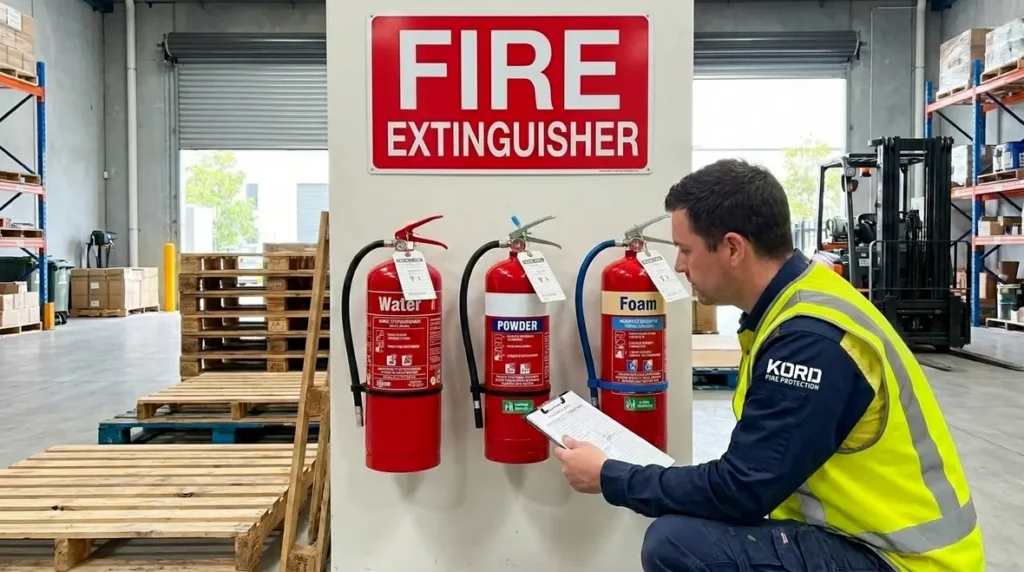
Most workplaces understand fire extinguishers in plain terms: red cylinder, handle, gauge, done. However, AS/NZS 1850 asks a more disciplined question. It focuses on how extinguishers are classified so they match the right fire type and hazard level. For example, a unit that suits one scenario can underperform in another, and that difference becomes expensive when you are dealing with smoke, heat, and evacuations.
Facilities that operate across multiple risks typically see three drivers for classification requirements. First, they must prevent the wrong extinguisher being used on the wrong hazard. Second, they need consistent equipment selection across branches, warehouses, plant rooms, and retail fit outs. Third, they must protect compliance audits and incident reviews with clear, traceable evidence.
This is where classification becomes practical rather than theoretical. A facility manager is not just trying to tick a box. They are trying to make sure the extinguisher closest to a real incident is the one that makes sense for that incident. That means the hazard profile of each area matters. Storage zones, switch rooms, kitchens, workshops, and loading docks may sit inside the same property, but they do not all present the same fire risk.
Now, a small joke for balance: fire safety is like sunscreen. When it works, nobody claps. When it fails, everyone suddenly becomes an expert. Classification helps you avoid the “everyone is an expert after the fact” meeting.
How testing supports reliable performance, not luck
Why visible condition is not the whole story
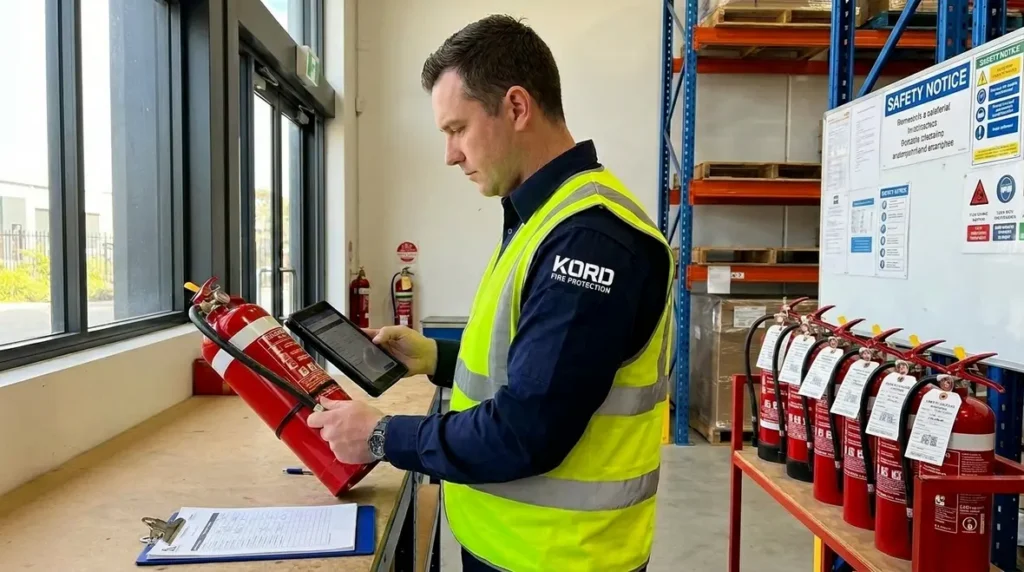
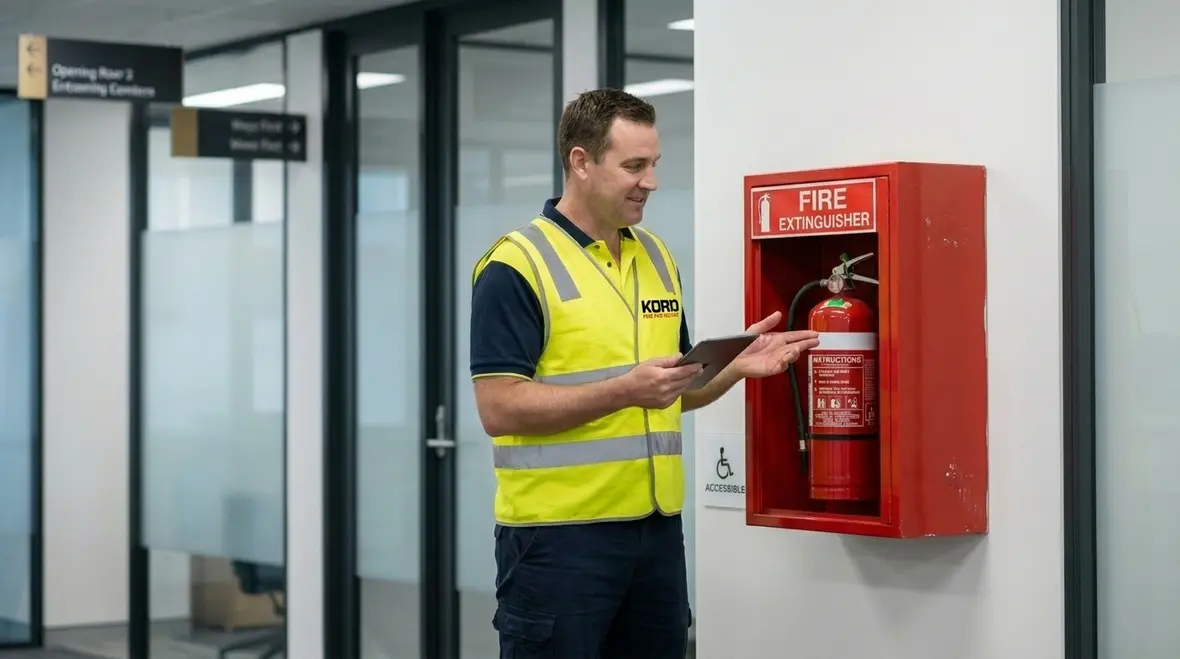
Testing turns a fire extinguisher from an object into a reliable safety tool. Under AS/NZS 1850 extinguishers requirements, the standard supports a testing approach that verifies key performance elements rather than assuming cylinders stay ready forever.
In practice, testing and related checks support these goals. They verify the extinguisher remains fit for service. They confirm the unit’s operation stays within accepted performance limits. They also help detect issues that can develop over time such as pressure loss, component wear, blocked paths, or degradation that does not always show up in a quick visual scan.
Then there is the operational reality. Warehouses experience vibration, retail sites experience constant movement and changes in floor layout, and industrial spaces often face heat, dust, and harsh handling. Therefore, a testing plan must match how your environment actually behaves.
Kord Fire Protection aligns testing with your site schedules and risk profile so your extinguishers do not get treated like seasonal decorations. When your assets are maintained properly, you avoid the awkward moment when an extinguisher “still looks good” but cannot perform as expected.
That matters because emergency equipment is judged in one brutal way only: did it work when it had to? Nobody hands out points for best intentions. A dependable testing rhythm reduces guesswork, supports staff confidence, and gives your organisation something much more useful than optimism, namely evidence.
What inspectors expect during compliance checks
The difference between having extinguishers and having a program
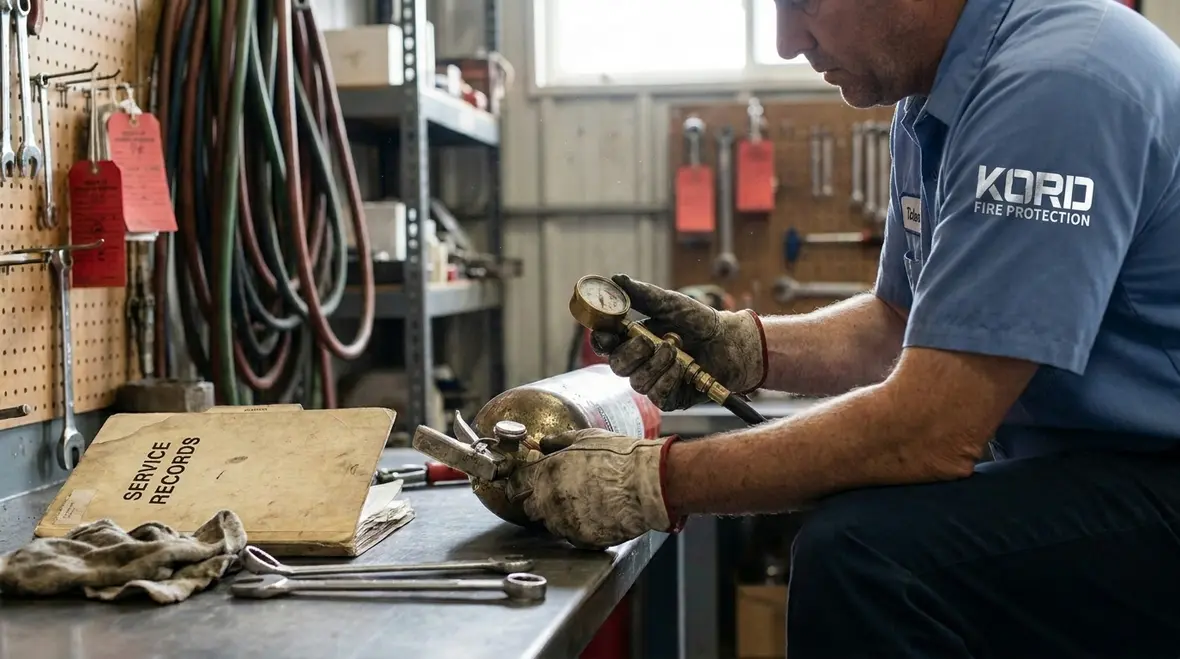
When someone audits a facility, they want more than a list. They want proof that the extinguisher program makes sense and stays current. Inspectors typically look for evidence that units are identified, accessible, and maintained within required intervals, with records that show what was done and when.
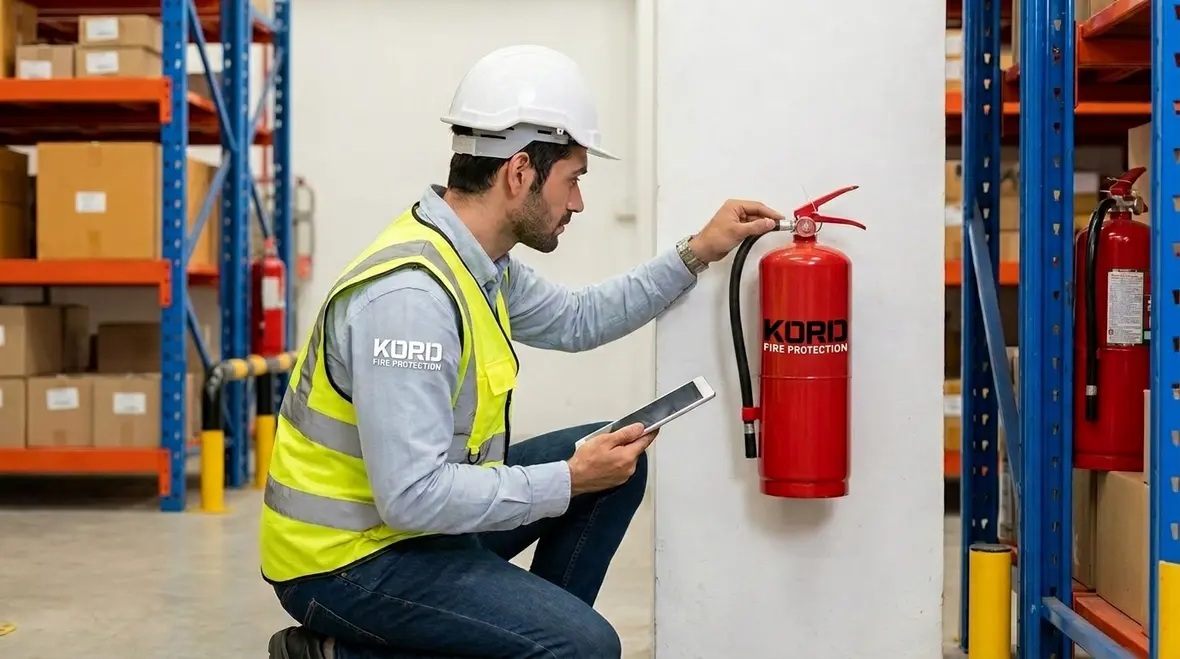
They also examine practical site factors. Extinguishers must be located where people can reach them safely. Signs and mounting should reduce confusion during a stressful response. In addition, the extinguisher condition should remain serviceable, including checking for damage, tampering, and clear readability of key information.
Because facilities vary, a strong compliance program considers where extinguishers are most likely to be used. That includes plant and switch rooms, loading bays, commercial kitchens in retail centres, maintenance workshops, and areas with flammable storage. When Kord Fire Protection supports your program, we focus on building consistent documentation and a maintenance rhythm your teams can follow.
Let us not pretend audits are fun. Still, they become much easier when your records are orderly and your equipment is actually tested. In other words, compliance stops feeling like a horror movie and starts acting like a process.
The strongest sites are usually not the ones with the fanciest binder or the most dramatic spreadsheet colours. They are the ones where the physical layout, the extinguisher selection, the servicing history, and the site records all agree with each other. That consistency is what helps a compliance check move from stressful interrogation to straightforward verification.
Choosing the right extinguisher categories across industrial and commercial sites
Hazards change faster than assumptions
Industrial and commercial environments mix hazards. One zone might carry electrical risk, another handles flammable liquids, and another includes combustibles from packaging, textiles, or general storage. As a result, extinguisher selection must track hazard classification rather than use a one size approach.
Strong programs use a simple rule: they match the extinguisher to the likely fire scenario. Then they ensure staff can recognise what is where. If the labels, training, and location mapping do not support decision making, the best equipment can still sit unused while the wrong response plays out.
For retail facilities, the challenge often comes from churn. Stores change, layouts shift, stock moves, and temporary displays appear. Therefore, extinguisher program management must include ongoing checks and update cycles that reflect the site’s evolving reality.
Kord Fire Protection helps customers manage this across multiple facets and multiple sites. We work with facility managers and safety teams to keep classification aligned with what is actually on the floor, not what was on the floor last year.
Record keeping and asset tracking that stand up in real audits
Because “we think it was serviced” is not a strategy
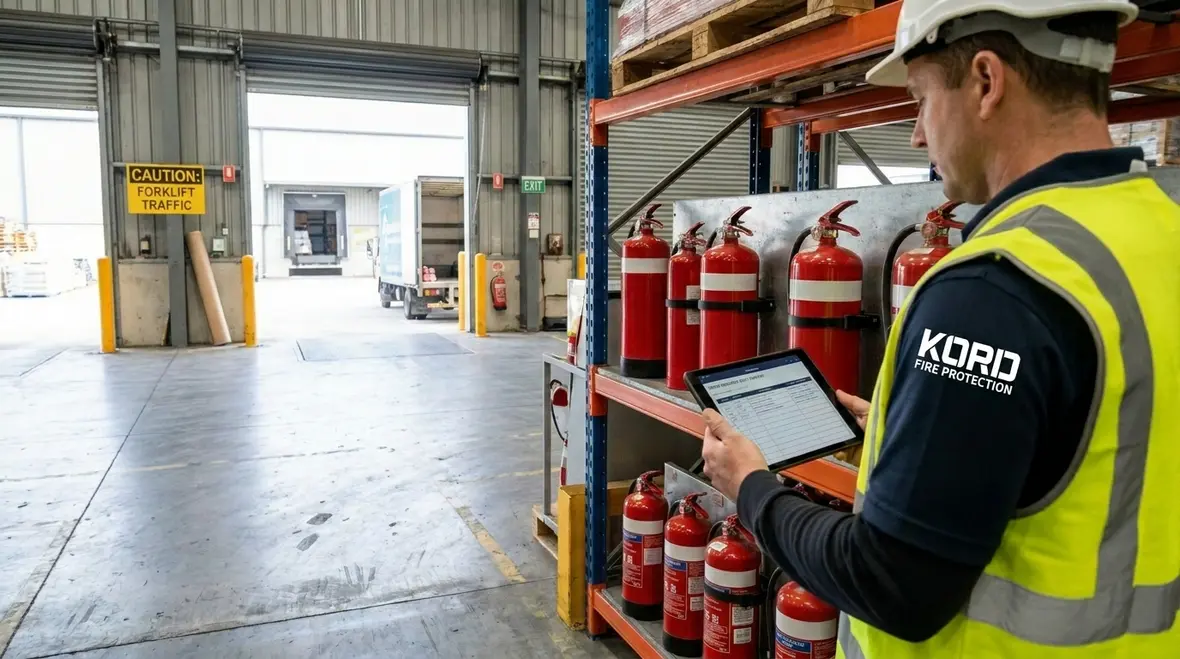
Compliance becomes stronger when maintenance records are easy to find and hard to question. This means clear identification of each extinguisher, consistent tagging, and a history that shows service actions over time.
Good record keeping helps in three situations. First, it supports scheduled testing and inspection so nothing slips between busy weeks. Second, it supports incident reviews where investigators ask what equipment was available and when it was last serviced. Third, it protects business continuity because you can plan outages for servicing without surprises.
However, record keeping is only valuable when it connects to real asset status. That is where a partner matters. Kord Fire Protection helps organisations maintain an extinguisher register approach that supports operational visibility. We reduce the “we think it was serviced” problem, and replace it with information that holds up when time is tight and questions start flying.
And yes, those questions often come at the worst time. If you have ever tried to find a document during an emergency, you already understand why tidy maintenance records matter.
A clear register also helps larger organisations manage consistency across multiple locations. When every site follows a similar structure for identification, servicing notes, and testing history, the business gets a much clearer picture of risk, gaps, and priorities. That makes future planning easier and last minute scrambling less common, which is a nice way of saying fewer panicked phone calls.

Why Kord Fire Protection partners with your extinguisher program
Kord Fire Protection becomes a vital partner because we treat extinguisher service as part of your safety system, not a standalone task. We support AS/NZS 1850 compliance by helping you understand classification needs, maintain service intervals, and keep testing records accurate and accessible.
For industrial, retail, and commercial operations, this means less disruption, more consistency, and stronger readiness across your sites. We also help safety teams reduce day to day friction. You gain clearer accountability, better asset visibility, and a process that supports both compliance and practical response.
In short, if you want your extinguisher program to work like it should, you need a partner who manages details and understands how sites operate. Kord Fire Protection provides that support, so your team can focus on running the business, not chasing paperwork.
FAQ
Conclusion: get your extinguisher readiness sorted
When a fire starts, you do not get a second chance to “get ready later.” Kord Fire Protection helps industrial, retail, and commercial facilities across Australia align extinguisher classification, inspection, and testing with AS/NZS 1850 requirements. If your program needs stronger records, clearer asset tracking, or a maintenance plan that actually fits your site, contact Kord Fire Protection today. Let us turn extinguisher compliance into calm, steady protection.