AS 2118.5 Home Fire Sprinkler Systems Explained
Quick Answer: AS 2118.5 sets out how home fire sprinkler systems should be designed, installed, commissioned, and maintained so they work when it matters most. This article explains the key requirements, common mistakes, and how Kord Fire Protection helps businesses and facilities meet the standard with confidence.
For organisations managing broader fire protection responsibilities, it also helps to connect home sprinkler requirements with practical fire protection services that support design coordination, commissioning, and ongoing maintenance across real projects.
AS 2118.5 Home Fire Sprinkler Systems, explained for stakeholders
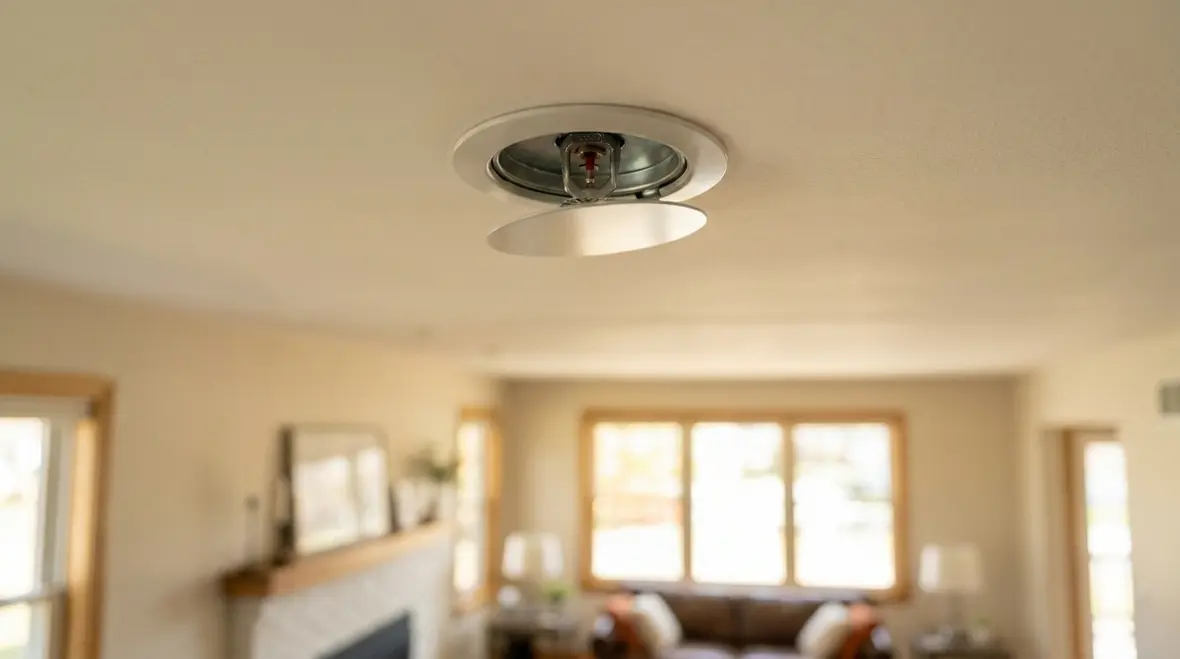
AS 2118.5 home fire sprinklers lay down clear rules for sprinkler systems in dwellings, but the lessons matter across Australia for anyone overseeing fire risk in attached facilities, mixed use buildings, and managed properties. These rules help ensure the right water reaches the right area at the right time, with performance that does not depend on luck, vibes, or a tired electrician “just guessing.”
When organisations plan upgrades, fitouts, or compliance pathways, they often focus on schedules and paperwork first. However, the real value of AS 2118.5 home fire sprinklers appears during commissioning and future maintenance, when hidden issues surface. Therefore, smart teams build the job from the start as a verification process, not a hope. And that is where Kord Fire Protection steps in as a vital partner, bringing practical expertise, calm guidance, and accountable outcomes.
Why stakeholders should care early
The people who benefit from understanding this standard are not limited to designers and installers. Property managers, facility teams, project coordinators, asset owners, and compliance stakeholders all have skin in the game. If early decisions ignore sprinkler requirements, someone usually ends up paying in delay, rework, or awkward meetings where everyone suddenly becomes very interested in ceiling plans.

How the standard shapes design, not just paperwork
AS 2118.5 does more than tell installers what to buy and where to put it. It influences system design decisions, such as pipe sizing, sprinkler selection, water supply expectations, zoning approach, and the way the system stays ready for action. As a result, the system does not just “exist.” It performs.
Design teams should treat the standard like a roadmap. For instance, they must consider how quickly sprinklers can activate, how water distribution behaves, and how the arrangement matches the occupancy and layout. Even small layout changes, like revised ceiling voids or new partitions, can change how heat reaches the sprinkler element. Then, if the design assumptions no longer match reality, performance can drift. Nobody wants a system that works beautifully on paper and quietly fails on day one.
So, the better approach is to coordinate design intent with installation reality. And then Kord Fire Protection supports the process so that the sprinkler system aligns with compliance expectations from planning through delivery, not after the fact.
Design issues that quietly become expensive
This is where many projects either look clever or become cautionary tales. A design that ignores practical access, future maintenance, or likely fitout changes can remain technically tidy while becoming operationally messy. That is why experienced coordination matters. If the documentation, ceiling plan, water supply assumptions, and installed conditions are not speaking the same language, the system may satisfy a drawing while disappointing real life.
Installation controls that protect performance
Now, the job does not end when materials arrive on site. Installation quality determines whether AS 2118.5 home fire sprinklers will deliver predictable operation. During installation, teams should control workmanship details that affect flow, alignment, and activation behaviour. Furthermore, correct pipe supports, sealing practices, and routing choices reduce stress and blockages that can interfere with water movement.
It helps to think of the system like a well rehearsed team. If one player misses cues, the whole routine suffers. Similarly, if installers skip checks, they might introduce air pockets, improper connections, or obstructions. These issues often show up later during testing, and by then time gets expensive.
Kord Fire Protection commonly supports contractors and facilities with process based oversight that helps keep the build on track. That means practical verification, clear documentation, and a professional hand that does not disappear after the checklist is stamped.
What good installation discipline looks like
- Pipework is installed with care for support, alignment, and access.
- Sprinkler locations are checked against actual ceilings and obstructions, not wishful thinking.
- Changes on site are reviewed before they become buried behind finishes.
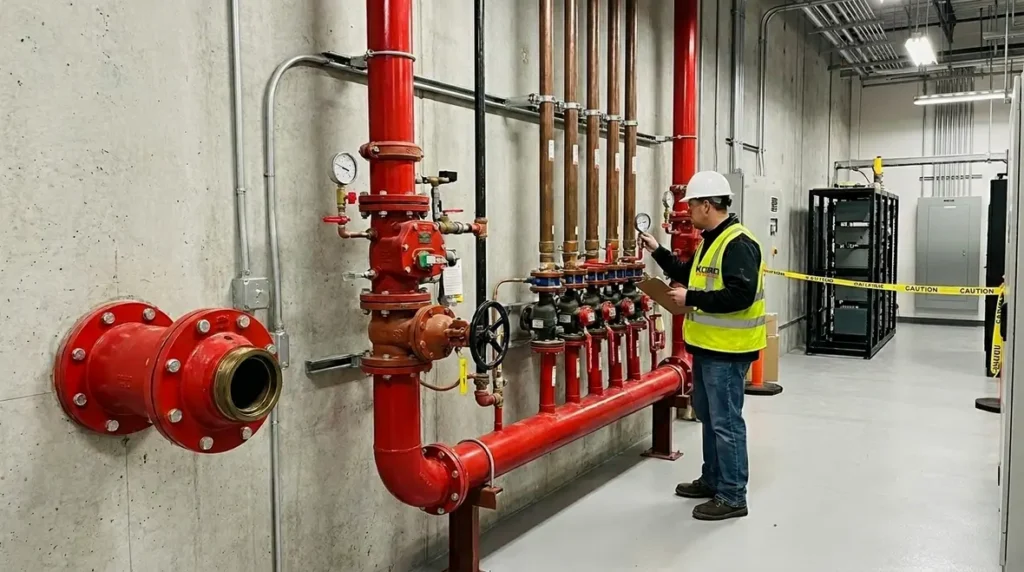
- Test points, valves, and critical components remain practical to reach later.
- Documentation is updated as the work evolves, rather than reconstructed from memory at the end.
Commissioning and testing: where compliance becomes real
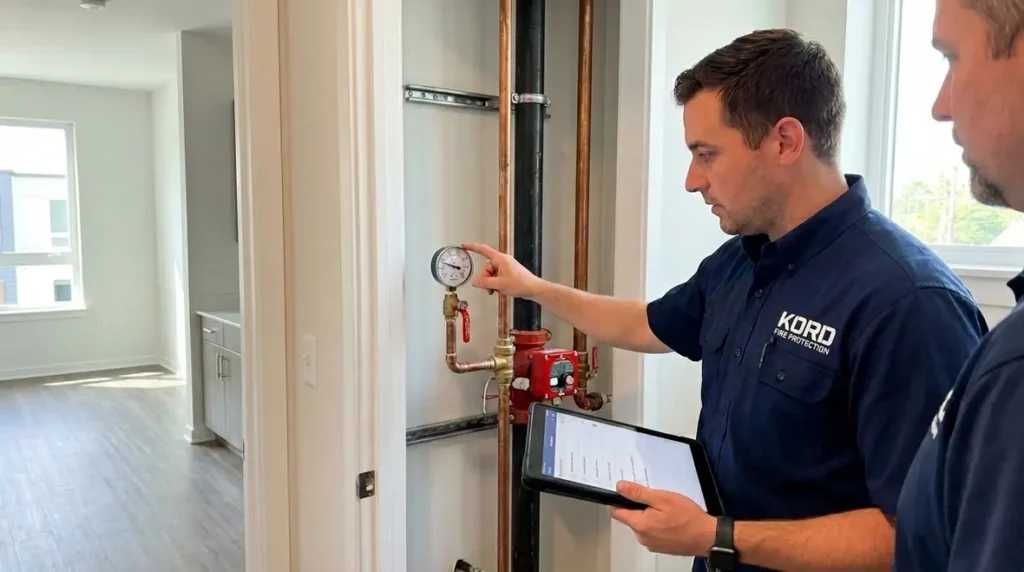
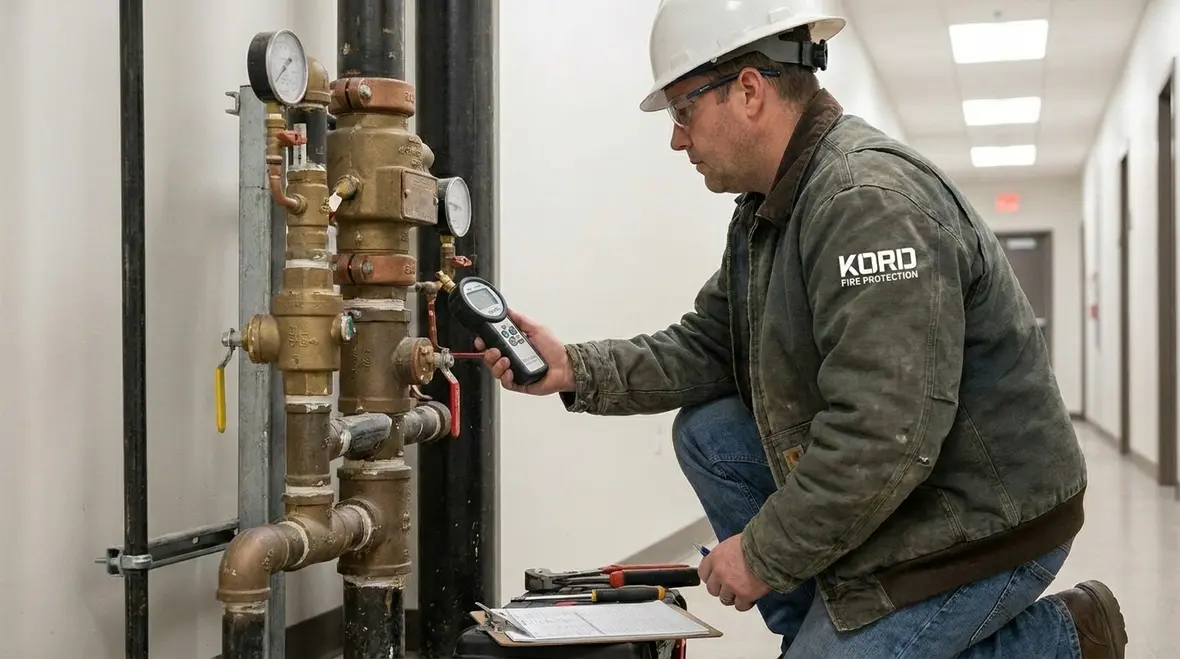
Commissioning turns a completed installation into an actual, accountable fire protection system. It also provides the evidence that the system can deliver water to the required areas under the expected conditions. In other words, this step proves the system, instead of assuming it.
Testing should confirm correct operation of relevant components, check water supply performance, and verify that the system’s setpoints and flow characteristics match the intent. Meanwhile, proper records provide a traceable history for audits and future service planning. If a facility later needs to demonstrate compliance, strong commissioning documentation saves time and arguments.
Some teams treat commissioning as a box ticking exercise. Then, surprise: the system reveals problems, and the project schedule starts doing cartwheels. Kord Fire Protection helps organisations avoid that scenario by supporting thorough commissioning steps that reduce rework and help ensure confidence at handover.
Why records matter as much as test results
A system can be installed correctly and still cause future headaches if nobody can trace what was verified, when it was verified, and under what conditions. Commissioning records are the memory of the project. Without them, later maintenance teams inherit a mystery novel where half the pages are missing and the plot twist is a valve no one can identify.
Maintenance that keeps systems ready, not “occasionally functional”
A fire sprinkler system must remain reliable over time. Dust, building changes, service interruptions, and altered ceiling spaces can affect both inspection access and system performance. Therefore, facilities should adopt maintenance routines that match the risk and the operational reality of their sites.
Maintenance work typically includes inspection planning, ensuring sprinkler locations remain unobstructed, verifying valves and system components, and keeping records up to date. In addition, when the building changes, the sprinkler system should be reviewed to confirm continued compliance. If a tenant adds partitions or reroutes ductwork, the fire protection strategy may need adjustment.
For industrial and commercial environments across multiple facets of Australian operations, this coordination matters even when the end use resembles a “home style” application. The standard mindset still applies: the system must work with the building, not against it. Kord Fire Protection can become the long term partner that helps facilities manage inspections, document outcomes, and keep readiness high.
Maintenance should track building reality
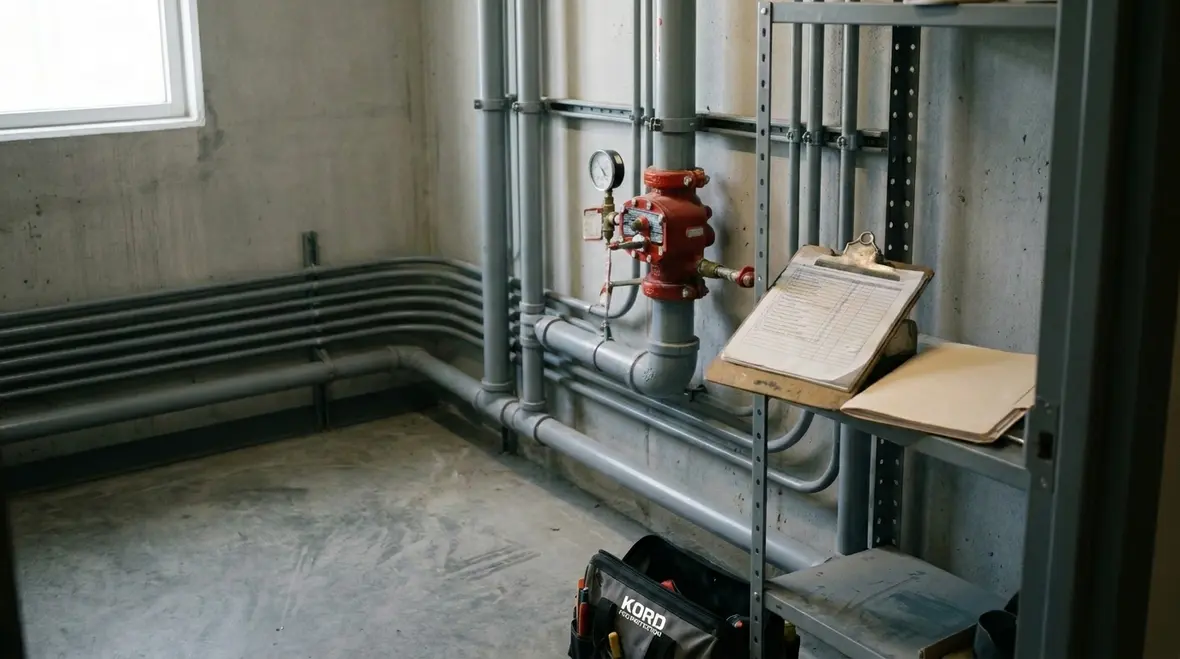
One of the most common long term problems is the slow drift between the installed system and the building it protects. Ceiling spaces get altered. Tenancies change. New services appear where nobody expected them. Storage patterns creep upward. Access panels get blocked by fitout changes. None of that feels dramatic in the moment, but over time it can chip away at reliability. That is why maintenance should not be treated as a calendar ritual alone. It should reflect what is actually happening on site.
Common pitfalls in real world projects
Even careful teams can stumble. Here are common pitfalls that organisations often encounter when delivering sprinkler work under AS 2118.5 frameworks, especially when projects move quickly or multiple trades overlap.
- Design mismatch after fitout changes: Revised ceilings, lighting, and partitions change conditions, then the system’s assumptions no longer match.
- Inadequate coordination between trades: Pipe runs can get squeezed, access can get blocked, and later inspections become a chore.
- Skipping verification at key stages: Small errors can hide until testing, which increases cost and slows handover.
- Weak documentation: Poor records make audits harder and future servicing slower.
- Unplanned maintenance access: If valves or test points become hard to reach, readiness declines over time.
Now, a quick joke because everyone needs one: fire safety does not care about excuses, and neither does a properly trained inspector. If the system cannot be verified, it cannot be trusted. Kord Fire Protection helps teams prevent these failures by supporting disciplined processes across installation, commissioning, and ongoing service.
A practical way to avoid the usual mess
Projects usually run smoother when responsibility is clear from the start. That means someone is tracking design intent, someone is reviewing site changes, someone is validating installation quality, and someone is making sure records actually match the installed system. Remarkably, this tends to work better than the classic industry strategy of hoping the next subcontractor sorted it out.
Why Kord Fire Protection acts as a vital partner
Many organisations treat fire protection like a once off activity. Yet, the strongest outcomes come from a partner who stays involved, supports coordination, and helps teams move from compliance intent to verifiable performance. Kord Fire Protection supports industrial, retail, and commercial facilities across Australia, assisting stakeholders who need reliable systems and clear accountability.
In practice, that means Kord Fire Protection helps align stakeholders, manage service expectations, and ensure work quality through structured verification and well kept records. Consequently, the project team spends less time reacting to surprises and more time delivering outcomes that stand up to scrutiny.
The benefit is not just technical. It is operational. Better coordination protects schedules, budgets, confidence at handover, and the long term usability of the system. When teams have a partner who values both compliance and practical delivery, fewer issues get kicked down the road for someone else to discover later.
FAQ about AS 2118.5 home fire sprinklers
Conclusion: get the job done with confidence
AS 2118.5 home fire sprinklers succeed when design intent matches installation reality, and when commissioning and maintenance prove ongoing readiness. Facilities across Australia need fire protection partners who help coordinate trades, verify performance, and keep documentation audit ready. Kord Fire Protection offers that steady, accountable support from early planning through ongoing service. If your project needs clear compliance pathways and real world reliability, contact Kord Fire Protection today and move forward with confidence.