AS 1851 Fire Pump Service Checklist for Australia
Quick Answer: An AS 1851 Fire Pump Service Checklist helps facility teams keep pumps reliable, test them the right way, and document every step. When contractors follow the checklist consistently, the system stays ready for the real emergency, not the pretend one during drills.
Fire pump maintenance in commercial and industrial settings cannot be treated like a once-a-year hobby. In Australia, the AS 1851 Fire Pump Service Checklist sets expectations for inspection, testing, and recording, so the pump system performs when it matters. And yes, that means it must do more than sit there looking confident. When facilities align their service work to the standard, they reduce risk, avoid downtime, and support compliance across industrial sites, retail centres, and multi-facility operations.
At that point, a skilled partner becomes the difference between “we serviced it” and “we proved it.” This is where Kord Fire Protection can step in as a vital partner, supporting reliable workmanship, clear reporting, and repeatable service outcomes across Australia.
For sites that want a broader maintenance partner instead of a patchwork of contractors, it also makes sense to connect fire pump work with wider fire protection support from Kord Fire Protection. That keeps reporting cleaner, service scopes more consistent, and fewer details lost in the handover between different providers.
Why AS 1851 Fire Pump checks keep systems trustworthy
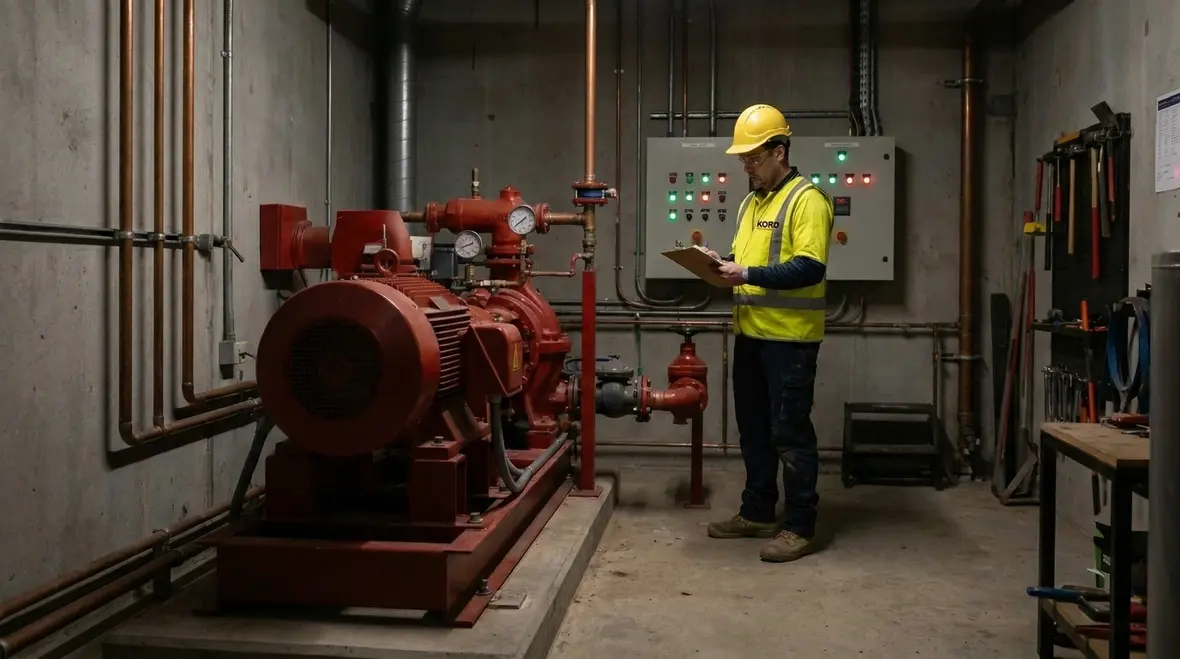
Fire pumps sit at the centre of water supply performance. If a pump fails, the whole protection strategy suffers, and that is not a small problem in a factory, warehouse, or shopping complex. Therefore, the checklist approach matters because it treats maintenance as verification, not guesswork.
First, the checklist helps teams confirm the pump starts, transfers, and runs under intended conditions. Next, it checks key parameters such as pressure, flow, stability of operation, and control behaviour. Then, it ties the work to documented outcomes, which matters for audits and for anyone managing building safety across multiple sites.
So while some people think a service record is paperwork, facilities that run critical assets know it is history. And history is what prevents the same fault from visiting again like a sequel nobody asked for.
Verification matters more than appearances
A pump can look perfectly respectable while hiding problems that only show up during an actual test sequence. A clean room, a tidy panel, and a motor that seems healthy at a glance are not the same thing as verified performance. The real value of an AS 1851 aligned checklist is that it forces the service process to prove the system can respond, not just pose for a nice inspection photo.
What the checklist typically includes on inspection and testing days
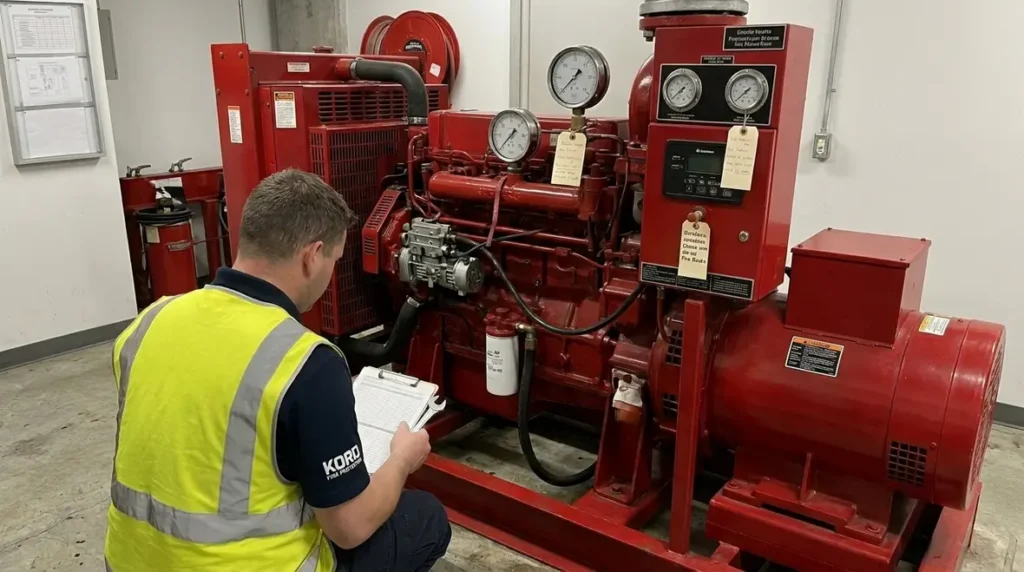
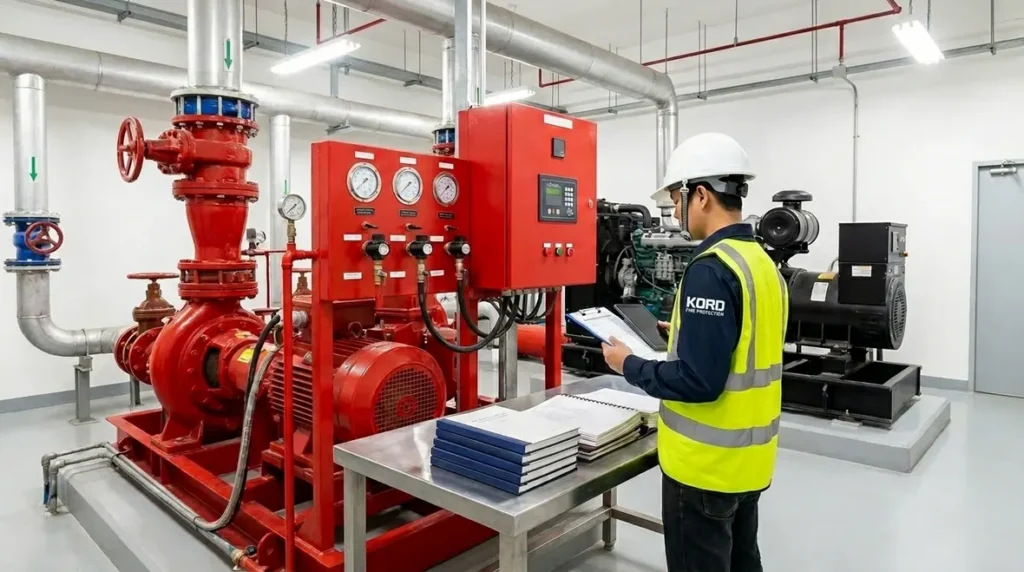
A solid AS 1851 aligned process usually covers the pump set, the controllers, and the full arrangement that supports start and delivery. While the exact scope can vary with the pump type and system design, the core work tends to follow a repeatable pattern.
Common checklist areas include:
- Visual inspection of the pump set, valves, pipework, and supports for leaks, corrosion, and physical damage
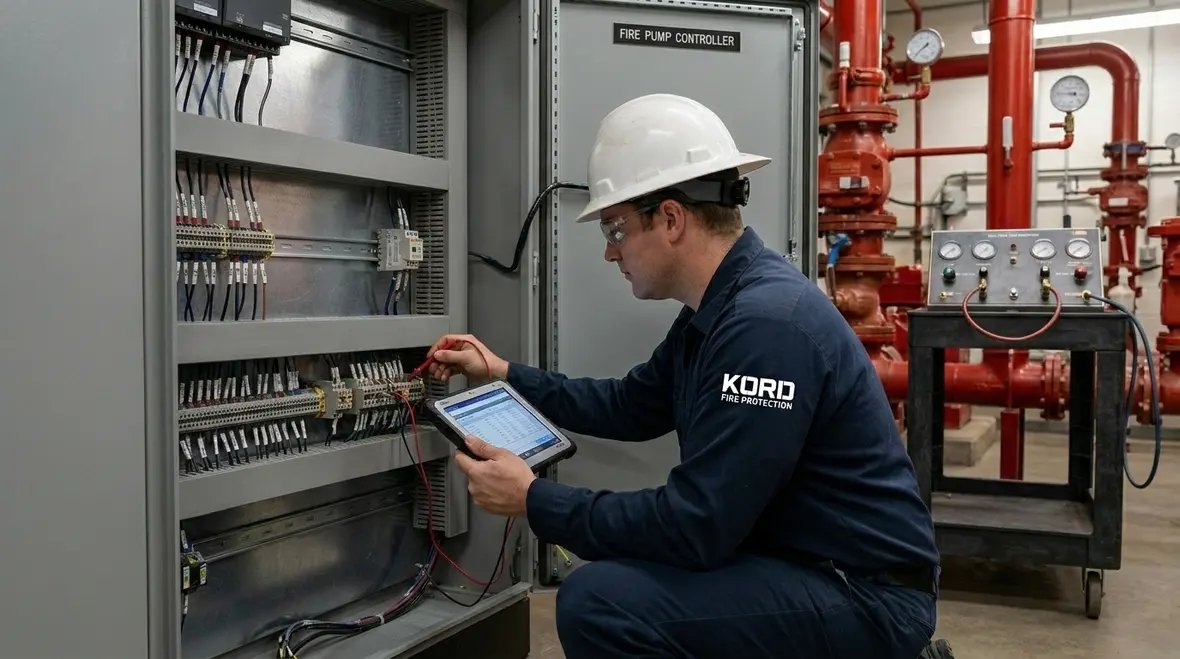
- Electrical checks of controllers, starting equipment, cabling integrity, and alarm conditions
- Operational testing to confirm start and run behaviour, including parameters used to verify performance
- Flow and pressure verification using appropriate test methods for the system configuration
- Condition checks for bearings, couplings, seals, and general mechanical health
- Functional checks of alarms, interlocks, and status indications to match the design intent
- Documentation of results, readings, adjustments, and any faults found
Importantly, the work should not just “tick boxes.” It must produce proof: readings that show performance and notes that explain what was done, what changed, and what still requires attention. Otherwise, the checklist becomes theatre. And nobody wants fire protection theatre, unless it is for a magician who accepts refunds.
What technicians should be looking for during the visit
A useful checklist does not stop at component names. It also guides attention. Technicians should be checking whether readings are stable, whether alarms behave as expected, whether there are signs of mechanical fatigue, and whether the system conditions match what the site actually relies on. That practical discipline is what turns maintenance from routine attendance into dependable risk control.
How testing methods protect industrial, retail, and facility teams
Facilities across Australia run different risk profiles. Industrial sites may have dusty environments, vibration, and variable water demand. Retail sites may rely on tighter service access schedules and must keep operations moving. Meanwhile, facilities managers still need consistent outcomes.
Therefore, a good service plan focuses on repeatability and clear controls. For example, the testing approach should account for how the pump system behaves under simulated demand, and it should check whether control sequences respond correctly. If the controller behaves differently than expected, the pump might not perform during an actual alarm condition, even if the motor still runs.
Also, test work must consider the entire system, including suction conditions and the way valves sit in normal and alarm states. In practice, small issues like a sticky valve or an incorrect setting can quietly turn a reliable pump into an unpredictable one. By contrast, a methodical check brings those problems into the light before they become a headline.
Kord Fire Protection supports this process by aligning field work to the required expectations and by producing service records that facility teams can actually use. In other words, the documents do not just exist. They help people manage risk.
Consistency across very different sites
One of the big advantages of a checklist-led service model is that it gives industrial operators, retail managers, and multi-site facility teams a common language. That means fewer assumptions, clearer review points, and an easier way to compare results between sites. Even when the locations are different, the process remains steady, and that steadiness is worth a lot when compliance deadlines appear on the horizon.
Common failure points during pump service, and how to catch them early
If a pump system fails, it rarely announces itself with a cheerful warning. More often, the issue builds quietly: a control fault that appears once in a while, a mechanical wear item that creeps forward, or a performance drop that looks harmless until the system needs flow.
Typical failure or degradation points include:
- Controller and wiring issues such as loose terminations, faulty readings, or incorrect alarm wiring behaviour
- Valves and line obstructions that affect suction conditions or prevent intended flow paths
- Mechanical wear like coupling wear, seal degradation, or bearing issues that can affect reliability
- Performance drift where pressure and flow do not match expected outcomes
- Documentation gaps where past results do not clearly show what was done and what needs follow up
To catch these early, the service work should combine inspection, functional checks, and performance verification. Moreover, the follow up process must be clear: if something falls outside acceptable limits, the facility team needs a practical recommendation and a timeline.
At Kord Fire Protection, the partnership approach matters. They help facilities plan service around operational realities, while also keeping compliance and evidence strong. That means fewer “surprise defects” later and fewer last-minute stand-downs when the system is needed.
Why early detection saves more than paperwork
Catching faults early is not just about producing neat reports. It protects budgets, avoids operational interruptions, and reduces the chance that a minor issue becomes a major repair at exactly the worst time. A loose termination is much cheaper to sort out than a system that fails when demand appears. Nobody likes discovering that the “small issue” was apparently training for a dramatic comeback.
Service scheduling, evidence, and compliance for multi site operations
Many businesses operate across multiple locations in Australia, and that creates a management challenge. They need consistency, clear reporting, and a service rhythm that does not disrupt production. Consequently, the best outcomes come from planning that matches service intervals and ensures documentation stays complete.
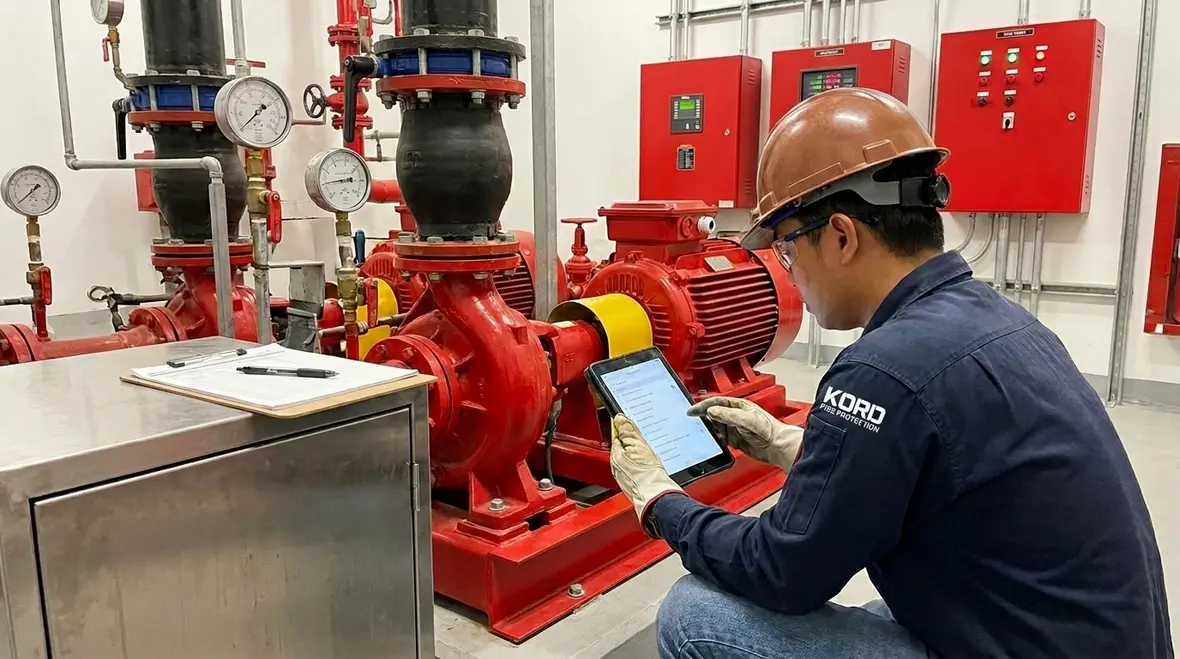
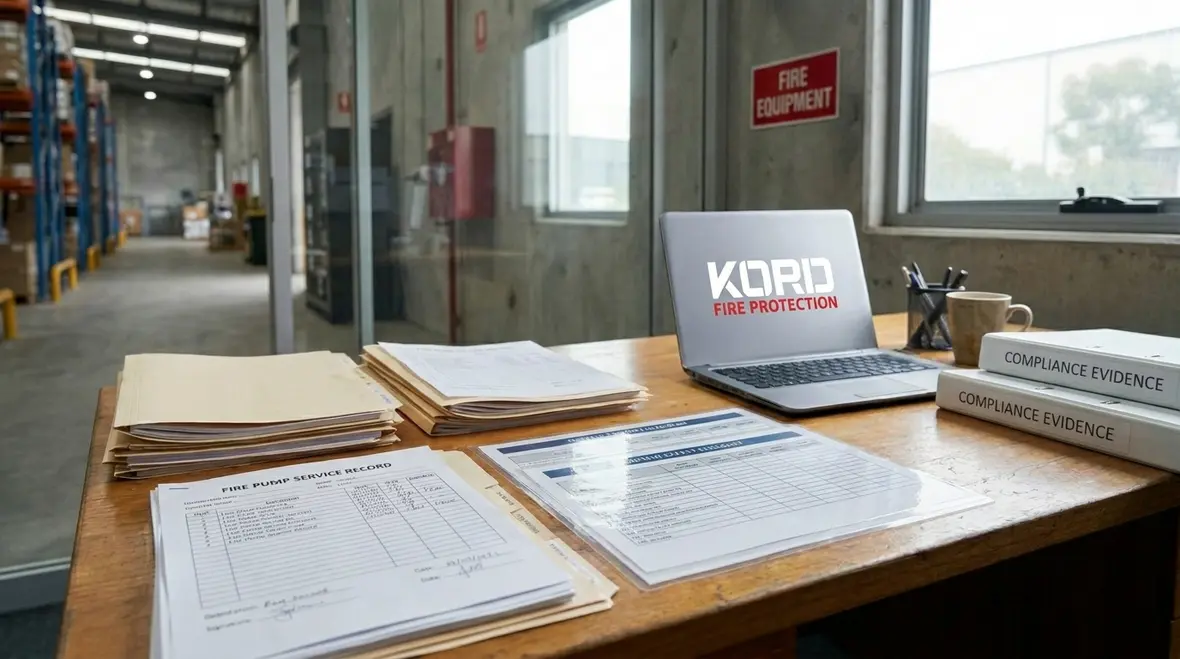
During service, teams should expect a structured workflow. First, technicians review previous records to understand what has been found before. Next, they perform the inspection and testing steps with attention to readings and conditions. Then, they record results in a way that facility managers can trace, audit, and action.
When evidence is clear, compliance becomes easier to manage. And when it is easier, teams spend less time chasing information and more time improving risk controls.
Kord Fire Protection supports this by providing service reporting that helps facility teams close the loop on recommendations. If a site needs attention, the record should help decide what happens next, not just prove that someone was there.
Reporting that people can actually use
The strongest service records do not bury the useful information. They show what was tested, what was observed, what requires follow up, and how urgent that follow up is. For multi-site operators, this matters even more because one vague report can create ten phone calls, three assumptions, and one very annoyed facilities manager.
Frequently asked questions about fire pump service and AS 1851
Ready to keep pumps dependable and audits simple?
Fire pump service should feel calm, organised, and provable, not like a scramble with a clipboard. Kord Fire Protection helps industrial, retail, and facility teams deliver reliable fire pump outcomes using a structured, evidence driven approach that supports compliance and action. If your next service is due, get in touch to plan the work, confirm scopes, and receive clear reporting that stands up under scrutiny. Your systems deserve that kind of certainty.