AS 2118 Fire Pump Requirements for High Risk Facilities
Quick Answer: AS 2118 sets the rules for fire pumps used in high risk facilities, including design, installation, testing, and ongoing maintenance. For sites that cannot afford downtime, these requirements help ensure reliable water delivery when seconds matter. Kord Fire Protection can help plan, install, commission, and maintain compliant systems with confidence.
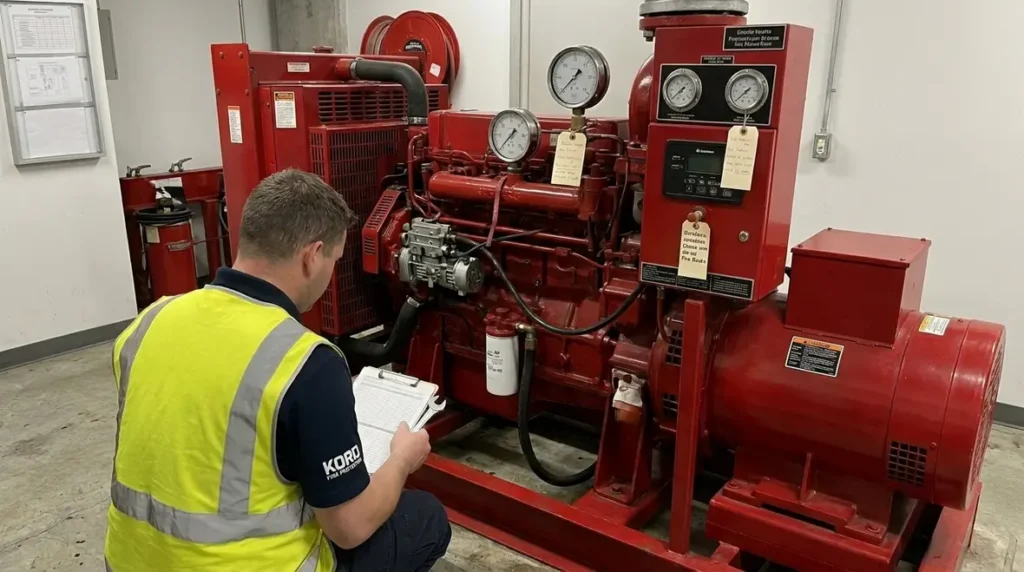
When an emergency hits, fire pumps do not “try their best.” They perform. That is why AS 2118 fire pump requirements sit at the center of fire protection planning for high risk facilities across Australia. Early in the process, a facility team must align the pump system with the site hazard, the water supply, and the fire service demand. Then, later, they must prove it still works through commissioning and routine testing. Because if the system fails, the building does not get a do-over, and neither does the insurer. Kord Fire Protection understands that reality and helps businesses build and maintain pump systems that meet AS 2118 expectations, without dragging the project into endless uncertainty.
To keep this practical, the article walks through what high risk sites should expect, how the system is typically arranged, and how a partner like Kord Fire Protection adds value beyond “install and walk away.” After all, fire protection should not feel like a mystery box.
Facilities reviewing broader compliance programs may also benefit from Kord Fire Protection’s related services for fire system planning, upgrades, and ongoing support across commercial and industrial sites.
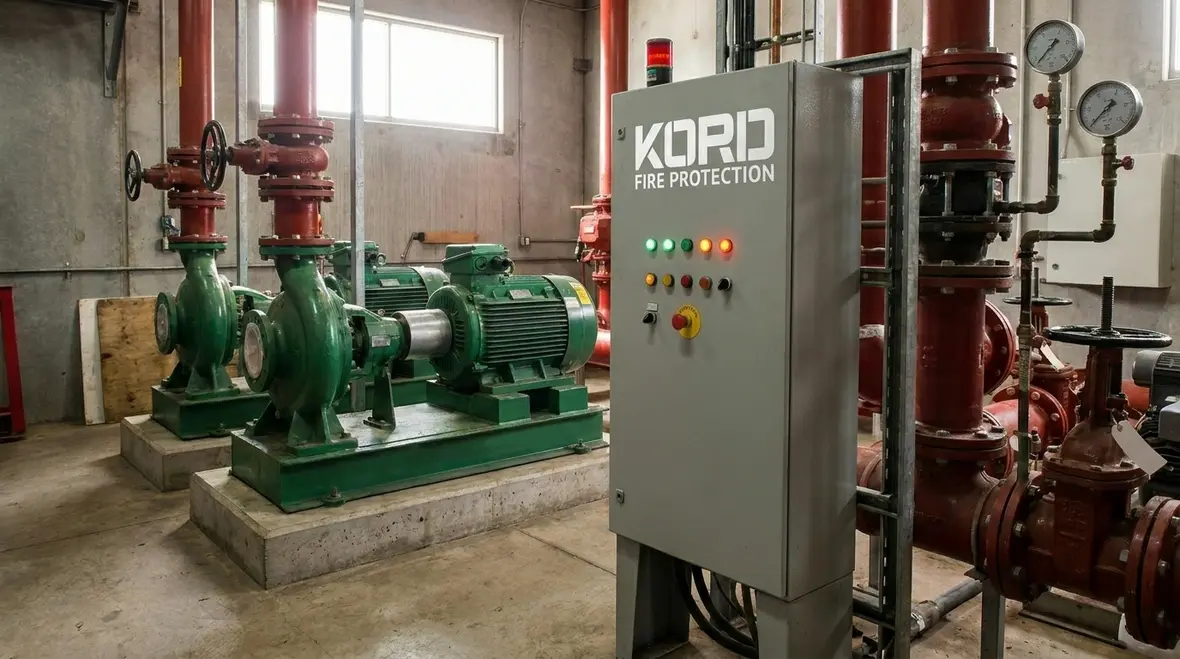
AS 2118 fire pump intent in high risk facilities
High risk facilities usually include environments where heat, fuel, or process materials can escalate a fire fast. Therefore, the fire pump must deliver the right pressure and flow at the right time, consistently. In addition, the pump system needs controls and protection that handle starting, suction conditions, and operational changes.
More specifically, AS 2118 requirements drive three outcomes. First, they ensure the pump can meet the hydraulic demand of the fire protection design. Second, they support reliable start and transfer under real conditions. Third, they require ongoing maintenance and testing so performance does not drift with time. Consequently, a facility team can reduce risk while also improving inspection readiness.
And yes, there is a bit of comedy in this world. People often think a fire pump is like a fridge, “set and forget.” In reality, it behaves more like a race car. If nobody checks it, it will not magically stay ready on race day.
Why the standard matters when downtime is not an option
For high risk sites, the pump is not there to look impressive in a plant room. It exists to overcome pressure loss, support sprinkler and hydrant demand, and keep water moving under emergency conditions that are far less polite than a routine inspection. If the building has significant fire load, complex processes, or vulnerable operations, the pump becomes part of the facility’s business continuity strategy as much as its compliance framework.
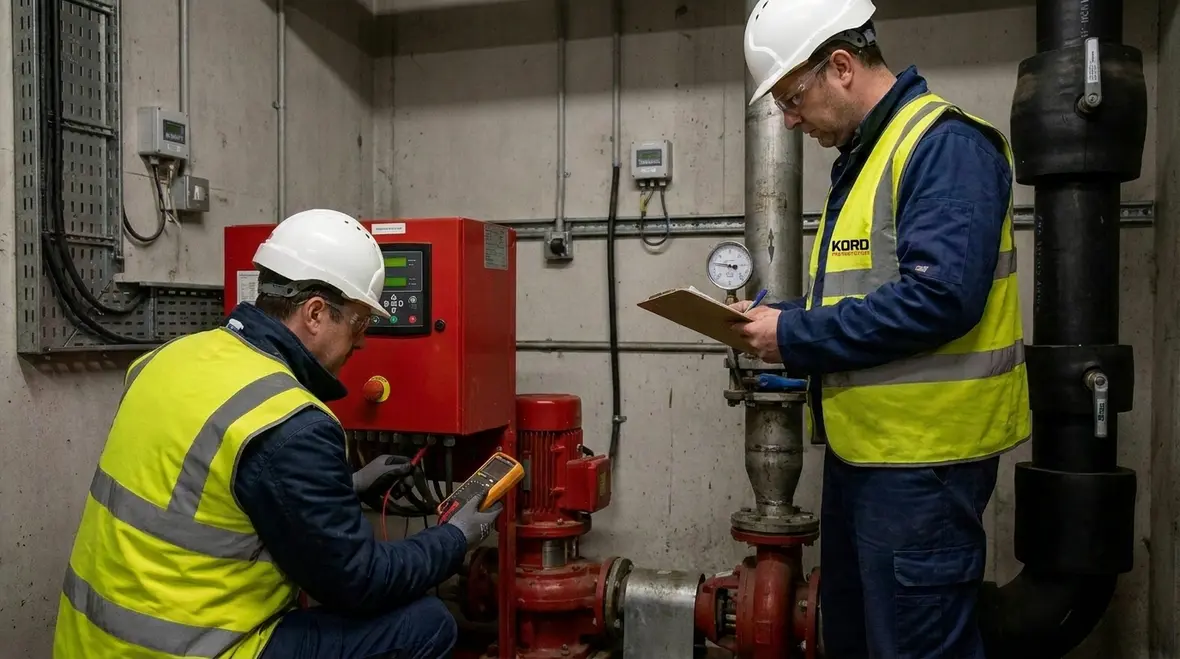
How the pump system design matches the hazard
Design drives everything. A compliant fire pump installation depends on the fire demand calculation and the water supply characteristics. For industrial, retail, and commercial sites, the system must match real flow needs for hoses, sprinklers, hydrants, or other connected water based systems.
To do this properly, design teams typically address the following:
- Water supply source, including town mains performance and any storage options
- Static and residual pressures at peak fire demand
- Suction conditions, because cavitation is not a gentle problem
- Pump curves, so the pump works in the correct operating range
- Pipe sizing and friction losses, since “close enough” becomes “too late”
- Control logic for starting, stopping, and changeover
Then the project team selects pump type and configuration that suit the site. Some facilities use duty and standby arrangements, while others may use multiple pumps to keep redundancy where it matters most. In high risk settings, the goal stays the same. The system must deliver required water flow and pressure without delays or unsafe operating conditions.
The water supply conversation nobody should rush
This is usually where practical reality barges into the meeting room. A pump can only work properly if the available water supply supports the intended fire demand. That means the team needs to understand not just nominal supply data, but actual site conditions, demand duration, reserve strategy, and how the system behaves under stress. If that sounds a bit less glamorous than shiny equipment brochures, that is because it is. It is also the part that prevents expensive surprises later.
A strong design process also considers the full network, not merely the pump itself. Pipe routing, control sequencing, test provisions, pressure sensing, and alarm logic all influence whether the final installation behaves as intended. In other words, the pump is the star, but it still needs a competent supporting cast.
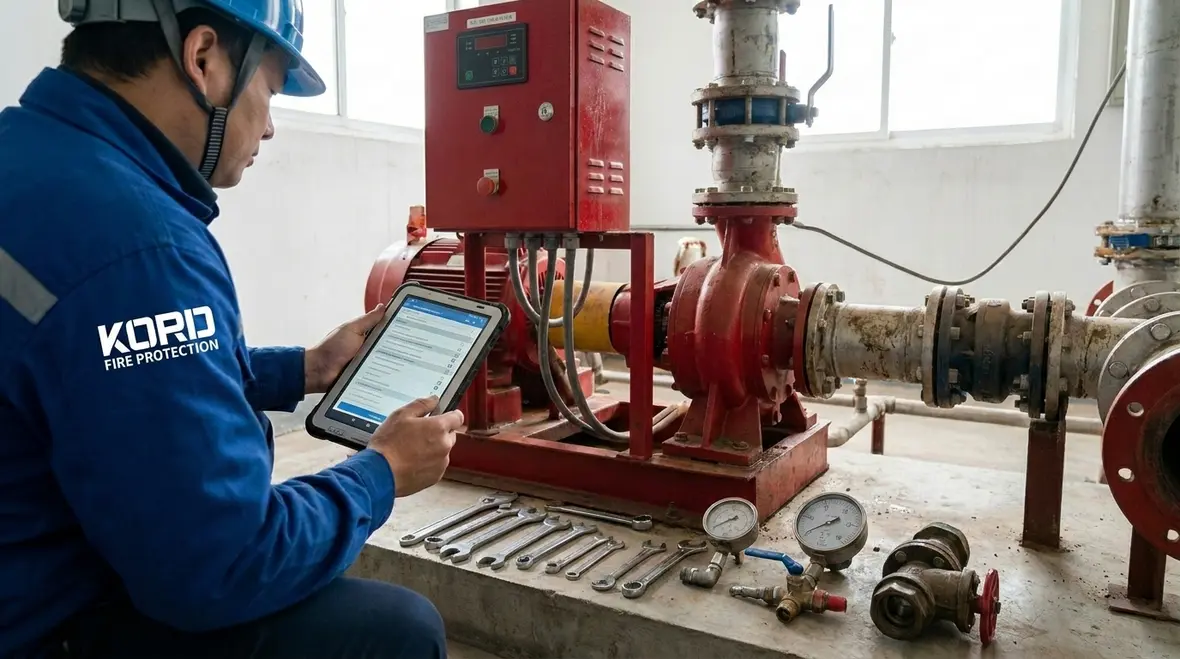
Installation details that affect real world reliability
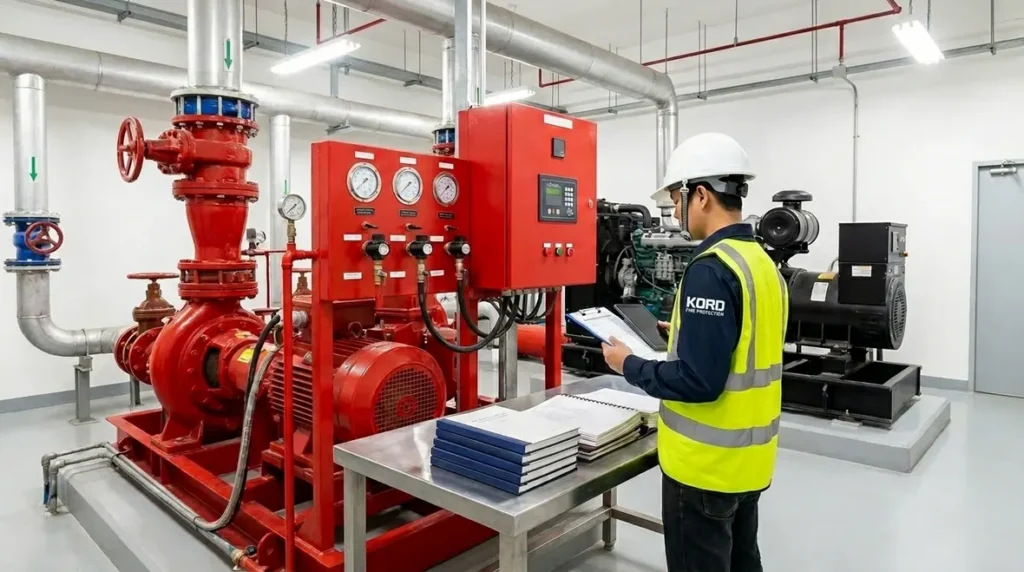
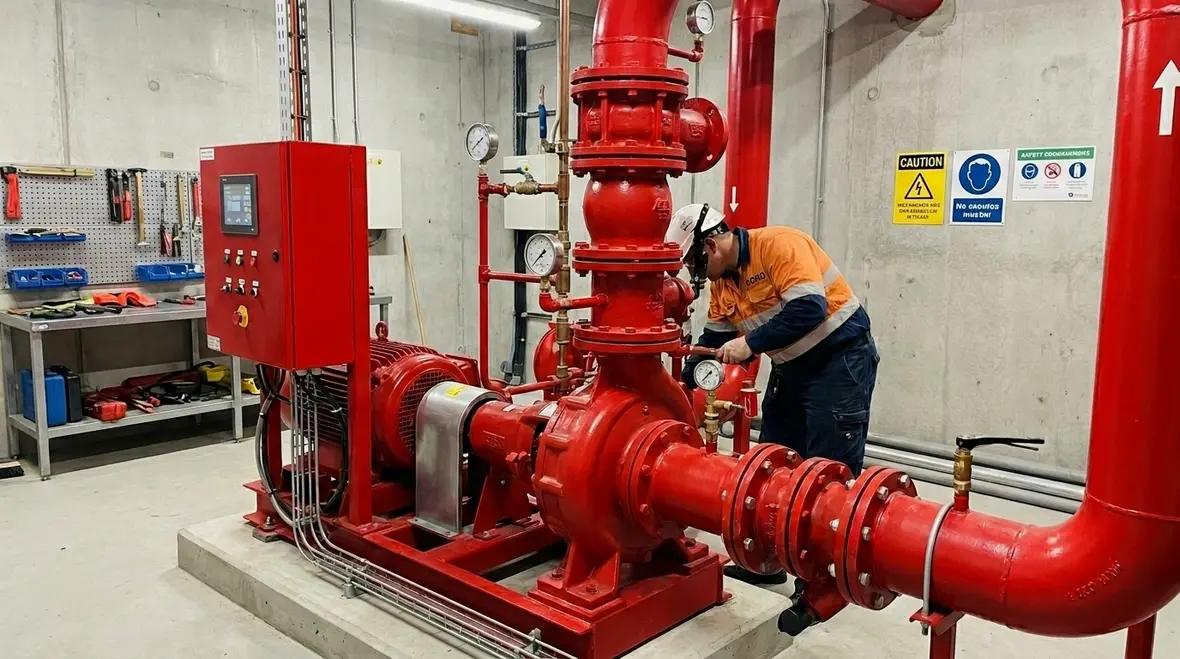
Even with good design, installation quality determines whether a fire pump system can stand up to stress. During installation and commissioning, teams must pay attention to alignment, pipe workmanship, valve selection, and system calibration.
Key reliability factors include:
- Correct mounting and alignment of pump assemblies to avoid vibration related failures
- Proper suction pipe layout to maintain stable inlet pressure and avoid air entrainment
- Valve positioning and commissioning settings, so flow paths match the design intent
- Electrical supply quality, including protection for controllers and starters
- Controller settings and alarm interlocks that match the site logic
- Isolation strategies that support safe maintenance without breaking readiness
Furthermore, high risk facilities often require clear documentation and traceability. Asset registers, test results, and commissioning reports should stay accessible for future audits. As operations change, the facility may need adjustments, and this paperwork becomes the map, not the guesswork.
Kord Fire Protection supports these steps by treating installation and commissioning as part of a single quality chain. That means the team prepares for the test, performs the test, records the outcomes, and fixes gaps quickly. If a pump system behaves like a complex instrument, Kord handles it like one.
Commissioning is where confidence gets earned
A system is not proven because everyone nods around a drawing set. It is proven when it starts correctly, reaches the required conditions, communicates alarms properly, and demonstrates that the installation matches the design basis. That is why commissioning matters so much for high risk facilities. It turns theory into evidence, and evidence is much more useful when the client, insurer, or auditor starts asking pointed questions.

Commissioning, testing, and ongoing maintenance
After installation, the system must prove it meets performance expectations. Commissioning verifies settings, checks operation under controlled conditions, and confirms that alarms and controls work as designed. Then, regular testing helps ensure the system keeps meeting requirements as wear and changes occur.
Routine maintenance commonly includes inspecting pump operation, checking control systems, verifying set points, and testing performance at planned intervals. Importantly, maintenance should cover both the pumps and the supporting components such as controllers, valves, jockey pumps where applicable, and pressure sensing equipment.
Also, in busy industrial environments, downtime has a cost. So teams often plan testing and maintenance to minimise disruption, while still meeting compliance obligations. Kord Fire Protection can schedule work with site constraints in mind, which reduces the chance that safety tasks get delayed until someone “finds time.” Spoiler alert: that time rarely comes when it should.
For facilities managing multiple trades and tight operational windows, Kord’s approach focuses on clear communication, coordinated access, and documented outcomes. Therefore, the client gains confidence that the pump system remains ready and auditable.
Maintenance keeps small issues from becoming expensive ones
This is the unglamorous but essential part. Regular service helps catch wear, control drift, minor leaks, starting issues, and instrumentation problems before they line up into one thoroughly inconvenient emergency. In facilities with production pressures, retail turnover, or changing tenancy demands, planned maintenance is often the only thing standing between order and last minute chaos.
Why a partner matters for compliance and speed
Fire pump compliance is not just about meeting technical points. It also relies on coordination across stakeholders, including facility managers, electricians, hydraulic contractors, consultants, and sometimes upgrade programs driven by risk reviews.
A vital partner helps by:
- Translating the requirements into a buildable plan that fits the site
- Coordinating design intent with install reality, so nothing gets lost in translation
- Managing commissioning steps and documenting evidence in a usable format
- Planning ongoing service so future inspections do not feel like panic mode
- Providing practical advice that matches Australian facility operations
In other words, Kord Fire Protection becomes the steady hand. While teams may juggle production schedules and retail turnovers, Kord helps keep the fire pump system on track. And when the regulator, insurer, or auditor asks for proof, the right records should already exist. That is the difference between “we think it’s compliant” and “it is compliant.”
That support matters even more when a site is changing. Expansion projects, tenancy changes, plant upgrades, altered storage arrangements, and revised risk reviews can all affect how a fire pump system should be assessed. A partner that stays involved over time can identify when the old basis no longer fits the new reality. That can save a facility from the classic problem of assuming yesterday’s solution will somehow keep up with today’s hazard.
FAQ: Fire pump requirements and AS 2118
Conclusion and call to action
High risk facilities need fire pump systems that perform every time, not systems that look good on paper. Kord Fire Protection works with industrial, retail, and commercial clients across Australia to plan, commission, service, and document fire pump readiness, including the compliance outcomes aligned with AS 2118 expectations. If the system is aging, expanding, or due for review, Kord can help you act early. Contact Kord Fire Protection today to book an assessment and get a clear, practical path forward.