AS 2941 Fire Pump Acceptance Testing in Australia
Quick Answer: AS 2941 fire pump acceptance testing verifies that fire pumps perform exactly as designed, under realistic conditions. It covers pump setup, flow and pressure checks, controls and alarms, and verification of driver performance. Kord Fire Protection supports facilities across Australia by planning, witnessing, and documenting tests so systems pass smoothly.
For facilities looking to keep the entire fire protection package aligned, it also helps to review Kord Fire Protection’s fire protection services early in the project, because acceptance testing works best when the broader compliance and maintenance picture is already organized.
Why AS 2941 matters on day one
When a facility installs a fire pump system, compliance and confidence should arrive together. AS 2941 fire pump acceptance testing sets the benchmark for verifying that pumps deliver the required flow and pressure, and that control systems respond correctly when the stakes get real. In the first 100 to 150 words, it is worth saying plainly: compliance is not paperwork theater. It is how a site proves that its protection system will actually work, not just look good on a diagram.
Now, every project manager has a favorite delay culprit. It is usually “the test date just moved.” AS 2941 helps prevent that kind of surprise by establishing clear expectations early. That is where Kord Fire Protection steps in as a vital partner, because acceptance testing succeeds when the right checks happen in the right order, with proper records, calibration, and witness-ready reporting.
What Kord Fire Protection does differently
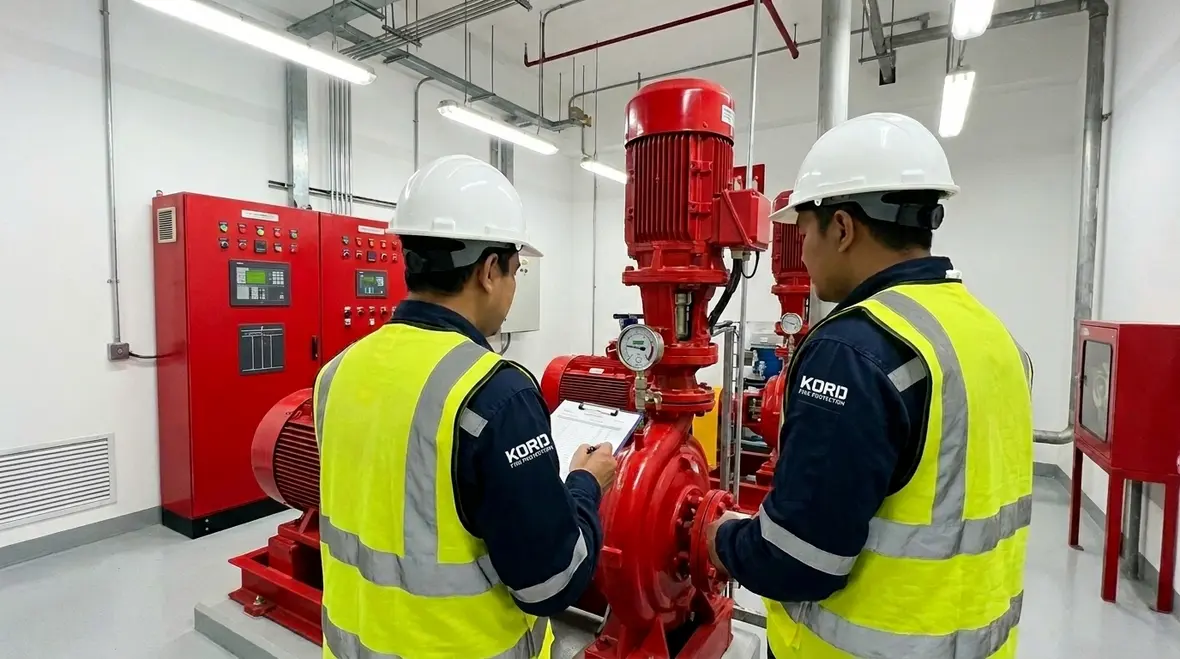
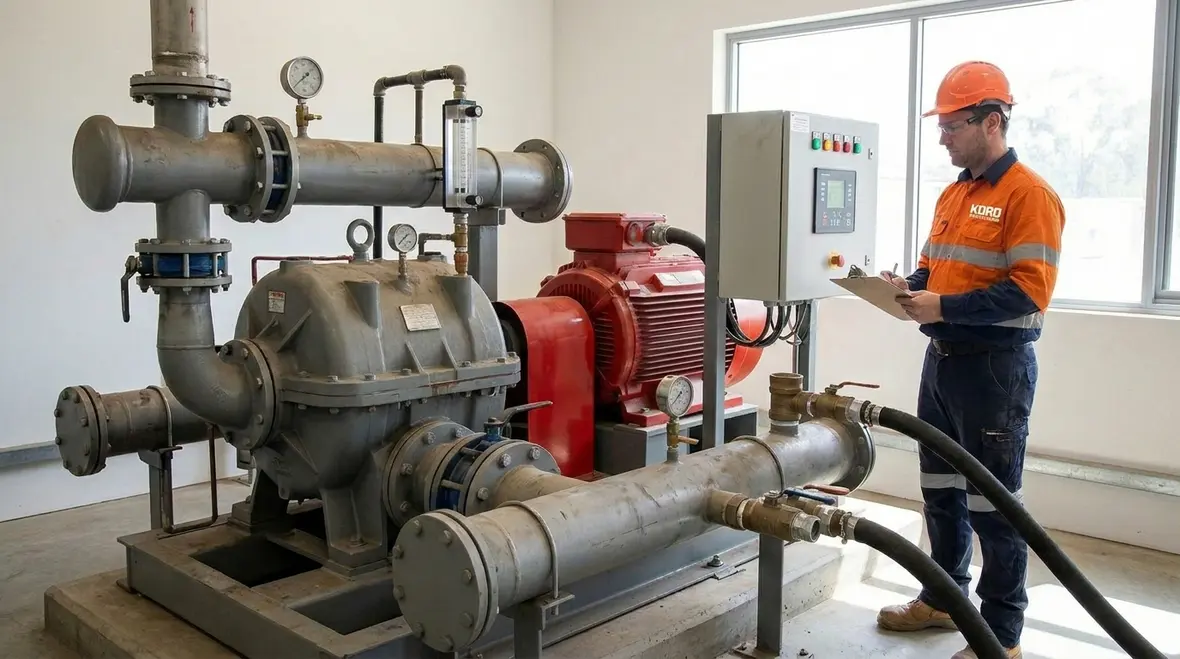
Many teams treat acceptance testing like a final hurdle. However, Kord Fire Protection approaches it like an organized handover. That means they show up prepared, review the documentation before testing starts, and align the pump, controllers, and electrical supply with the test plan. As a result, the facility gets fewer stop-start moments, cleaner outcomes, and evidence that can stand up during audits.
In practical terms, Kord Fire Protection helps industrial sites, retail precincts, and commercial facilities across Australia by managing the details that others often miss. For example, they confirm measurement readiness, verify setpoints and control logic, and ensure the testing sequence supports safe operation. Then they compile the final acceptance pack with clear results, so everyone knows what passed, what was adjusted, and what remains.
That difference matters because acceptance testing is rarely just about one pump and one control panel. It sits at the intersection of mechanical installation, electrical coordination, documentation control, and realistic site conditions. If any one of those pieces turns up unprepared, the whole day can go sideways fast. Kord Fire Protection reduces that risk by treating the test as the last structured proof of performance before handover, not as a dramatic reveal where everyone hopes for the best.
And yes, it is still important to laugh at the chaos sometimes. But nobody wants to “wing it” with life safety. Even the biggest action movie heroes would ask for the test reports first.
Key steps in fire pump acceptance testing
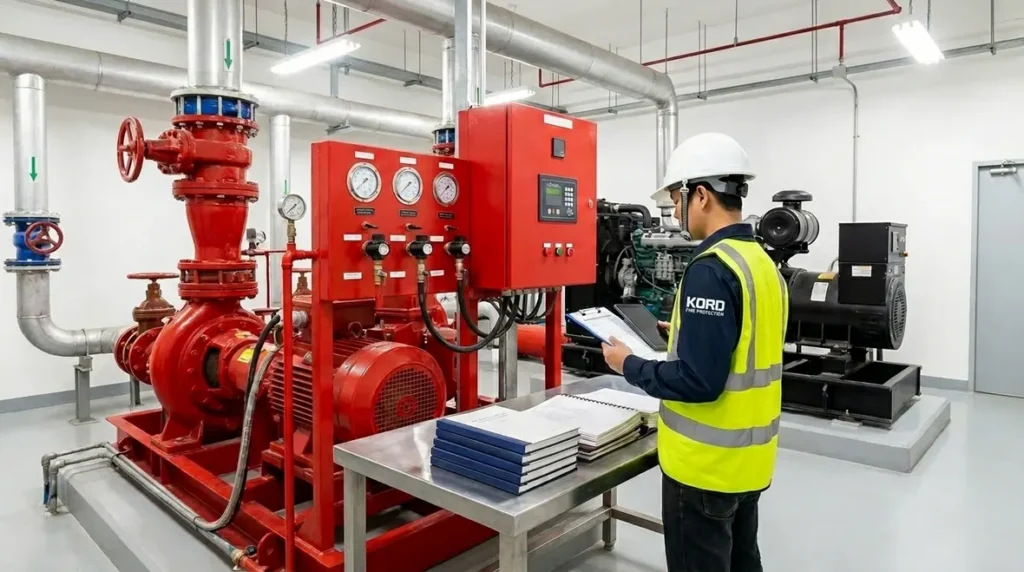
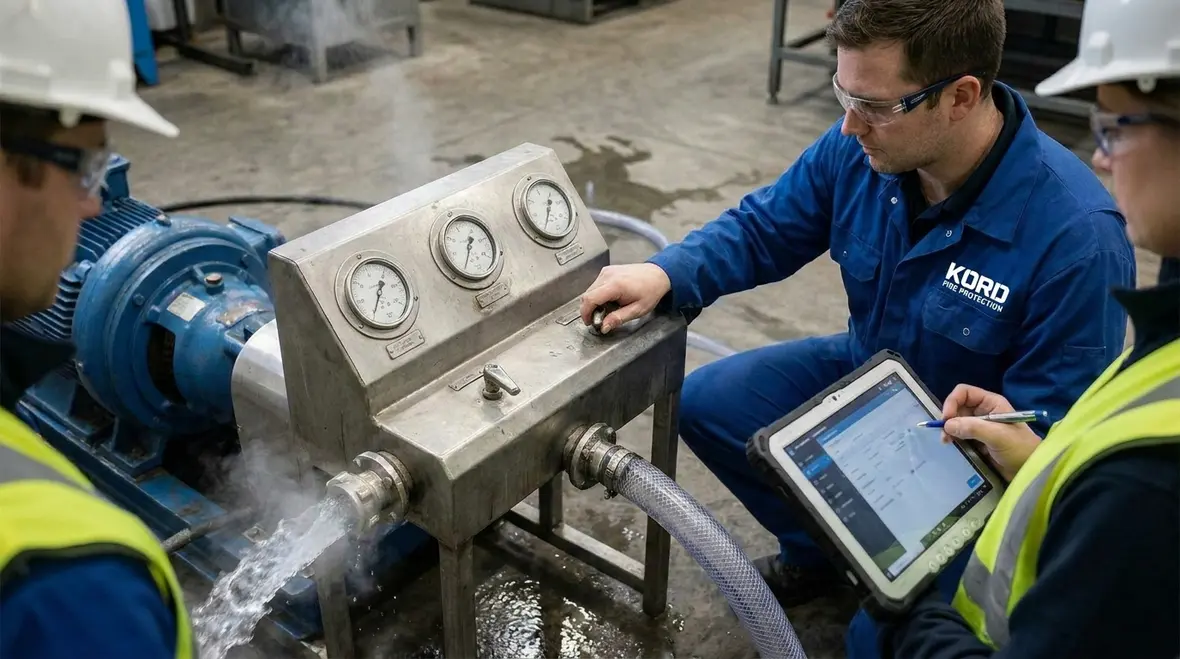
AS 2941 guides testing that proves performance, reliability, and control behavior. The intent is simple: the system must start, deliver required pressure and flow, and respond to demand as expected. To do that, a team typically follows a structured sequence. They confirm readiness, then run controlled tests, then record results carefully.
Here is how a robust acceptance process usually unfolds in commercial, retail, and industrial contexts:
- Pre start checks: The team verifies installation details, coupling alignment, suction conditions, and pipework readiness. They also check that gauges, flow meters, and test connections work correctly.
- Control and sequence verification: They validate automatic starting logic, stop logic, and system response to demand signals.
- Flow and pressure performance tests: They confirm the pump can achieve required duty points and that pressure remains stable under test conditions.
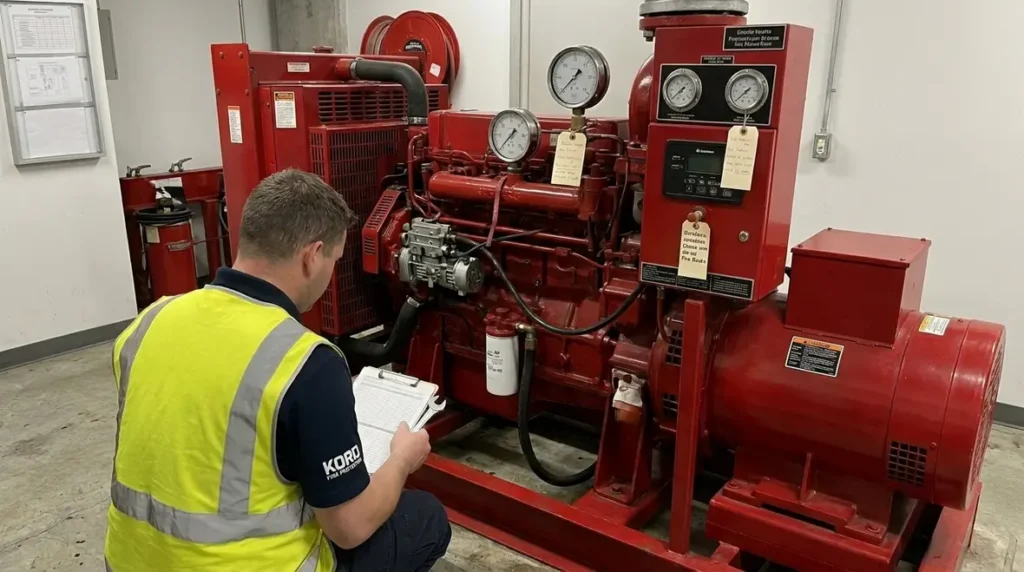
- Driver and power checks: For electric motors and diesel engines, the team verifies operating behavior and records key performance indicators.
- Alarm and interface checks: The facility proves that alarms, status signals, and monitoring outputs function as designed.
Because conditions can vary from site to site, Kord Fire Protection tailors the approach while still following the AS 2941 acceptance intent. Therefore, the outcome matches the pump design, not just a generic script.
Why sequence matters more than people think
A solid test day is not random. The order of checks matters because one skipped verification can distort everything that follows. If measurement devices are not trusted, flow results become questionable. If control logic is not verified first, a pump may perform mechanically while still failing operationally. If alarm interfaces are ignored until the end, the site can walk away with a system that runs but does not communicate. That is why disciplined sequencing saves time. It catches small issues before they turn into very expensive “how did nobody notice this” conversations.
How test data becomes audit ready evidence
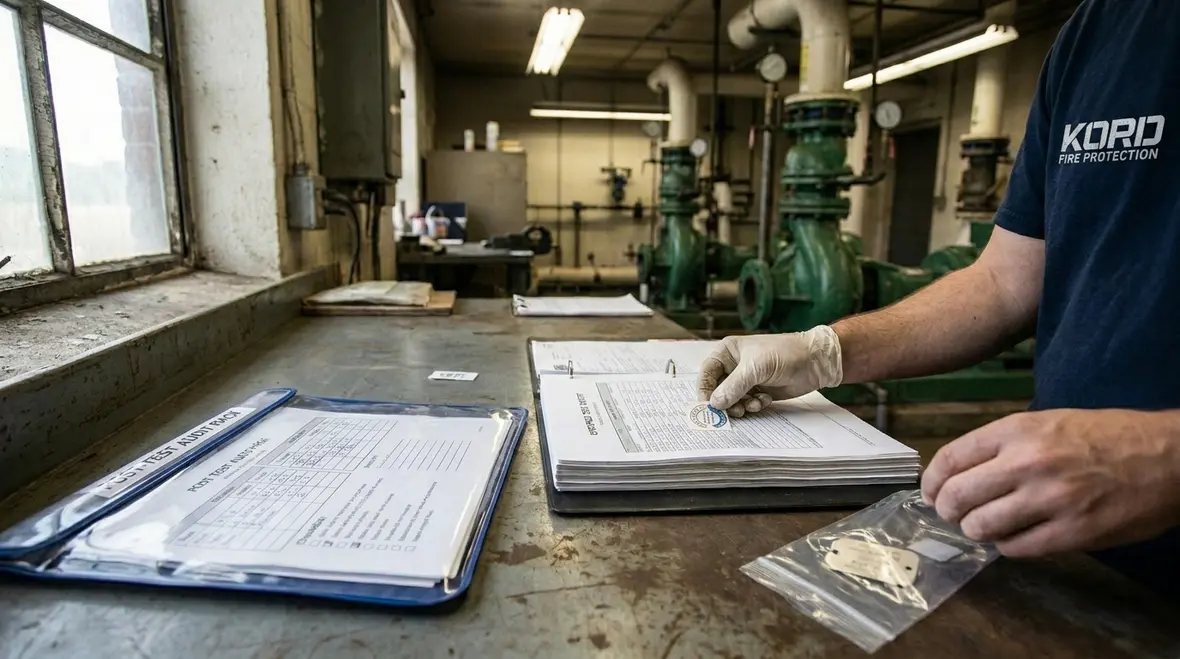
Testing is only half the job. The other half is evidence. Regulators, insurers, and facility managers often want more than “it worked.” They want traceable results that show measurements, setpoints, and verification steps. That is exactly why good documentation matters.
During acceptance testing, Kord Fire Protection captures results in a clear format that supports review and future maintenance. For instance, they record actual measured values for flow and pressure, operating parameters for the drivers, and control responses. They also document what the team changed, if anything required adjustment.
Then, they help the facility connect the dots between what the drawings promised and what the system achieved. Consequently, the acceptance pack becomes a decision tool, not a mystery folder. Facility teams can use it to plan maintenance, manage risks, and prepare for upcoming inspection cycles.
This is also where professional documentation earns its keep long after the commissioning team has left site. Months later, when someone asks why a setpoint was adjusted, what pressure was actually achieved, or whether the alarm sequence was witnessed, the answers should already exist in writing. Clean records shorten future investigations, reduce friction during audits, and help maintenance providers understand the original performance baseline instead of guessing from incomplete notes and fading memories.
And if anyone tries to treat the report like a “nice to have,” Kord Fire Protection handles the situation calmly. After all, compliance reports do not earn their keep by sitting quietly on a shelf.
Common issues during acceptance and how they get fixed
Even well designed fire pump systems can hit snag points during commissioning and acceptance. However, predictable issues often surface when teams rush setup or skip pre checks. AS 2941 focuses attention on what must be verified, and Kord Fire Protection uses that structure to prevent the most common problems from turning into expensive rework.
Here are typical snag points and the practical approach used to resolve them:
- Instrumentation and measurement drift: If gauges or meters do not read within expected ranges, results become unreliable. Kord Fire Protection ensures measurement setup supports accurate readings.
- Control sequence mismatch: Sometimes the hardware works, but the sequence logic does not match the intended operation. Therefore, control logic verification happens before performance testing.
- System demand assumptions: Pipework configuration and test conditions affect duty points. Because of this, testing focuses on realistic conditions that reflect the design intent.
- Driver starting behavior: Electric and diesel drivers have different behaviors under demand. The team records operating details so performance can be confirmed, not guessed.
When issues show up, Kord Fire Protection does not hide behind vague language. Instead, they document findings, coordinate corrective actions with site stakeholders, and then retest where necessary. This reduces uncertainty and protects the timeline.
Small problems that cause big delays
Most failed or delayed acceptance tests do not collapse because of one dramatic fault. More often, the trouble comes from a stack of smaller misses: incomplete drawings, inaccessible valves, unclear control narratives, unverified alarm paths, or instruments that were assumed to be close enough. Each issue may sound minor on its own. Together, they can chew through hours. That is why preparation is not admin fluff. It is the difference between a controlled verification process and a long day of troubleshooting under pressure while everyone checks the time.
Preparing facilities for acceptance testing day
Facilities often want to know what they can do ahead of time to keep the day calm. The best results happen when the site prepares for testing like it matters, because it does.
To keep the process smooth, teams should do the following:
- Confirm access and permits: Ensure safe access to pump rooms, control panels, and test points.
- Provide recent documentation: Pump datasheets, electrical schematics, control narratives, and updated drawings speed up review.
- Coordinate with operations: Align test scheduling with plant operations so shutdowns and interruptions stay minimal.
- Ensure monitoring and alarms are available: The site should confirm that alarm receivers and interfaces can be observed during testing.
In addition, Kord Fire Protection can act as the partner that brings order to the schedule. They bring the test plan focus, the documentation discipline, and the witness-ready reporting approach. Therefore, the facility does not scramble mid test, and the team does not spend hours chasing preventable details.
Sites also benefit when the right people are lined up before the first check begins. That may include operations staff, electrical support, controls personnel, and anyone responsible for permits, isolation approvals, or monitoring interfaces. Acceptance testing moves more smoothly when those people are available at the right moments rather than being called in after a problem appears. In other words, a calm test day is usually built the day before, not magically discovered at 9:00 a.m.
FAQ
Final word: make acceptance testing a confidence builder
Acceptance testing should not feel like an endurance event. With AS 2941 as the benchmark, a facility can prove performance, control behavior, and measurement accuracy with proper evidence. Kord Fire Protection helps industrial, retail, and commercial sites across Australia move from test day stress to audit ready clarity. If a fire pump system is being commissioned, upgraded, or needs verified acceptance outcomes, contact Kord Fire Protection and make the next step solid, calm, and compliant.