Fire Sprinkler Systems Brisbane by Kord Fire Protection
Quick Answer: Fire sprinkler systems in Brisbane protect lives and business assets by controlling a fire early, often before it spreads. For commercial buildings, this means safer evacuation, less damage, and smoother insurance outcomes. Kord Fire Protection can design, install, maintain, and upgrade systems so your property stays compliant and ready.
When a commercial property is in Brisbane, fire risk never clocks out. And while smoke alarms do their best impression of urgency, fire sprinkler systems Brisbane give buildings something much more serious: automatic protection. Our team at Kord Fire Protection helps commercial owners, facilities managers, and tenants across Australia plan, install, and maintain sprinkler systems that fit how the building is actually used. After all, a warehouse is not a library, and a retail fitout is not a server room. Different hazards need smart design, not guesswork.
Strong planning also works better when it connects to the rest of your fire strategy. If you are reviewing broader building protection needs, it is worth considering Australian fire sprinkler services as part of a more complete approach that supports compliance, maintenance, and future upgrades without turning every project into a last-minute scramble.
Commercial sprinkler protection and compliance in Brisbane
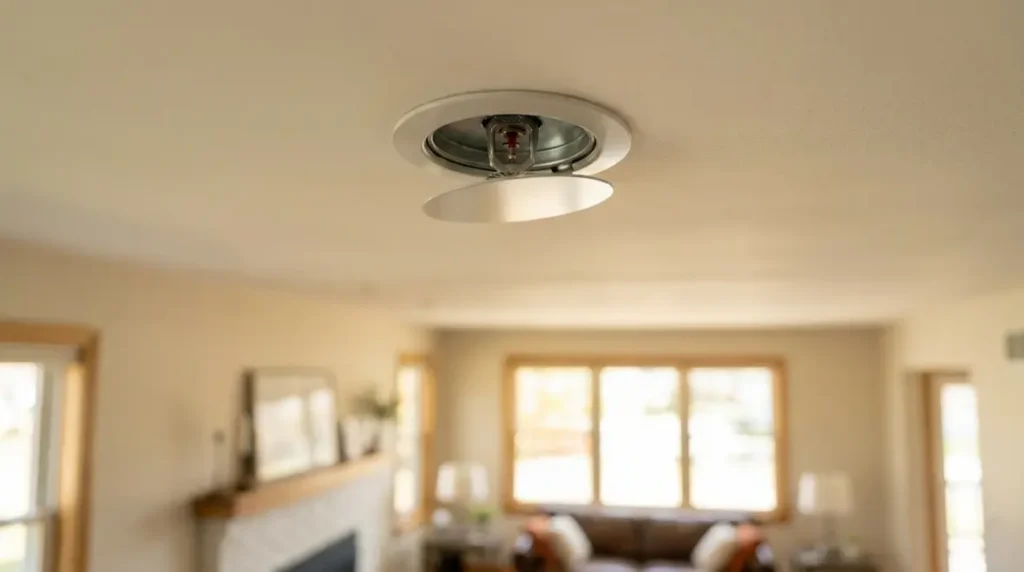
Commercial buildings face strict fire safety requirements, and sprinkler systems sit at the center of many fire strategies. First, they reduce fire growth by cooling and controlling flames. Then they buy time for occupants to evacuate and for firefighters to arrive with better visibility and less intensity to deal with.
In practice, compliance means the system must match the building type, occupancy, and fire engineering assumptions. For example, ceilings, obstructions, storage height, and occupancy density change how water needs to reach the fire. Therefore, a proper design accounts for water supply, pipe sizing, and sprinkler spacing. If someone tries to “make it work” with a generic layout, the building pays the price later, and the business pays it twice.
Kord Fire Protection operates as a vital partner because it treats compliance as a living system, not a one time checkbox. Moreover, our team coordinates inspections, testing, and documentation so commercial stakeholders can keep moving without chaos.
How sprinkler design adapts to retail, industrial, and facilities
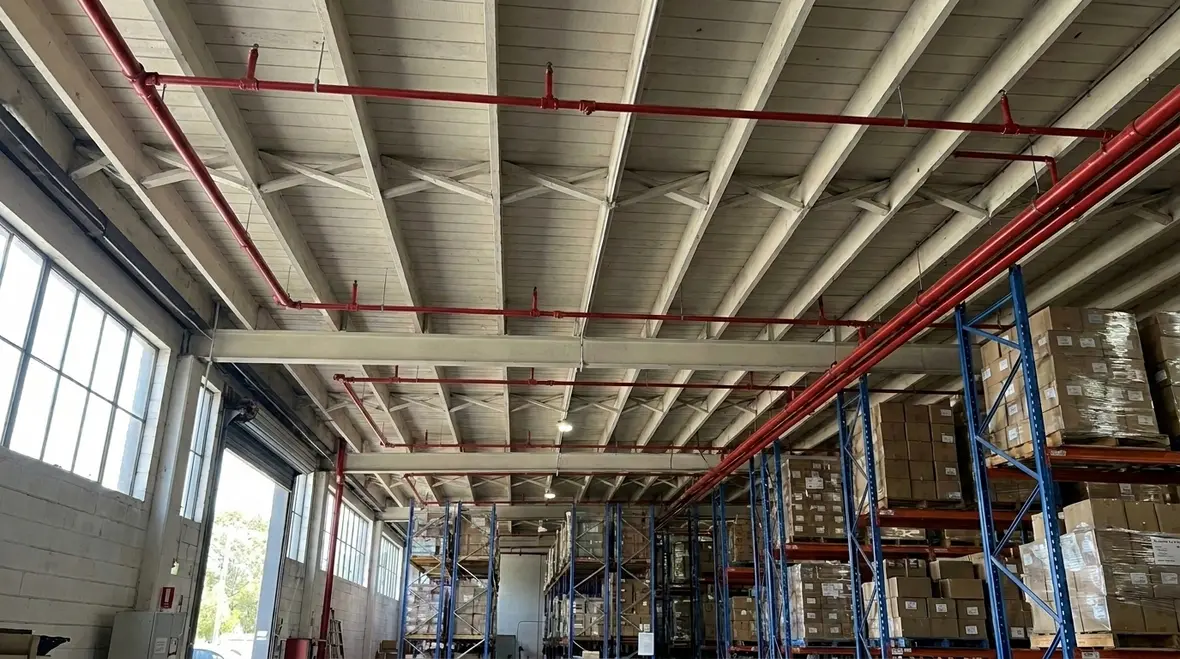
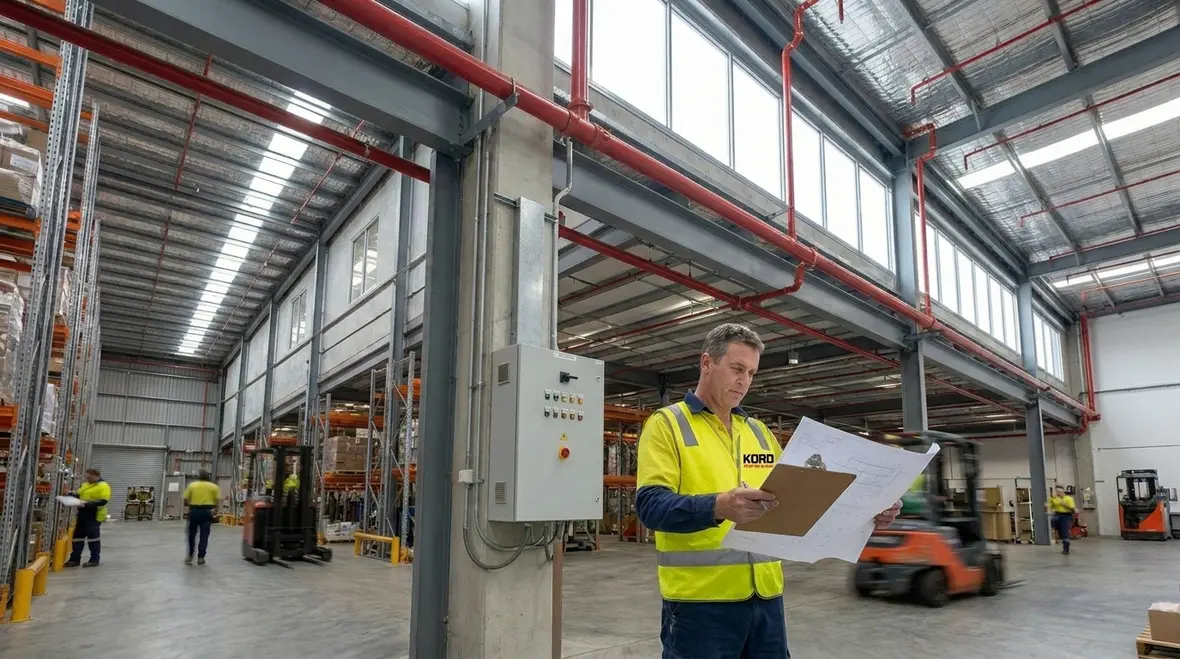
Different sites fail in different ways. Retail areas might include light finishes, fast flame spread in certain displays, and a lot of hidden voids behind partitions. Industrial sites might include storage arrangements, racking, process hazards, or changes in ceiling height over time. Facilities often include plant rooms, workshops, and corridors that can act like fire pathways if the system is not tuned properly.
So, a strong fire sprinkler systems Brisbane design starts with hazard identification. Next, technicians and engineers select sprinkler types and spacing that match the risk, including coverage rules for ceilings and concealed spaces. Then they plan water delivery to ensure that the system performs under real pressure and demand conditions, not ideal lab conditions.
Also, designers account for the building’s changes. Over the years, tenant fitouts shift, shelving moves, and partitions appear. As a result, the sprinkler system needs upgrades or zoning adjustments to keep coverage effective.
Kord Fire Protection supports these transitions because our work covers not just installation, but also adjustments tied to operational reality. We show owners what the system protects, where it may need upgrades, and how to plan maintenance around trading hours or production schedules. Business stays open. Fires stay contained. The rest of life keeps rolling.
What good hazard matching really looks like
Good sprinkler design is not about cramming more heads into a ceiling and hoping enthusiasm counts as engineering. It means identifying what could burn, how quickly it could spread, what might block discharge, and how operations may evolve after handover. A tidy retail tenancy, a busy warehouse aisle, and a mixed-use facility all behave differently under heat. The design has to respect that reality if the system is going to perform when it matters.
Water supply, zoning, and why it matters more than people think
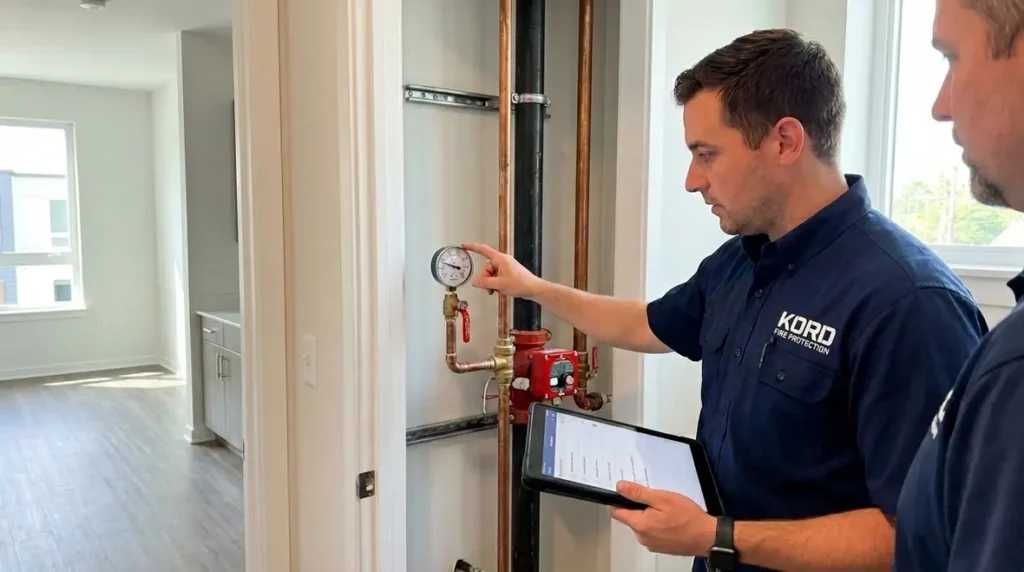
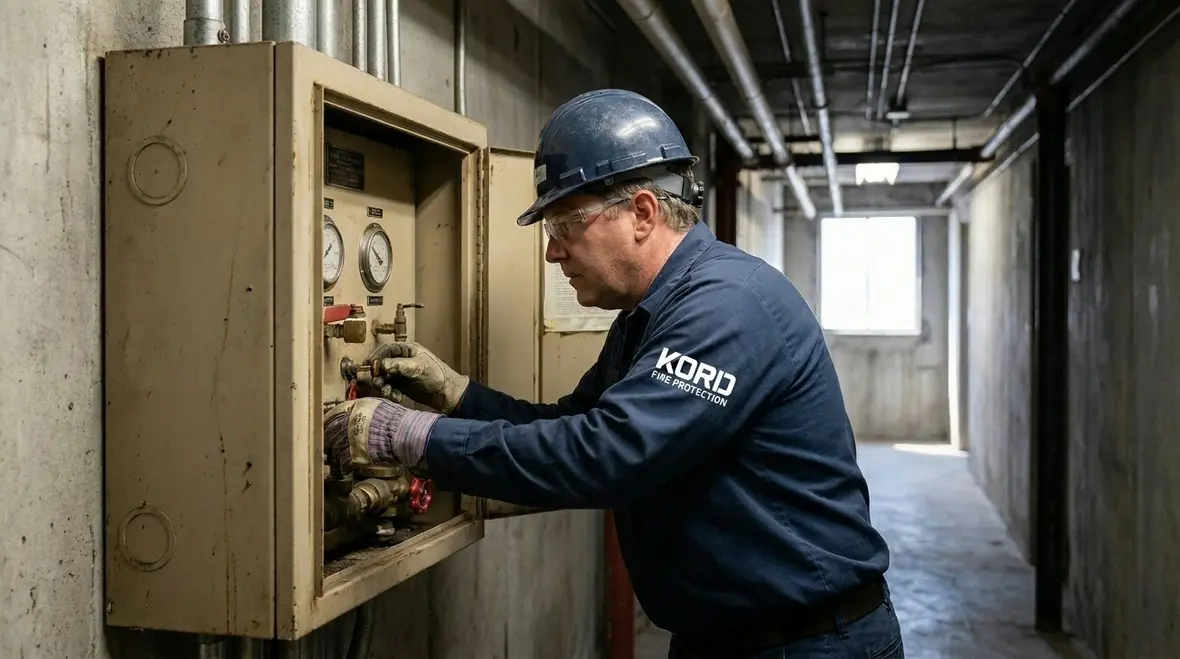
People often focus on sprinklers themselves, like they are the whole show. Yet the water supply is the backbone. Therefore, the system must deliver water reliably when heat activates sprinklers. That means checking mains pressure, pumps where needed, tanks, backflow prevention, and control valves.
Zoning plays a quiet but critical role. It limits how much of the system operates in an alarm or fire event, which helps keep water where it matters. Also, zoning improves monitoring for maintenance teams, because it reduces uncertainty about which section needs attention.
Then comes the reality of aged infrastructure. Over time, pipes can accumulate corrosion or scale, valves may seize slightly, and insulation can be altered. Consequently, the system can perform less effectively if owners only “notice” issues after a test shows trouble.
Kord Fire Protection brings a practical mindset to these details. We evaluate supply reliability and component condition as part of a broader service plan, so commercial customers do not discover problems during high risk periods. In business, surprises are for birthdays, not fire systems.
Why supply reliability changes the outcome
A beautifully planned sprinkler layout still depends on the simple question nobody should ignore: will enough water arrive, in the right place, at the right time? If the answer is shaky, the rest of the design is basically theatre with pipework. Reliable supply, sensible zoning, and accessible control points help maintenance teams respond faster and help building owners avoid nasty surprises during inspections, audits, and emergency events alike.
Installation that avoids downtime and protects your operation
Installation is not just a technical task. It is also a logistics challenge. Commercial and industrial sites run on schedules, and downtime has a cost that makes accountants sweat. So contractors must plan access routes, staging, temporary shut downs, and coordination with other trades.
Effective installation typically includes a phased approach. First, the design is confirmed with site measurements. Then teams manage pipe routing to fit ceilings, services corridors, and mechanical spaces. After that, they install sprinkler heads, pipework, and fire control assemblies, and they test system integrity before handover.
Meanwhile, the best teams manage risks to the building during works. Dust control matters, penetrations need careful sealing, and work must not compromise existing fire barriers. Furthermore, they document every part so future maintenance and upgrades stay clear.
Kord Fire Protection builds that kind of order into projects. Our crews work with site managers to plan around operations, and our handover process supports ongoing compliance. When customers partner early, they also avoid costly redesign later, which is the sort of “plot twist” no business wants.
Maintenance and testing schedules that reduce risk over time
Fire protection is not a “set and forget” service. It is more like a reliable staff member: it needs regular checks, training, and support to perform when it counts. Sprinkler systems must undergo inspections and testing to confirm that components remain functional, valves operate, alarms trigger correctly, and water supply performs as expected.
Maintenance should also reflect building use. If a facility expands, changes storage methods, or modifies ceiling layouts, the system may require an update. Therefore, the best maintenance plans include periodic reviews and visual inspections, plus testing aligned to regulatory requirements.
In addition, good documentation saves time. When someone upgrades a tenant space later, clear records help engineers understand existing zones and pipe routes. Without that, the project turns into a scavenger hunt with a clipboard.
Our company, Kord Fire Protection, acts as that organised partner. We help facilities across Australia plan maintenance calendars, coordinate access, and keep records tidy for audits. In plain terms: your system stays ready, and your team stays confident.
Project coordination checklist for facilities managers
When a sprinkler project starts, the goal is clarity and control. To help a facilities team stay on track, here is a practical checklist. It keeps communication tight and prevents rework. And yes, it beats finding out late that someone moved a ceiling without telling anyone.
| Planning step | What to confirm |
| Site hazard review | Occupancy risk, storage arrangements, ceiling heights, and obstructions |
| Water supply assessment | Mains pressure, pumps and tanks, valve condition, backflow requirements |
| System zoning | Coverage logic, monitoring approach, and change control for future fitouts |
| Installation logistics | Access, staging, shutdown windows, and coordination with other trades |
| Testing and handover | Operational checks, documentation, and training for on site staff |
FAQ about fire sprinkler systems in Brisbane
Partner with Kord Fire Protection for a safer, compliant future
Fire sprinkler systems Brisbane are more than hardware. They are engineered protection that must match your building today and still work when your business evolves. Kord Fire Protection partners with commercial and industrial customers across Australia to design, install, test, and maintain systems with clear documentation and real site understanding. If your property is planning upgrades, expanding, or simply wants stronger assurance, contact Kord Fire Protection and move with confidence.