Warehouse Fire Sprinklers Melbourne Service by Kord Fire Protection
Quick Answer: Warehouse fire sprinkler systems in Melbourne protect high-value stock, fast-growing businesses, and critical operations. When sprinklers are designed, installed, and maintained correctly, they help control fires early, reduce damage, and support compliance. Kord Fire Protection partners with facilities across Australia to deliver dependable sprinkler service from planning to testing.
Warehouse fire risks do not wait for paperwork. In Melbourne warehouses, where racking, packaging, pallets, and stacked goods can turn a small ignition into a fast-moving event, warehouse fire sprinklers Melbourne is not just a box to tick. It is a practical safeguard that supports people, protects continuity, and gives insurers and regulators more confidence. And yes, fire protection systems can be as crucial as a well-timed coffee run. When things go wrong, you want the right system, the right documentation, and a team that shows up prepared.
Facilities that are reviewing broader protection responsibilities may also want to understand how ongoing fire system support fits into day-to-day compliance, especially when warehouse operations are changing faster than the paperwork can keep up.
Warehouse fire conditions in Melbourne: why sprinklers must match real risk
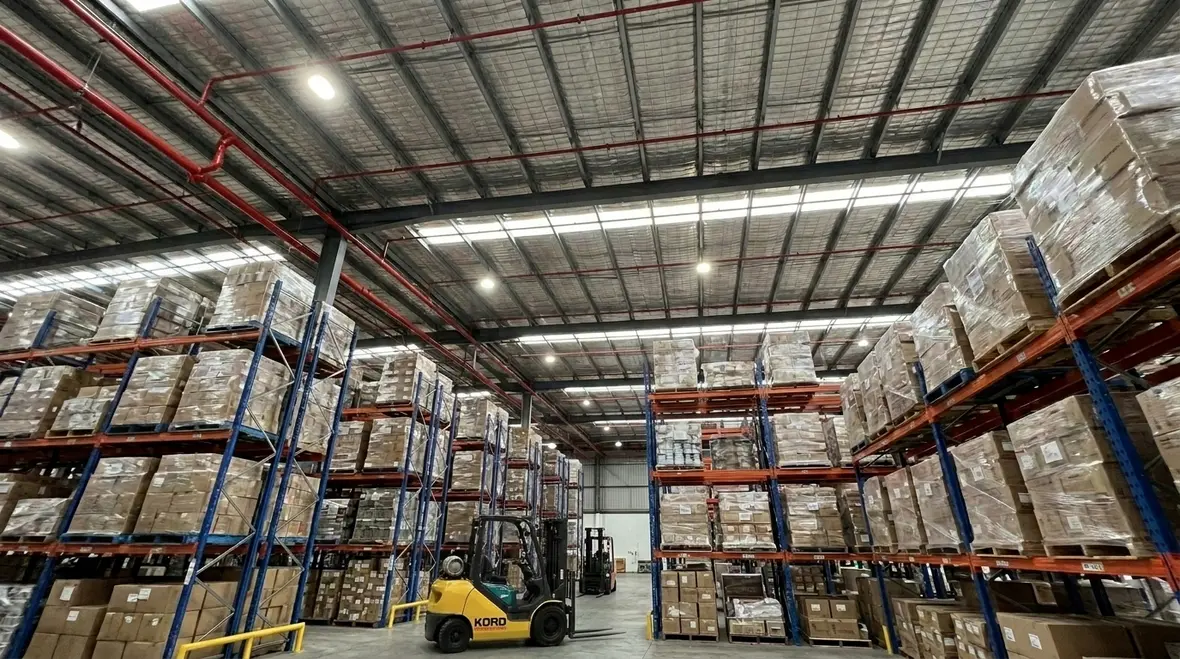
Warehouses create a specific challenge set. First, storage heights increase fuel exposure. Second, airflow from open doors, loading bays, and warehouse ventilation can push heat and smoke in ways that surprise teams. Third, commodity types matter: paper products, plastics, solvents, cardboard, and packaging all react differently to heat. Therefore, sprinkler design must match the actual hazard, including ceiling height, obstructions, and commodity configuration.
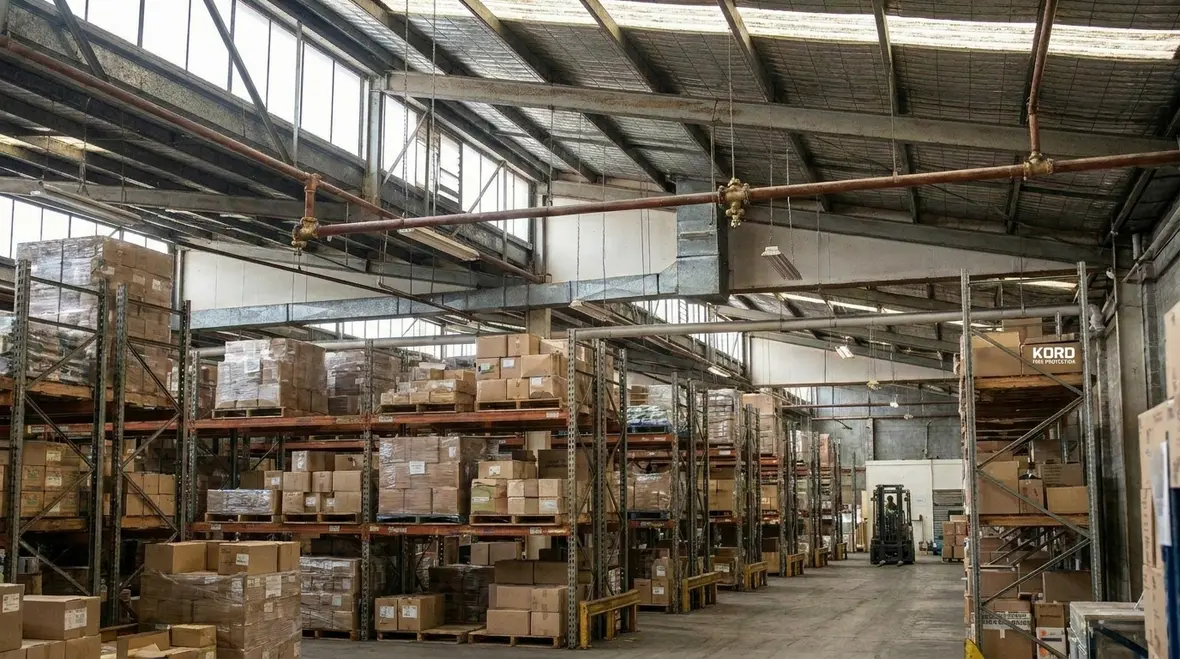
In Melbourne facilities, sprinklers also need to consider common layout realities. For example, sprinkler heads can sit behind beams, lights, ducting, or catwalk structures. If a system ignores these obstructions, it may not deliver the right water distribution at the right time. Furthermore, changes happen after installation. A business upgrades racking, expands stock zones, or reconfigures storage. Consequently, the sprinkler layout must stay aligned with the building’s current use.
So, the goal is not “sprinklers everywhere.” The goal is targeted coverage that responds quickly and predictably. When a system performs as intended, it limits fire spread, reduces heat exposure, and often helps keep smoke movement from getting out of control. That is how protection becomes operational, not theoretical.
How sprinkler design supports compliance and real-world performance
When Kord Fire Protection reviews a warehouse protection approach, it focuses on the details that regulators and insurers actually look for. Design choices include sprinkler type, spacing, operating temperature, water supply calculations, and the distribution pattern across the ceiling. Additionally, the system must integrate with alarms and emergency response processes, so the facility can take action immediately.
Design details that cannot be guessed
Good design also prevents “false confidence.” For instance, some systems struggle if the water supply is marginal or if the system relies on assumptions that do not match local pipe sizes, isolation valves, or hydraulic performance. Meanwhile, improper zoning can delay response and reduce effectiveness. Therefore, a design must be supported by proper commissioning and documentation that proves it is ready for service.
To make it clearer, design should answer one key operational question: if a fire starts in the storage zone, will sprinklers activate early and control the fire before it overwhelms the area? If the answer is uncertain, the facility feels it during incidents and audits. However, when the system is built and verified correctly, the risk picture becomes measurable and manageable.
That practical thinking is exactly why many sites also review their broader Australian fire sprinkler services strategy while planning warehouse work. The warehouse may be the urgent priority, but the documentation, testing expectations, and lifecycle performance goals usually connect to the rest of the property portfolio too.
Installation and upgrades: avoiding the “it was fine yesterday” trap
Warehouse teams often install things in stages. New racking goes up, then pallet types change, then extra bays appear. Eventually, the fire protection system may lag behind the operational changes. That lag is where problems breed, because a sprinkler system is only as good as its match to the space.
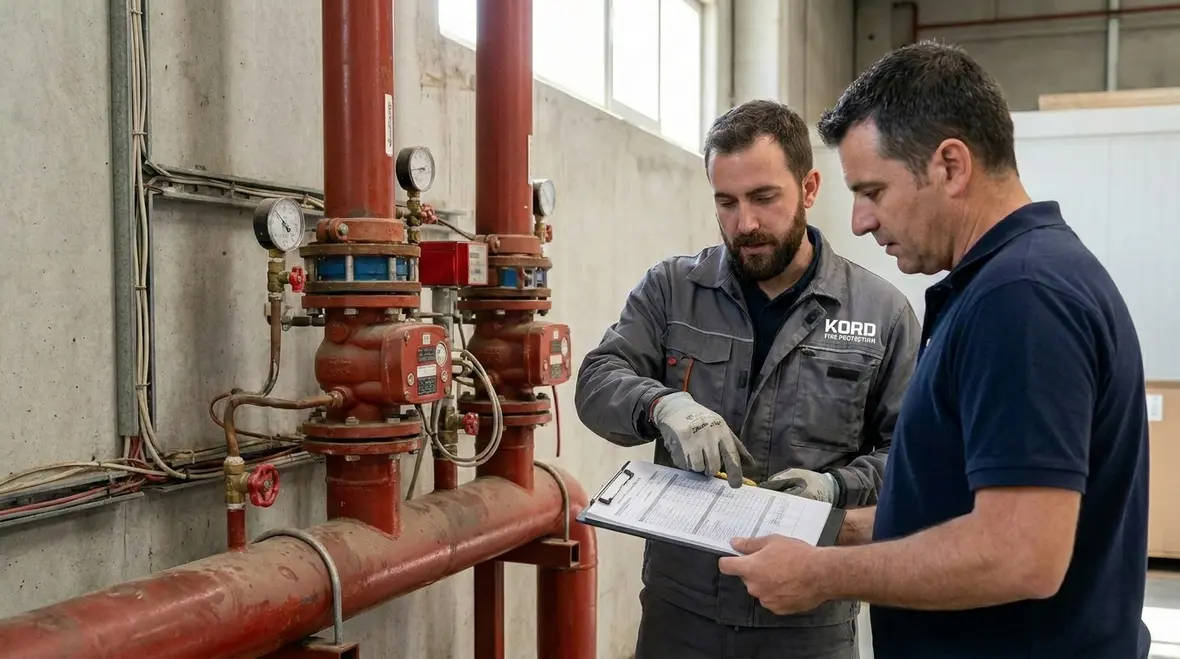
During installation or upgrades, Kord Fire Protection treats the warehouse like a living system, not a static drawing. Crews coordinate with stakeholders to reduce disruption to operations, and they follow a sequence that supports quality. Meanwhile, they manage constraints like ceiling obstruction mapping, pipe routing, and head alignment, because small mismatches can create big gaps in coverage.
Upgrades should follow the warehouse, not fight it
When upgrades occur, the work often includes pipe modifications, sprinkler head adjustments, valve and control updates, and testing. Also, if the warehouse adds mezzanines, high-bay storage, or new compartments, the sprinkler strategy may need to change. That is not drama. It is simply good engineering hygiene.
And yes, there is always at least one person who says, “We never had issues before.” Fire safety is not about history. It is about what happens when physics decides to do its own thing. Sprinklers help keep that physics in check.
Testing, maintenance, and ongoing inspections for warehouses
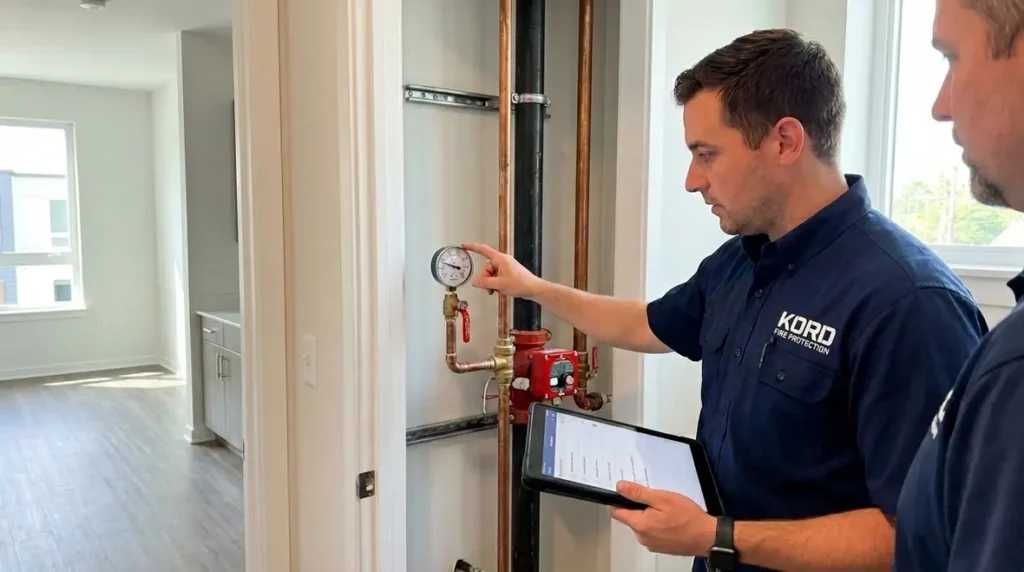
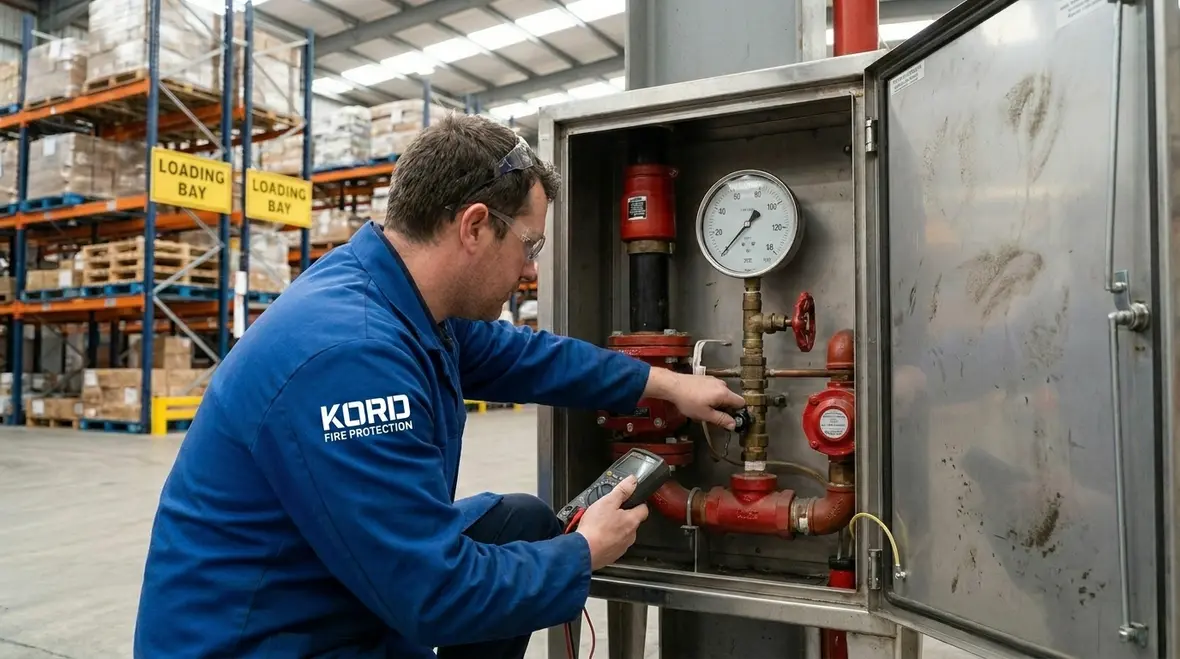
Even well-designed systems need care. Over time, pipe corrosion, valve issues, blocked water supplies, and accidental damage can reduce performance. Therefore, maintenance and testing create a continuous confirmation loop that the system still works as intended.
In practice, effective programs cover routine inspections, flow and pressure checks where applicable, alarm testing, and record keeping. Additionally, Kord Fire Protection supports facilities by building a maintenance rhythm that suits warehouse operations. That means scheduling work at times that reduce impact on picking, dispatch, and deliveries.
Inspection needs to look at hardware and the space around it
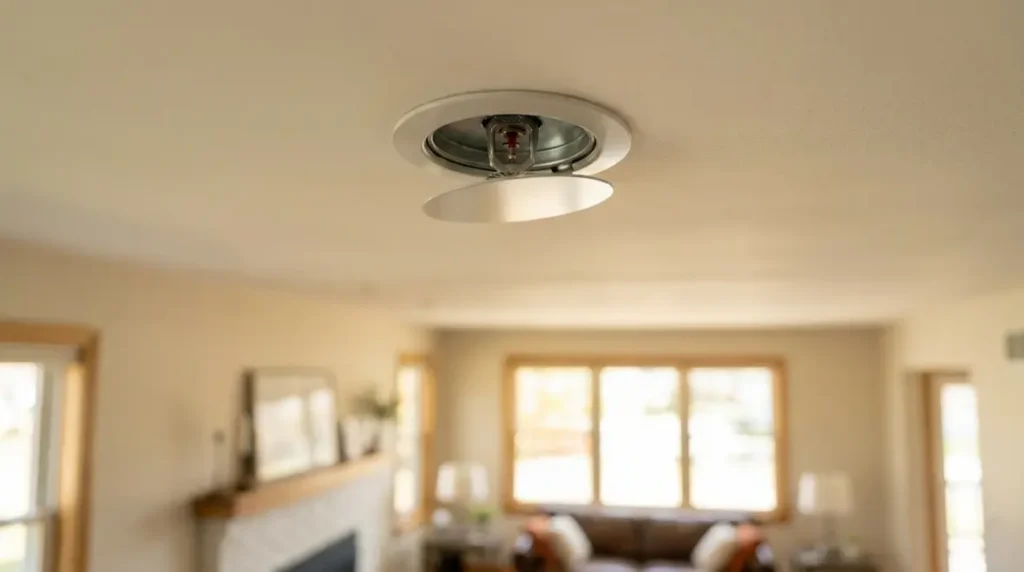
Maintenance also includes verifying that the sprinkler heads remain unobstructed and in good condition. If a forklift, storage rack adjustment, or refurbishment causes physical changes near sprinkler lines, the protection plan must reflect it. Consequently, inspections should not only check the hardware. They should check the environment around it.
When records are managed properly, the facility reduces risk during audits and improves confidence with insurers. More importantly, it supports faster response if a fault occurs. Fire protection that is maintained is fire protection that can be trusted.
Water supply, alarms, and detection: the full protection chain
Sprinklers work best as part of a chain. The water supply must sustain the required flow and pressure. The system needs reliable controls, isolation valves that function, and correct water monitoring. Furthermore, alarms should trigger as designed, and any interlocks with emergency procedures must operate cleanly.
Many warehouses also coordinate fire sprinklers with detection systems, because early alarm supports faster evacuation and response. In addition, the building’s fire strategy, including compartmentation and safe access routes, matters. If staff cannot respond quickly, even the best sprinkler system faces extra pressure as fire grows.
Kord Fire Protection helps businesses see the system as a network, not separate parts. Therefore, they can assist with performance-focused recommendations, documentation alignment, and handover support after commissioning. That is where a partner becomes more than a contractor. They become a steady hand that helps industrial, retail, and commercial facilities keep compliance on track across Australia.
Why Kord Fire Protection is a vital partner for warehouse sprinkler service in Melbourne
There are companies that install systems. There are companies that test systems. And then there are partners that understand the job does not end when the final pipe clamp clicks into place. Kord Fire Protection supports warehouse owners and facilities teams with practical expertise, clear reporting, and a service approach that respects operational reality.
They can help businesses plan upgrades before risks grow. They can align maintenance schedules with operational constraints. They can also support documentation and compliance processes that keep audits calm, not chaotic. And if someone tells them, “We need it tomorrow,” they do not respond with a shrug. They respond with a plan.
In short, warehouse fire sprinklers Melbourne performance depends on design accuracy, installation quality, and ongoing verification. Kord Fire Protection helps deliver that full package as a long-term service partner.
Common warehouse sprinkler service items
| Service need | Why it matters |
|---|---|
| Routine inspections and testing | Confirms sprinklers, alarms, and water supply still work as designed |
| Valve checks and monitoring | Prevents isolation and supply faults from going unnoticed |
| Hydraulic and coverage reviews | Keeps protection aligned with storage changes and layouts |
| Post upgrade commissioning | Verifies performance after modifications and ensures records are complete |
Conclusion
Warehouses run on uptime, and fire protection supports that reality. When a facility needs reliable warehouse fire sprinklers Melbourne service, the safest choice is a partner who treats design, installation, testing, and documentation as one continuous job. Kord Fire Protection can help industrial, retail, and commercial sites across Australia stay compliant, reduce damage risk, and keep operations moving. Contact Kord Fire Protection today for a tailored assessment and a clear service plan.