AS 1851 Fire Pump Testing Frequency in Australia
Quick Answer: AS 1851 sets how often fire pumps must be tested to stay reliable when it matters most. Frequency depends on pump type, system design, and risk level. Regular testing keeps water delivery on time, reduces failures, and supports compliance. Kord Fire Protection can manage the plan, documentation, and repeatability.
When facilities need fire pump reliability, they do not rely on luck. They rely on AS 1851, the standard that guides inspection and testing routines across commercial and industrial environments. Specifically, it explains how often fire pumps should be tested, what evidence to capture, and how to keep systems ready under pressure. And yes, this is the part where most people stop reading and start hoping the pump “feels fine.”
In reality, AS 1851 fire pump testing frequency is not a guessing game. It is a structured schedule that helps organisations protect people, assets, and operations across Australia. In the sections below, our third person lens stays focused on how the frequency works, why it matters, and how Kord Fire Protection helps sites meet the requirements without turning maintenance into a never ending soap opera. For facilities wanting a broader compliance partner, Kord Fire Protection also supports fire protection services across Australia that fit naturally alongside pump testing programs and ongoing maintenance planning.
What AS 1851 covers for fire pumps, and why timing matters
AS 1851 focuses on the ongoing inspection, testing, and maintenance of fire protection systems. Fire pumps sit in the middle of that safety chain because they supply the required water pressure and flow to sprinklers, hydrants, and related fire fighting uses. Therefore, timing matters because pump performance can drift over time even when the equipment looks clean and calm.
As components age, tolerances change. Controllers can develop faults. Valves can stick. Electrical connections can loosen. Furthermore, water quality, pipe scale, and system pressure demands can shift. Consequently, testing frequency is designed to catch these changes early, before they show up during a real incident. In short, regular tests keep the system honest.
Why this matters in day to day facility management
For facility managers, the problem is rarely that a pump looks obviously broken. The problem is that a system can appear perfectly respectable right up until the moment it needs to perform. That is why scheduled inspection and testing matter so much. They replace assumptions with measured results, and they create a service history that can be reviewed, audited, and improved over time.
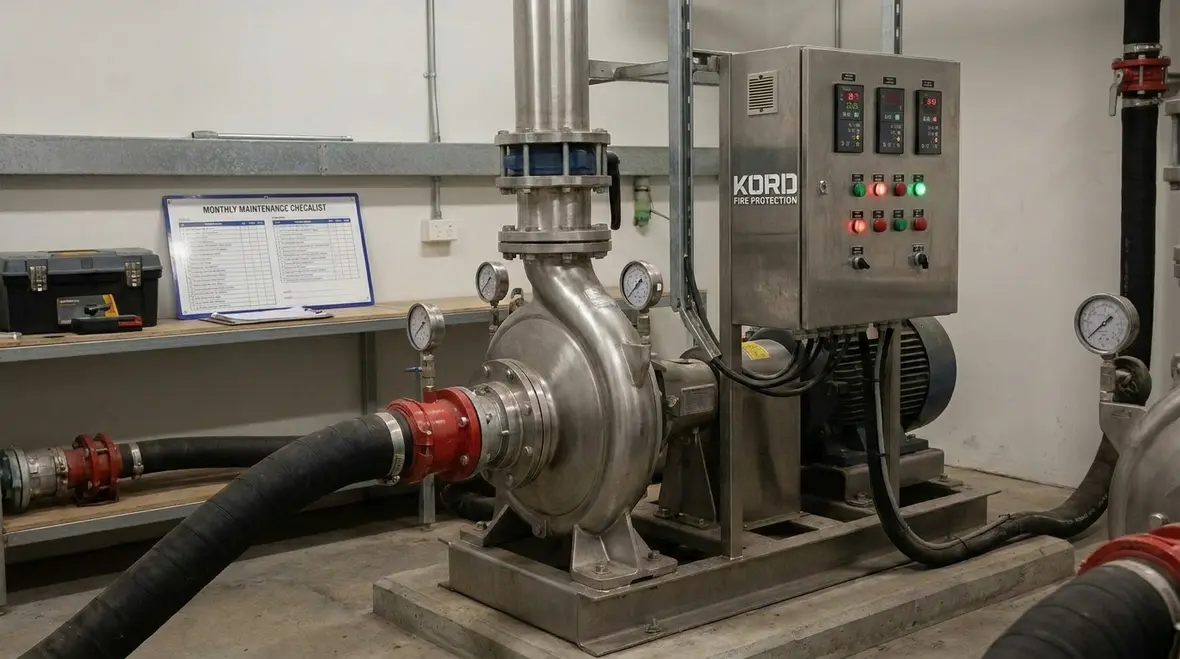
How the AS 1851 fire pump testing frequency is usually scheduled
In practice, sites follow a layered approach. They match test intervals to risk, design, and system complexity, then they document results so the history is repeatable. At a high level, the testing program often includes routine checks, periodic performance tests, and more detailed functional verification over time.
Although every system differs, the standard typically drives a cadence that balances operational impact with safety assurance. For example, a facility that relies on a pump for active suppression needs more consistent proof than a low risk setup with limited reliance. Also, pump redundancy, standby arrangement, and control system features influence what gets tested and how often. Therefore, the “frequency” becomes a tailored schedule, not a one size fits all timetable.
What the schedule is trying to prove
Put simply, the goal is to verify that:
- the pump starts correctly when demanded
- pressure and flow meet the design intent
- controls, alarms, and stop functions behave as expected
- the pump can sustain operation for the required duration
- readings are captured and trendable for future decisions
And yes, if someone says they “tested it” once years ago, that is not a plan. That is a memory, and memories are not compliance documents. Comedy aside, compliance paperwork should feel less like a ghost story.
A well structured program also helps teams avoid the common mistake of treating pump testing as a single event. It is better understood as a repeating framework. Each check builds on the previous one, making it easier to spot gradual drift, repeated defects, or awkward patterns that would never appear in an isolated once off inspection.
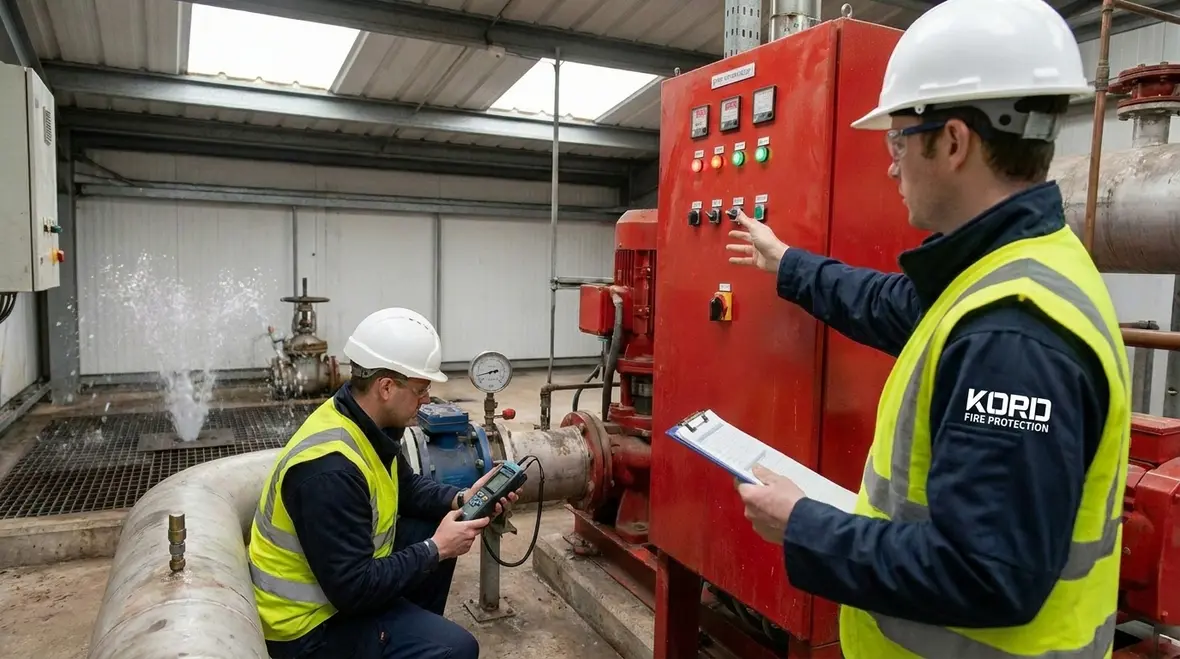
What changes the testing interval in real Australian facilities
Even when two facilities have similar pump equipment, differences in design and usage alter the testing requirements. Kord Fire Protection commonly sees these factors come up during system review and service planning. Furthermore, this is where a proper risk based approach becomes practical, not theoretical.
Key drivers include:
- System type and demand profile: sprinkler arrangements, hydrant uses, and any special fire scenarios
- Pump arrangement: duty and standby configuration, jockey pump interaction, and changeover behavior
- Control system complexity: panel features, alarms, and interlocks that must confirm correct logic
- Water supply conditions: static and dynamic pressure, tank arrangements, and any variable supply characteristics
- Site operating conditions: temperature swings, humidity, vibration exposure, and electrical environment
- Maintenance history: previous defects, repairs, component replacements, and failure trends
As a facility’s operations evolve, so should the test planning. For instance, a retail centre that later expands tenancy areas may change the hydraulic demand. Likewise, an industrial site that changes pipework or adds process loads can influence the pressures the pump must deliver. Therefore, the testing frequency and test method stay aligned to the current reality on site.
Why the environment around the pump matters too
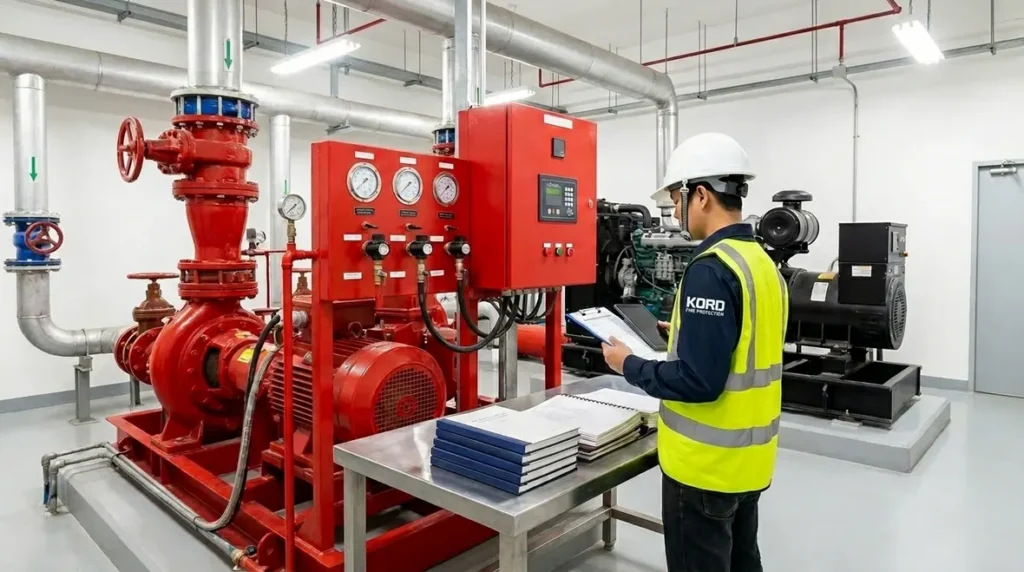
A pump does not live in isolation. It lives in a room, inside a building, connected to a wider fire protection network and an electrical supply that may or may not be having its best day. If the surrounding conditions are harsh, inconsistent, or poorly maintained, the testing program has to account for that reality. Otherwise, the schedule becomes tidy on paper and unreliable in practice.
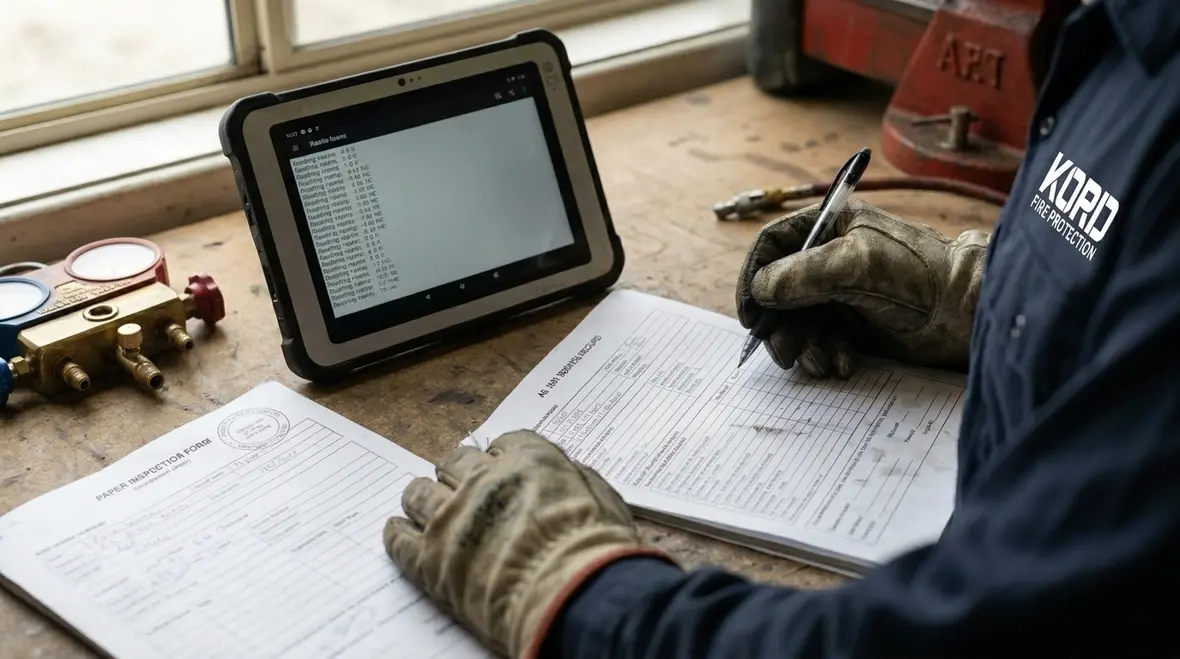
How testing is performed to verify performance, not just “function”
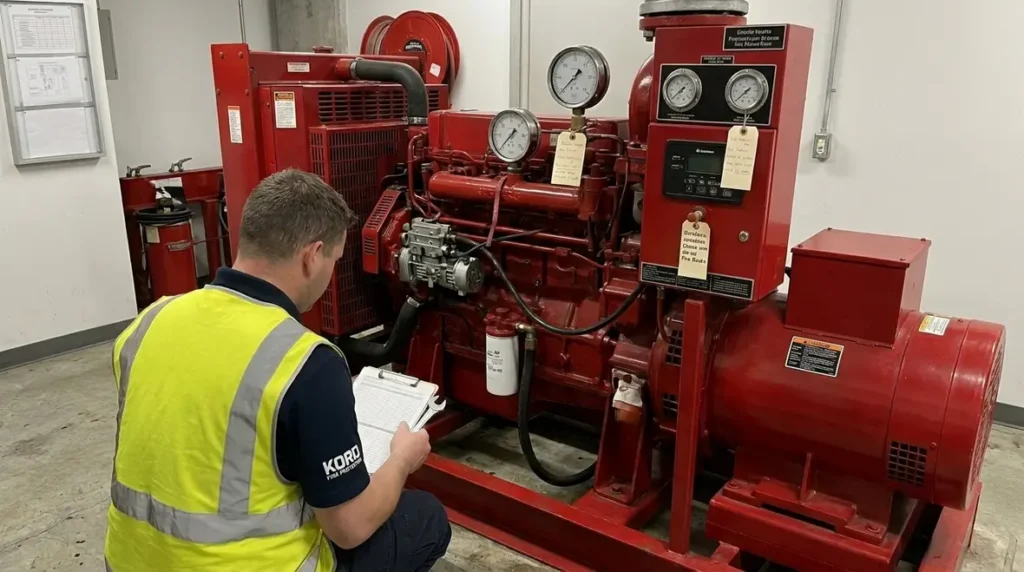
Many people think fire pump testing means pressing a button and waiting for applause. However, effective testing does more than confirm the pump turns on. It checks performance against design intent and captures evidence that shows reliability under controlled conditions.
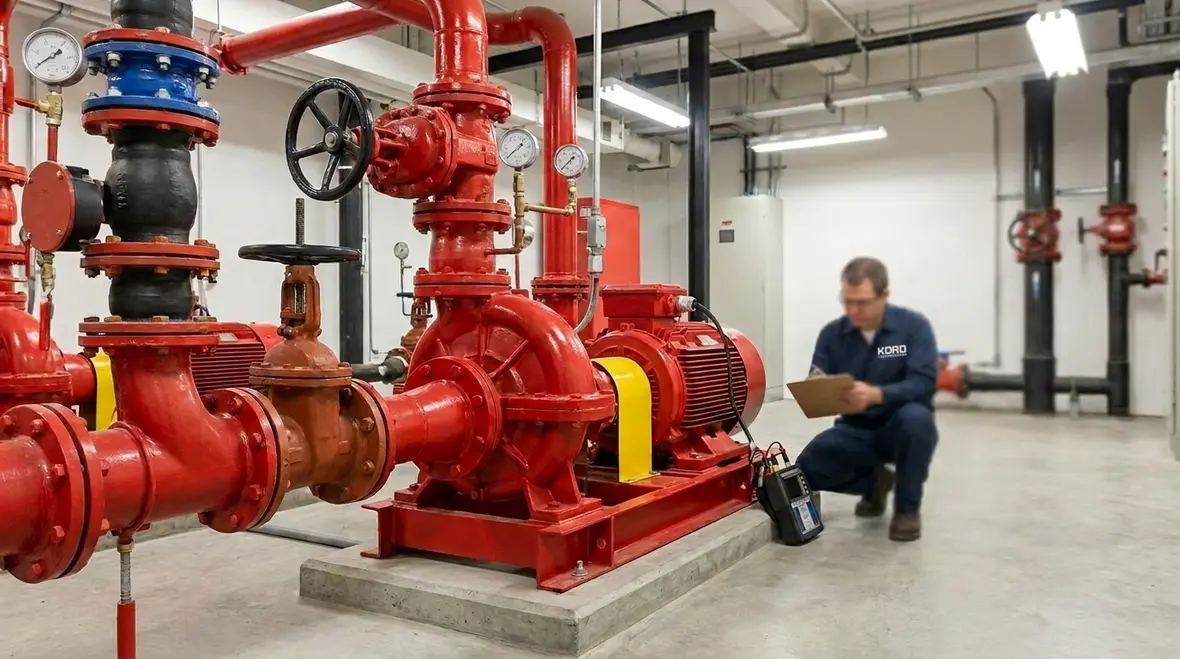
Typically, testing includes staged verification of:
- starting sequence and electrical operation under simulated demand
- pressure rise and stability over time
- flow delivery and system response
- valve operation and correct configuration during test modes
- alarms, indicators, and controller logic confirmations
In addition, good service teams also examine the surrounding system. They check for signs of wear that a pump cover cannot hide. Then they confirm that test equipment and measurement methods provide dependable readings. Consequently, the facility receives results that stand up to review, not vague “pass or fail” notes.
When documentation is done properly, it becomes a tool for decision making. It highlights slow drift in performance and helps plan replacements before a failure forces expensive downtime. That is how testing turns into risk reduction, not just a yearly tick box.
The difference between a checkbox and a useful record
Useful records do more than say a technician attended site. They capture readings, operating observations, anomalies, corrective actions, and the reasoning behind follow up work. That level of detail makes the next service visit smarter. It also gives owners, managers, and auditors a much clearer picture of whether the system is genuinely healthy or merely getting by on optimism.

Why a specialist partner helps meet AS 1851 outcomes smoothly
Here is the part where the right partner earns its keep. Kord Fire Protection can become a vital partner by handling the testing program with consistency, clear reporting, and a focus on what actually matters for industrial, retail, and commercial facilities across Australia. Instead of leaving compliance to a rotating cast of contractors, a specialist provides steady process and accountability.
They also help reduce operational disruption. Because they plan testing activities, coordinate access, and confirm system readiness beforehand, facilities experience fewer surprises. At the same time, they deliver documentation that supports audits, renewals, and internal safety reviews. That documentation is not just a file. It is proof that the facility protects people on purpose.
Finally, Kord Fire Protection can support the full workflow. That can include pre test reviews, observation of installation details, corrective actions after findings, and follow up confirmation tests. In other words, they help the site close the loop, not just produce a report and move on to the next emergency. Because emergency is not a service plan. It is a nightmare.
FAQ about fire pump testing frequency under AS 1851
Next steps for sites that want confidence, not guesswork
Fire pump reliability should not depend on “when we last checked.” It should rest on a testing program aligned to AS 1851, backed by accurate records and repeatable performance checks. Kord Fire Protection can review the system, help shape the right testing cadence, and deliver confident reporting across industrial, retail, and commercial facilities. If a site wants smoother compliance and fewer surprises, the next step is a proper assessment and a scheduled plan. Reach out to get started.