AS 1851 Fire Pump Maintenance Records Guide for Compliance
Quick Answer
AS 1851 sets clear expectations for fire pump maintenance records, so facilities can prove systems stay reliable. By following the guide, teams schedule inspections, capture results, and track faults to closure. Kord Fire Protection can step in as a reliable partner, keeping documentation tidy and compliant across industrial and commercial sites.
Fire pumps are the kind of equipment people only appreciate when they need them. And when that moment arrives, it is rarely during a calm Tuesday afternoon. So, for facilities across Australia, the AS 1851 Fire Pump Maintenance Records Guide matters because it helps organisations show that the pumps, controls, and related systems stay ready when fire risk escalates. Our company, Kord Fire Protection, works with industrial, retail, and commercial sites to make sure those records are not just “completed,” but actually useful, accurate, and audit ready. That difference is where compliance stops being paperwork and starts becoming real protection.
For facilities looking to strengthen both documentation and practical system support, it also helps to align record keeping with broader fire protection services so testing, maintenance, and evidence all tell the same story.
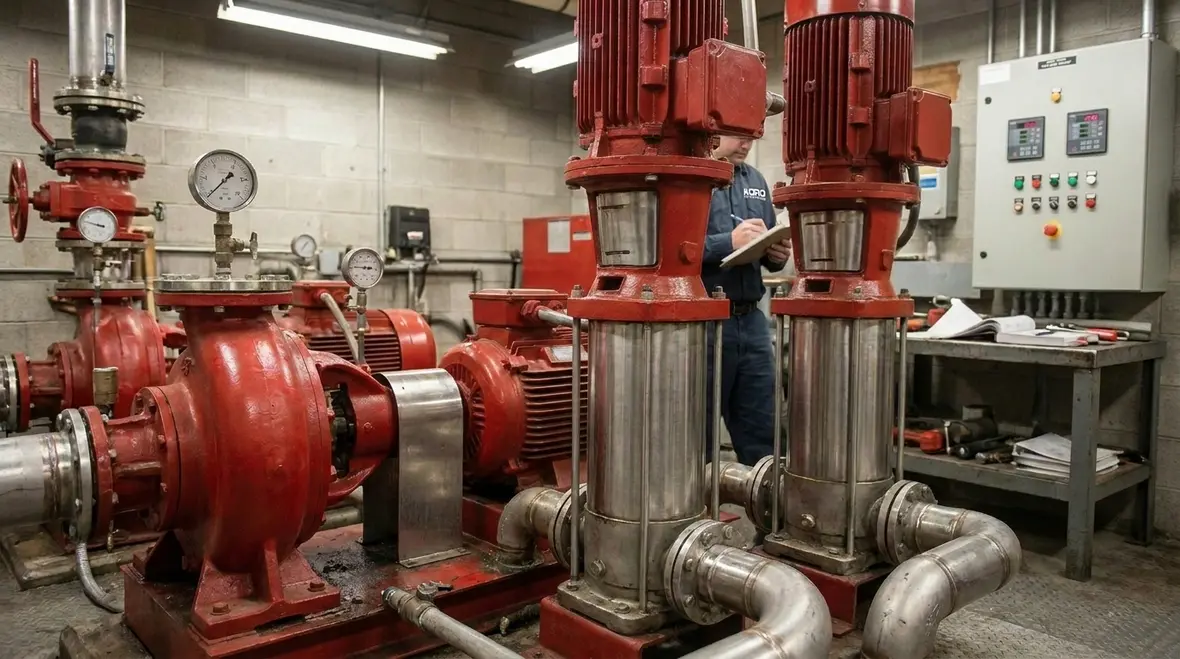
Why fire pump maintenance records matter in daily operations
Maintenance records do more than satisfy audits. They create a timeline of performance, faults, and corrective actions. This is vital because fire pump reliability depends on details that can drift over time: controllers, valves, pressure switches, couplings, seals, and even the quality of test results. If a record shows consistent parameters, it signals stability. If it shows changes, it helps teams act early instead of guessing later.
Additionally, records reduce confusion during incidents. When a controller behaves differently or a test indicates a trend, the facility team can quickly cross check prior data and decide whether to isolate, retest, or escalate. In other words, the document stops being a dusty binder and becomes a decision tool. And yes, nobody wants their fire system to become a “mystery box,” not even for a pop quiz themed on survival.
Records turn maintenance from memory into evidence
That shift matters in everyday site operations. A solid maintenance history helps teams compare present results against prior checks, identify whether a change is new or recurring, and avoid wasting time chasing faults that were already investigated. It also gives managers a cleaner basis for planning work orders, contractor coordination, and risk reviews without relying on half remembered notes and somebody saying, “I think it was fine last time.”
What AS 1851 requires for documentation and evidence
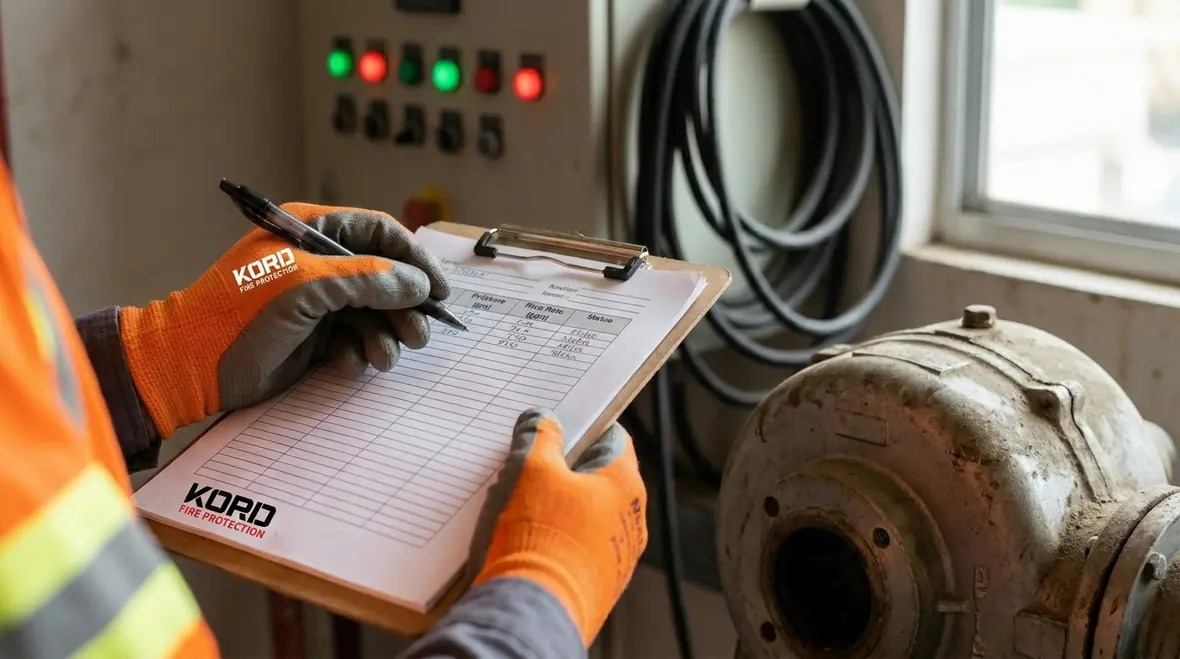
AS 1851 focuses on planned service and the keeping of maintenance records that support compliance. In practice, facilities should capture key information for each maintenance activity and test, including what was inspected, what was found, what was corrected, and when it was done. The goal is traceability.
Our team at Kord Fire Protection treats this like a control system for paperwork. We help clients document consistently across sites, because different building managers should not produce different formats that all “sort of” meet requirements. Instead, records should be structured so an auditor can follow them without reading like a detective novel.
Common record elements include:
- Date, location, and unique identification of the pump and associated components
- Task type, such as inspection, test, or performance verification
- Measured results such as pressures, start times, flow test outcomes, and control responses
- Any faults, defects, or abnormal conditions noted during the visit
- Actions taken immediately and recommendations for follow up works
- Sign off, including the person or team responsible for the entry
Importantly, good records also show closure. When a defect is found, the documentation should clearly state how it was addressed and when verification occurred. Otherwise, it is just a list of problems, and those problems have a way of returning like uninvited guests from a sequel.
What auditors and site teams want to see quickly
The strongest records are easy to follow. Asset identity should be obvious, test dates should make sense in sequence, measured values should be readable, and any defect should link cleanly to a corrective action. If somebody has to decode abbreviations, search through six folders, and guess whether a job was actually closed, the record system is not helping anyone.
How to build a maintenance record system that teams will actually use
A record system only works if operational staff can find and interpret it quickly. Therefore, Kord Fire Protection helps clients design a practical workflow: capture data on site, store it in a consistent location, and review it at the right intervals. This reduces “handover gaps” between contractors and facility teams.
To keep records strong, the system should include a repeatable structure:
- Standard templates for each task type, so entries stay comparable over time
- Version control for documents, so the latest condition is never ambiguous
- Clear links between findings and corrective actions, including who owns the fix
- Defined responsibilities for updating registers, closing works, and escalating risks
- Easy retrieval for audits, maintenance planning, and incident response
In large facilities, teams often juggle multiple assets. So, they need records that integrate with their broader asset register. When fire pump history aligns with overall maintenance planning, it becomes easier to spot recurring issues and budget for upgrades before a failure forces expensive emergency repairs.
And yes, the template should not read like it was written by a robot that only learned English from policy manuals. Keep it clear, factual, and consistent. That is the difference between a record someone files and a record someone relies on.
Keeping records accurate after tests, callouts, and fault finding
Test activity changes the story. When a team runs a test or investigates a fault, the record should reflect real conditions and clear observations. Therefore, it should capture not only pass or fail, but also the context around results. If a pump starts with a slightly different response time, or if a controller alarm appears, the record should explain what occurred and what was checked.
For example, during fault finding, the technician may verify wiring integrity, check sensor calibration, inspect strain on couplings, confirm valve operation, and review control logic. Then the records should state:
- What the fault looked like and when it occurred
- Which checks were performed and what outcomes were observed
- What parts were adjusted or replaced
- How performance was confirmed after the correction
Moreover, callouts should not disrupt the documentation rhythm. When a corrective action is completed, the record should update the maintenance history promptly. If records lag behind work, teams lose the timeline value. They then rely on memory, and memory is about as reliable as a nightclub bouncer on a Tuesday morning.
Close the loop every time
One of the biggest compliance weak points is not the initial finding. It is the missing follow through. A defect is noted, a job is mentioned, and then the paper trail wanders off into the bush. Strong record practice means every finding has an owner, an action, a date, and a verification step so the history reads like a complete chain rather than a stack of loose ends.
Spotting trends before they turn into non compliance
Once records exist, the next step is to use them. Kord Fire Protection encourages clients to review maintenance trends across pump run characteristics and control behavior. Over time, records can reveal patterns such as repeated defects in the same module, small performance drift, or recurring valve-related issues. Addressing trends early prevents repeat failures and reduces costly downtime.
Trend review supports better planning for facilities that operate with tight schedules. Retail sites may require work outside peak trading hours. Industrial environments often run 24 7 and cannot afford long shut downs. When teams base decisions on documented trends, they can plan interventions with more confidence and less disruption.
In practical terms, trending helps a facility decide whether to:
- Schedule parts replacement before another test highlights the issue
- Adjust maintenance frequency for a specific risk or component
- Upgrade ageing controllers or components to improve stability
- Clarify training for operators if recurring faults link to handling
And importantly, trending supports stronger audit narratives. Instead of reacting to isolated findings, the facility can show a consistent approach guided by evidence, which is exactly the kind of story auditors look for.
Dual column best practice checklist for fire pump record readiness
To keep things straightforward, facilities can use this quick readiness view. It helps teams prepare records for audits and operational reviews.
| What to confirm | Why it matters |
|---|---|
| Dates and task types are correct | It proves planned service coverage and traceability. |
| Measured results are recorded | It shows performance, not just activity. |
| Faults and defect actions are closed | It prevents unresolved issues from hiding in history. |
| Documents are stored consistently | It speeds up audits and incident response. |
| Recurring issues are tracked | It supports trend-based planning and upgrades. |
FAQ about AS 1851 fire pump maintenance records
Conclusion and call to action
Fire pump maintenance records should feel calm, clear, and audit ready, not like a last minute scramble before paperwork deadlines. When a facility follows AS 1851 expectations and uses records as a performance tool, it strengthens compliance and supports real operational confidence. Kord Fire Protection partners with industrial, retail, and commercial sites across Australia to keep documentation accurate, consistent, and useful. If the next audit feels too close, reach out and let us help turn maintenance records into dependable protection.