AS/NZS Fire Pump Requirements for Hydrant Systems Australia
Quick Answer
AS/NZS fire pump requirements for hydrant systems in Australia focus on reliable pressure, proper pump sizing, automatic start behavior, and tested performance. In practice, teams must align design, installation, commissioning, and ongoing inspection to stay compliant. Kord Fire Protection helps facilities manage risk with disciplined service and clear documentation.
AS/NZS fire pump requirements for hydrant systems do not leave much room for wishful thinking. In the first 100 to 150 words, here is the gist: fire pumps must deliver the right flow and pressure under test, start automatically, and operate safely with the rest of the hydrant system. Then, the rest of the job fills in the details that make compliance real and not just a “we probably did it” assumption. Our company, Kord Fire Protection, steps in as a vital partner by keeping the technical side sharp, the records tidy, and the risk level lower than a spreadsheet’s coffee budget.
For facilities trying to keep systems dependable year after year, disciplined fire protection services matter just as much as the pump itself. A good pump installed badly, tested loosely, or documented poorly is still a problem wearing expensive shoes. Near the top of the process, that is the practical difference between box ticking and true operational readiness.
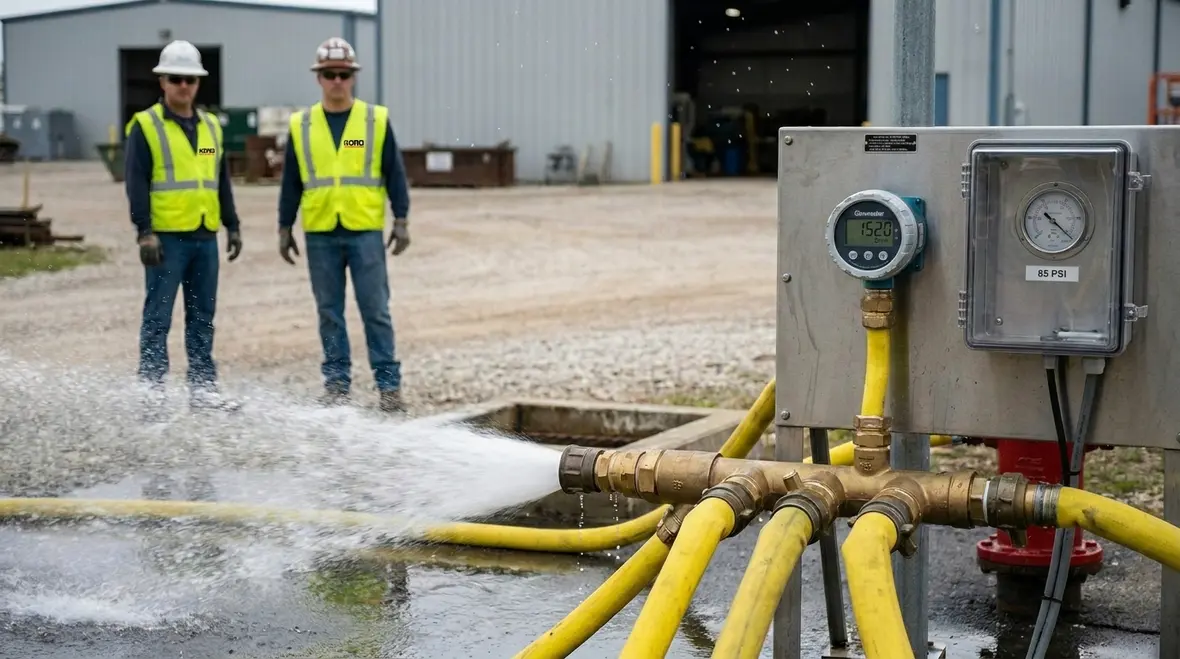
Why hydrant systems demand disciplined pump design
Industrial, retail, and commercial facilities rely on hydrant systems as a backbone response during emergencies. However, a hydrant network is only as effective as the pressure it receives. Therefore, fire pumps must be selected and arranged to meet demand scenarios, not average conditions. Furthermore, pumps must maintain performance during worst case starts, when multiple outlets open or flow rates spike.
In most projects, the design intent starts with hydraulic calculations, including pipe losses, hose and nozzle allowances, and required discharge performance. Next, the pump curve and system curve must align so that the pump can hold pressure without hunting, surging, or falling below required thresholds. When teams skip this step, they end up with a pump that “sounds fine” but performs poorly under real flow.
That design discipline also reduces the kind of hidden headaches that show up months later. A pump can seem acceptable during a casual review and still fail to support a demanding outlet combination under pressure. The issue is rarely dramatic at first. It is usually a small mismatch, a control quirk, or a suction arrangement that looked tidy on paper and turned moody on site. Those are the details that turn a compliance conversation from calm to uncomfortable in record time.
It is a bit like streaming a movie on Wi Fi. If the signal is mostly there, the device still spins. In fire protection, spinning equals delay, and delay equals problems.
Design intent has to survive real site conditions
A disciplined design process does not stop at selecting a pump with impressive numbers on a datasheet. It has to survive pipe friction, valve arrangements, elevation differences, and the very human reality that installations are not built inside a perfectly behaved spreadsheet. If the arrangement cannot hold up when tested at meaningful flow, then the design intent never really left the meeting room.
What AS/NZS fire pump requirements typically cover
Across the Australian compliance landscape, AS/NZS fire pump requirements for hydrant systems typically cover key areas that directly impact how the pump behaves in an emergency. First, they focus on pump performance and acceptance testing. Then, they address reliability features, control logic, and system integration. Finally, they require commissioning and inspection practices that confirm the installation matches the design.
In practical terms, this means no single piece of the arrangement gets to act like it is working alone. The pump, controller, valves, power supply, and monitoring points all have to pull in the same direction. If one element lags behind, the whole hydrant system pays for it. Compliance is not just about owning equipment. It is about proving the equipment behaves properly when the pressure is on, which is a terrible time to discover that everyone had different assumptions.
- Correct pump duty selection for the required flow and pressure demand
- Automatic starting on demand and safe stopping logic after operation
- Control system reliability and clear alarm and status outputs
- Water supply connection arrangements that support stable suction conditions
- Electrical and power reliability measures for pump operation
Additionally, documentation matters. Facilities need test records, commissioning evidence, and maintenance history that show the system stays within required performance boundaries over time. If the paperwork lags behind the hardware, the compliance story becomes hard to defend during audits or incidents.
Documentation is part of the protection strategy
Records may not be glamorous, but they are often the difference between confidence and confusion. Clear documentation shows what was tested, what was found, what was corrected, and what still needs attention. When that history is complete, a facility can make decisions quickly. When it is messy, every question becomes a scavenger hunt with worse lighting.
How to size and match pump performance to hydrant demand
Design teams must translate hydrant intent into numbers that guide pump selection. Therefore, sizing starts with the required flow at specified pressure points, then moves into pipework resistance and expected losses. After that, the team checks whether the selected pump can meet the demand without dropping into an inefficient or unstable operating region.
In practical terms, matching pump curves to the system curve ensures the pump can hold the required pressure during sustained flow. Meanwhile, multi-outlet scenarios need special attention. Even if a facility rarely tests multiple outlets at once, the pump must handle that worst credible case.
To make it concrete, a facility might plan for a particular hose discharge scenario across its hydrant zones. The pump must support the required pressure at the discharge while also overcoming friction losses through valves and fittings. If the designer picks a pump that is close “on paper” but not on curve, the system can underperform when flow increases.
That is why Kord Fire Protection often focuses early with clients. When we review the design basis and later validate through testing, we help close the gap between engineering intent and on site reality.
Another common trap is selecting for a best case operating point and hoping the rest of the system behaves politely forever. Hydrant systems rarely sign that agreement. As valves age, layouts change, or tenant use shifts, the system can demand something different from what the original selection assumed. Building a margin for realistic operation is sensible engineering, not pessimism.

Installation and commissioning checks that prevent future failures
Installation quality determines whether the pump performs like the drawings. Consequently, commissioning cannot be a quick tick box. Instead, commissioning should verify that controls, sensors, starters, valves, and the pump itself work together as a single system.
- Controller sequence validation for automatic start, stop, and reset behavior
- Verification of pressure and flow instrumentation accuracy
- Confirmation that isolating valves and check valves operate correctly
- Electrical checks that cover protection, supply stability, and fault handling
- Measured performance during acceptance testing against required outcomes
Moreover, commissioning should include realistic observation. Technicians should watch how the pump responds during start transient conditions and steady flow. If alarms trigger unexpectedly or the control system fails to transition cleanly, the issue often shows up during the first structured tests.
And yes, sometimes a component behaves perfectly in the test yard and then misbehaves on site due to conditions nobody predicted. That is why verification matters. A facility cannot afford the “it will probably sort itself out” strategy. Fire protection rarely rewards optimism.
Commissioning is where assumptions go to be tested
A strong commissioning process is less about ceremony and more about exposing weak links early, while fixes are still manageable. It confirms the controller logic works, the signals make sense, and the pump behaves consistently under load. If a site skips that discipline, it may still receive a neat folder at the end, but neat folders do not move water.
Service and ongoing compliance for AS/NZS performance over time
Even a well installed pump can drift. Wear, aging components, and changes to site pipework can alter pump behavior. Therefore, facilities need a service plan that supports repeatable checks, not occasional heroics.
Ongoing service typically includes periodic inspections, functional tests, and maintenance actions that keep the system reliable. For hydrant systems, the goal remains consistent: the fire pump must deliver the required performance when demanded. To keep that outcome predictable, technicians should monitor key items and address faults early.
| Service focus | What it protects |
| Performance checks and trending | Delivery of correct pressure and flow over time |
| Control system checks | Correct automatic start and alarm reliability |
| Pump and valve maintenance | Reduced risk of sticking, leaks, and loss of efficiency |
| Documentation and test records | Audit readiness and clear incident evidence |
Meanwhile, the service team should communicate clearly with facility managers. When someone asks “what did you actually do,” you want a straight answer supported by records. Kord Fire Protection builds that partnership mindset, helping clients across multiple facets of commercial, retail, and industrial operations manage compliance without turning every quarter into a fire drill.
Consistency matters here more than drama. A reliable service program is not built on occasional heroic recoveries. It is built on regular checks, sensible maintenance, useful reporting, and follow through when faults appear. That sounds less exciting than emergency improvisation, but it is far more helpful when actual performance is the thing on trial.
How Kord Fire Protection becomes a vital partner
Facilities do not just buy a pump. They buy assurance that the system will work when it matters. That is where Kord Fire Protection becomes a vital partner. We support clients with disciplined service, practical recommendations, and documentation that keeps compliance on track.
In addition, our approach helps reduce disruption. We coordinate with site schedules, communicate in plain language, and ensure technicians complete work in a way that respects operational realities. As a result, plant managers and asset owners spend less time chasing updates and more time running the business.
Also, when teams plan upgrades or respond to issues found during inspections, Kord Fire Protection helps connect the dots. We align service findings with the requirements in AS/NZS and the realities of installed systems. In other words, we turn “we found a problem” into “here is what to do next, and here are the records to prove it.”
That partner role matters because fire protection decisions usually compete with everything else a facility is trying to manage. Production targets, tenant needs, access constraints, budgets, shutdown windows, and audit preparation all want attention at once. A capable service partner helps bring order to that pile instead of adding another confusing layer to it.
FAQ
Conclusion
Fire pumps for hydrant systems are not “set and forget.” They require correct design, careful commissioning, and ongoing service to stay aligned with AS/NZS performance expectations. Kord Fire Protection helps commercial, retail, and industrial sites across Australia protect assets and people with disciplined testing, clear records, and practical recommendations. If you want fewer surprises during inspections and more confidence when it counts, engage Kord Fire Protection today and keep your hydrant system ready for action.