ASNZS Fire Pump Testing and Maintenance Australia
Quick Answer: AS/NZS fire pump testing and maintenance keeps water delivery reliable when it matters most. It verifies pump performance, checks controls and alarms, inspects components, and ensures compliance. It also reduces downtime risk for industrial, retail, and commercial sites across Australia. Kord Fire Protection helps facilities stay ready, not lucky.
Fire pumps do not care about schedules, budgets, or how late the night shift runs. They simply wait for the real emergency, and then they perform or they fail. That is why AS/NZS standards guide how teams test and maintain these systems across Australia. In this article, Kord Fire Protection walks through an AS/NZS fire pump testing and maintenance overview, with practical detail for industrial, retail, and commercial facilities. And yes, the checks go beyond a quick listen and a hopeful glance. After all, “it sounds fine” is not a maintenance strategy, it is a vibe.
For sites reviewing broader system support, Kord Fire Protection can also help coordinate related fire protection services across connected assets so testing, maintenance, and documentation work together instead of drifting into separate admin piles.
Why fire pumps must be ready, not merely present
Fire pumps support sprinkler systems, hydrant systems, and sometimes foam or special applications. Therefore, a system that sits idle or slowly degrades can deliver less pressure, reduced flow, or delayed startup. These issues often show up only under real demand, which is the worst time to learn anything.
When teams follow AS/NZS aligned testing and maintenance, they confirm that the pump can achieve the required pressure and flow. They also verify that controllers react fast, valves move as they should, and water supply conditions remain within design limits. In other words, testing turns a theoretical rating into real-world performance. And it helps facilities avoid surprise downtime, because repairs tend to cost less before the “red button” moment.
Readiness is a performance question, not a presence question
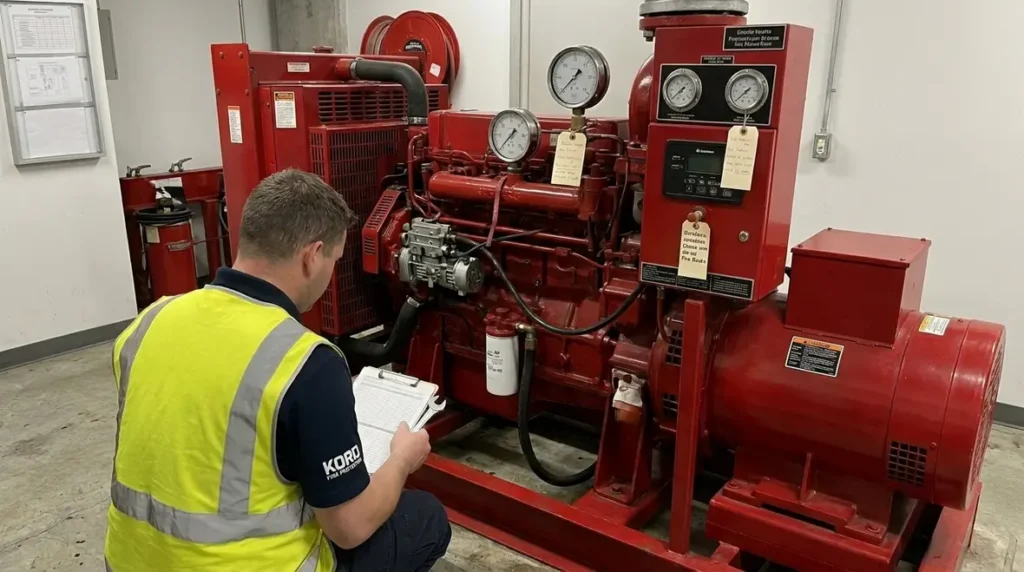
A fire pump can exist in a room, appear tidy, and still be one bad start sequence away from disappointment. That is the whole point of routine testing. It separates equipment that is merely installed from equipment that is genuinely ready. In practical terms, facility teams need confidence that the system will respond under pressure, not confidence that it looked respectable during a walkthrough with a clipboard and a brave face.
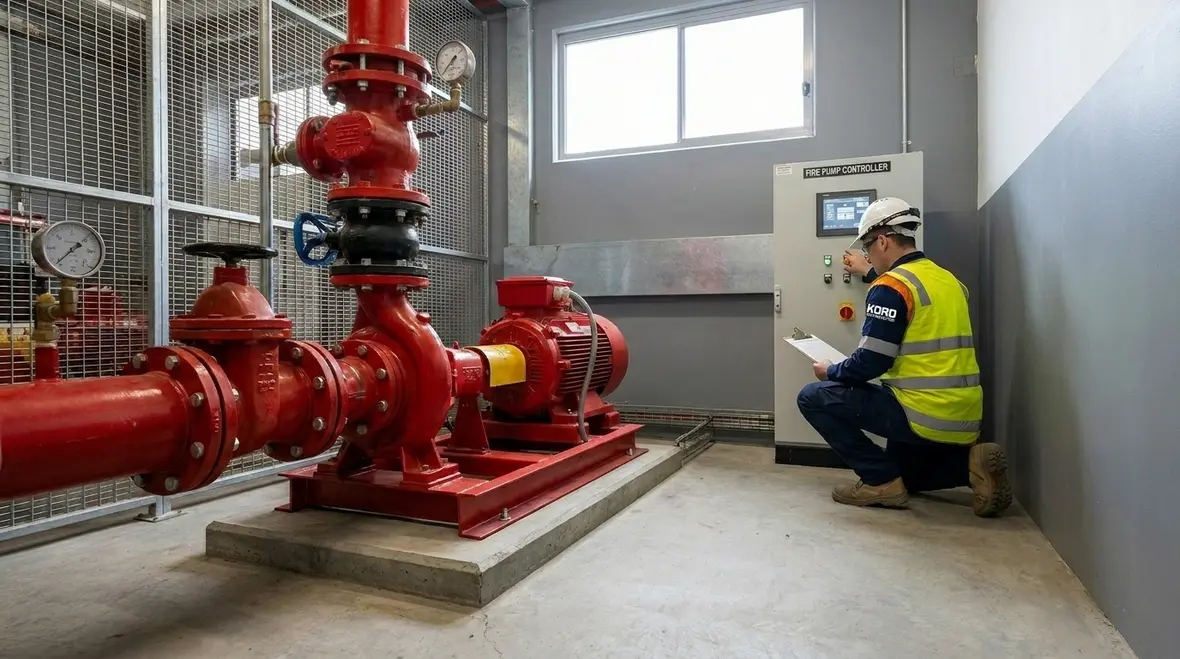
What AS/NZS testing usually verifies on site
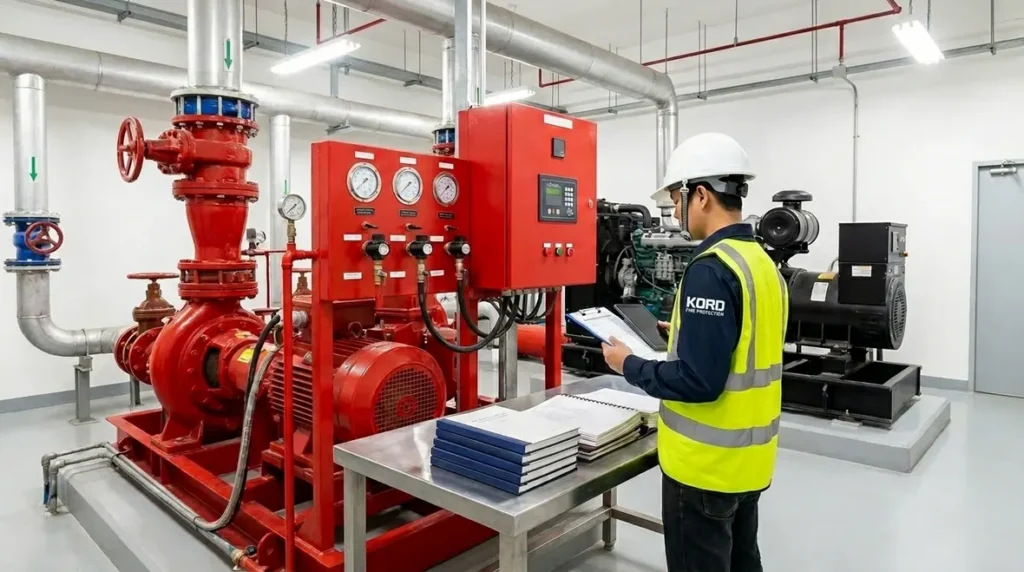
Most facilities need the full package, not a checklist that looks good on paper. Testing typically covers performance, mechanical condition, and control integrity. Consequently, technicians measure key outputs and confirm that the system responds in the right sequence.
Common verification steps include:
- Hydraulic performance checks to confirm pressure and flow meet the design requirements at expected demand
- Controller and alarm functions to ensure start, stop, and fault logic operate correctly
- Pump run testing to observe stability during operation, not just ignition at startup
- Valve operation to confirm required isolation and non-return functions behave properly
- Jockey pump and pressure setpoint review to ensure the system maintains standby pressure without cycling issues
- Backflow prevention checks so the system protects against unintended water movement
Additionally, testers often check for signs of wear that can quietly reduce reliability: unusual vibration, leaking seals, or abnormal discharge conditions. However, the goal remains clear. It is not to prove the pump is alive. It is to prove the pump will do the job under the exact stress the design expects.
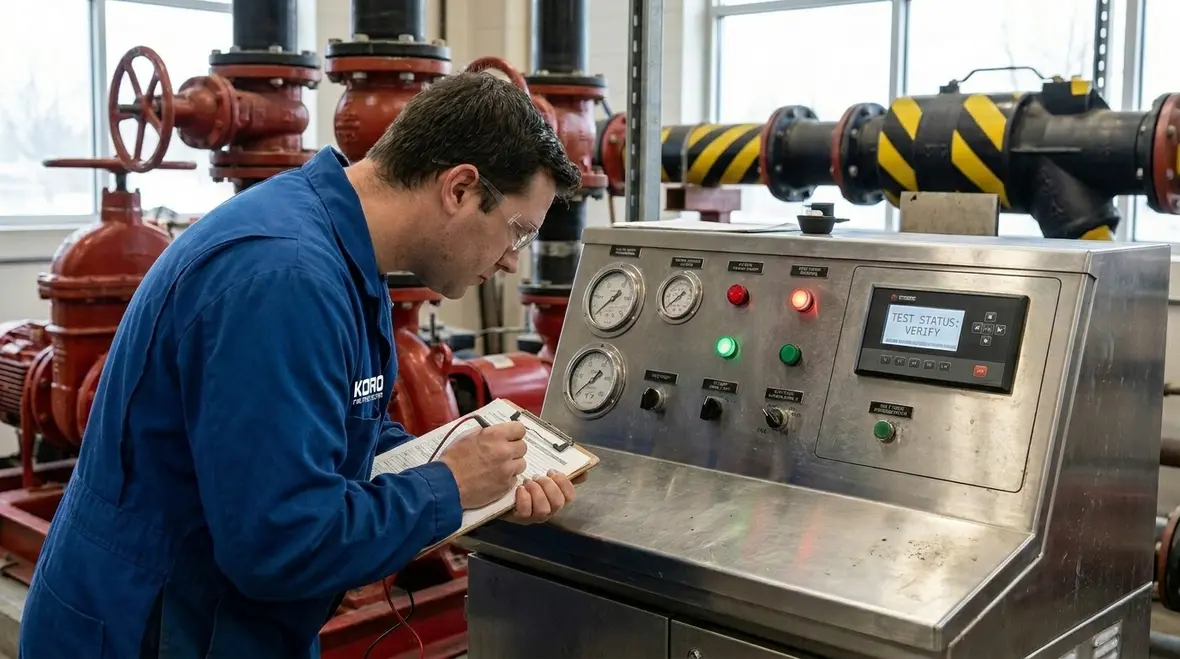
What a proper site test actually reveals
A proper test reveals more than a pass or fail moment. It shows how quickly the controller reacts, whether pressure stabilises as expected, whether the jockey pump is masking a bigger issue, and whether supporting components are cooperating or quietly plotting chaos. That matters because fire pumps live inside a chain of dependencies. If one link hesitates, the entire response can soften at exactly the wrong time.
For industrial sites, those checks can be especially important where process risk, storage layouts, or high-value equipment raise the cost of failure. In retail and commercial settings, the same principle applies. Occupants, stock, continuity, and insurer expectations all rely on systems behaving as designed, not just existing in theory.
How maintenance prevents hidden failures
Maintenance is where the calm, deliberate work happens. It reduces the chances that minor issues turn into major failures. Even when a pump starts reliably, internal wear can lower efficiency over time, and that is exactly how “it worked last time” turns into “it failed today.”
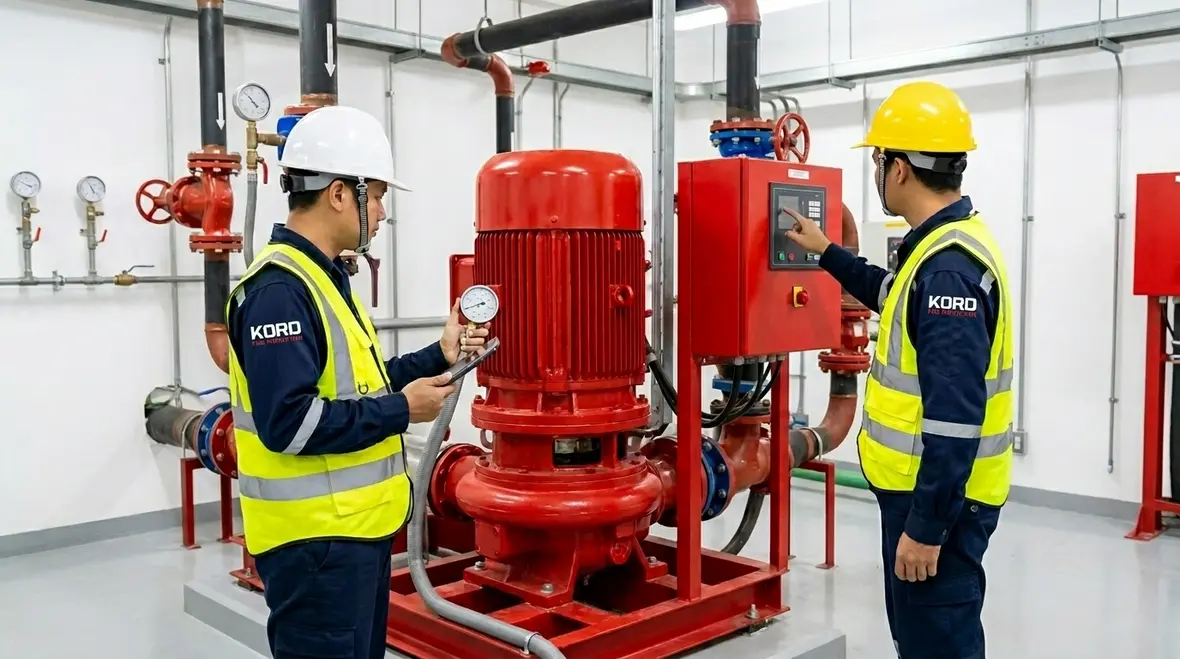
Kord Fire Protection supports facilities by aligning maintenance tasks with the pump type, duty arrangement, and site operating conditions. That means they do more than generic tightening and quick visual checks. They follow a method that keeps components in a known condition and reduces the risk of repeat faults.
Maintenance often includes:
- Inspection of couplings, bearings, and alignment to reduce vibration and premature bearing wear
- Seal and leakage monitoring so small losses do not escalate
- Electrical checks for starters, relays, and protection devices to avoid control drift
- Strainer and suction condition checks to maintain water availability
- Exercise routines for standby units so they do not “sleep through” their next demand
- Calibration and setpoint confirmation where applicable to keep pressure delivery accurate
And yes, sometimes the pump tells the truth in plain sight. A noisy bearing, a hot motor, or a stubborn valve will show up if the right eyes are on the right details. Even so, the best results come from planned work, not heroic troubleshooting after hours. No one wants to run a fire pump repair like it is a Netflix season finale.
Small faults love quiet rooms
Hidden failures usually do not arrive with dramatic music. They build slowly through wear, drift, contamination, vibration, and neglected adjustments. A seal starts leaking a little. A bearing grows louder by degrees. A setpoint slides just enough to become annoying later. Maintenance catches those tiny rebellions early, before they turn into shutdowns, expensive repairs, or a very awkward explanation to management.
Record keeping, compliance, and audit readiness
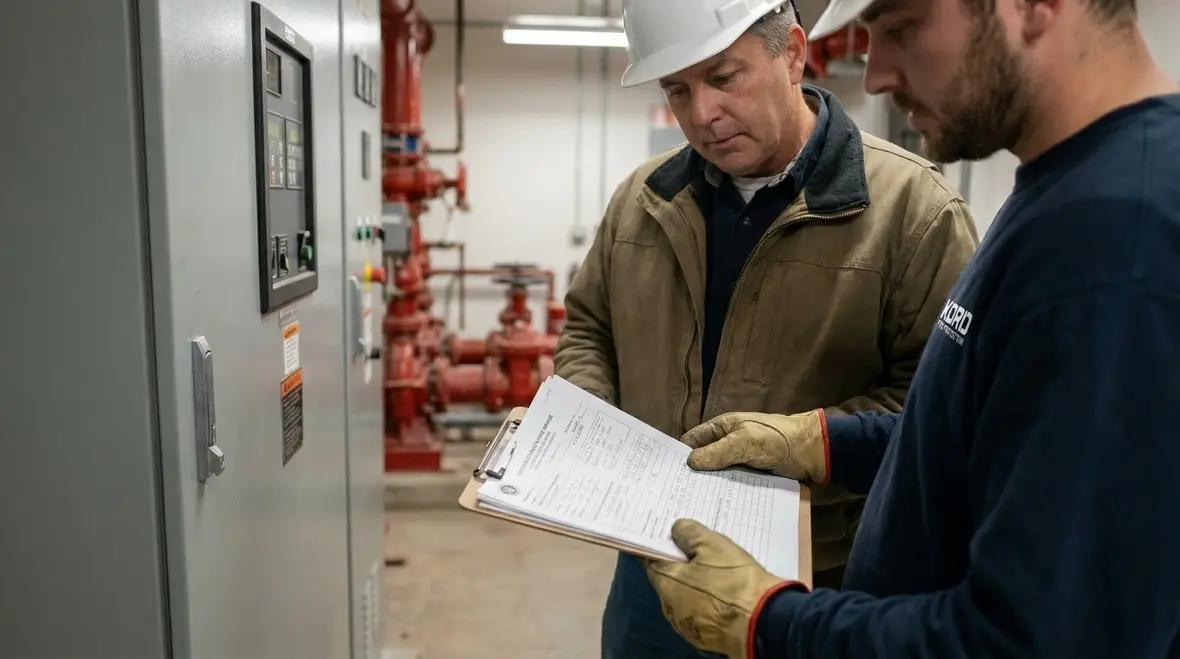
Facilities across Australia often face audits, insurer reviews, and internal safety governance. Therefore, documentation matters as much as testing itself. Good records show what happened, what was measured, and what was corrected. They also show trends, which helps teams forecast when components need attention before performance drops.
Effective reporting usually includes measured results, fault findings, corrective actions, and re-test outcomes when required. It also clarifies any maintenance items that need future scheduling. As a result, compliance becomes a managed process rather than a last-minute scramble.
Kord Fire Protection helps clients build audit-ready evidence for their operations. They coordinate work to reduce disruption, and they communicate clearly so stakeholders understand risk, timelines, and the next steps. In many businesses, that is the difference between a safety system that sits on the shelf and one that supports confident operations.
How Kord Fire Protection becomes a vital partner
In real sites, fire pumps are not stand-alone assets. They connect to water supply, controls, alarms, valves, and broader fire strategies. That means a partner must understand the whole system and how changes impact performance. Kord Fire Protection positions itself as that vital partner for industrial, retail, and commercial facilities across multiple facets of Australian operations.
They help owners and facility managers by combining testing discipline with practical maintenance planning. Moreover, they focus on clear communication and consistent execution, so teams do not just “pass tests,” they build reliability. When stakeholders see professional reporting, predictable scheduling, and responsive support, the relationship stops feeling like admin and starts feeling like protection.
If a site needs coordinated services across different fire assets, Kord can also streamline how work is planned and documented. That reduces gaps between inspections and cuts down the risk of miscommunication between vendors. In short, they help facilities stay ready, instead of relying on luck and duct-tape confidence.
A partner helps turn maintenance into confidence
The best support partner is not just there to tick a service box and vanish into the ute. They help sites understand what was tested, what changed, what needs attention next, and how to prioritise action without drama. That kind of clarity matters because fire protection is rarely just a technical problem. It is also a coordination problem, a documentation problem, and occasionally a “who approved this?” problem.
Featured FAQ
Final call to action for facilities
Fire pumps protect people, premises, and continuity of operations. When testing and maintenance follow AS/NZS guidance, facilities reduce failure risk, strengthen audit confidence, and keep response capability ready. Kord Fire Protection supports industrial, retail, and commercial sites with disciplined testing, practical maintenance planning, and clear reporting that stakeholders can trust. If a pump needs attention or a schedule needs tightening, contact Kord Fire Protection today and move from hope to proven readiness.