AS NZS Fire Pump Requirements for Sprinkler Systems Australia
Quick Answer: AS/NZS fire pump requirements for sprinkler systems in Australia ensure the pumps deliver reliable water flow and pressure during a fire, with proper control, testing, power supply, and commissioning. A qualified fire protection partner, like Kord Fire Protection, helps facilities meet the rules and stay ready when it matters.
When a sprinkler system must perform, people expect water to show up on time, at the right pressure, in the right quantity. That is exactly where AS/NZS fire pump requirements come in. In the first place, these rules shape how fire pumps are selected, installed, controlled, and proven. Then they guide how the system gets tested, maintained, and handed over with confidence. And yes, this is not the sort of paperwork anyone cheers for, but fire safety is one of those areas where “close enough” can turn into “too late.”
For facilities reviewing their broader compliance position, it also helps to look at Kord Fire Protection’s related sprinkler support services as part of a joined up fire safety strategy across inspection, testing, and ongoing readiness.
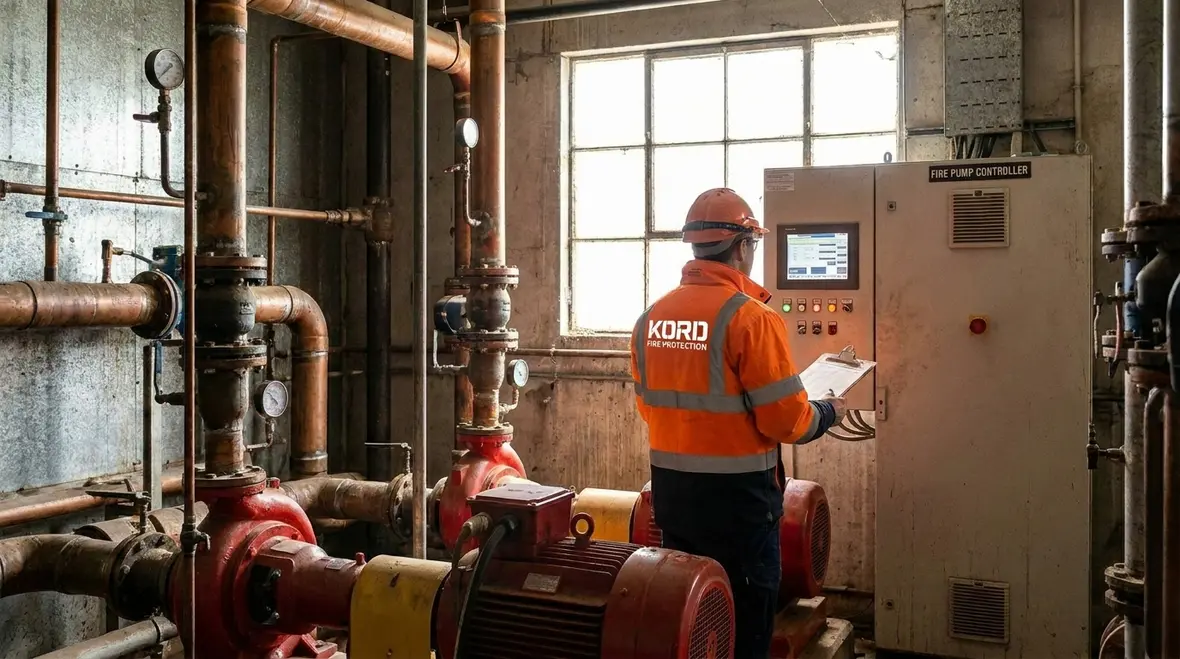
What fire pump performance does AS/NZS demand?
For sprinkler systems, AS/NZS expectations focus on delivering reliable hydraulic performance under fire conditions. First, the fire pump must meet the required flow rate and pressure at the most demanding point in the sprinkler network. Next, the design process usually looks at the total water demand, pipe losses, elevation differences, and any operating constraints from the sprinkler system itself.
Additionally, the pump must start and run as intended when the system calls for it. Therefore, the control scheme needs clear logic for starting, stopping, and handling alarm conditions. If the pump cannot start promptly or cannot sustain the required output, the sprinkler system may not achieve its designed density and duration.
Facilities in industrial, retail, and commercial environments often add complexity: longer pipe runs, multiple zones, high bay structures, and sometimes shared services with other systems. Consequently, the fire pump design has to fit the site, not just a generic guideline.
And because systems do not care about excuses, the design must also consider how the pump responds during the transition from standby to operation. In real terms, that means the pump and controls should not “think about it” during an emergency.
Why the duty point matters more than the brochure
A pump data sheet can look impressive, but the real test is whether the set can supply the actual system duty point once pipe friction, building height, valve losses, and required sprinkler demand are accounted for. That is where design discipline pays off. A pump that is technically powerful but poorly matched to the network can still leave a site exposed, which is a frustrating way to discover that specifications and performance are not always on speaking terms.
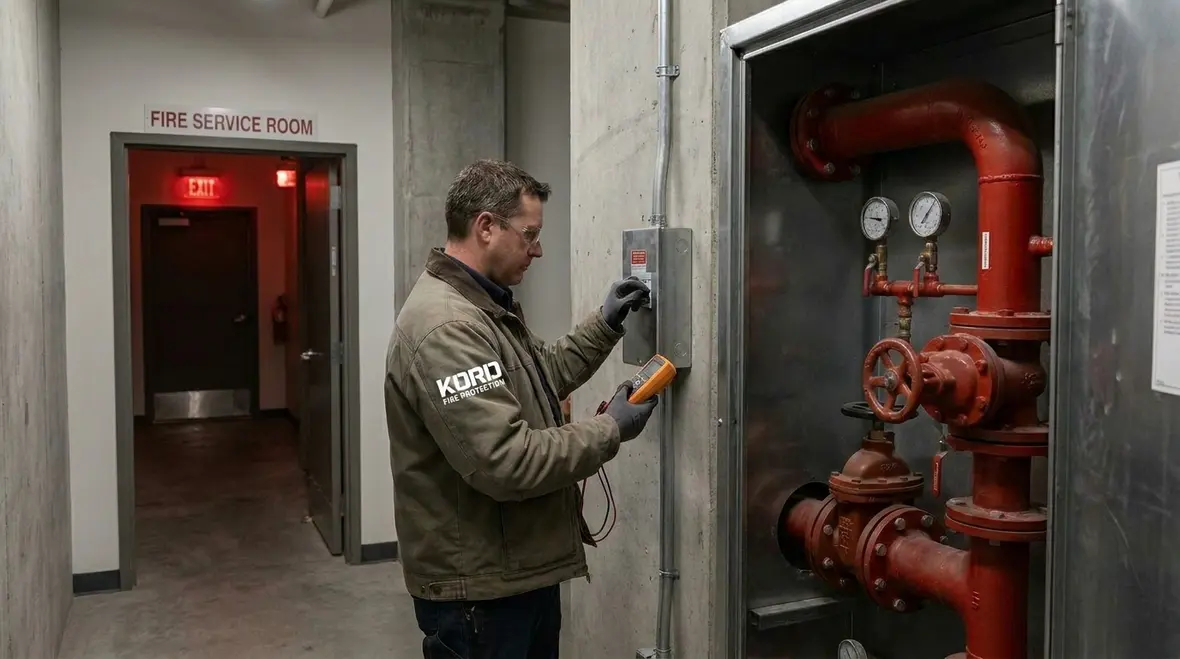
How do pumps stay reliable during a real event?
Reliability is the heartbeat of fire pump compliance. So, the system must reduce single points of failure. Typically, designers plan for dedicated pump sets, robust controls, and electrical arrangements that survive the hazards of a fire scenario. Where multiple pumps serve the system, the design should allow the required performance even if one unit cannot operate.
Next, fire pumps require proper suction and discharge conditions. That includes ensuring suction supply is adequate and that the pump can prime and handle the expected water source behaviour. For instance, facilities that rely on tanks, reservoirs, or combinations of sources need to demonstrate that the pump can draw water without causing harmful cavitation or instability.
Furthermore, the control interface matters. Fire pumps often start from signals such as pressure drops, tank level changes, or sprinkler demand signals. Then the system should coordinate with alarms, isolation valves, and any monitoring outputs. Put simply, the pump should behave like a professional under pressure: start, deliver, and report.
If you are thinking, “Sure, but who checks that this stuff actually works?” That is where ongoing testing and commissioning enters the story.
Power, controls, and the parts nobody notices until they fail
The quiet performers in a compliant installation are often the controller settings, power supply resilience, signal paths, and status monitoring points. They are not glamorous, and nobody puts them on a poster, but if they are wrong, delayed, isolated, or poorly integrated, the fire pump can become a very expensive confidence trick. Good compliance work makes sure these hidden pieces do their job before the emergency introduces itself.
What installation and commissioning steps matter most?
Even when the pump model looks right on paper, installation quality can make or break performance. During installation, the rules expect correct alignment, proper pipe supports, suitable materials, correct valve arrangements, and safe access for maintenance. In addition, the system must be installed to protect it from damage, including damage from the very incident it is meant to handle.
After installation, commissioning proves the system can meet its duty point. During commissioning, the team typically verifies control operation, start times, running status, alarms, and the pump’s ability to deliver required performance. They also verify that the system’s set points and interlocks match the design intent.
To keep facilities ready for audits, the documentation should be complete: commissioning records, test results, and as built details. Because when inspectors ask for the history, you need more than “someone said it was done.”
Also, many facilities use multiple trades at once: sprinkler fitters, fire alarm installers, electricians, and mechanical contractors. Therefore, a coordinated approach prevents gaps where one discipline assumes another already covered a key requirement. That is a common source of delay, and delays cost money.
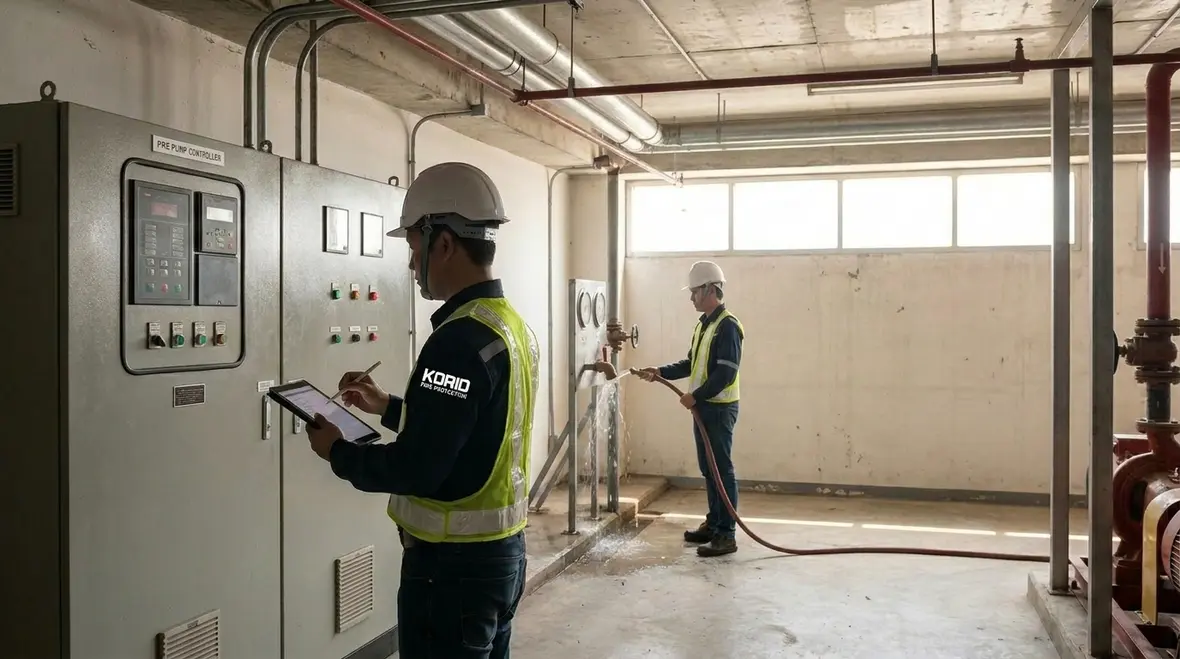
How should testing and maintenance be planned?
Once the system is commissioned, it must stay in serviceable condition. Routine inspection, testing, and maintenance help confirm the pump, controller, sensors, valves, and power supply remain functional. Over time, components can drift: seals wear, batteries degrade, valves stick, and settings change after site works.
Consequently, a maintenance plan should include checks that match the risk level and operational needs of the facility. For industrial sites, the plan must account for dust, vibration, heat, and plant activity. For retail and commercial buildings, the plan must manage access and minimize disruption to operations.
In practice, maintenance often focuses on the controller function, alarms, readiness checks, and periodic performance-related testing. Also, any repairs must follow the approved approach so the system continues to meet the design duty.
When this is managed well, the facility avoids the classic situation where a test reveals a problem during the busiest week of the year. Nobody wants to be the person who schedules the fire pump test on the same day as the biggest stocktake. That is not bravery, that is poor planning.
Where do common compliance gaps appear?
Many facilities face the same hurdles. First, the pump selection may not align with actual site conditions after construction variations, additional services, or later modifications. Next, the control wiring, monitoring points, or alarm integration may not match what the system documentation states. Then there are the “hidden” gaps: isolation valves left in wrong positions, damaged labels, inaccessible controllers, or incomplete records.
Another frequent issue involves electrical supply arrangements and how the site handles power changes. For example, if the facility experiences generator maintenance or electrical upgrades, the fire pump controls and power arrangement must remain compatible with the emergency scenario.
Facilities can also run into problems when multiple contractors touch the same asset over years. Each contractor may do good work, but if nobody owns the system as a whole, details slip. As a result, the next test becomes a scavenger hunt for information.
This is where Kord Fire Protection becomes more than a service provider. They can operate as a vital partner by coordinating the mechanical, control, and testing side of the fire pump lifecycle. In other words, they help the facility avoid the “too many cooks” problem and ensure the fire pump system stays aligned with AS/NZS expectations over time.
Why record keeping saves more than paperwork headaches
Documentation is not glamorous either, but it is one of the fastest ways to tell whether a site is genuinely under control. Accurate records support audits, future maintenance, change management, and handovers between contractors or facility managers. Without them, even simple questions become archaeological projects, and nobody wants to excavate a pump room file trail while compliance deadlines are tapping their watch.

How Kord Fire Protection supports facilities across Australia
Kord Fire Protection supports industrial, retail, and commercial facilities with practical, site-aware fire pump services and compliance support. Their role typically includes help with readiness, structured testing, and clear documentation so facilities can demonstrate what they have done and when they did it. Importantly, they treat the fire pump as a system, not a standalone item.
Then, because facilities change, they also help manage the follow up. That means updates after plant works, coordination with other fire services, and guidance that keeps the sprinkler system integrated and aligned. Additionally, their approach reduces downtime by planning work around operations, so the facility can keep running while still staying safe.
So when a facility chooses Kord Fire Protection, it does not just get a job completed. It gets a partner that understands the real-world pressure of compliance deadlines, audit requests, and operational continuity.
FAQ
Conclusion (CTA): Fire pump compliance is not a one time event. It is a lifecycle: design intent, correct installation, commissioning proof, and ongoing testing that keeps performance steady. If your industrial, retail, or commercial facility needs a dependable partner, Kord Fire Protection can help align the sprinkler system with AS/NZS expectations and reduce compliance risk. Reach out today to plan your next inspection, testing window, and documentation pack with confidence.