AS 2941 Fire Pump Deficiencies: What to Watch
Quick answer: AS 2941 sets the rules for fire pump performance in Australia, so deficiencies can quietly erode reliability, pressure, flow, and compliance. This article highlights the key issues to watch for, what they look like in the field, and how Kord Fire Protection can partner with facilities to keep pumps inspection ready.
When fire pump issues start, they rarely announce themselves with theatrical smoke, flashing lights, or a villainous monologue. Usually, they begin with something painfully ordinary: a drifting set point, a sticky valve, a sensor that is technically there but not exactly telling the truth. Over time, those minor defects stack together until the system that looked fine on paper becomes far less dependable in practice. That is exactly why facilities need to pay close attention to what AS 2941 fire pump deficiencies actually look like before they turn into emergency failures.
For facilities already reviewing their broader protection systems, it also makes sense to look at Kord Fire Protection’s related fire services support as part of a more consistent maintenance approach across the site. Good fire pump performance does not live in isolation. It depends on the surrounding system, the testing routine, and the people making sure the whole thing stays honest.
AS 2941 fire pump basics: what can go wrong and why it matters
Under AS 2941, fire pumps must deliver dependable pressure and flow when it matters most. However, real world systems do not fail in dramatic ways like movie villains twirling wires. They fail in boring, expensive ways. And then, when the test comes, the pump does not perform like it should, or documentation does not match what is installed.
In industrial sites, retail precincts, and commercial facilities across Australia, fire pumps sit at the back of the mind until they suddenly become the front page. Consequently, deficiencies often begin with simple causes like poor commissioning, incorrect set points, worn components, or incomplete maintenance records. Then, as time passes, the “small” issues stack up, and the system becomes less trustworthy than it should be.
To make things worse, many facilities treat fire pump checks like a box ticking exercise. Yet the goal is not to collect paperwork. The goal is to ensure the pump delivers for real, every time. That means understanding both the obvious faults and the subtle warning signs that show up before a total failure. A pump that starts but cannot maintain pressure is not a success story. It is just a problem that happened to be noisy enough to notice.
Key deficiencies to watch for during inspections and testing
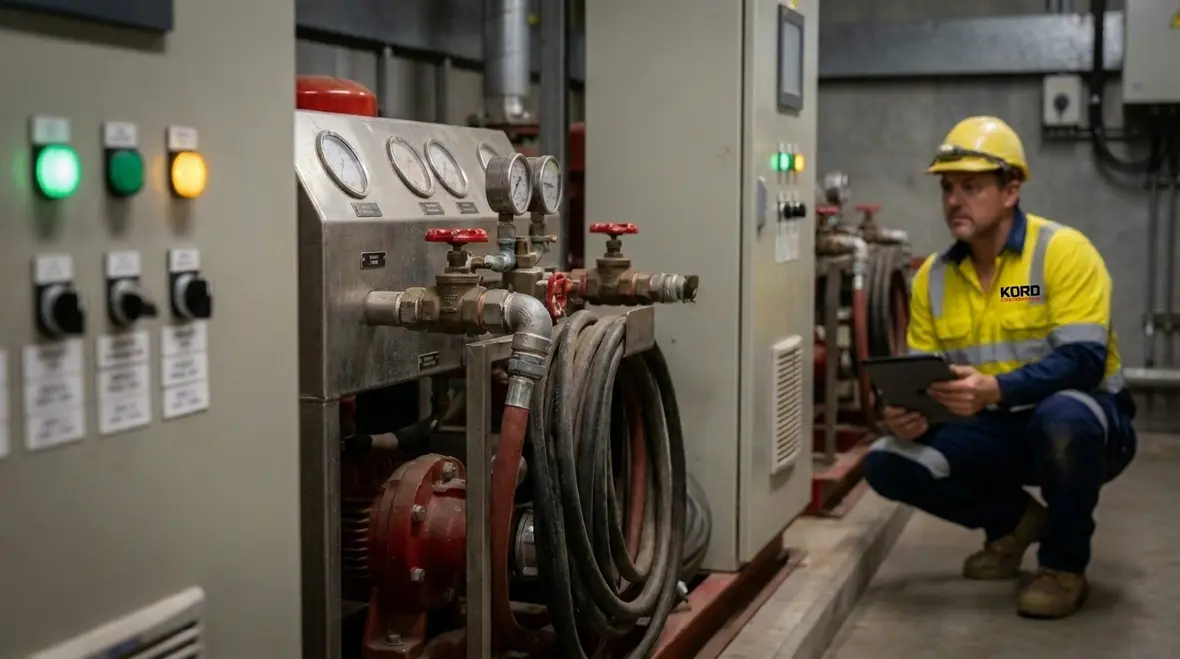
Fire pump deficiencies usually show up in a pattern. First, performance drifts. Next, alarms and indicators stop telling the truth. Finally, the system becomes non compliant or unreliable. Here are the high impact issues inspectors and engineers commonly find.
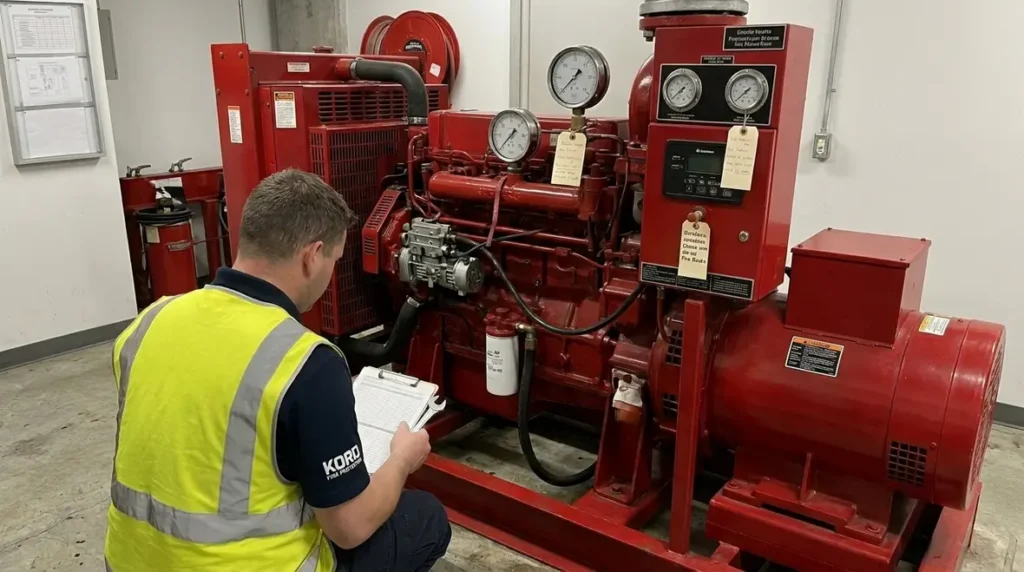
- Controller and sensor problems: Faulty pressure sensors, inaccurate transducers, or misconfigured control logic can delay start, send wrong signals, or cause unstable pressure during flow.
- Over speed or under speed operation: A pump running too slow will not meet the duty point. A pump running too fast can create excessive wear and unstable discharge pressure.
- Poor suction conditions: Blocked strainers, debris in suction lines, air ingress, or insufficient suction head can starve the pump.
- Valves in the wrong position: Discovery during site walks often includes partially closed suction or discharge valves, trapped air in jockey arrangements, or incorrect bypass configuration.
- Weak or leaking joints: Even minor leaks can affect suction pressure, priming, and overall hydraulic performance under demand.
- Test method mismatches: When facilities test using the wrong operating scenario, they can miss the very conditions the pump must handle.
And yes, sometimes the pump “passes” on paper while the system behaves differently in practice. That is why disciplined testing matters. It is also why a strong partner is useful. Facilities rarely need more surprises, especially when sprinklers and fire hydrants are waiting in the wings.
Inspection teams should also be wary of a false sense of confidence created by repeat routines. If the same abbreviated test is used every time, the same blind spots stay hidden every time. A facility can end up with neat records, familiar forms, and a pump room full of unresolved defects. None of that helps during an actual demand event. What helps is a testing program that reflects the real operating conditions the pump is expected to handle.
Why recurring minor faults deserve attention
Small recurring faults often get dismissed because they are not immediately catastrophic. But repeated controller resets, nuisance alarms, brief pressure dips, and intermittent vibration all tell a story. The story is usually that the system is drifting away from stable, repeatable performance. In a fire protection context, that is not a charming personality trait. It is a warning.
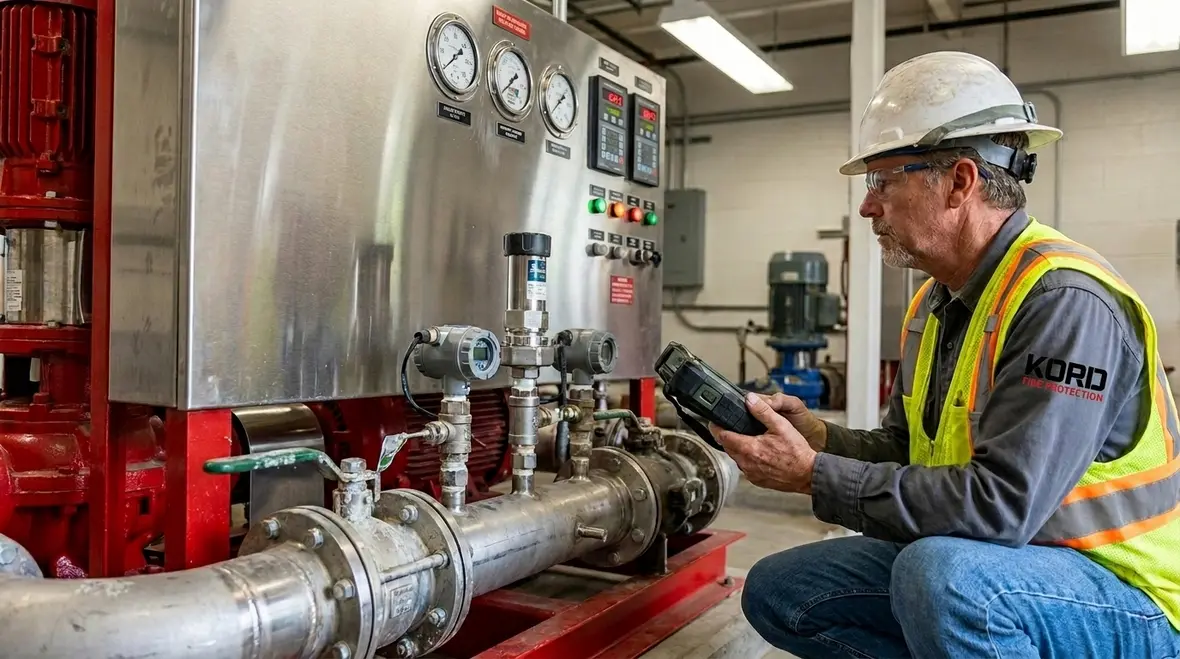
Hydraulic performance and pressure control failure signals
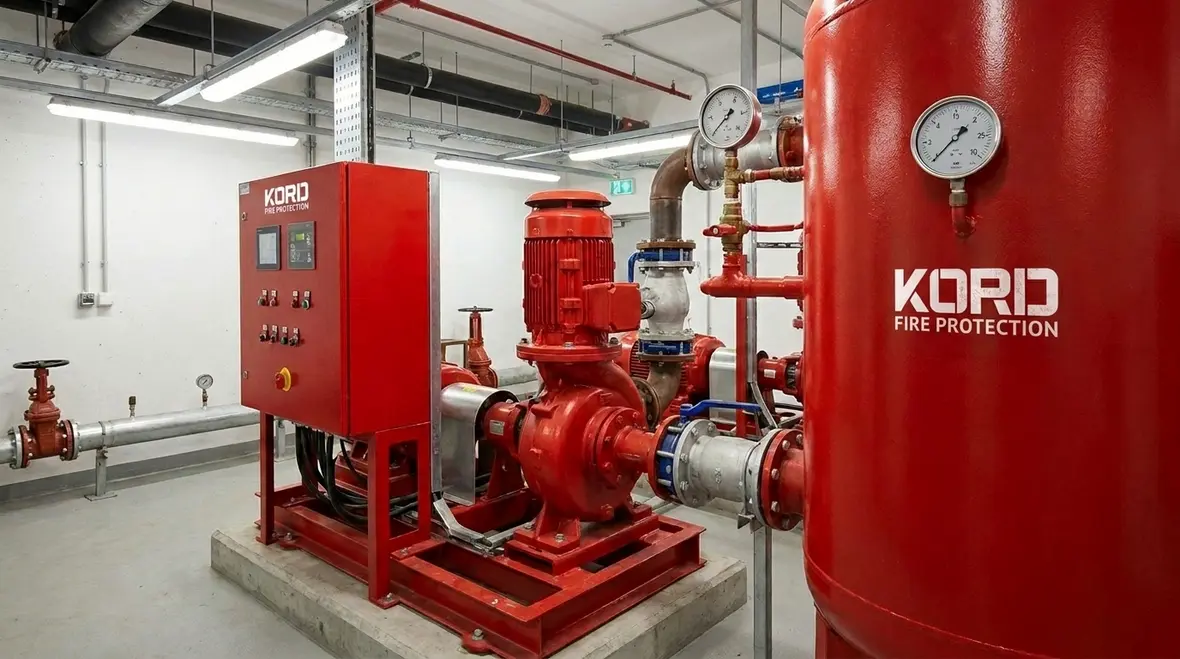
Fire pumps are not just big machines. They are precision systems. Therefore, hydraulic issues can indicate multiple underlying faults. During flow testing, inspectors should pay close attention to the shape of the pressure curve, how quickly pressure stabilises, and whether the system maintains the required discharge conditions.
Common signals include pressure that drops too rapidly when demand increases, oscillation or surging, and uneven performance between duty and standby pump states. Another red flag is when the pump performs well at one flow point but fails near the design duty point. In that case, it often points to incorrect impeller trimming, wrong pump curves used during design, or an installation that changed after commissioning.
Pressure control failures can also come from the jockey pump logic and pressure set points. If the pressure control strategy conflicts with the pump controller settings, the system can cycle unnecessarily. Over time, frequent starting and stopping accelerates wear and can reduce reliability. In retail and commercial contexts, the same problem can show up as false alarms, service interruptions, or complaints that get ignored until the wrong moment.
Another overlooked sign is inconsistency between historical results. If one test period shows healthy and stable discharge behaviour and the next one shows noticeable variation without any documented changes, something deserves investigation. Maybe a component is wearing out. Maybe a valve position changed after another contractor worked nearby. Maybe the instrumentation is drifting. Whatever the cause, a trend moving in the wrong direction is not something to file away and admire later.

Common mechanical wear issues that reduce reliability
Mechanical deficiencies are where time and neglect leave fingerprints. Fire pumps work hard only during emergencies, so they spend long periods waiting. Yet components still age. Seal wear, bearing wear, and corrosion can quietly degrade pump efficiency.
- Seal and gasket leakage: Small leaks can lead to loss of prime, corrosion, or loss of system integrity.
- Bearing condition decline: Excess heat, noise, or vibration often signals misalignment or worn bearings.
- Corrosion inside wet components: Rust and scale can restrict flow paths and affect suction strainers and impellers.
- Coupling misalignment: Alignment issues can cause vibration, seal stress, and premature component failure.
- Impeller and wear ring deterioration: These reduce efficiency and can change the hydraulic curve.
Also, facilities sometimes overlook piping support and vibration isolation. However, mechanical loads transfer through rigid mounts and pipework. Then, over time, the pump room starts to behave like a tuning fork. If maintenance teams do not monitor vibration and alignment, the pump can drift from its expected performance.
For many assets across Australia, these issues worsen after changes to the site layout, pump room access modifications, or valve line work by trades who were not involved in the original fire engineering. In other words, the system ends up different than the drawings that live in a folder somewhere.
This is one of the reasons experienced service providers look beyond the pump itself and consider the whole installed arrangement. A pump can be mechanically sound and still perform badly if surrounding conditions have shifted. Likewise, a well documented design intent means very little if the physical system no longer resembles it. The hardware always gets the final vote.

Compliance evidence and documentation gaps: the silent problem
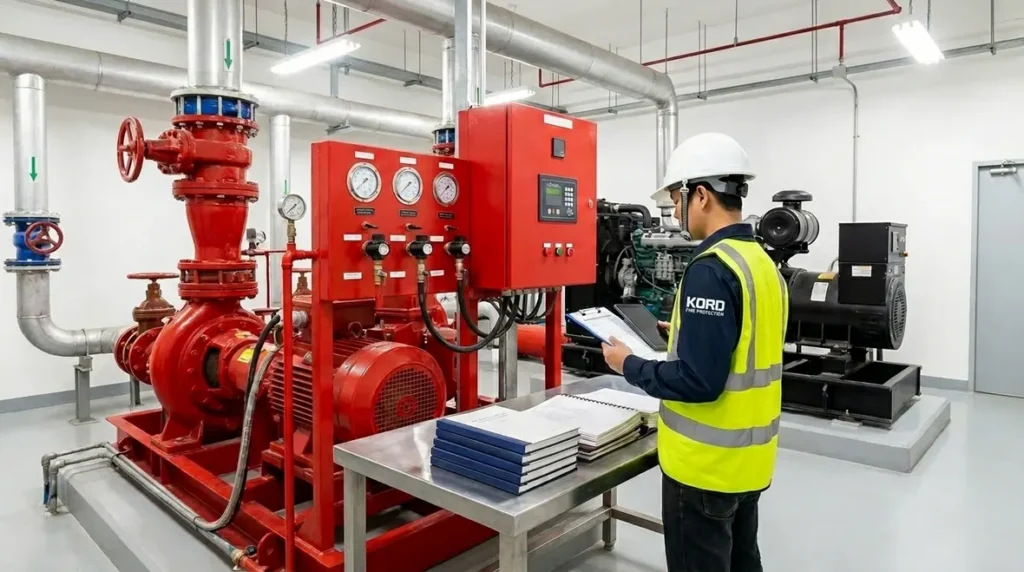
Even when equipment seems to work, documentation problems can trigger serious compliance risk. Therefore, facilities should not treat records as an afterthought. What matters is the connection between the installed asset, the maintenance activities, and the testing outcomes.
Typical gaps include incomplete commissioning records, missing calibration evidence for pressure instruments, and maintenance logs that do not show the full history of corrective actions. Another problem is when the test setup does not match the methodology required for the duty scenarios. When that happens, the system might be “tested” but not truly verified.
| Inspection item | What good looks like |
|---|---|
Pump controller checks | Correct set points, verified alarm states, sensor calibration evidence, and logged fault history |
Hydraulic test results | Recorded flow and pressure performance with traceable test conditions and outcomes |
Valve and isolation status | Documented positions, verification of correct configuration before tests |
Mechanical condition | Notes on vibration, alignment, seal condition, and any corrective work |
Of course, the best time to fix documentation is before an auditor asks. The second best time is immediately after an issue is identified, not after a repeat failure forces the timeline to get dramatic. Facilities across Australia learn this the hard way, usually with a very expensive lesson and a very short deadline.
Good documentation also helps future maintenance teams understand why decisions were made. Without that continuity, each new inspection starts from scratch, assumptions creep in, and the site becomes increasingly vulnerable to avoidable mistakes. Paperwork is not glamorous, but neither is explaining to stakeholders why nobody can prove the last calibration date.
How Kord Fire Protection becomes a vital partner for your fire pump service program
Kord Fire Protection helps industrial, retail, and commercial facilities manage fire pump service in a way that supports real reliability, not just paper compliance. In many sites, the pump room is managed by a team that is stretched thin. Then, vendors come and go, and the continuity fades. Kord steps in as a stable partner, coordinating service activities, test planning, and record keeping so the system is ready when demand arrives.
Moreover, Kord can help identify deficiencies early by focusing on performance trends, controller behaviour, and mechanical wear indicators. Consequently, corrective actions do not wait for the next inspection cycle. Instead, they align with operational realities, including access constraints and site downtime limits.
Whether the facility runs multiple pumps across large campuses or supports complex retail tenancies with shared infrastructure, Kord supports consistent outcomes. The objective stays simple. The fire pump must deliver the required performance, every time. And yes, that is a lot more comforting than hoping the system “feels like it will work.”
Conclusion
Fire pump deficiencies often start quietly, then escalate into unreliable performance, confusing alarms, and compliance headaches. By watching hydraulic behaviour, mechanical wear, controller accuracy, and documentation quality, facilities reduce risk before it becomes an emergency. Kord Fire Protection can partner with industrial, retail, and commercial sites to plan service, verify performance trends, and keep evidence audit ready. If the pump room has ever surprised a team, it is time to stop guessing and start verifying.