AS 2941 Fire Pump Compliance Testing for Owners in Australia
Quick answer: AS 2941 sets the rules for fire pumps and their compliance testing, so building owners can rely on water supply during emergencies. This article explains what compliance means in practice, what gets tested, how often, common risks, and how Kord Fire Protection helps owners stay ready, not just “paper ready.”
When a fire starts, seconds matter. That is why AS 2941 exists, and why it shows up in the real world of industrial sites, retail centres, warehouses, and multi tenant facilities across Australia. In plain terms, it helps ensure fire pumps perform as intended when they are called upon. Yet compliance is not a one time tick in a folder. Instead, it is a system of correct installation, ongoing checks, and documented evidence that the pump, controller, alarms, and associated interfaces actually work together.
Now, building owners do not wake up dreaming about pump curves and test records. Still, the better the preparation, the less likely they face expensive downtime, insurer pushback, or worse, a pump that does what it was never asked to do. The goal is steady readiness, and this guide helps a facility decision maker understand the job in practical terms.
For owners already reviewing broader fire protection services, it helps to treat AS 2941 pump compliance as part of the bigger readiness picture rather than a standalone admin task. The pump might be the muscle, but compliance is what proves the muscle can actually lift when it matters.
Understanding AS 2941 fire pump compliance in owner terms
Owners often want one simple question answered: “Are we compliant, and can we prove it?” Under AS 2941, compliance connects design intent to real performance. That includes confirming the pump system provides the required flow and pressure, that it starts correctly, and that it responds within the expected time when the fire signal arrives.
To keep things clear, owners should think of compliance as three layers. First, the system must be set up correctly at install time. Next, it must be maintained so it stays within acceptable limits. Finally, it must be tested often enough to prove it works under conditions that resemble reality. As a result, documentation becomes a living record, not a “save it for later” habit.
Also, compliance is not only about the pump itself. It is about the entire arrangement: suction and discharge conditions, power supply stability, control wiring, alarms, pump controllers, isolation valves, and the way the system ties into the site fire alarm and detection or manual actuation pathways. If one link is weak, the chain fails when people need it most. And no, a confident sign on the wall does not count as performance data.
Why owners need proof, not assumptions
That proof matters during audits, maintenance planning, and insurer reviews. It also matters internally when a facility manager changes, a site expands, or a landlord needs to show tenants that critical life safety systems are being handled responsibly. A solid testing record removes guesswork and replaces it with evidence. In the fire world, evidence is a lot more comforting than optimism wearing a hard hat.
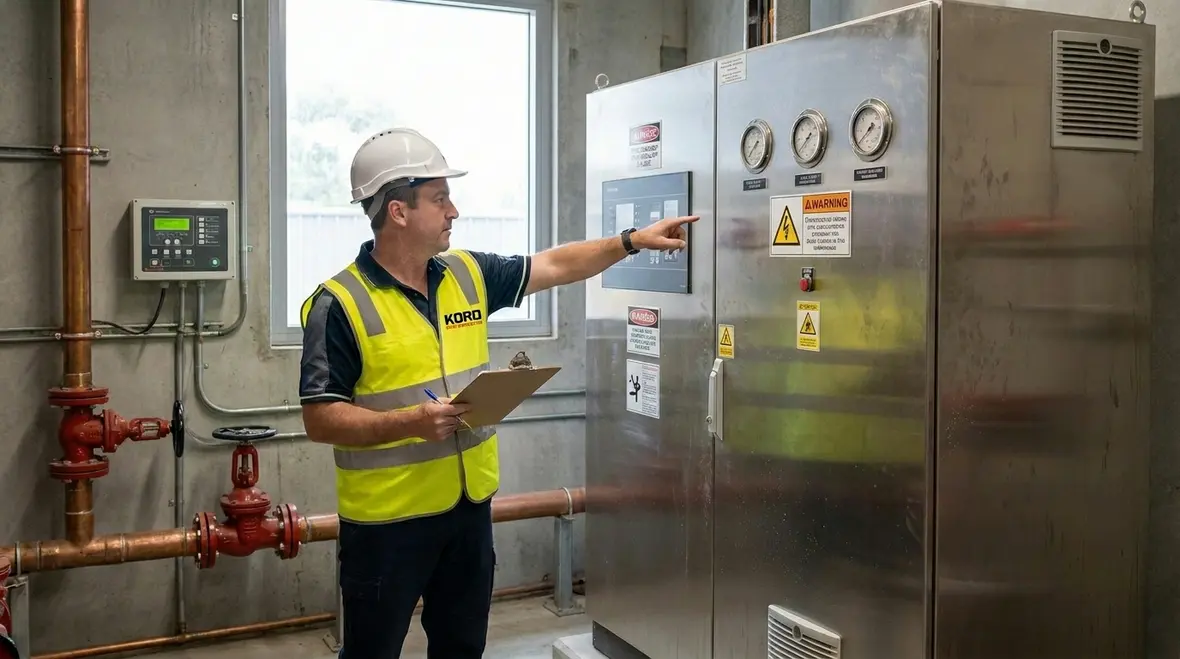
What gets checked during compliance testing and inspections
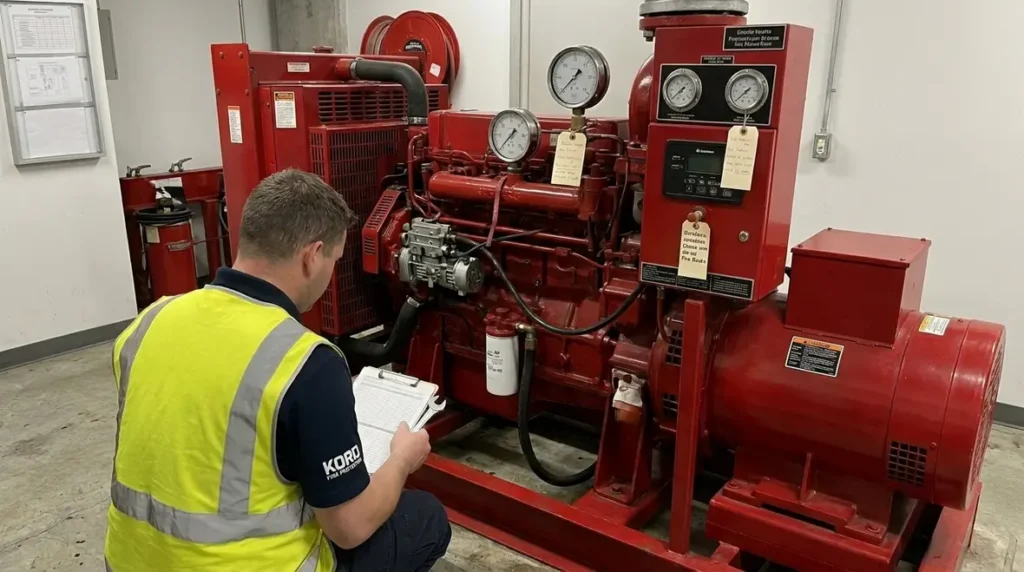
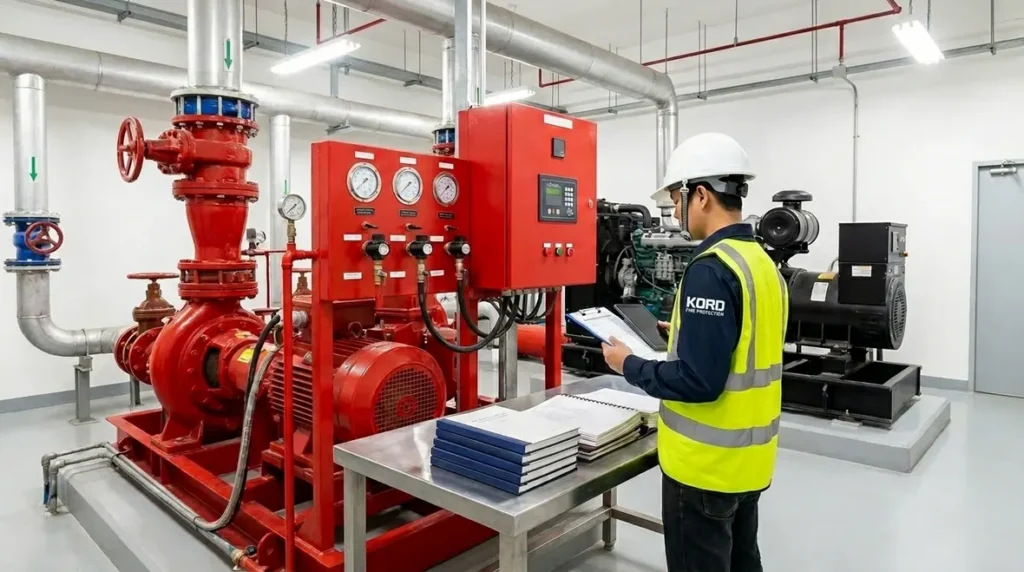
Testing under AS 2941 focuses on proving operational capability. Kord Fire Protection typically structures inspections so the owner can understand what is being checked, why it matters, and what evidence is recorded. Tests usually cover:
- Automatic start performance: the pump must start on demand and reach stable operating conditions quickly
- Pressure and flow verification: results must align with the system requirements and expected curves
- Controller function: correct operation of protective functions, alarms, and fault indicators
- Changeover and redundancy: where duty and standby arrangements exist, the sequence must work
- Diesel or backup arrangements: if installed, fuel, readiness, and operating conditions must be verified
- Flow path and valve status: valves must be in correct positions and remain usable
- Soundness of interfaces: confirmation that alarms, signals, and interlocks behave as intended
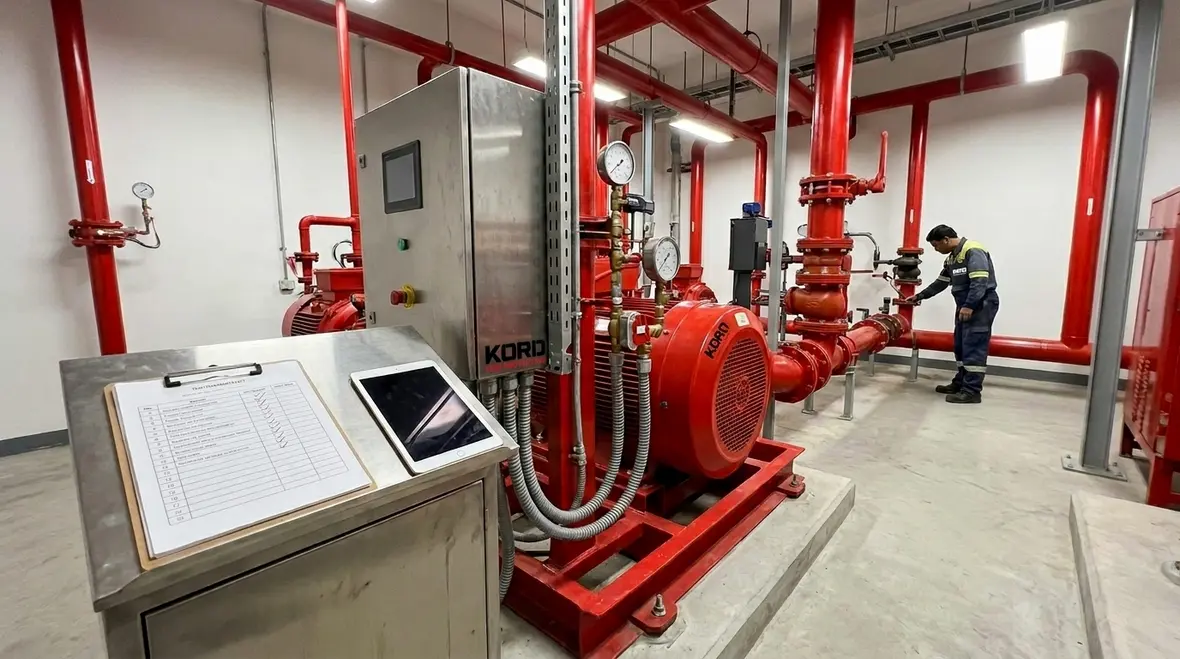
To make this practical, a good compliance approach uses a check list that matches the specific pump configuration on the site. For example, an industrial facility with variable demand and complex pipework needs a different emphasis than a smaller commercial setup with simpler connections. As a result, testing remains targeted instead of generic.
Finally, it is common for issues to show up first as “small” symptoms. A slight delay in start, a controller nuisance alarm, or a pressure reading that drifts over time can point to bigger problems. If owners ignore the early signals, the system becomes a mystery machine that only performs when it feels like it, which is not a strategy anyone should use for life safety.
Testing is about the whole system response
A pump can look healthy in isolation and still disappoint once the broader fire protection sequence comes into play. That is why useful testing checks communication between the pump equipment, alarms, controls, and the actual site conditions around them. If the sequence is clumsy, delayed, or inconsistent, the owner needs to know before an emergency supplies the worst possible performance review.
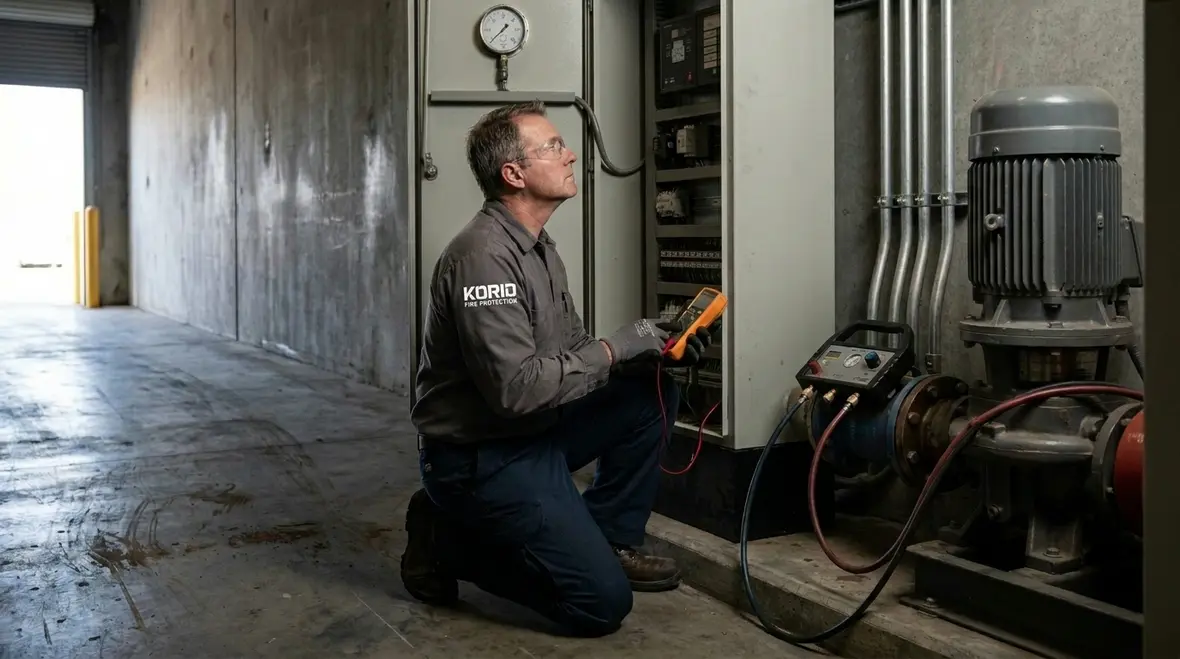
Common failure points that owners can prevent
Fire pump systems can look fine during routine walkthroughs and still fail under operational stress. Therefore, owners benefit from knowing the most frequent causes of non compliance, degraded performance, or costly repeat work. In many facilities, the usual culprits include:
- Corrosion and internal wear: the pump can lose efficiency as components age
- Power and control disruptions: loose terminations, water ingress, or control circuit faults
- Valve issues: valves that stick or have been left in incorrect positions during other maintenance
- Suction and pipework problems: blockages, air entrainment, or incorrect pressure conditions
- Gaps in testing evidence: records that do not clearly link test results to the pump and its configuration
- Seasonal readiness neglect: systems can degrade between maintenance cycles when conditions change
Moreover, facilities often change while the fire pump system stays in place. Fit outs, warehouse expansions, changes to electrical distribution, or even minor works around pipe routes can affect how the system performs. Then, the owner discovers the pump does not behave like it did last year. That is why a compliance program should align with actual site activity, not only calendar dates.
And yes, the “we will deal with it later” approach tends to arrive right on time, like a pop quiz in final exam week. The difference is that this quiz can be measured in risk, not grades.
How small faults become expensive problems
A slow trend is still a trend. Minor pressure loss, recurring alarm resets, or unexplained controller behavior can keep sliding from nuisance into non compliance. Owners who act early usually spend less, plan better, and avoid the joyless surprise of urgent repairs colliding with tenant activity or production schedules. Nobody enjoys hearing “this should have been picked up months ago,” especially when the invoice is warming up in the background.
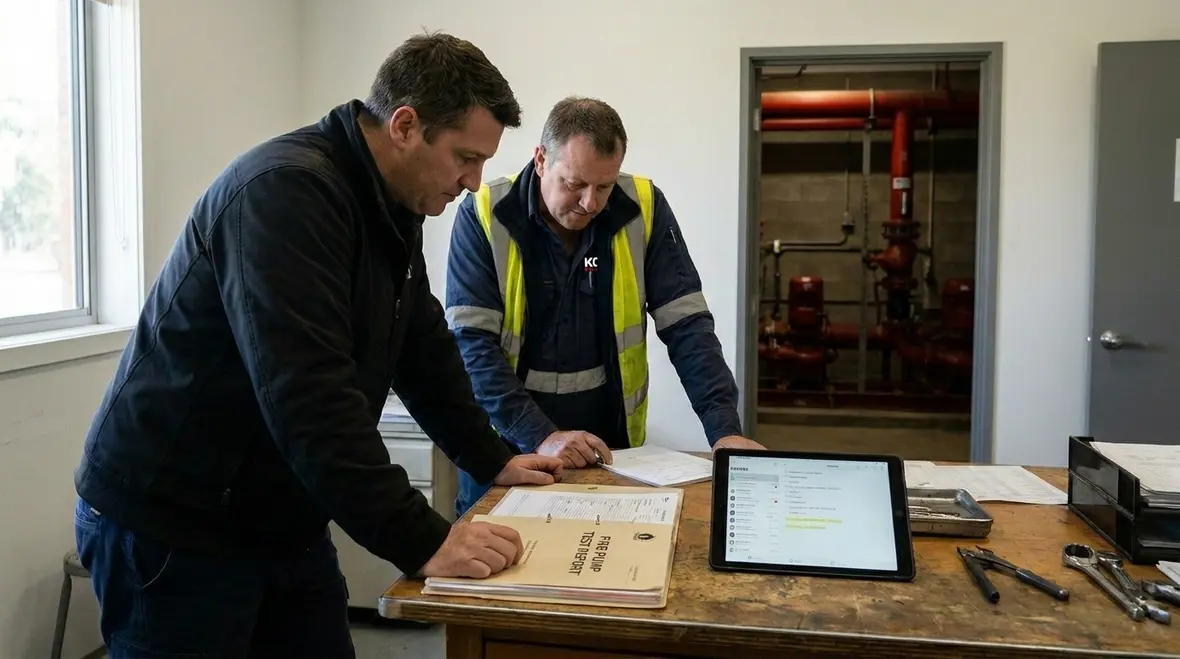
Maintaining compliance with a practical program
Compliance only holds if it is sustained. A practical program establishes clear responsibilities, scheduling, and documentation. Kord Fire Protection can help owners set up a cycle that matches operational realities across industrial, retail, and commercial properties. A strong program typically includes:
- Scheduled testing: routine checks at intervals that meet requirements and site risk
- Targeted inspection between tests: visual checks for obvious hazards and signs of degradation
- Corrective maintenance: repairs and replacements recorded with traceability
- Configuration verification: confirming the system matches design intent after works on site
- Clear reporting: results written so managers and insurers can follow them
Transition matters here. Instead of only collecting reports, owners need a feedback loop. For example, if a test shows a trend toward reduced pressure performance, the program should respond with planning before a failure forces emergency work. In addition, if the site changes, the compliance team should reassess interfaces like alarms and controllers so the system responds as expected.
Owners also benefit when the reporting format supports decisions. If a facility manager can immediately see pass, fail, and recommendations, the program becomes easier to fund and easier to defend.
A well planned program also makes coordination less painful. Sites with multiple stakeholders, mixed tenancy arrangements, or changing operating hours need a process that respects access windows and minimises disruption. That practical discipline is what turns compliance from a recurring headache into a managed routine.

How Kord Fire Protection supports building owners across Australia
Compliance should not feel like a solo mission. Kord Fire Protection can act as a vital partner by taking ownership of the technical side while keeping the owner informed and prepared. This works especially well for owners with multiple sites, mixed tenancies, and frequent operational changes across Australia.
In practice, Kord Fire Protection helps owners in several ways. First, the team builds a compliance approach that matches each pump system rather than using a one size template. Next, it delivers clear, documented test results that show what was done and what the pump achieved. Then, it supports the corrective maintenance pathway so issues do not bounce back as repeat faults.
Additionally, Kord Fire Protection understands that facility managers juggle many priorities, like trading floors, production schedules, and refurbishments. Therefore, the team works with site requirements to coordinate access, plan downtime, and reduce disruption. Nobody wants a fire pump shut down while the forklifts are doing their own action movie stunt scenes.
Finally, the partnership approach strengthens owner confidence during audits, insurer reviews, and compliance planning. When the evidence is clear and consistent, owners spend less time defending paperwork and more time operating the business.
FAQ: Fire pump compliance and AS 2941 basics
Conclusion: Get your next compliance cycle under control
Fire pump compliance should feel steady, not stressful. Owners who act early protect people, reduce downtime risk, and keep evidence ready for audits and insurers. Kord Fire Protection helps across industrial, retail, and commercial sites throughout Australia by coordinating testing, maintaining documentation, and supporting corrective maintenance with clear reporting. If your schedule is overdue or your records are unclear, contact Kord Fire Protection now to build a compliance plan that holds up when it truly counts.