Fire Sprinkler Inspection for Australian Commercial Sites
Quick Answer
For Australian commercial sites, fire sprinkler systems need planned checks, testing, and record keeping to stay reliable. A proper fire sprinkler inspection confirms the system can flow water as designed, spot maintenance issues early, and meet compliance expectations. When done with the right partner, downtime risk drops and safety rises.
In the quiet hours of an office tower, warehouses keep moving, retail keeps trading, and facilities keep humming. Yet behind those everyday routines, sprinkler systems stand by like a calm security guard with a whistle and a big water budget. That is why a fire sprinkler inspection matters for Australian commercial buildings: it verifies the system will work when someone needs it, not when it is convenient.
At Kord Fire Protection, our team treats each inspection as a business-critical job, not a tick-the-box exercise. We help industrial, retail, and facilities across Australia stay ready, document properly, and reduce the chances of unpleasant surprises during audits or emergencies. And yes, we also save people from the “we found it after the incident” moment. Nobody wants that sequel.
For businesses looking at broader compliance planning, it also helps to understand how scheduled protection support fits into the bigger picture through Australian fire sprinkler services. A well-run inspection program works best when it sits inside a consistent service strategy rather than being treated like a once-a-year scramble.
Why commercial sprinkler systems need routine checks
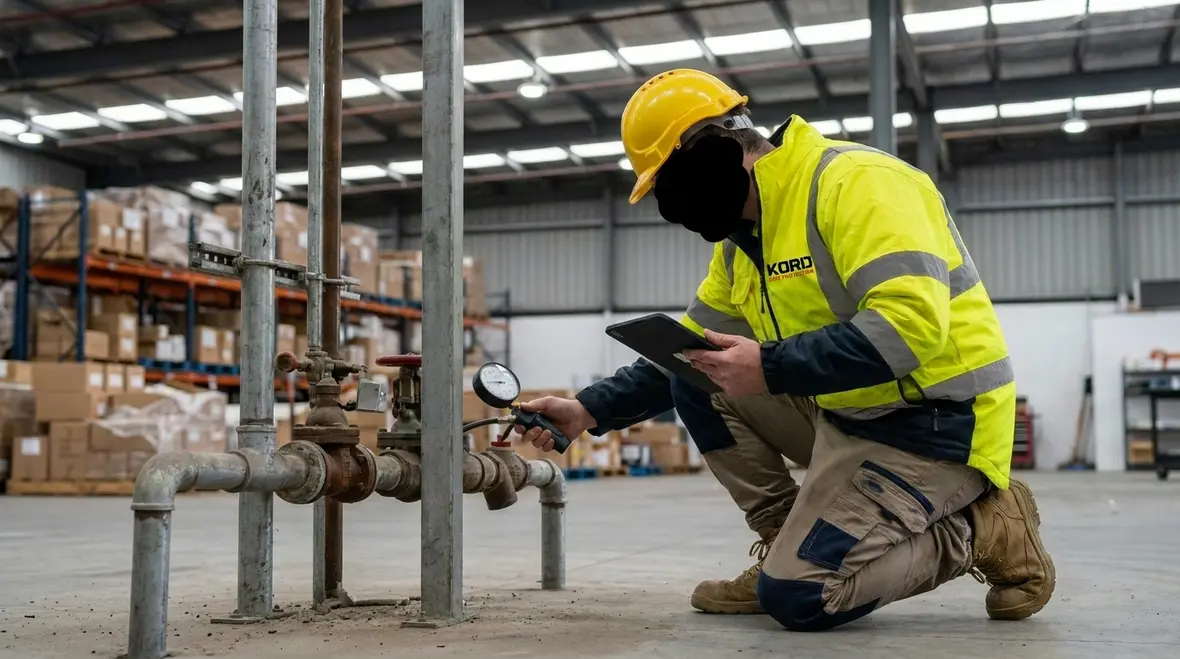
Fire suppression systems do not age like a fine wine. They age like office coffee. Over time, components can corrode, valves can stick, water flow can change, and controls can lose their accuracy. As a result, routine checks help maintain performance and support safe operations.
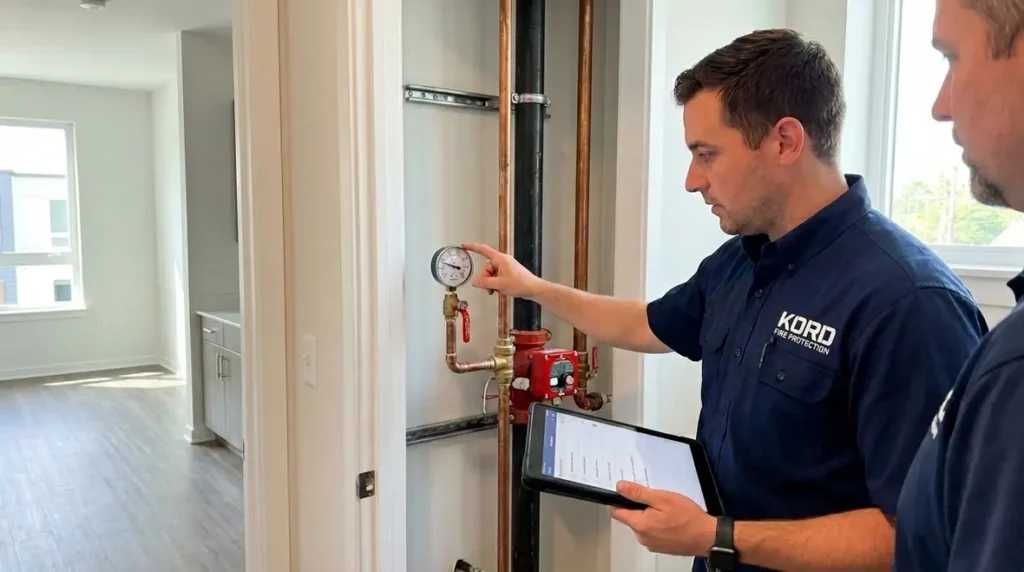
During a structured fire sprinkler inspection process, technicians assess the full chain of readiness. They verify water supply conditions, check for signs of physical damage, and examine system integrity. Furthermore, they confirm that alarms and controls align with the protection design. This matters in industrial sites with dust, vibrations, or high ceiling spaces, as well as in retail centres where renovations and fit outs can quietly disrupt layouts.
In practice, inspections reduce risk in three ways. First, they catch small issues before they grow. Second, they support compliance workflows and reporting. Third, they help building managers plan maintenance with less disruption. Kord Fire Protection works with site teams to coordinate schedules, so operations keep running while inspections do their job.
Routine checks support operational confidence
That confidence matters more than many teams realise. A commercial building can look perfectly orderly on the surface while hidden sprinkler issues slowly pile up overhead. A valve left in the wrong position, corrosion around fittings, or an unnoticed obstruction near a head can all turn into a very bad surprise at exactly the wrong time. Routine inspections pull those problems into the light before they become expensive headlines in someone’s incident report.
What an inspection typically covers in Australia
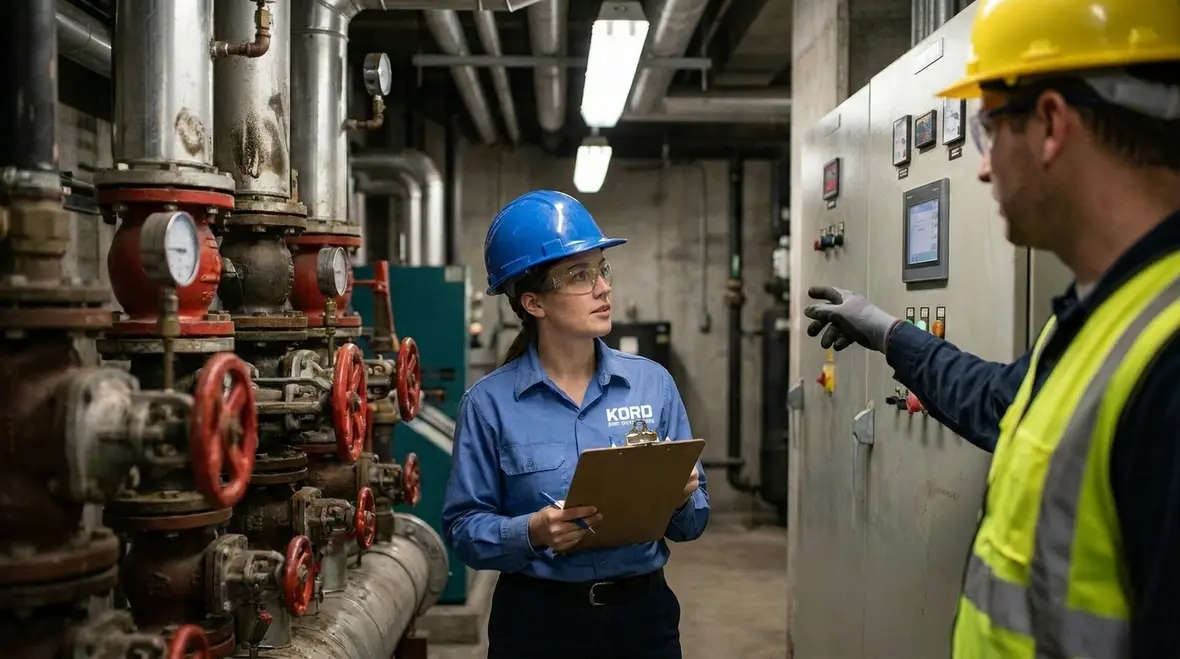
Different buildings bring different hazards, but a high-quality sprinkler inspection keeps a consistent focus. It checks what the system needs to perform, then confirms the site conditions do not block it.
Common areas included in a professional inspection include the following:
- Visual condition checks of sprinkler heads, pipework, hangers, and supports for damage, leaks, and corrosion
- Valve and control inspections to ensure they remain in the correct position and can operate when required
- Water supply verification including tanks, pumps, and mains conditions where applicable
- Flow and pressure checks in line with system type and site requirements
- Alarm and monitoring review to confirm signals reach the right control points
- Hydraulic and hazard alignment checks when the building changes, such as new racking or revised layout
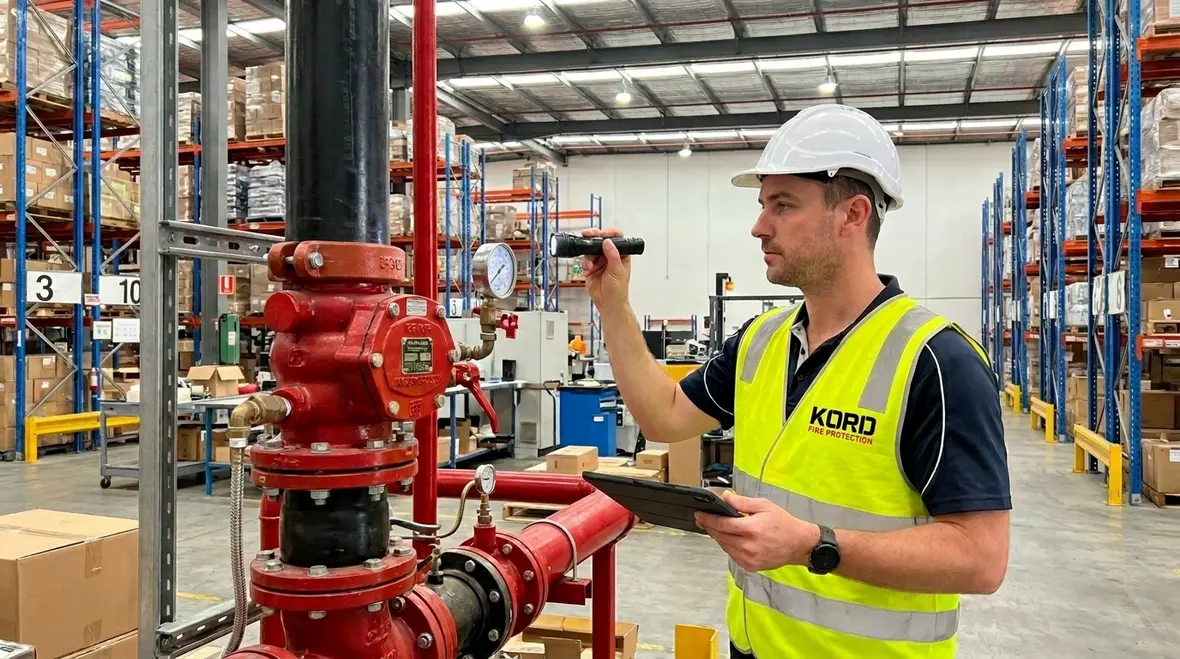
Because commercial environments change, inspections should account for real world conditions. For example, a warehouse that adds new storage can alter the risk profile, while a retail site that remodels a corridor can affect water coverage. Therefore, inspectors should link findings to building activity, not just to the equipment.
That is where Kord Fire Protection acts as a vital partner. We provide clear findings, practical recommendations, and documentation that helps facilities teams move from “we should” to “we did.”
Inspections should reflect the real building, not the drawing set from three fit outs ago
That point is worth underlining because commercial sites rarely stay frozen in time. Warehouses expand upward, retail spaces reshape aisles, offices rework ceilings, and service zones slowly become storage zones because apparently every spare corner eventually auditions to hold boxes. A useful inspection looks beyond the original intent of the system and asks whether it still matches how the building is operating today.
How to schedule inspections without disrupting operations
Facilities teams often face a balancing act. They must protect people and property, yet they cannot pause production or close trading floors for weeks. The key is planning.
A strong inspection plan considers staff movements, access routes, and safety controls on site. Moreover, it aligns with fire system shutdown constraints and testing requirements. For industrial sites, it also considers dust control, hot work zones, and forklift traffic. For retail, it considers customer access, temporary barricades, and after hours work where needed.
Here is a practical approach buildings commonly use:
- Review the latest system records and last inspection outcomes before arriving on site
- Confirm the scope based on system type, layout, and any recent changes
- Coordinate access for ceilings, plant rooms, valve cabinets, and service areas
- Plan around business cycles such as peak trading, production shifts, or loading windows
- Document outcomes immediately so recommendations stay accurate
And yes, sometimes teams discover that the “accessible” valve cabinet is apparently accessible only if you own a time machine. In those cases, Kord Fire Protection helps coordinate alternate access strategies and solutions, so the job stays safe and effective.
Common problems inspectors find in Australian commercial sites
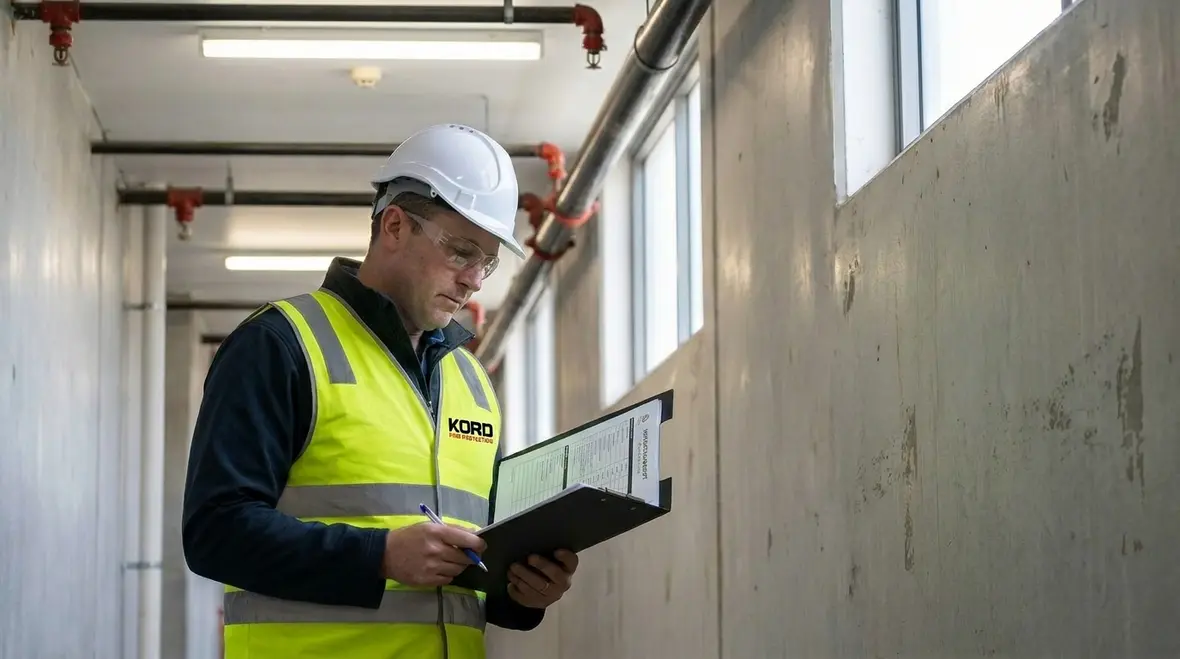
Sprinkler systems are usually installed well. Still, problems show up as buildings evolve. Typically, findings fall into a few repeat categories.
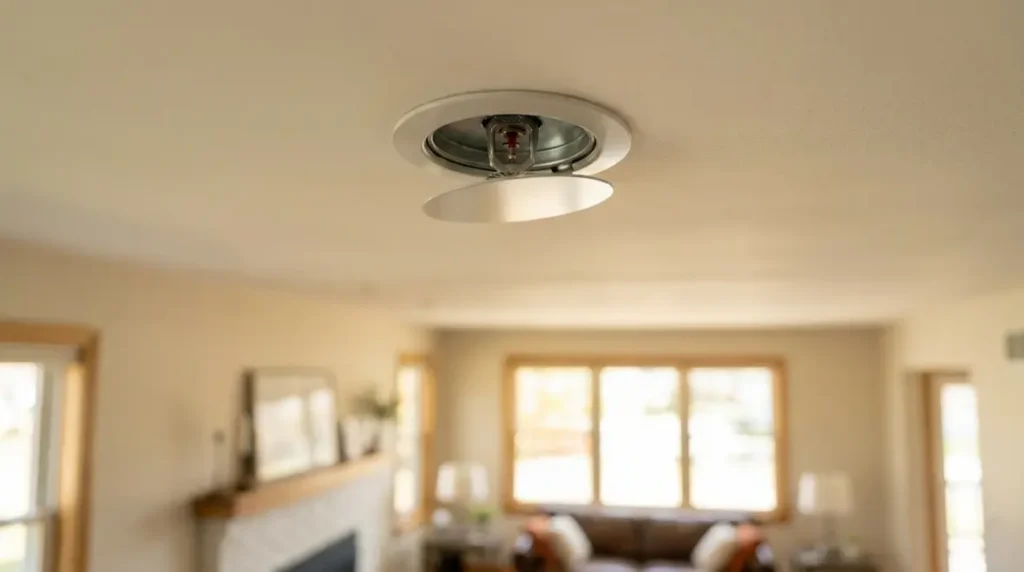
One frequent issue involves obstructions. Ceilings get modified, ductwork gets added, or display racks creep closer than expected. Even when sprinklers remain untouched, coverage can suffer if the environment changes. Another problem involves maintenance gaps. Valves may not be exercised regularly, signage may fade, and monitoring points may not reflect current site operations.
Corrosion and water staining also appear, especially in areas with condensation or humidity. Meanwhile, in facilities with frequent renovations, spare heads and identification labels can go missing. Then there is the “mystery alteration” effect, where someone changes a layout and nobody updates the fire service records. It happens. It is also fixable.
When inspectors identify these issues, they should recommend what to do next. Kord Fire Protection supports this with structured advice, so clients can address risks promptly without guessing. As a result, facilities managers can prioritize actions and budget with confidence.
The most expensive defects are often the boring ones
Very few sites lose sleep over a faded sign or a partly obstructed sprinkler head until an audit, incident, or insurance question suddenly makes those details the star of the show. That is the strange magic of fire protection: the small, dull, unglamorous details often carry the biggest consequences. Thorough inspections are designed to catch exactly those details before they get dramatic.
Compliance and reporting that facilities teams can trust
Commercial building compliance relies on clear records. Inspections should produce evidence, not vague statements. Therefore, reporting needs to be consistent, easy to understand, and aligned with the system and findings.
Good documentation typically includes the date, system details, what was checked, and what was found. Furthermore, it should explain any defects, risk level, and recommended actions. In addition, the reports should help managers track progress through maintenance cycles.
For industrial, retail, and multi site facilities, reporting becomes even more important. The building portfolio grows, staff move, and contractors change. Without solid documentation, compliance turns into a scavenger hunt.
Kord Fire Protection helps reduce that burden. We focus on reporting clarity, practical remediation guidance, and the kind of communication that keeps everyone aligned. In other words, we help you get the paper trail that actually helps, not the paper trail that just looks busy.
Building a long term partnership with Kord Fire Protection
A single inspection can solve problems. A long term partnership prevents them. Kord Fire Protection positions our work to support facilities across Australia, including industrial sites, retail centres, and commercial operations where change never fully sleeps.
We work with teams to understand how the building functions day to day. Then we align inspections with planned maintenance, site access realities, and system performance goals. As projects expand, we help update records and support safe ongoing readiness. That means fewer last minute surprises and fewer “can we get this done by tomorrow” conversations that make managers age five years overnight.
When the time comes for scheduled testing and ongoing checks, a consistent provider delivers continuity. Kord Fire Protection brings that continuity through experienced inspection practices and business focused communication.
FAQ
Conclusion and Call to Action
Fire protection should not feel like an ongoing mystery. Kord Fire Protection helps Australian commercial sites maintain dependable readiness through thorough inspection, clear reporting, and practical next steps. If your industrial facility, retail centre, or commercial building needs a scheduled review, contact Kord Fire Protection to book a professional fire sprinkler inspection and build a calmer compliance cycle. We will coordinate access, document results, and help you act with confidence.