AS 2444 Fire Extinguisher Placement and Fire Blanket Guide
Quick Answer
AS 2444 explains where to place fire extinguishers and fire blankets so staff can reach them fast and safely. It also sets rules for mounting height, distance, signage, and risk coverage. When businesses follow these requirements, response time improves and inspections get easier, not harder.
AS 2444 fire extinguisher placement that keeps response times short
Fire safety is one of those topics people only remember when the alarm sounds, which is convenient for nobody. Under AS 2444, businesses must place AS 2444 fire extinguishers so they are visible, accessible, and positioned for quick use by trained workers. In the same spirit, the standard also supports consistent planning for fire blankets, which can help control certain fires early and buy time for evacuation and professional response.
From industrial sites to busy retail and commercial facilities across Australia, our goal is the same: reduce confusion in the first critical moments. And yes, that means more than just “stick it somewhere near the door.” AS 2444 requires thoughtful layout, not guesswork.
Our company, Kord Fire Protection, helps organisations turn the standard into a practical, site ready solution. Because when extinguishers and blankets match real travel paths, hazards, and access rules, compliance becomes a system, not a scramble.
That practical approach fits naturally with broader fire protection services, where placement is treated as part of a working safety system rather than a decorative wall accessory that only gets noticed during audits. When the equipment plan connects with site operations, the result is simpler inspections, clearer staff expectations, and faster response when seconds suddenly matter.
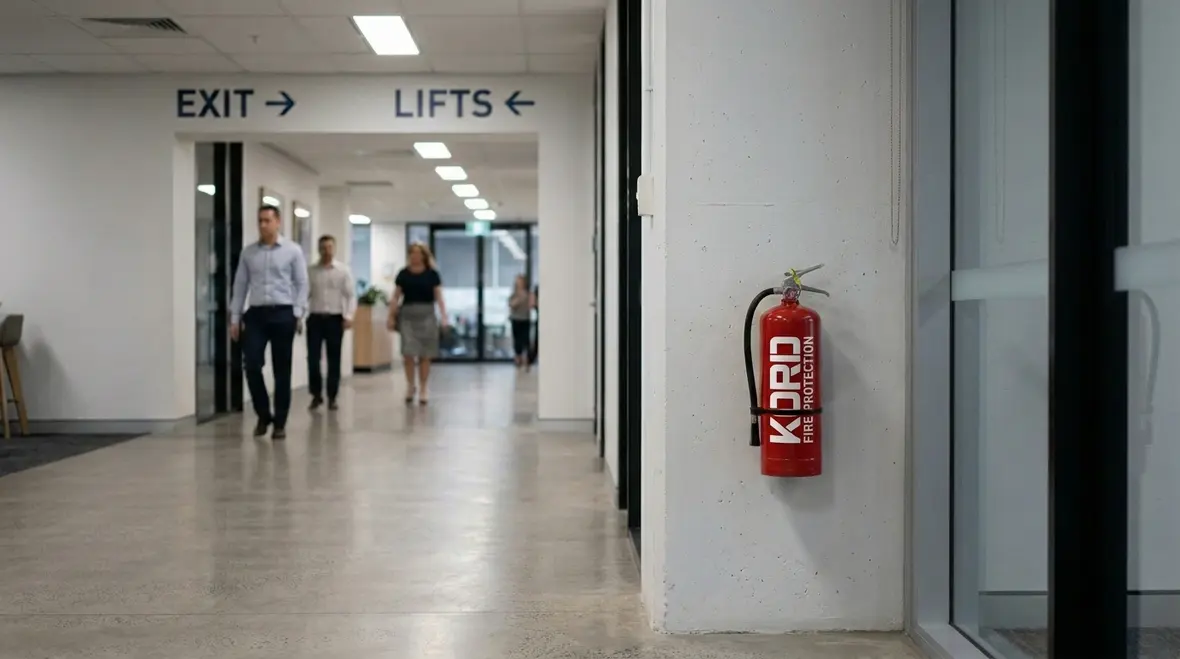
Where people actually walk: choosing locations based on risk
AS 2444 fire extinguisher rules begin with a simple truth: people move. They do not sprint across floors like they are in a movie chase scene, even if they feel like it. Therefore, placement should follow normal travel routes and access points.
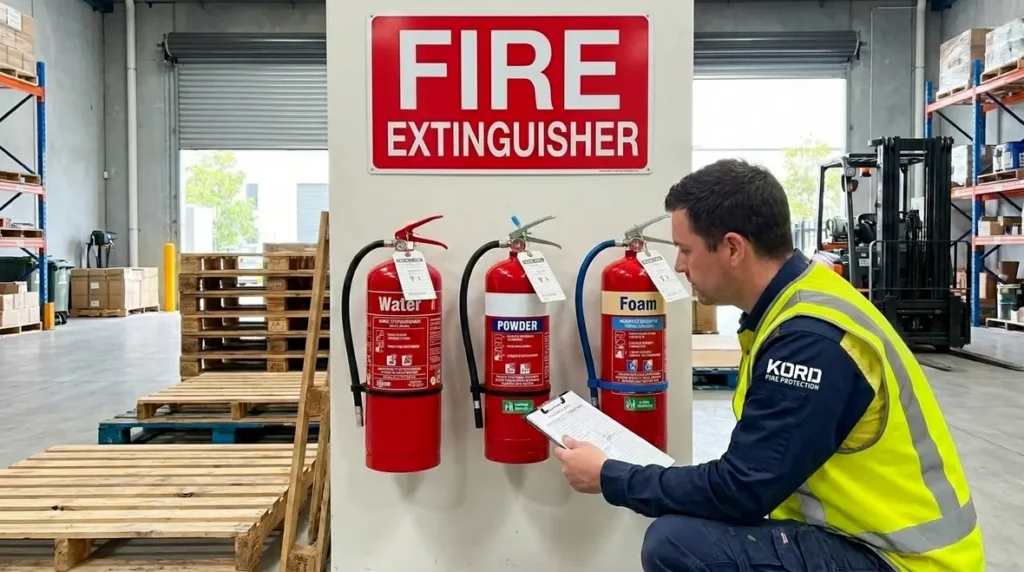
Teams should consider the specific hazards in each zone. A workshop area, a loading bay, and a service counter face different risks. As a result, the extinguisher type and the fire blanket location should align with what can ignite there. Then, they should remain easy to find even in smoke, darkness, or noise.
To make this work, businesses typically map hazards room by room. Then they confirm that each extinguisher and fire blanket sits where it can be reached without obstacles, locked doors, or tight maneuvering. If a staff member needs to remove a barrier or squeeze through equipment to reach a unit, the placement fails the real world test.
Risk zones are not all created equal
This is where a one size fits all layout quietly falls apart. High traffic areas need visibility, higher risk areas need closer consideration, and mixed use spaces need both. A warehouse office that opens into a production floor is not the same as a reception area near a kitchenette. If the same placement logic gets copied across both, somebody is going to end up walking too far or reaching the wrong equipment at exactly the wrong time.
Thoughtful planning also makes staff training easier. People remember equipment better when it appears where they expect it to be, along paths they already use. That sounds obvious, but obvious things are the ones people most often complicate.
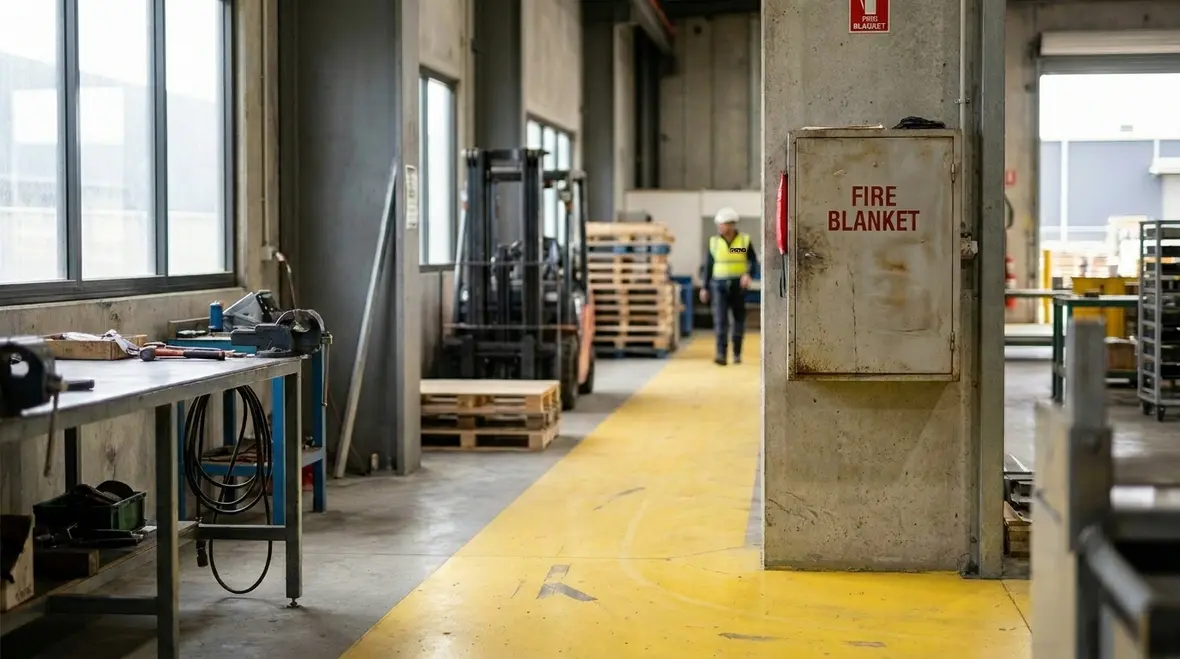
How height, access, and visibility create real usability
Now we get to the practical stuff. AS 2444 expects that extinguishers and blankets are mounted for fast action. That means clear access without stepping onto unstable surfaces or climbing. It also means the unit should not blend into the background like a gray office chair that nobody notices until the chair complains.
In many facilities, placement decisions fail for predictable reasons. Units get installed too high, tucked behind signage, or placed in corners where workers can see the wall but not the equipment. Therefore, placement should keep the extinguisher within comfortable reach and ensure it is visible at the time someone needs it.
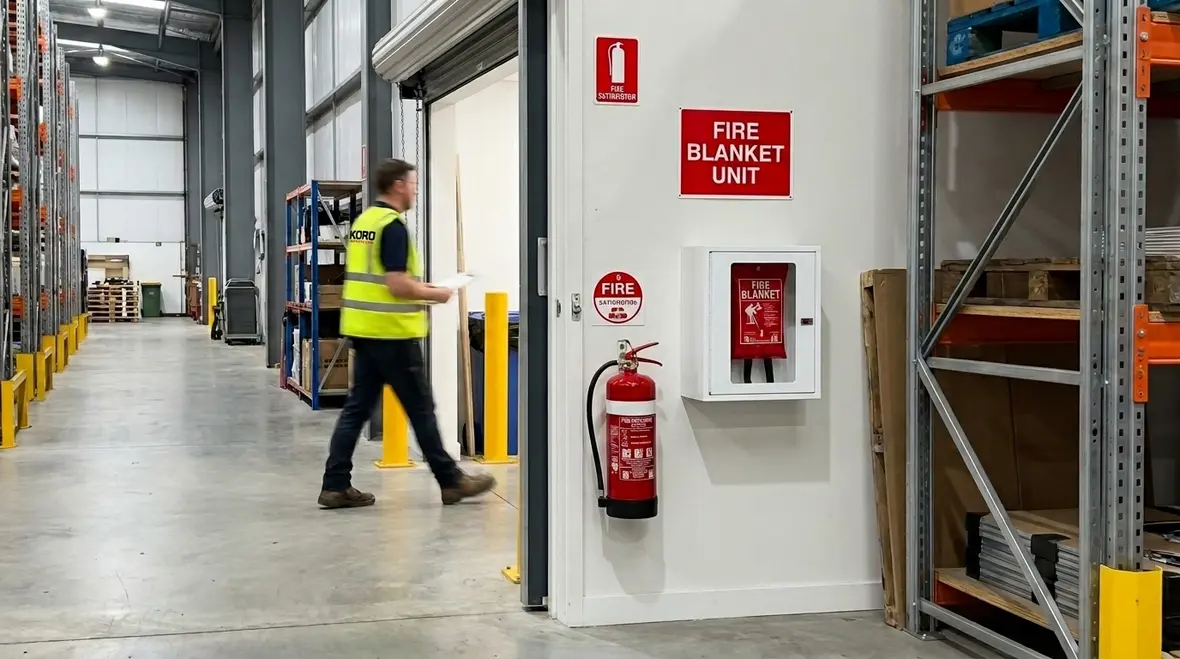
For fire blankets, location matters just as much. They should be positioned near areas where small, early fires could start, and where a person can deploy the blanket without walking through the hazard. Also, the blanket must be easy to access, with the container or cabinet clearly identified.
Kord Fire Protection supports sites by reviewing layout and confirming access paths for staff roles across shift patterns. In other words, the plan works for the day team, the night team, and the subcontractors who arrive on Tuesday and hope nobody changes the rules.
Visibility during stress matters more than neatness
A tidy install can still be a bad install if nobody can spot it under pressure. During an incident, people are not calmly admiring symmetry. They are scanning fast, following signs, and trying not to make a difficult moment worse. Good placement respects that reality. Equipment should stand out, signage should reinforce the location, and surrounding storage should not slowly creep in until the extinguisher becomes part of the furniture.
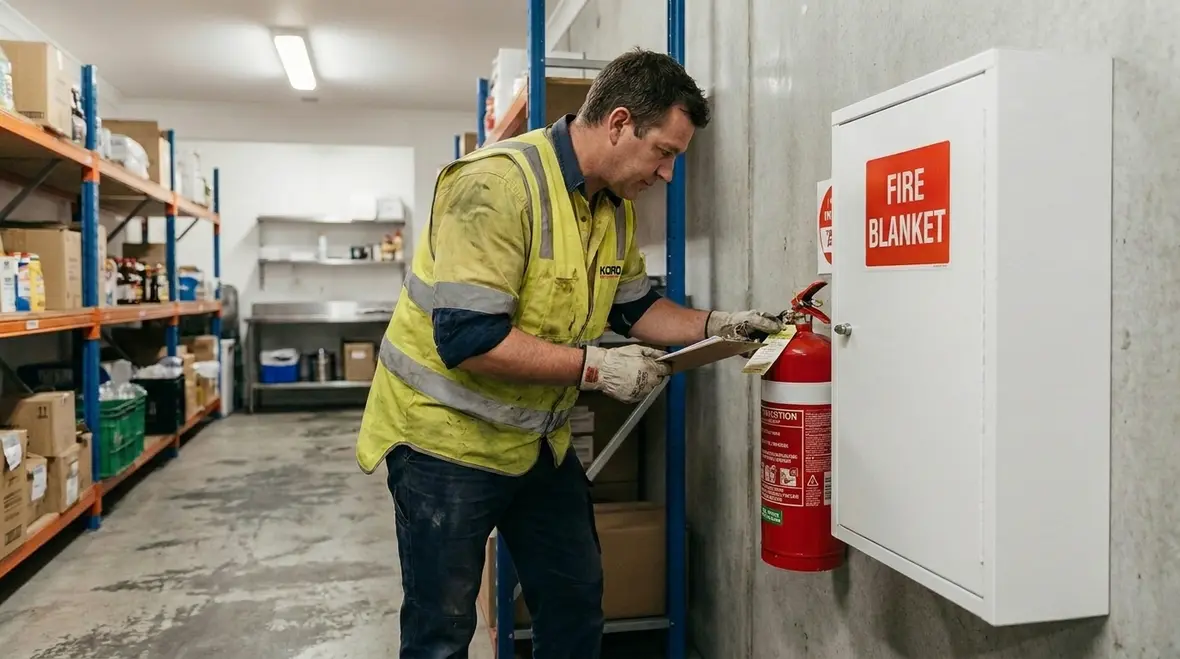
Common mounting mistakes that fail inspections and staff confidence
Inspections often uncover the same set of issues, and they usually come from good intentions gone wrong. For example, extinguishers get placed “where it looks neat,” rather than where workers can reach them quickly. Or, units are grouped in one location even though the hazard is spread across multiple work zones. That might be tidy, but it is not effective.
Another frequent problem involves hidden access. A unit might sit behind a door that stays shut, or it might be blocked by pallets, bins, or stored stock. Meanwhile, signage might point to “equipment” in general, but not clearly to the exact location of the unit a worker must grab.
Then there is the “we installed it once, so we are done” mindset. However, facility layouts change. New racking gets installed. Machines move. A shop floor expands. As those changes happen, extinguisher reach and blanket access can become mismatched to the hazard.
That is why it helps to use AS 2444 fire planning as an ongoing service, not a one time installation. Kord Fire Protection can recheck placement during site improvements, ensuring that the safety system stays aligned with how the workplace operates now, not how it operated last year.
The small issues that become big problems
Sometimes the problem is not dramatic at all. It is a display stand that migrated six feet to the left. It is a stack of cartons parked in front of the cabinet for “just this afternoon.” It is a renovation that created a new wall and quietly changed how people move through the space. None of those feel major until someone needs the equipment immediately. Then suddenly every small compromise has a very loud opinion.
Fire blanket placement: early control for the hazards that ignite quickly
Fire blankets can provide a fast, controlled response for certain fire types, especially in areas where clothing, small equipment, or specific ignition risks exist. Therefore, the placement should support immediate action. The blanket should be near likely ignition points and positioned so a person can deploy it without stepping into harm.
For industrial and commercial facilities, the best blanket placement also considers staff movement and training. If workers do not know where the blanket sits, the asset becomes decoration. Also, if the blanket is located where the cabinet must be reached from awkward angles, it slows the response.
To strengthen usability, teams should combine placement with simple site communication. When staff can locate the blanket quickly and understand when to use it, incidents are handled earlier. And earlier response reduces the chance a small event becomes a larger one that disrupts operations, damages stock, and increases downtime.
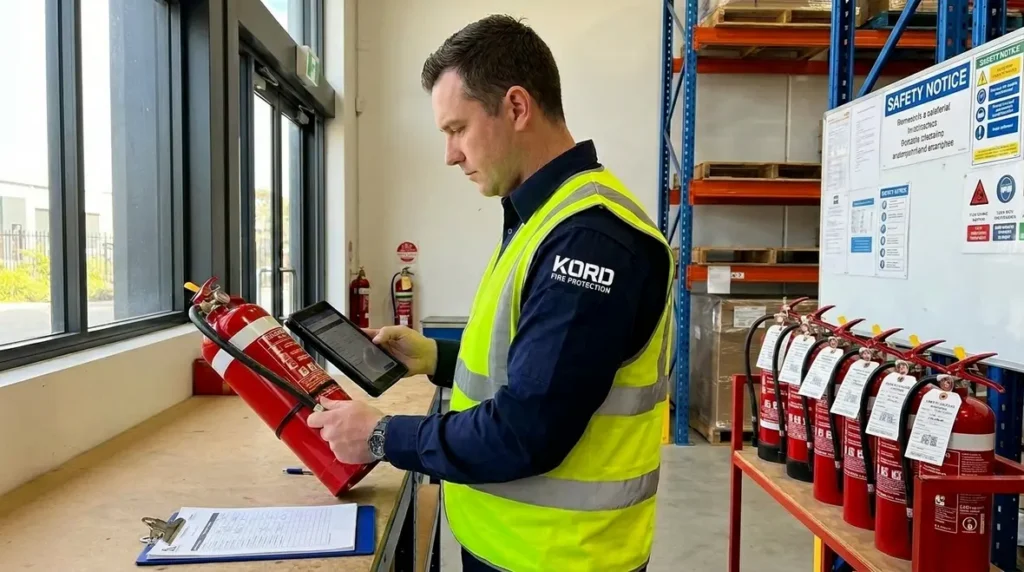
Kord Fire Protection works with facilities to align blanket locations with real operational zones, then supports maintenance and checks so the units remain ready when needed. Because a ready system is the quiet kind of confidence.

Choosing partners: why Kord Fire Protection helps beyond install
Many companies treat fire equipment as a compliance checkbox. Yet AS 2444 placement is only the start. Effective fire protection requires correct type selection, correct positioning, correct signage, and maintenance that keeps the system dependable.
Kord Fire Protection becomes a vital partner by bringing practical service across industrial, retail, and commercial environments. That includes understanding site flow, evaluating hazard zones, and verifying that AS 2444 fire extinguishers and fire blankets remain accessible and visible over time. Then, instead of handing over a folder and walking away, the service stays with the business as the workplace evolves.
Also, think about what happens during changes. New tenants. Updated layouts. Refurbishments. Storage reorganised. If extinguisher placement does not adjust, compliance can drift without anyone noticing. With ongoing support, Kord helps prevent that drift before it turns into a “why did we get flagged” meeting.
Support that keeps pace with the site
The useful part of ongoing support is not just compliance paperwork. It is having someone revisit the site when the layout shifts, when a hazard profile changes, or when new storage patterns start interfering with access. That keeps the plan grounded in what the workplace actually looks like now, not in an outdated diagram that still thinks the old shelving is there.
FAQ about AS 2444 extinguisher and fire blanket placement
Call Kord Fire Protection for placement that holds up
Fire safety should not rely on luck, heroics, or “someone will find it.” Kord Fire Protection helps facilities apply AS 2444 guidance to real layouts across Australia, so extinguishers and fire blankets stay accessible, visible, and aligned to hazard risk. If a site plan needs review or you want ongoing support, contact Kord Fire Protection today. Let the compliance feel calm, not chaotic.