AS/NZS 1841 Portable Fire Extinguisher Compliance Guide
Quick Answer: AS/NZS 1841 sets the rules for portable fire extinguishers in workplaces across Australia. It covers selection, installation, inspection, maintenance, and replacement so extinguishers stay ready when alarms get real. Kord Fire Protection can help organisations meet these requirements with compliant products and ongoing service.
In busy industrial sites, retail strips, and commercial facilities, a fire extinguisher cannot be “mostly ready.” It must be ready. That is where AS/NZS 1841 extinguishers come in, because this standard defines how portable units should be chosen, located, serviced, and kept in working order. Kord Fire Protection uses these requirements as the backbone of its service approach, helping businesses avoid the classic problem of having equipment that looks fine in photos but fails in an emergency. And yes, that is the difference between “we had one somewhere” and “we acted in time.”
For businesses reviewing their broader fire protection setup, it also helps to consider how portable extinguishers fit alongside other site measures and ongoing fire protection services. The extinguisher on the wall matters, but so does the system around it, especially when compliance needs to hold up under pressure and not just during a tidy audit photo.
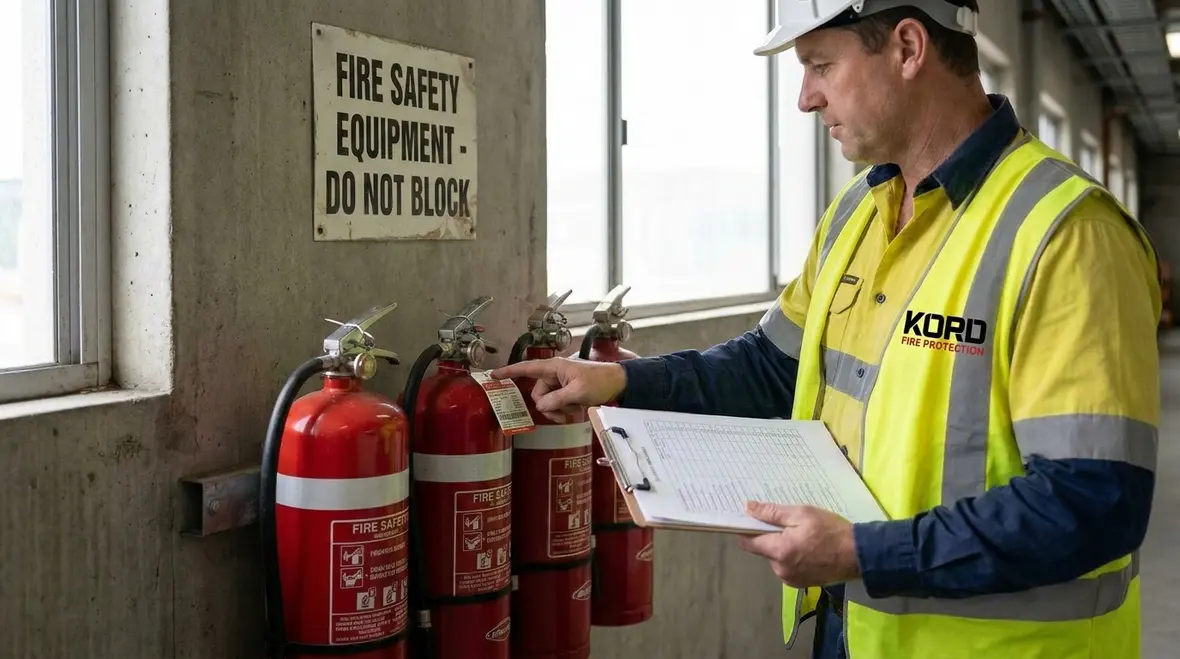
Why AS/NZS 1841 portable extinguisher rules matter on site
Fire response times often decide outcomes, and the extinguisher is usually the first tool many staff can reach. Therefore, AS/NZS 1841 focuses on practical readiness, not paper compliance. It tells stakeholders how to match extinguisher type and capacity to the fire risks in their specific environment. In addition, it sets expectations for ongoing checks so small issues do not turn into big failures later.
For facilities teams, it also reduces confusion. Instead of relying on guesswork, they follow a known structure for selection, placement, and service intervals. Consequently, the extinguisher system becomes part of the broader fire safety plan, alongside alarms, emergency procedures, and staff training.
Readiness beats paperwork every time
That distinction matters more than many sites realise. A compliant extinguisher program is not simply about ticking a box and moving on. It is about making sure people can identify the correct unit, reach it quickly, and trust that it will operate as intended if a small fire starts to grow legs. A workplace may have several extinguishers installed, but if they are poorly matched to risk or forgotten between service periods, the illusion of safety becomes more dangerous than the truth.
And look, no one wants to be the person explaining why an extinguisher was “probably fine.” Courts, insurers, and regulators do not accept probably. They accept compliance.
How selection and placement align with real fire risk
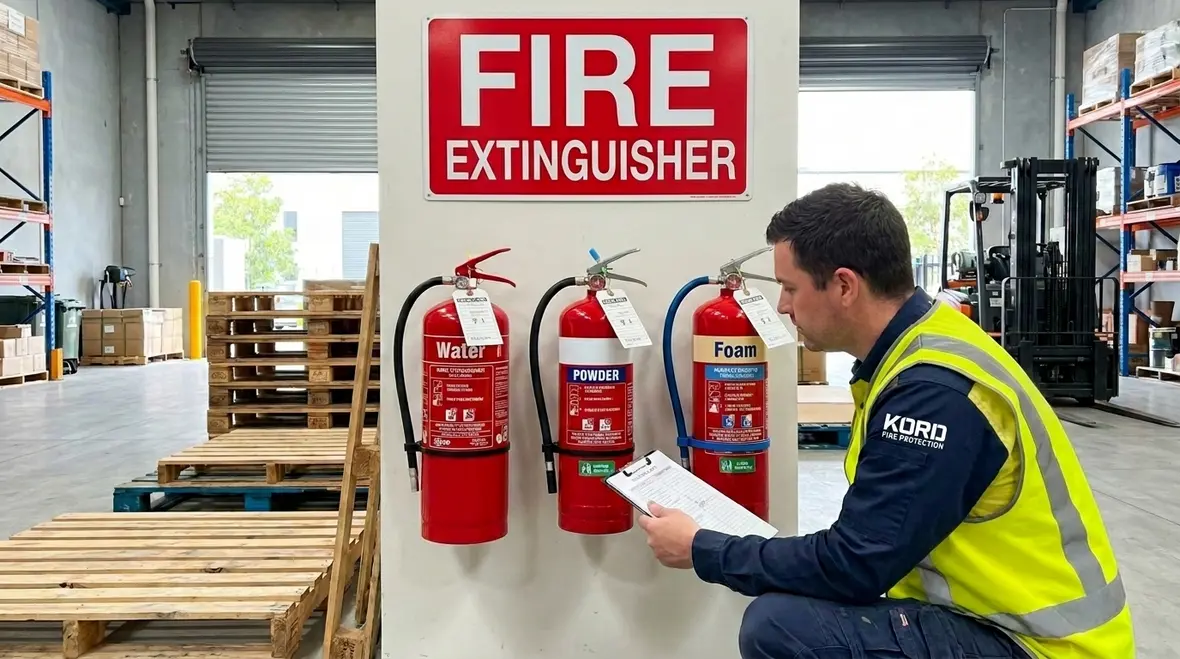
AS/NZS 1841 extinguishers are not one size fits all, and that is the point. Kord Fire Protection supports the process by helping organisations align extinguishers to the hazards present, such as flammable liquids, electrical equipment, cooking areas, workshops, or dusty industrial zones. Then, it helps ensure units are placed where people actually can access them during stress.
Good placement is not about finding wall space. It is about visibility, clear access, and route planning. For example, extinguishers placed behind storage racks or in high traffic pinch points can turn a quick grab into a dangerous detour. At the same time, locations must consider whether the extinguisher can be reached by staff using normal paths of travel, and not only by the athletic department.
Matching hazards, travel paths, and human behaviour
When selection and placement work together, the right extinguisher is more likely to be used correctly in the early stage of a fire. However, that early stage does not last long, so the system needs to be ready before training becomes a memory. This is where practical site knowledge matters. Areas with electrical switchboards, fuel handling, hot works, kitchens, or mixed storage conditions can each create different response needs. The standard supports consistency, but real world implementation still requires thought.
A smart layout also respects how people behave when stressed. They follow familiar routes, aim for exits, and often look for the most visible safety equipment first. That means signage, mounting height, visibility, and corridor access all matter. The best location on paper is not always the best location in practice if pallets, displays, or temporary stock can quietly turn it into dead space by next Tuesday.
What inspections and maintenance require throughout the year
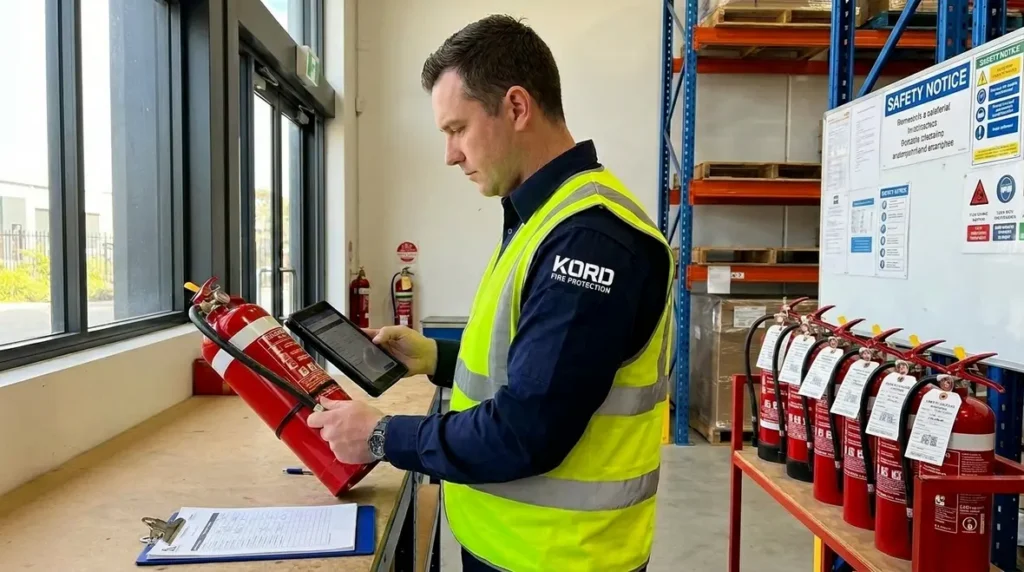
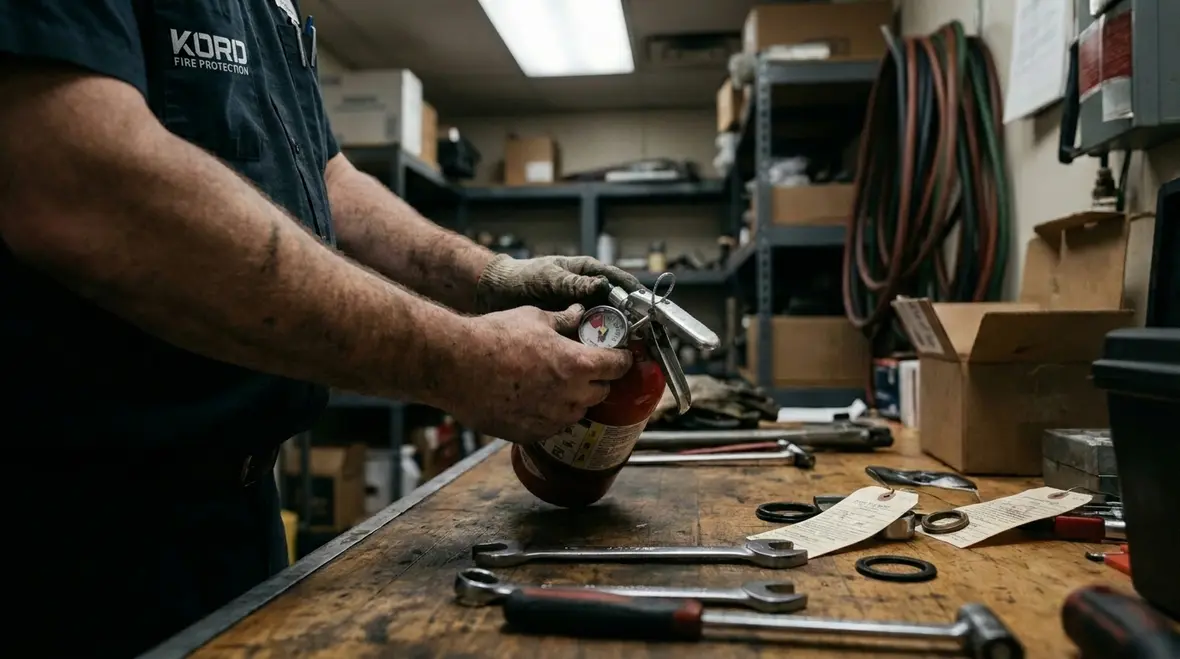
Even a new extinguisher does not stay new. Dust collects, pressure gauges change, seals age, and brackets loosen. As a result, AS/NZS 1841 drives an inspection and maintenance approach that keeps performance within expected limits. Kord Fire Protection helps businesses schedule service activities in a way that fits operations, including shutdown windows when needed.
In practical terms, inspections typically focus on identifying obvious defects and confirming that the extinguisher remains in its designated condition. Then maintenance addresses deeper checks that require qualified servicing steps. In many workplaces, this process reduces downtime risk because faults are found early, not during an emergency walk-through when everyone is pretending they are not nervous.
Small faults become large problems fast
Additionally, recordkeeping matters. A compliant system requires traceable evidence of service, so facilities teams can show what happened, when it happened, and who completed it. Therefore, the process becomes auditable for internal governance and external requirements. A tag, service record, or documented inspection trail does more than satisfy admin. It tells the site whether its equipment has remained trustworthy over time.
This is especially useful on larger sites where extinguishers are spread across warehouses, offices, amenities, plant rooms, and loading zones. Without a disciplined service plan, it becomes easy for missing units, damaged brackets, blocked access, or worn identification labels to slip through the cracks. Those cracks tend to appear at the worst possible moment, which is a very rude time for an extinguisher to have an identity crisis.
Training, compliance, and the human side of fire readiness
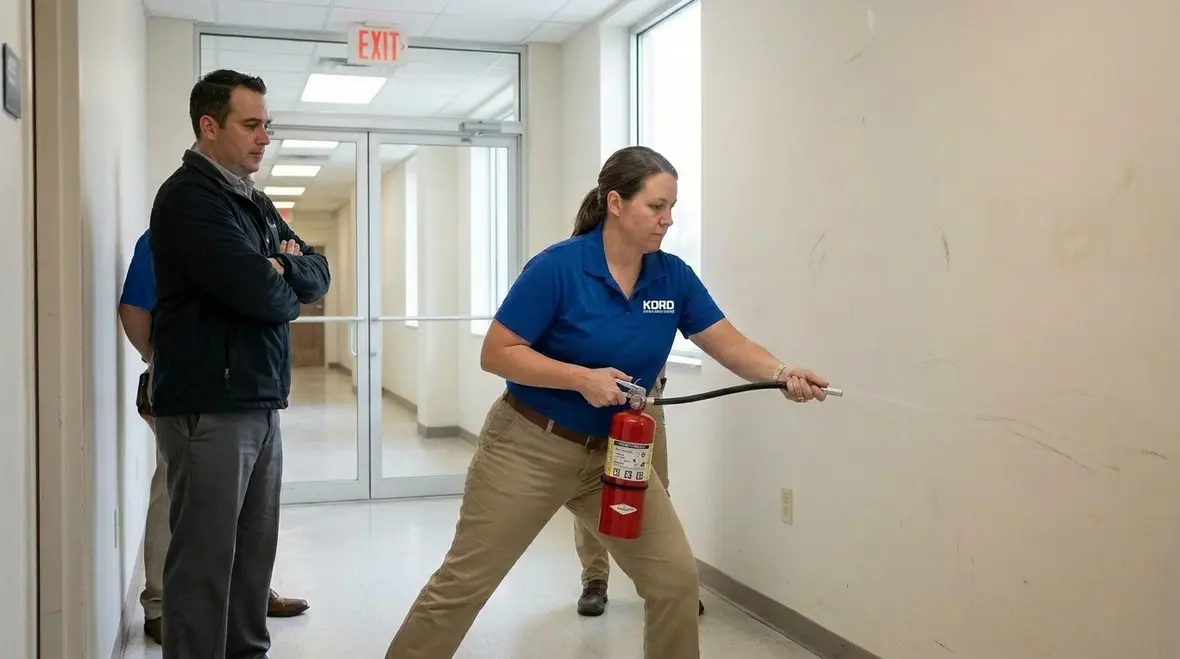
Portable fire extinguishers are only effective if staff know how to use them and when to activate them. While AS/NZS 1841 covers the equipment requirements, it also fits within a broader safety culture that includes training and procedures. Kord Fire Protection works with businesses to support a practical approach, where staff understand the basics, such as choosing the correct extinguisher type and using it with a clear escape plan.
Of course, people forget. That is normal. So, workplaces should not rely on one training session from five years ago. Instead, they should reinforce knowledge through toolbox talks and updated site procedures. Then, when incidents occur, staff react with less hesitation and better confidence.
Confidence comes from repetition, not wishful thinking
Training also helps people understand when not to use an extinguisher. If the fire is spreading quickly, smoke is building, visibility is poor, or escape routes are compromised, the priority shifts to evacuation and emergency response. That kind of judgment is part of real readiness too. The best extinguisher program in the world still depends on people making sound decisions under stress, which is exactly why practical reinforcement matters.
And yes, the “I’ve watched the video” training still counts, but it should not be the only plan. A real site uses real staff behaviour, not just cinematic bravery.

Where Kord Fire Protection becomes a vital partner
Compliance is a chain, and every link matters: the extinguisher itself, the selection process, installation standards, inspections, maintenance, and documentation. Kord Fire Protection helps organisations hold that chain together in Australia’s industrial, retail, and commercial environments. Because workplaces vary widely, Kord Fire Protection does not treat every site the same. Instead, it supports hazard based decisions that align with AS/NZS 1841 expectations.
In addition, the company provides ongoing service so businesses do not scramble at renewal time. This matters for facilities that run on tight schedules, where downtime for servicing must be planned. Then, when new areas open or processes change, Kord Fire Protection helps teams reassess needs rather than leaving risk controls frozen in time.
Compliance works better when it behaves like a system
Businesses also benefit from clarity. When teams know what is required and why it is required, compliance stops feeling like a chore and starts behaving like a system. That system is easier to maintain, easier to explain, and far more likely to survive staffing changes, layout changes, and the general chaos that busy workplaces produce for free. And honestly, a system beats a spreadsheet monster every time.
FAQ about AS/NZS 1841 portable fire extinguishers
Conclusion and CTA
Fire readiness should feel steady, not stressful. By aligning portable equipment with AS/NZS 1841 requirements, businesses protect people, assets, and operations. Kord Fire Protection helps industrial, retail, and commercial sites across Australia keep extinguishers correctly selected, placed, inspected, and documented. If a compliant plan matters to your facility, contact Kord Fire Protection today for an assessment and a service approach built for your real risks.