AS/NZS 1221 Hose Reel Service and Compliance Australia
Quick Answer
AS/NZS 1221 sets clear expectations for fire hose reel equipment, including how it should be installed, maintained, and ready to perform. For industrial, retail, and commercial sites across Australia, choosing the right hose reel system and supporting it with dependable service reduces risk, downtime, and compliance headaches.
In many facilities, fire safety isn’t the part people think about until something goes wrong. Yet, when the heat is on, a system must work fast and consistently. That is where AS/NZS 1221 hose reels come into the picture. Early on, they guide how fire hose reel equipment should be selected and managed, so water reaches the right place at the right time. And yes, it matters. If you have ever tried to grab something during an emergency while fumbling with clutter, you already understand why readiness counts.
This article explains what AS/NZS 1221 covers, what facilities should check, and how Kord Fire Protection can act as a vital partner for hose reel service and ongoing compliance across Australia’s industrial, retail, and commercial environments. For sites reviewing broader maintenance needs, it also makes sense to align hose reel checks with your fire protection service support so inspections and documentation stay practical instead of turning into a scavenger hunt with paperwork.
What AS/NZS 1221 sets for fire hose reel equipment
AS/NZS 1221 provides a framework for fire hose reel performance and readiness. It focuses on the practical side of fire response: the hose reel must be accessible, the components must suit the environment, and the system must be maintained so it functions when it is needed most. In other words, it is not just about having a reel on the wall like a motivational poster. It is about having a tool that works under stress.
Most sites deal with changing risk. Warehouses shift layouts, retail stores refresh fit outs, and plants add new processes. Therefore, the “correct” hose reel setup depends on coverage, access paths, and the way occupants move through spaces.
Proper alignment to AS/NZS 1221 helps organisations reduce uncertainty. It supports a consistent approach to installation standards, inspection expectations, and service frequency. It also helps teams avoid the classic problem of assuming that because equipment is mounted, it must automatically be ready. Sadly, walls are very supportive, but they are not a maintenance program.
Why readiness matters beyond box-ticking
A site can appear organised during a walkthrough and still struggle in a real emergency. That gap is exactly why hose reel standards matter. They translate broad safety intent into practical expectations about equipment, access, and ongoing condition. For facility managers, that means fewer assumptions and a clearer benchmark for what “ready” actually looks like on the ground.
How hose reel placement and access affect real outcomes
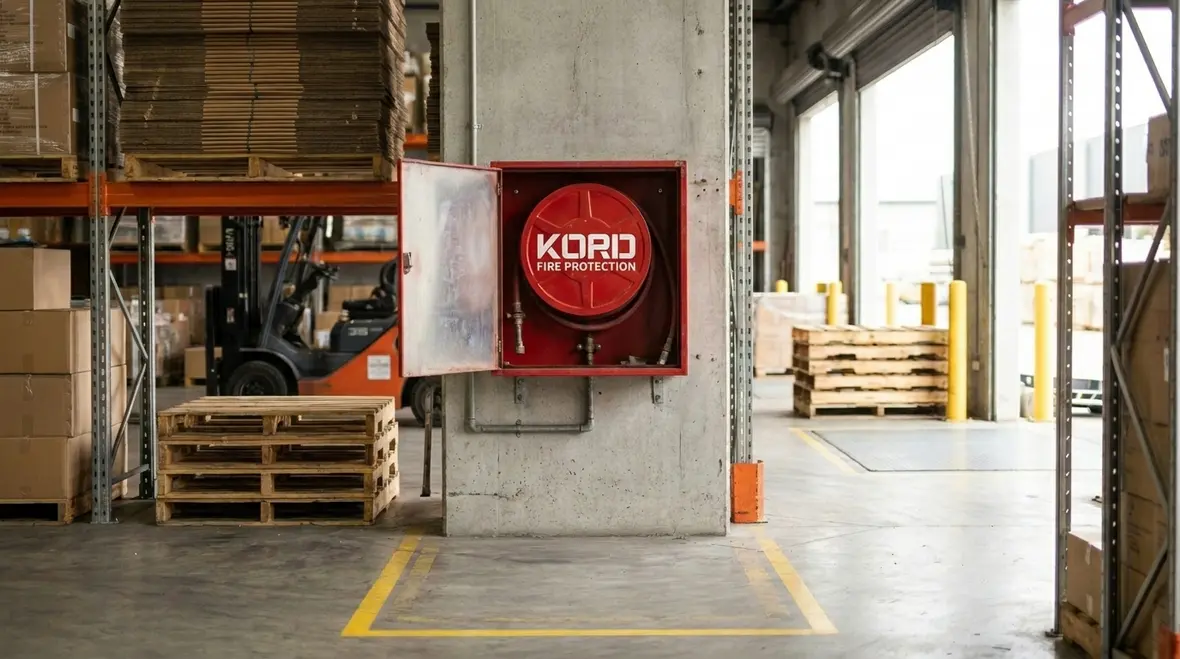
When a fire starts, every second matters. So, facility teams should look beyond compliance and consider how people actually find and use hose reels. AS/NZS 1221 hose reels need to be located so they can be reached safely, even with smoke or heat in the air.
- Visibility and access: The reel should not sit behind stock, pallets, or temporary displays.
- Clear reach: Staff must be able to access the hose and trigger operation without obstruction.
- Coverage logic: The reel should support protection of the likely fire areas based on site layout.
- Environmental suitability: Areas like loading docks can be harsh. Equipment must match the surroundings.
In practice, crews often discover “compliant on paper, messy in real life.” Then managers ask why inspections feel like a surprise quiz. The answer is simple: spaces change. That is why ongoing service planning matters.
Placement decisions should also reflect human behaviour. People follow familiar paths, avoid obstacles, and react imperfectly under pressure. If the reel is technically available but awkward to reach, that awkwardness becomes a safety problem very quickly. Good placement is not only about distance. It is about usable distance.
Common access issues that quietly build up
The trouble with hose reel access is that it often worsens gradually. A temporary display becomes permanent. A storage cage creeps outward. A new rack line narrows the route. Nobody plans for poor access, yet it arrives anyway if no one reviews changes with fire safety in mind. That is why periodic checks should follow layout updates, not just the calendar.
Inspection and service: what to check before problems spread
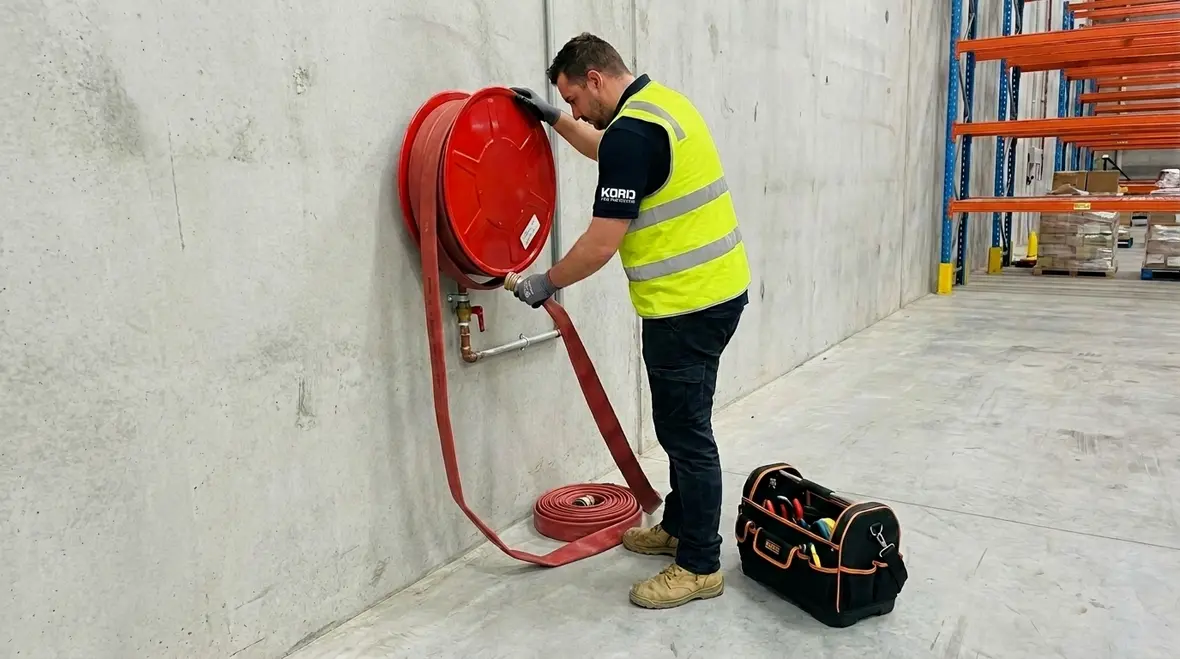
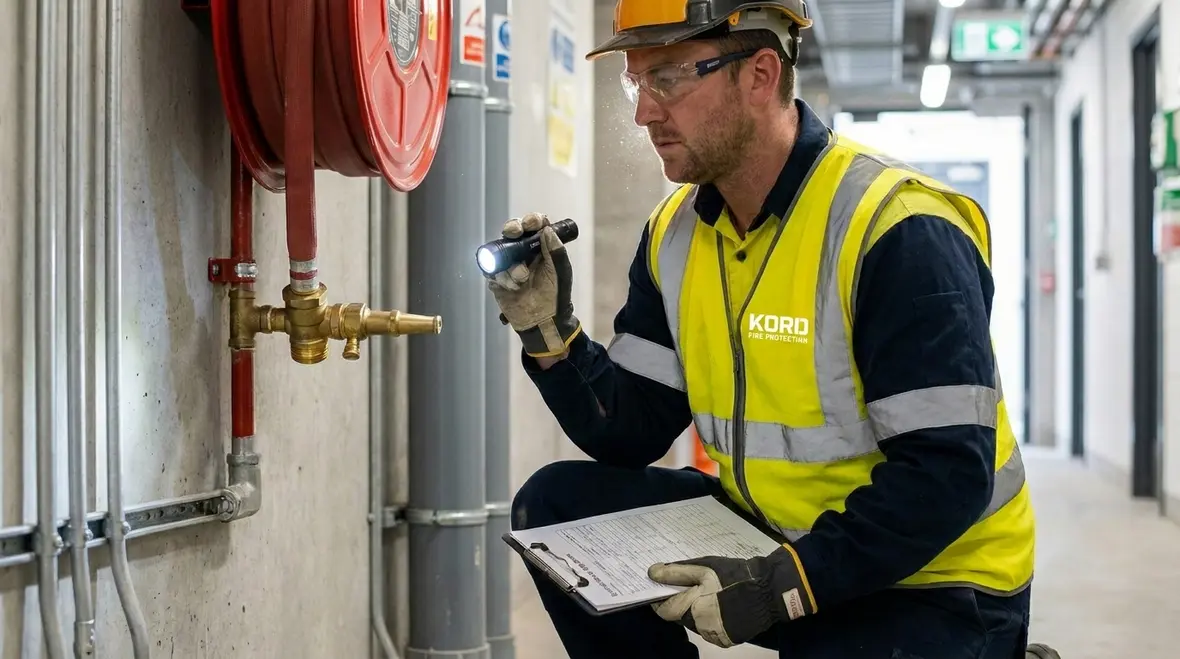
Even well-installed hose reel systems can deteriorate over time. UV exposure, corrosion, vibration, water pressure changes, and general wear can reduce performance. Therefore, inspection and servicing should not be treated like an optional chore that only happens when someone remembers.
- Hose condition: Look for cracks, abrasions, and signs of aging.
- Reel operation: Confirm the hose feeds and retracts as expected.
- Nozzle and couplings: Ensure fittings remain secure and functional.
- Pressure and delivery: Verify performance meets the required standard for safe use.
- Signage and labeling: Make sure staff can identify operation steps quickly.
Additionally, inspections should focus on what staff can do under pressure. If a reel is technically intact but the hose is tangled or access is blocked, the system still fails. It is like having a fire extinguisher behind a glass door that never gets unlocked. You do not want that moment. Nobody does. Not even the extinguisher.
A well-run service visit should leave teams with more than a ticked form. It should produce clarity: what was checked, what needs attention, what can wait, and what could become expensive if ignored. That kind of reporting is where compliance becomes useful rather than decorative.

What a strong maintenance rhythm looks like
The best maintenance programs are predictable without becoming lazy. They account for service intervals, environmental wear, operational disruption, and site-specific risks. More importantly, they create a repeatable rhythm that people can actually follow. Fire safety gets neglected when it lives only in memory. It improves when it lives in a schedule.
Installation planning for commercial and industrial sites
Industrial, retail, and commercial facilities rarely look identical from one site to the next. They have different ceilings, different rack systems, different foot traffic patterns, and different business hours. So, installation planning needs to align with operations.
- Fit out timelines: Plan hose reel placement during construction or refurbishment, not after the fact.
- Ongoing changes: When pallets, shelving, or signage moves, access routes can change too.
- Service access: Technicians need safe access for maintenance without disrupting the business.
- Consistency across sites: Groups with multiple locations often want the same service standards everywhere.
As operations expand, it becomes tempting to treat hose reel equipment as “set and forget.” Yet the reality is closer to “set and review,” because the risk landscape evolves. Good planning reduces the chance of costly rework and keeps safety workflows smooth.
It also helps to look at installation through the lens of future flexibility. A perfectly placed reel today can become inconvenient after one refurbishment, one stock profile change, or one new workflow. Planning that anticipates movement usually performs better than planning built on the hope that nothing will ever change again.
Why Kord Fire Protection can be a vital partner for service and compliance
Kord Fire Protection supports facilities that need dependable service, clear reporting, and a practical approach to keeping fire systems ready. Instead of leaving teams to piece together inspection results and maintenance schedules, Kord helps organisations manage hose reel requirements in a way that supports day to day operations.
In many workplaces, safety teams juggle compliance, plant changes, contractor management, and training. Therefore, partnering with a specialist reduces friction and helps maintenance stay proactive. Kord Fire Protection can assist with:
- Service planning: Align inspections and maintenance with operational schedules.
- Condition checks: Identify issues early so repairs do not become emergencies.
- Documentation support: Provide clear outcomes so stakeholders understand the status of equipment.
- Site specific advice: Recommend improvements based on what technicians observe in the field.
To borrow a pop culture line, safety should not be “survive and hope.” It should be “prepare and perform.” And yes, we get it, no one wants another vendor folder full of paperwork. Kord aims to keep the process straightforward and business friendly, while supporting the requirements that protect people, stock, and continuity.
Why external support makes compliance easier
Internal teams already manage enough moving parts. When hose reel servicing is coordinated well, it stops competing with every other operational demand. A specialist partner helps translate inspection outcomes into actions, timelines, and records that make sense to both site teams and decision-makers. That means less scrambling before audits and fewer avoidable surprises afterward.
Practical next steps for facility managers
Facilities that want results should start with a simple gap check. Then they should connect it to a service rhythm. So here is a practical path forward.
- Confirm coverage and access: Walk the routes staff use during normal operations, not just during inspections.
- Review reel condition: Look for signs of wear, blockage, or uncertain operation.
- Align maintenance timing: Schedule service when it creates the least disruption.
- Track changes to layouts: Any fit out or warehouse adjustment should trigger a quick review of hose reel accessibility.
When this routine becomes consistent, teams reduce risk and avoid last minute surprises. And if anyone asks why it matters, the answer is easy: because fire does not negotiate, and neither should maintenance planning.
FAQ
Conclusion
Fire hose reel readiness is not luck. It is planning, servicing, and maintenance that keeps systems dependable for industrial, retail, and commercial sites across Australia. Kord Fire Protection helps organisations manage hose reel equipment with a practical approach to inspections, reporting, and ongoing service. If your team wants fewer compliance surprises and more confident performance, contact Kord Fire Protection today for a tailored service plan that fits your site.