AS 1851 Diesel Fire Pump Maintenance Guide for Australia
Quick Answer
AS 1851 guides how businesses should plan, inspect, test, and maintain diesel fire pumps so they keep delivering reliable fire performance. The right routine covers starts, alarms, control systems, fuel readiness, and flow tests. Kord Fire Protection helps organisations across Australia stay compliant and ready, not lucky.
The quiet truth about fire pumps is this: they do not care about panic, deadlines, or “we’ll do it later.” They respond to maintenance, procedures, and evidence. That is why AS 1851 sits at the heart of a proper diesel fire pump maintenance guide in industrial, retail, and commercial facilities across Australia. In practice, it sets expectations for how teams should manage performance over time, so the pump can start, supply water, and keep working when it matters most.
From that baseline, the rest of this guide breaks down how organisations should approach maintenance in a way that is calm, thorough, and actually usable on site. And yes, it also helps prevent the kind of moment where the pump refuses to start, and the only thing that runs is everyone’s nerves. For organisations reviewing broader compliance needs, Kord Fire Protection’s fire protection services fit naturally into a planned maintenance strategy without turning the process into paperwork theatre.
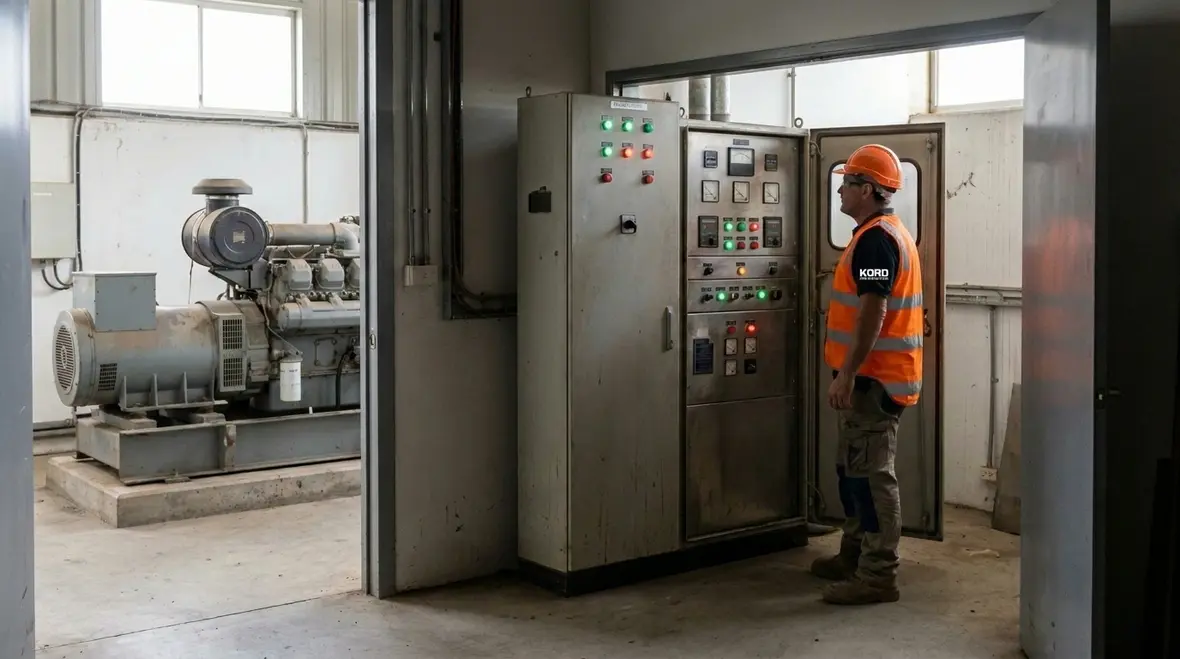
What AS 1851 Diesel Fire Pump Maintenance Covers
AS 1851 provides a structured way to maintain fire pump systems, including diesel driven sets, through scheduled work, recorded checks, and testing that matches the system’s risk. Consequently, a proper plan does not just “service the engine.” Instead, it verifies that each component can perform its job under fire conditions.
Typically, this includes a clear maintenance schedule, defined test intervals, and documented outcomes. Therefore, facilities reduce uncertainty and build a trail of compliance. Also, teams avoid the classic problem of doing random tasks that look busy but do not prove performance.
Why structure matters more than good intentions
A diesel fire pump can look perfectly fine right up until the moment it is asked to do something serious. That is exactly why a structured maintenance program matters. It forces consistency, creates accountability, and gives facilities a repeatable method instead of relying on memory, confidence, or the old classic, “I checked it a while ago.” In life safety work, “a while ago” is not a maintenance interval. It is a confession.
Daily Readiness, Weekly Checks, and Monthly Discipline
Diesel fire pumps rely on readiness. Even when the pump rarely runs during normal operations, it still must stay ready to start instantly. As a result, the maintenance approach starts with routine checks that detect small issues early.
Practical examples include inspecting for signs of leaks, checking visible fuel and oil levels where applicable, and confirming that the controls show normal status. Then, teams should verify battery health, charging performance, and that the pump area remains clear, clean, and functional. Next, they confirm alarms and interlocks operate correctly, because a fire pump that starts is useful, and a fire pump that starts and signals properly is even better.
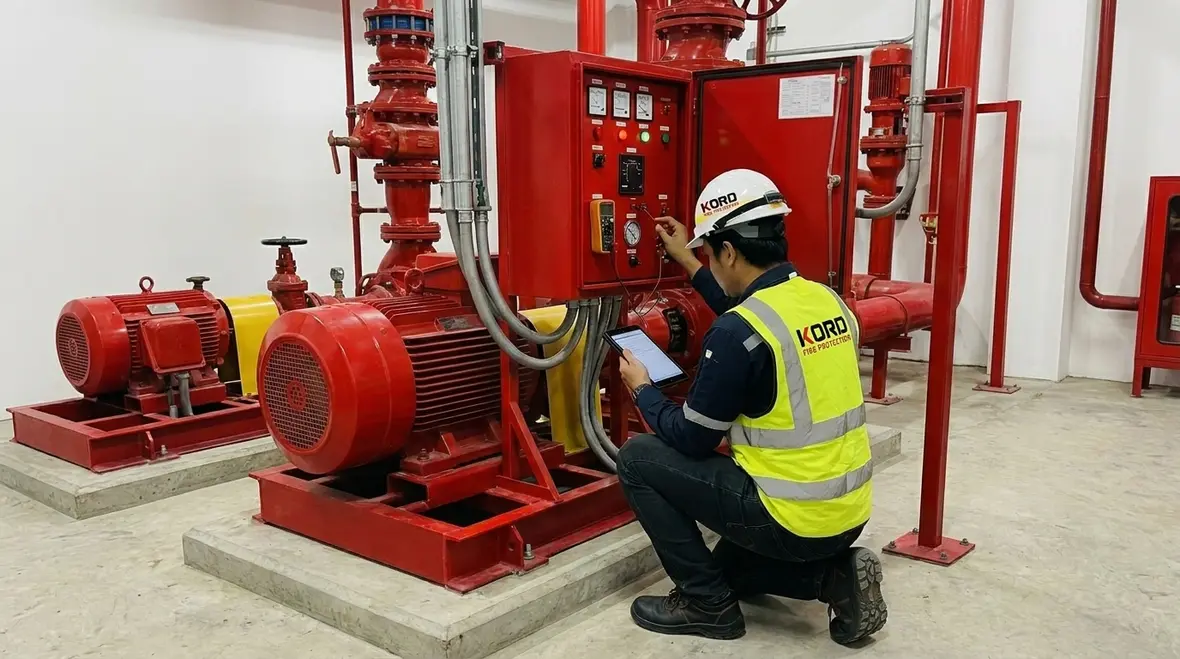
For many sites, the monthly cadence becomes the backbone. At that stage, technicians typically focus on function checks, condition monitoring, and verification that the set can start reliably from the control panel. Furthermore, they should check that the jockey pump, where fitted, stays within expected behaviour so system pressure remains stable. If a site has frequent false starts or control faults, the maintenance plan should catch it before it becomes a recurring “mystery drama.”
A practical rhythm for site teams
- Daily awareness of panel status, obvious leaks, and general pump room condition.
- Weekly attention to batteries, charger health, fuel visibility, and alarm status.
- Monthly discipline around functional checks, starting reliability, and recorded outcomes.
- Prompt fault rectification so recurring issues stop becoming permanent residents.
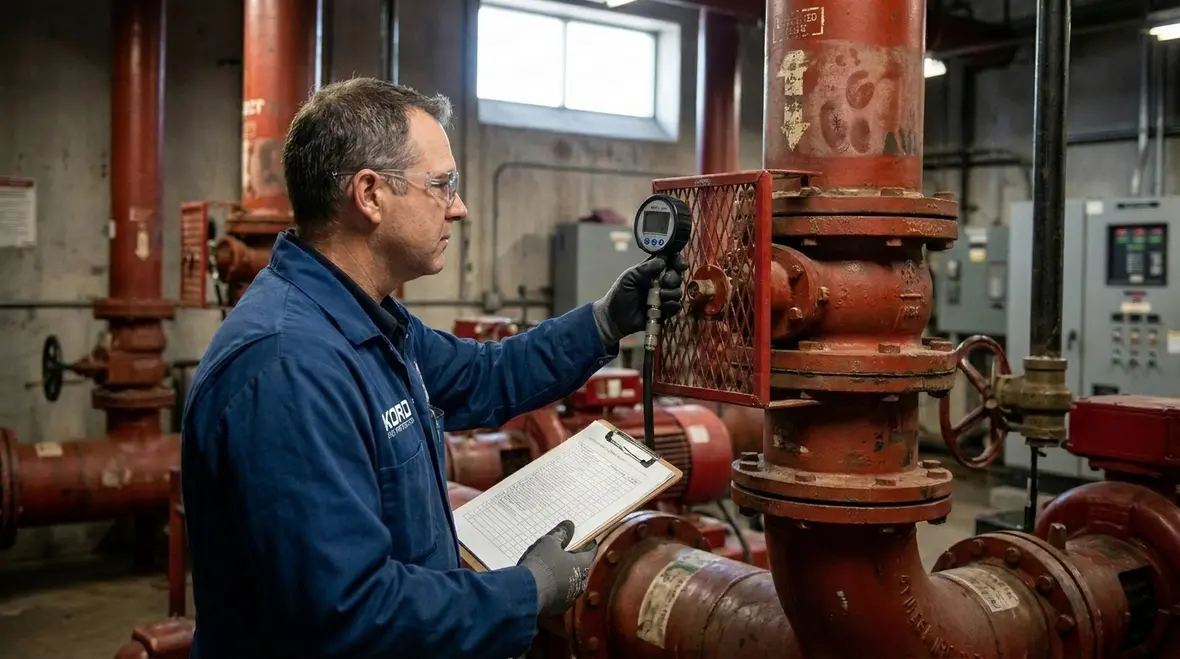
Routine Testing That Proves the Pump Can Deliver Flow
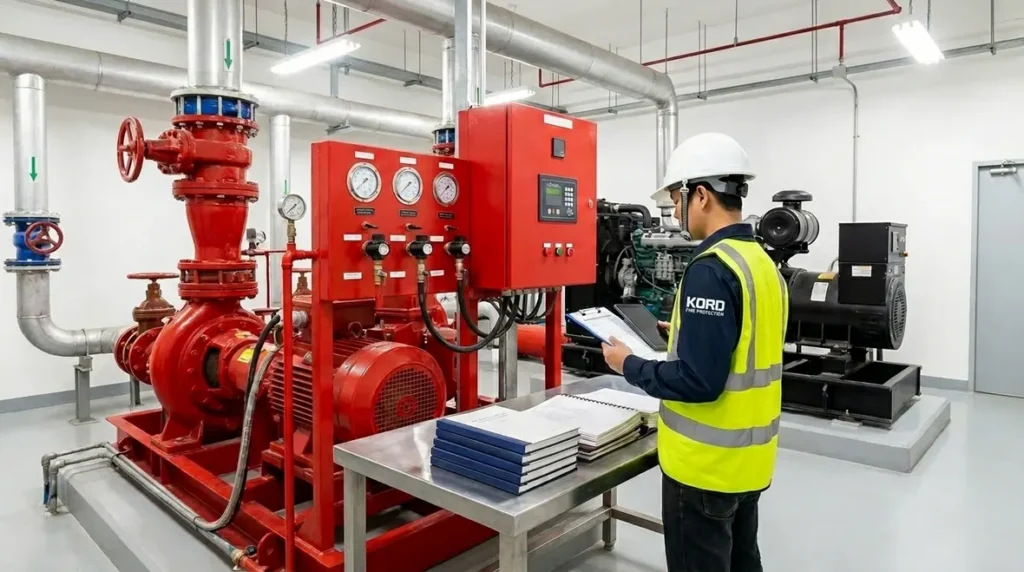
Inspection alone is not enough. Fire pumps must deliver flow and pressure when demanded. Accordingly, testing methods should reflect the system design and operational requirements. This is where the plan must treat the diesel pump like a life safety asset, not a mechanical hobby project.
During performance checks, the team should confirm the pump starts as intended, reaches the required speed, and provides stable discharge under test conditions. In addition, they should verify that instrumentation and gauges read correctly, and that controls respond within expected timeframes. Meanwhile, technicians record test results in a way that supports compliance and future troubleshooting.
It is also wise to ensure that valves and discharge arrangements do not silently change over time. For example, a valve that drifts from its intended position can reduce effective performance. Therefore, regular verification matters, and documentation saves time later when someone asks, “When did this start behaving like that?”
Performance evidence beats assumptions
The point of testing is not to create a nice looking checklist. It is to prove the pump can do the work. Reliable records of flow related testing, pressure behaviour, control response, and start performance give maintenance teams a history they can use. Without that history, troubleshooting becomes guesswork wearing a high-vis shirt.
Diesel Engine Focus Areas: Fuel, Cooling, and Starting Systems
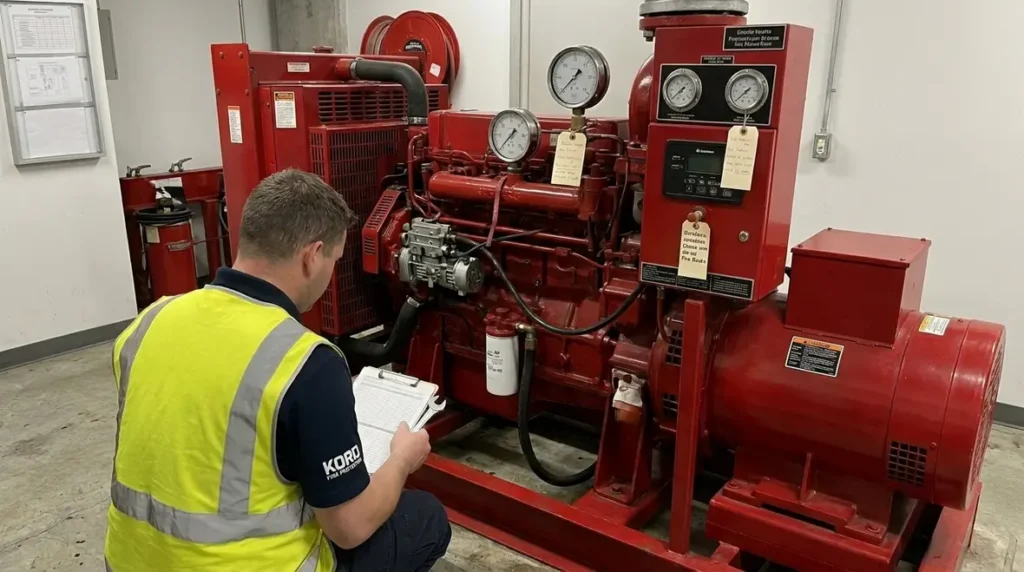
Diesel pumps have specific needs. Fuel quality, cooling performance, and start reliability can make the difference between success and a very loud failure. So, the maintenance plan should cover the engine and related systems in detail, not just the pump head.
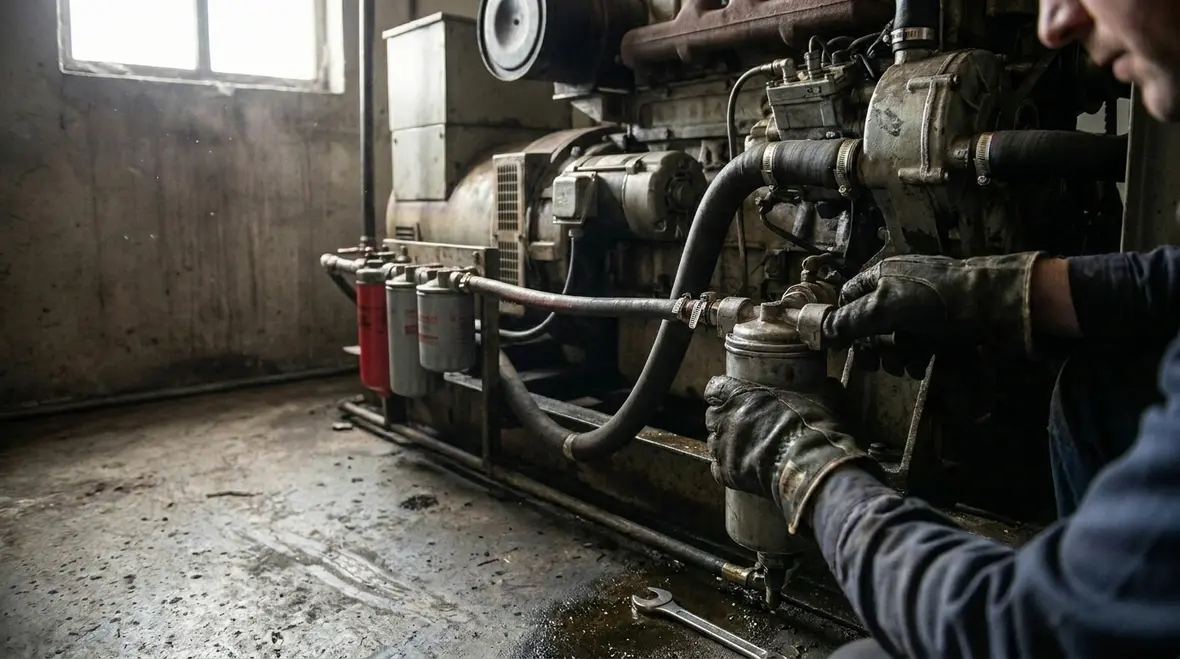
First, fuel readiness matters. Over time, fuel can degrade, water can enter storage, and filters can clog. Consequently, the plan should include fuel checks and housekeeping to keep supply stable. Next, cooling systems require attention. Heat management affects engine performance and reliability during an emergency start, so technicians should inspect hoses, levels, fans, and related components.
Finally, starting systems need strict control. Battery condition, starter motor operation, and wiring integrity must support immediate starts. If control panels show faults or degraded status, the maintenance work should go beyond “noted” and move into correction. Because when a fire event arrives, nobody wants a comedy sketch where the engine tries, fails, then tries again like it is auditioning for a role in an action movie.
Documentation, Compliance, and What Auditors Actually Want
Compliance lives in records. Even if the maintenance work looks solid, without documentation it becomes hard to prove performance. Therefore, facilities should keep maintenance records that clearly show what work occurred, when it occurred, and what results were measured or observed.
Under a well run AS 1851 program, the log should include details from inspections and tests, fault rectification actions, and evidence that controls and performance meet the required standard. Additionally, technicians should record anomalies such as repeated starting issues, unusual readings, or recurring faults, then link them to corrective actions.
For facilities with multiple buildings, shift teams, or contractors, consistent records also reduce confusion. As a result, maintenance teams can show trends, not just snapshots. And when auditors show up, the facility does not scramble. It simply points to organised evidence and moves forward.
What strong documentation usually includes
- Inspection dates, technician notes, and visible condition findings.
- Functional test outcomes and any measured performance data.
- Alarm, control, and starting system observations.
- Fault rectification records linked to the original issue.
- Clear evidence that recurring problems are being tracked, not ignored.
How Kord Fire Protection Becomes a Vital Partner
Many organisations try to handle diesel fire pump maintenance with a mix of internal effort and external “as needed” visits. That approach can work until the day it does not, usually during busy periods when the real work is already stacked. Kord Fire Protection helps businesses avoid that trap by partnering with sites on a planned, evidence driven maintenance cycle aligned with AS 1851 expectations.
They support facilities across industrial, retail, and commercial sectors throughout Australia, bringing a service mindset that focuses on outcomes. That means clear scheduling, disciplined testing, and practical reporting that helps teams understand what happened and why it matters. Furthermore, Kord Fire Protection helps coordinate the full maintenance picture so the diesel engine, controls, alarms, and performance evidence stay connected.
Here is the kind of support facilities often appreciate, presented clearly. One column handles the “doing,” the other handles the “proving.”
| Maintenance Action | Why It Matters |
| Inspections and functional checks | Detects early faults before they affect emergency operation |
| Performance and flow related testing | Confirms the pump delivers the required output under demand |
| Engine and starting system focus | Improves start reliability and reduces “failed to start” events |
| Clear reporting and records | Supports compliance and faster future troubleshooting |
In short, Kord Fire Protection does not just show up with tools. They help organisations build confidence that the system will perform when it is called. And honestly, that is a lot more comforting than relying on wishful thinking and a half charged battery.
Conclusion
Diesel fire pump maintenance works best when it is planned, tested, recorded, and corrected with discipline. With AS 1851 as the foundation, facilities can manage readiness, engine reliability, control performance, and flow evidence in a way that stands up to real emergencies and real audits. If your team wants a partner who delivers calm, thorough service across industrial and commercial sites, Kord Fire Protection is ready. Contact Kord Fire Protection to align your maintenance program and keep your systems dependable.