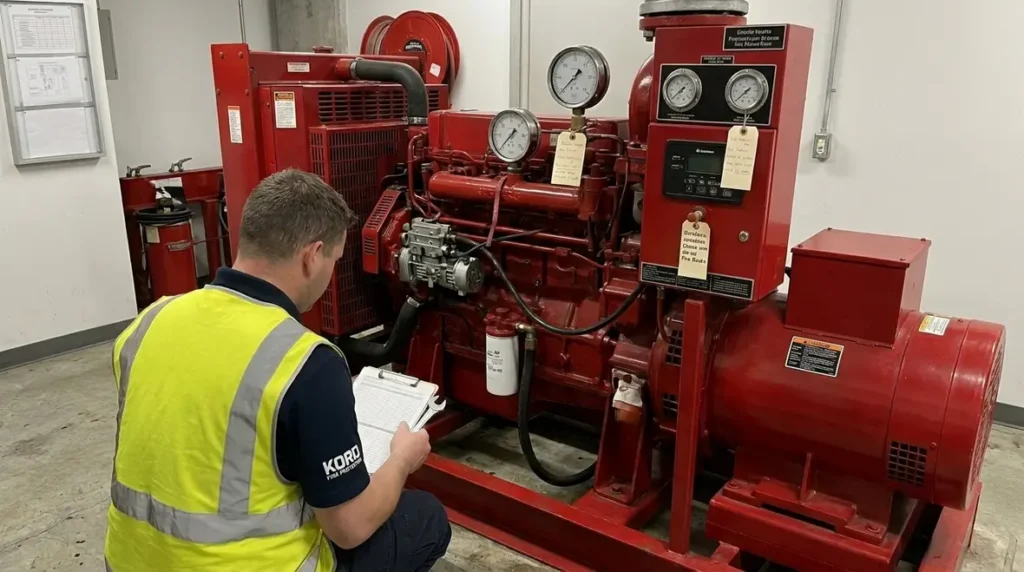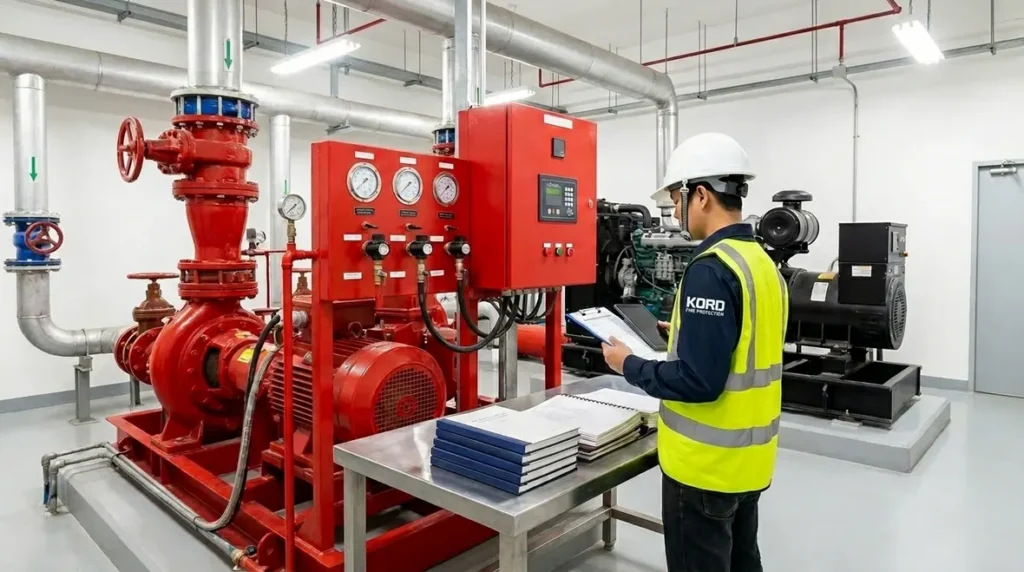
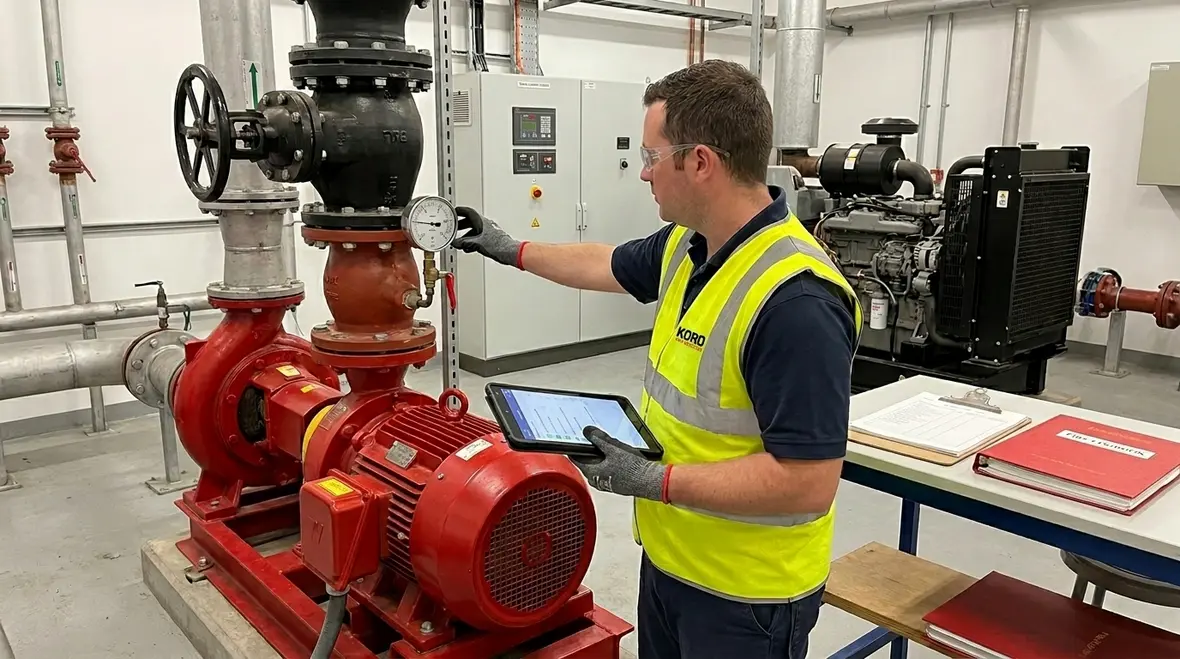
AS 1851 Fire Pump Routine Service Guide Australia
Quick Answer: AS 1851 Fire Pump Routine Service helps facilities keep pumps reliable for fire duty. A trained technician follows a structured checklist, verifies control logic, checks flows and pressures, inspects pumps and valves, and logs results. When the service is done consistently, the system performs when it matters, not when it is convenient.
In Australia, fire safety teams often rely on AS 1851 to guide routine maintenance and testing of fire protection systems. Specifically, the AS 1851 Fire Pump Routine Service Guide sets expectations for how fire pumps should be checked, measured, and documented so they remain ready for duty. However, the value of that guide does not stop at compliance. In fact, it turns into a practical operating standard that protects people, assets, and business continuity across industrial, retail, and commercial facilities.
Facilities that want a broader partner for inspection planning and ongoing fire protection support can also explore Kord Fire Protection services early in the process, because routine pump servicing works best when it is tied into the wider site safety picture rather than treated like a lonely checkbox with a clipboard.
Fire pumps need more than “it looks fine”
Fire pumps do not fail politely. Instead, they often wait until the exact moment a system is called to perform. Then, the reality arrives like a late Uber: after everyone has already planned around it. AS 1851 routine service addresses that risk by pushing teams to verify performance and condition, not just appearance.
Most facilities manage their pumps like important equipment, but the guide makes the work repeatable and measurable. As a result, it reduces guesswork and helps sites respond faster to faults. Moreover, it supports consistent testing schedules across different building types, including warehouses, shopping centres, manufacturing plants, and multi use commercial complexes.
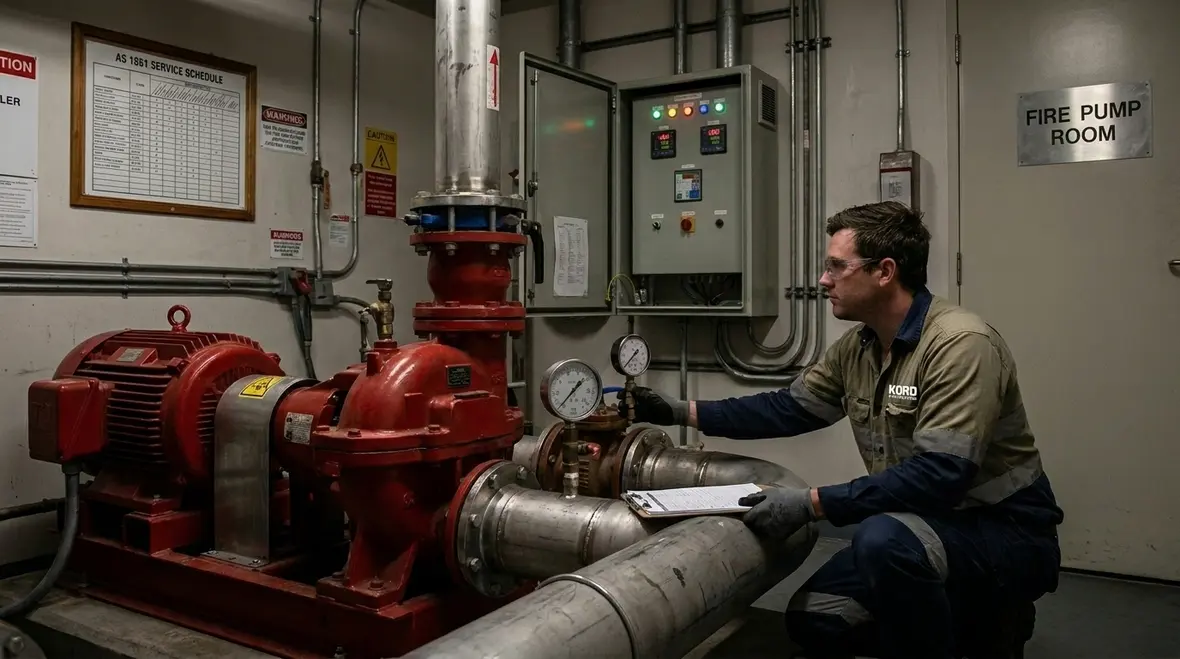
What the AS 1851 routine service actually covers
AS 1851 does not treat fire pumps as a “set and forget” utility. It drives a systematic approach that typically includes visual inspections, operational checks, and performance related verification. Even when a pump runs smoothly in normal conditions, routine service checks continue to confirm that starting reliability and flow capability still match the design intent.
Depending on the system design, service activities can include practical steps that tell a much fuller story than a quick glance ever could. The point is not to admire the pump for existing. The point is to prove it is ready.
- Control and status checks to confirm the start sequence, alarms, and indicator functions operate correctly
- Pump health inspections for leaks, corrosion, mounting condition, and coupling or bearing areas
- Valve and line verification so suction and discharge paths stay unobstructed and correctly positioned
- Testing under controlled conditions to confirm performance parameters remain within acceptable limits
- Documentation so the site tracks trends and acts before a fault becomes a crisis
In short, it blends practical inspection with evidence based testing. Consequently, facilities can show that they did not just “touch” the system. They evaluated it. That distinction matters a lot when managers want confidence, insurers want order, and the building would prefer not to discover its weaknesses during a genuine emergency.
Why structure matters so much
A structured service routine creates consistency between visits, between technicians, and between years of site history. That makes trend spotting easier. If pressure starts drifting, if starting times begin changing, or if the same component keeps appearing in notes, the record tells a story long before the fault decides to become dramatic. Nobody wants a pump with a hidden backstory.
How technicians verify reliability in the pump room
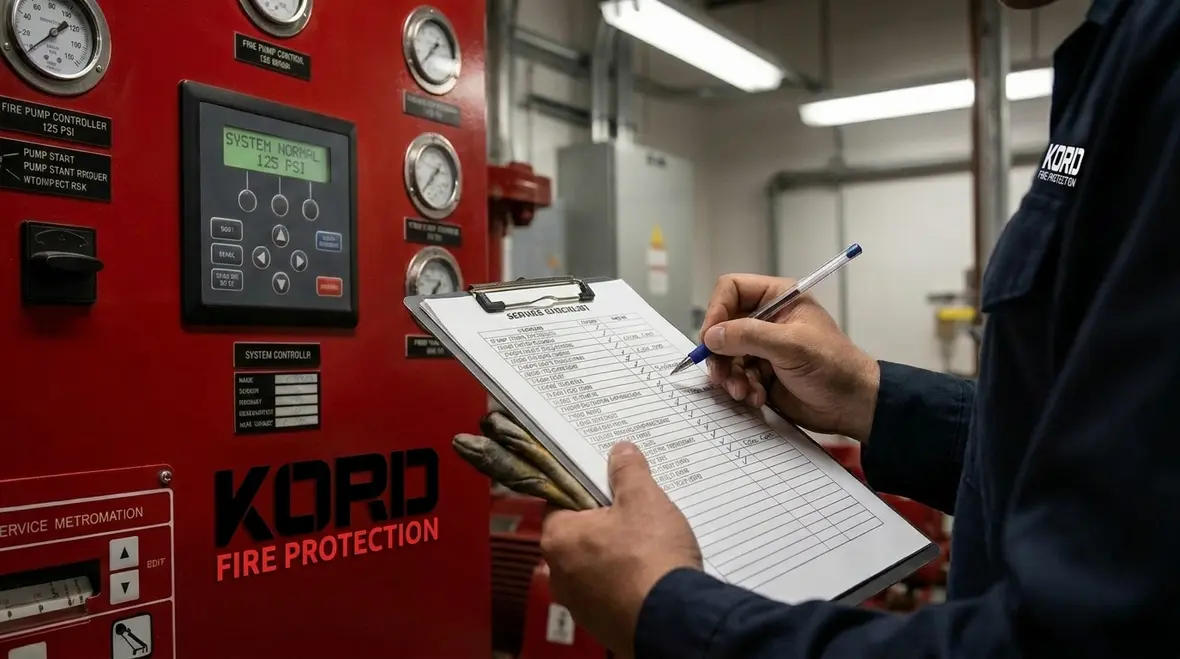
A quality service starts before the pump ever spins. First, the technician reviews site history and previous records, then cross checks alarms, controller events, and any logged defects. After that, the service moves into verification steps that focus on how the pump behaves when duty matters.
For reliability, technicians commonly pay attention to these areas:
- Starting performance so the pump responds quickly and correctly to the demand signal
- Pressure and flow behavior to confirm the pump delivers the expected capability
- Electrical and motor protection where applicable, to prevent nuisance faults and hidden issues
- Strainers, suction conditions, and line integrity because small restrictions can cause big problems
- Engine or diesel support systems if the installation uses them, including readiness indicators and run condition checks
To keep things real, these tasks are not glamorous. Nobody posts a selfie in a pump room with a proud “just inspected the isolation valves” caption. Yet, that is exactly why the work matters. When someone does it properly, the system stays boring in the best possible way. Like a safety drill that never has to become a real evacuation.
This is also where experienced technicians earn their keep. They notice little things that can be easy to miss: vibration that feels slightly off, moisture where it should not collect, status indications that technically appear normal but do not line up with the wider system condition. Reliability usually slips by inches before it slips by miles.
Common findings and how sites prevent repeat faults
During routine service, technicians often find issues that develop quietly over time. Sometimes the cause is simple. Other times, it is the kind of slow creep that reminds everyone why maintenance windows exist. The AS 1851 approach helps sites address these items with the discipline of a checklist, not the optimism of “it will probably be okay next time.”
Examples of recurring findings include:
- Valve position drift from maintenance activities or building works
- Minor leaks or seal wear that do not stop operation immediately, but they reduce long term reliability
- Blockages or degraded suction conditions that reduce effective flow
- Control system abnormalities such as inconsistent status signals, which can mask a deeper issue
- Environmental wear such as corrosion from damp conditions or dust exposure
Then, the site should not only fix the symptom. It should also stop the cause. For instance, after a valve position issue, a facility might add clearer lockout processes or update local operating procedures for trades. As a result, repeat faults drop and the pump stays dependable.
The difference between repair and prevention
A site that only repairs what failed is always playing catch up. A site that learns from each fault starts improving the whole system. That can mean clearer labelling, better contractor induction, tidier housekeeping around the pump room, more disciplined post works signoff, or sharper internal communication when valves or power supplies are touched. It is not flashy, but it is effective. Most of fire protection’s best work happens before anyone notices it.
Why Kord Fire Protection becomes a vital partner
AS 1851 guidance works best when a facility has a partner who understands the system, the site, and the paperwork reality. That is where Kord Fire Protection steps in. Kord Fire Protection helps industrial, retail, and commercial facilities across Australia manage fire pump routine service with a steady, professional approach that fits real operations. In other words, they help teams avoid the “we will book it later” trap that always seems to book itself for the worst possible time.
Kord Fire Protection can support the job by delivering:
- Service planning aligned to the facility schedule, so operations keep moving
- Clear reporting that translates test results into action items, not confusing jargon
- Practical recommendations that reduce the chance of repeat defects
- Compliance focused documentation aligned with routine expectations for fire pump systems
Moreover, Kord Fire Protection can help facilities build confidence with routine performance trends. Instead of waiting for the next test to reveal problems, the team can spot changes early. That is the difference between reacting like it is a surprise and responding like it is a plan.
Planning for downtime and keeping business moving
Fire pump routine service can require controlled conditions, and facilities need to plan around that. Therefore, the best programs coordinate access, permissions, isolation steps, and testing windows early. When the schedule is managed well, the service stays efficient and the risk stays controlled.
Facilities can prepare by:
- Confirming access to pump rooms and controllers, including after hours arrangements where needed
- Highlighting recent works such as line modifications, penetrations, or valve adjustments
- Ensuring documentation is available including prior test results and system drawings
- Coordinating alarms and notifications so building operations stay informed
As a bonus, thoughtful planning keeps technicians focused and reduces repeat visits. Nobody enjoys multiple trips to the same site, unless the second trip comes with a well deserved coffee and a clear fix. Kord Fire Protection understands that rhythm and works with facilities to keep downtime minimal.
FAQ
Conclusion: make routine service a business advantage
Fire pumps do their job only when demand arrives, so routine service must be more than a checkbox. When facilities follow the AS 1851 Fire Pump Routine Service Guide with disciplined testing and proper documentation, they reduce failure risk and protect operations. Kord Fire Protection can act as the steady partner that plans the work, delivers clear results, and helps prevent repeat faults. If a fire pump inspection is coming up, get in touch with Kord Fire Protection and make the next service as calm as the pump room should feel.