AS 2118 Fire Pump Water Supply Requirements Compliance
Quick Answer: AS 2118 sets the rules for fire pump water supplies, including design, testing, performance, and commissioning. It helps keep pumps reliable when smoke, alarms, and panic show up exactly at the worst time. Kord Fire Protection helps facilities meet these requirements with practical service and dependable compliance support.
In Australia, AS 2118 Fire Pump Water Supply Requirements guide how facilities should plan and maintain fire pump systems so they perform when it matters most. In the first place, these rules exist to remove guesswork from a situation that already has enough drama. After all, a fire pump that “works most days” is not the kind of partner anyone wants. This article walks through how commercial, industrial, and retail sites can meet the standard with clear, practical steps, and how Kord Fire Protection can support the job from planning through ongoing service.
Facilities that need a broader compliance partner can also explore Kord Fire Protection’s fire protection services for support that fits naturally with inspection, testing, maintenance, and real-world system reliability.
What AS 2118 covers for fire pump water supply
AS 2118 focuses on the water supply that feeds a fire pump system, not just the pump itself. Therefore, it looks at the entire chain of performance: water source, pipework, pressure availability, and how the system behaves under demand. In other words, it is less about “having a pump” and more about ensuring the supply can support fire flow for the required duration.
Further, the standard drives facilities toward measurable outcomes. That means designers and installers do not rely on vague promises. Instead, they confirm that the system can deliver the required flow and pressure under realistic conditions. If a site’s water supply varies with demand, the system must be planned to handle that reality rather than hope it behaves.
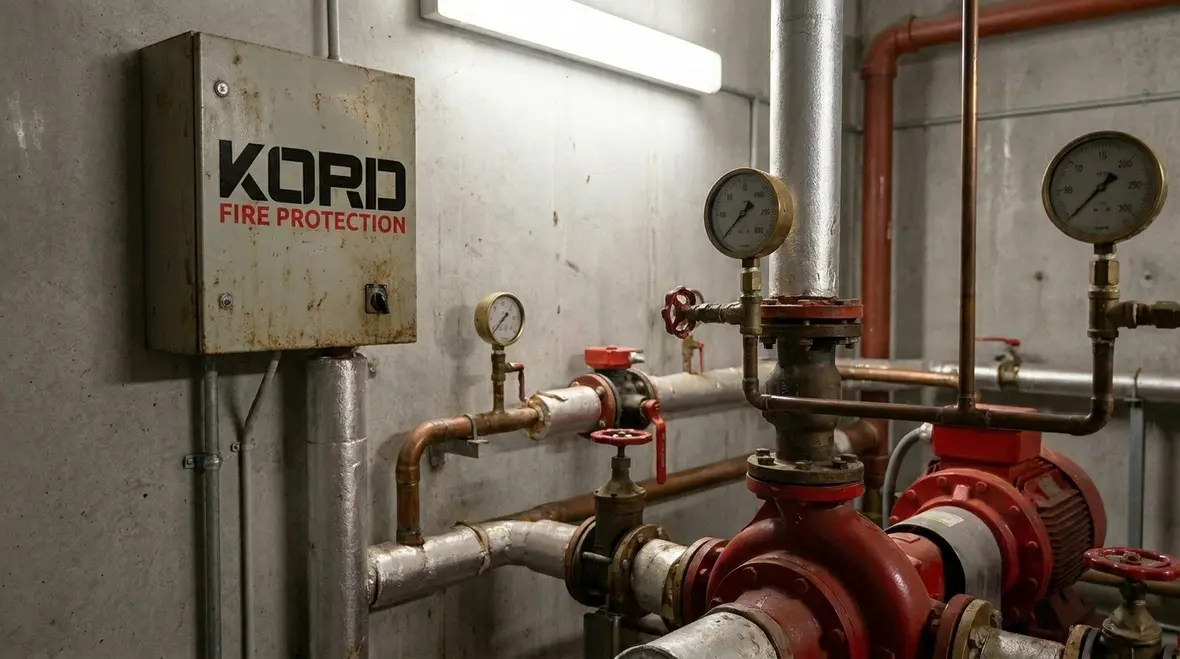
How the water supply, pipework, and pump work together
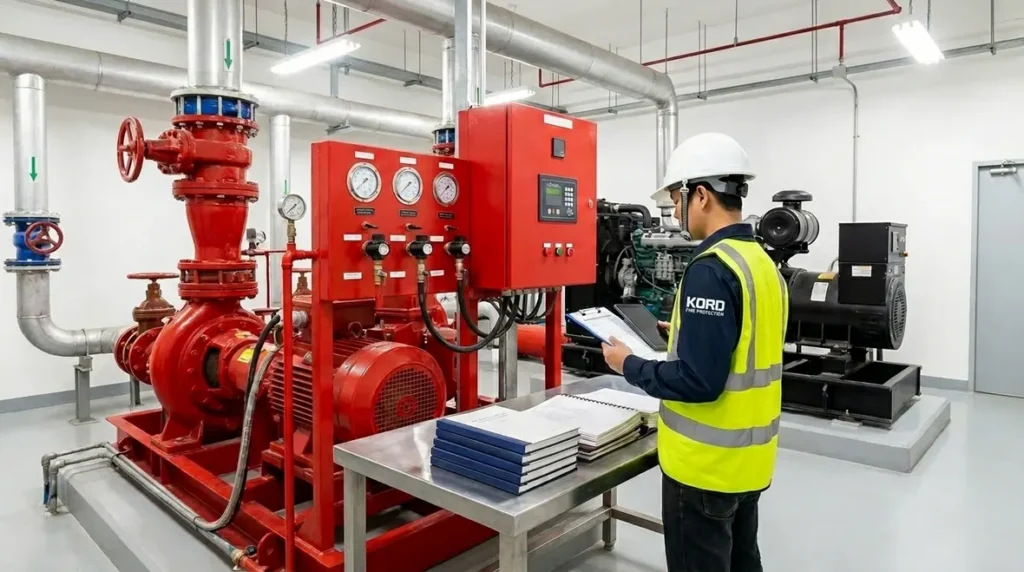
A fire pump system behaves like a team, and one weak member can slow the whole group down. For example, even a well-chosen pump can underperform if the suction conditions are poor. So, facilities should treat the pump and its supply as one integrated design.
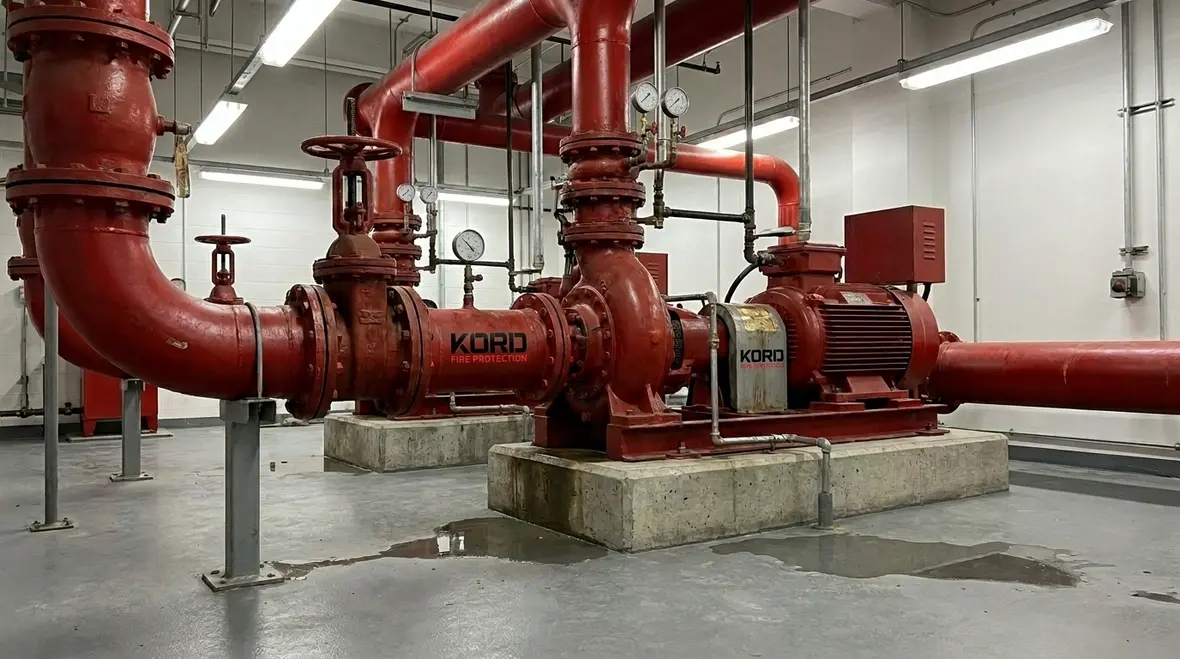
Key areas typically include suction supply performance, pipe sizing, fittings, and water availability during operation. Additionally, the system must manage pressure changes and prevent conditions that harm pump operation. Over time, pipework fouling, valve wear, and minor changes in building services can shift performance. Consequently, regular checks and service become essential, not optional.
As a quick pop culture nod, think of it like a heist movie: everyone has a role, but if the getaway car fails, the crew is stuck. Fire pumps work the same way. If the supply line cannot deliver, the whole operation becomes a dramatic monologue instead of action.
Why integration matters more than isolated components
That is why experienced service teams do not just glance at a pump set and call it a day. They look at upstream supply conditions, downstream demand, valve positions, pressure behavior, and whether the whole arrangement still reflects the original intent. A great pump connected to a compromised supply is still a compromised system. It is a bit harsh, but hydraulics has never been known for handing out participation trophies.

Design and commissioning steps that protect compliance
When facilities plan fire pump water supply, they should follow a structured path that produces evidence, not just hope. First, the water source and capacity should match the fire scenario the system is meant to cover. Then, designers confirm hydraulic performance and verify that the system meets required conditions under operating demand.
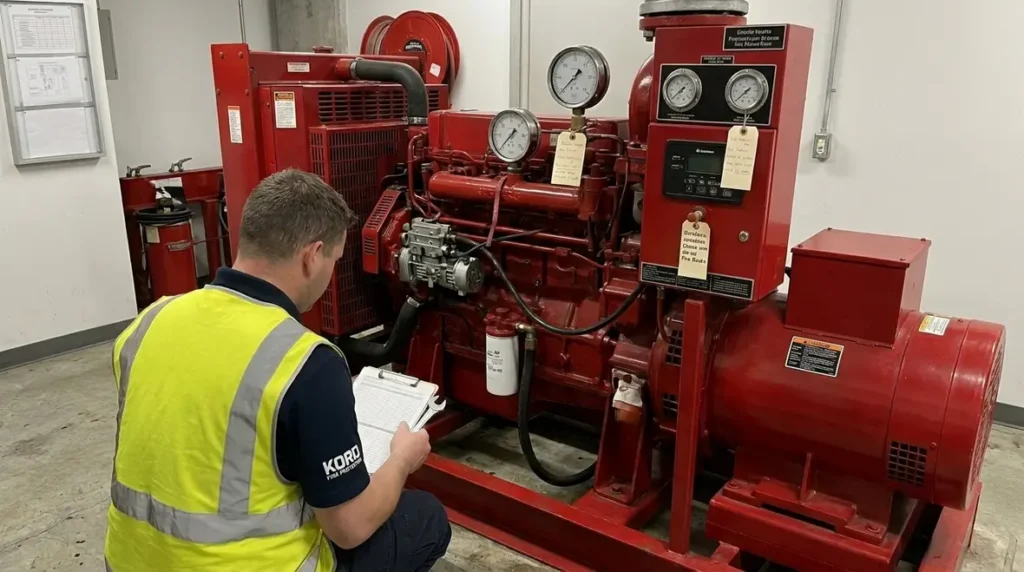
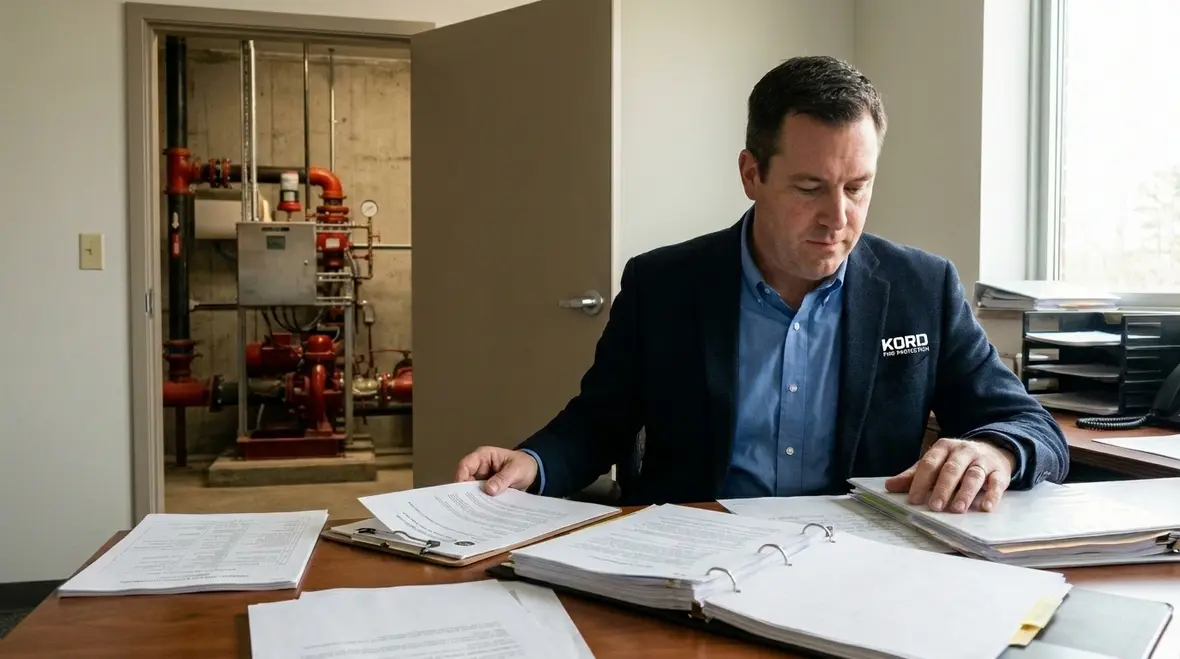
After design, commissioning plays a central role. During commissioning, the system should be tested in a way that reflects real operation. That includes checks on pump start, flow stability, pressure performance, and safety related functions. Moreover, commissioning should produce clear records so the facility can demonstrate compliance when auditors or insurers ask for proof.
At this stage, Kord Fire Protection can act as a vital partner. Our team supports commercial, retail, and industrial sites across Australia by coordinating the practical steps that make compliance achievable. Instead of handing over a binder and wishing luck, Kord Fire Protection helps ensure the system is set up to perform, and that the documentation and test results are in order.
Commissioning records are not paperwork for paperwork’s sake
Those records matter because memory gets fuzzy, contractors change, and facilities evolve. A clean set of commissioning and test documents gives future technicians something better than crossed fingers. It shows what was verified, what conditions existed at the time, and what baseline the site should compare against later. Without that, troubleshooting becomes an expensive detective series with fewer laughs.
Testing, inspection, and ongoing service for real-world reliability
Once a fire pump system is installed and commissioned, the story does not end. Water systems age, components wear, and operating conditions shift. Therefore, facilities should build an ongoing service plan that covers inspection, testing, and corrective maintenance.
Effective service usually focuses on performance verification and the health of key components. That includes ensuring valves operate correctly, monitoring control systems, and checking that the water supply remains stable. Furthermore, technicians should look for changes that could affect suction conditions, flow, or pressure delivery.
Here’s the part people often learn the hard way: a fire system can look fine during a quick visual check, but still fail a performance test later. Pressure readings, pump behavior, and flow outcomes reveal the truth. Kord Fire Protection helps facilities avoid surprise failures by keeping service practical and focused on results.
Reliability lives in repetition. Scheduled inspections catch drift before drift becomes failure, and performance testing confirms whether the system still behaves the way the design intended. That is especially important on busy sites where other building works can quietly affect water services. One small change in isolation may seem harmless. Stack three or four of them together and suddenly the pump room has acquired a plot twist.
Common challenges across industrial and commercial sites
Different sites come with different water supply realities. Industrial locations may experience variable demand from process systems. Retail buildings can see changes from fit outs and ongoing maintenance. Larger facilities often have complex pipe layouts that make performance sensitive to small changes.
As a result, some common challenges include changes in building services that quietly alter available flow, aging pipework that affects pressure, and control settings that drift after upgrades. In addition, sites sometimes inherit systems from previous contractors without complete records. Then the team is left to reverse engineer what was done, which is like reading a mystery novel where someone removed half the pages.
Kord Fire Protection supports facilities by bringing service expertise and a compliance focused mindset. We help teams understand what matters under AS 2118, identify risks early, and keep documentation clear. That reduces downtime, supports insurance and audit readiness, and keeps the facility ready for the moments that matter.
The most common problems are rarely dramatic at first
That is what makes them annoying. A partly fouled line, a valve not quite where it should be, a subtle pressure issue, or a record set that is missing one crucial test can all sit quietly until someone needs certainty. By then, the job is harder, the clock is louder, and nobody is impressed by the phrase “we thought it was fine.”

Why Kord Fire Protection helps facilities meet AS 2118 confidently
Meeting AS 2118 Fire Pump Water Supply Requirements works best when facilities treat it like a managed service, not a one-off task. Kord Fire Protection acts as a partner that supports the full lifecycle: planning support, commissioning coordination, testing, inspections, and ongoing maintenance. Consequently, clients spend less time chasing answers and more time operating safely.
Also, our approach stays business practical. We understand industrial environments run on schedules, so we plan work to reduce disruption. And because we work with many facility types, we know what auditors and insurers typically look for: evidence, records, and performance verification. In short, Kord Fire Protection helps turn compliance into something the site can rely on, not something the site dreads.
CTA: keep compliance steady with Kord Fire Protection
When a facility wants fire pump reliability, it needs more than a checklist. It needs consistent service, clear records, and performance focused testing aligned to AS 2118 Fire Pump Water Supply Requirements. Kord Fire Protection helps industrial, retail, and commercial sites across Australia reduce risk and stay ready. Reach out to discuss your system, service schedule, and documentation needs, and let our team keep the pressure where it belongs.