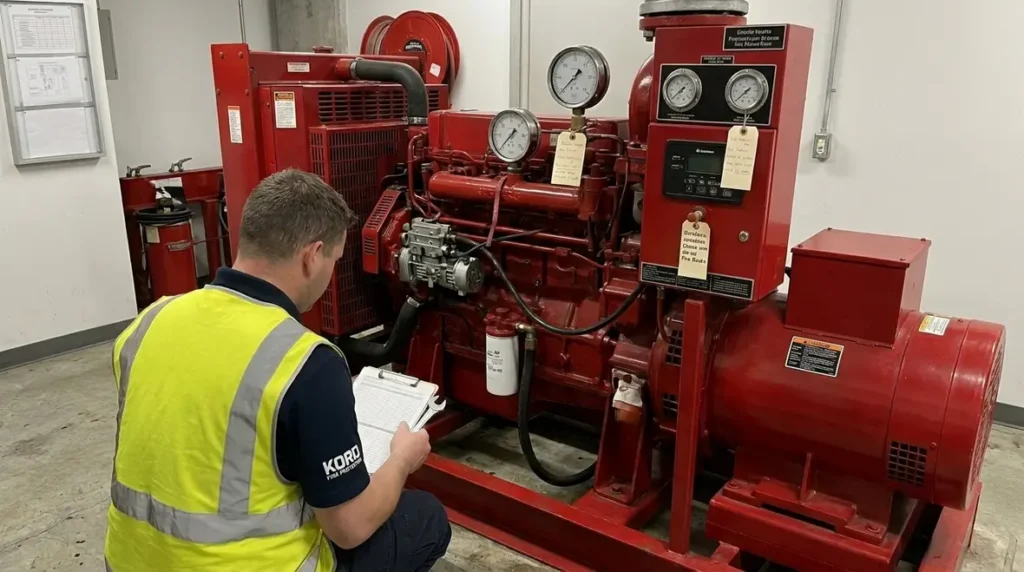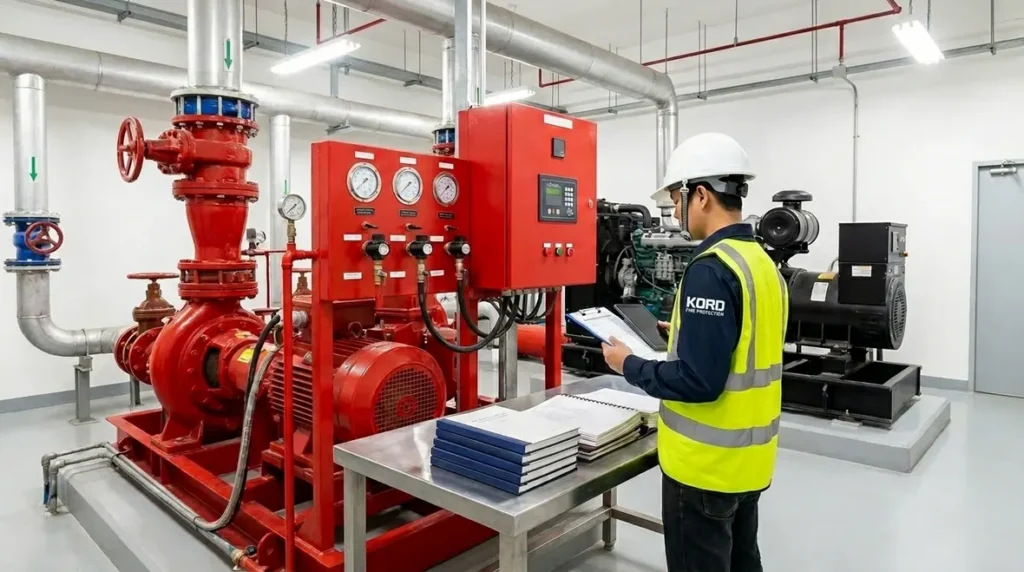
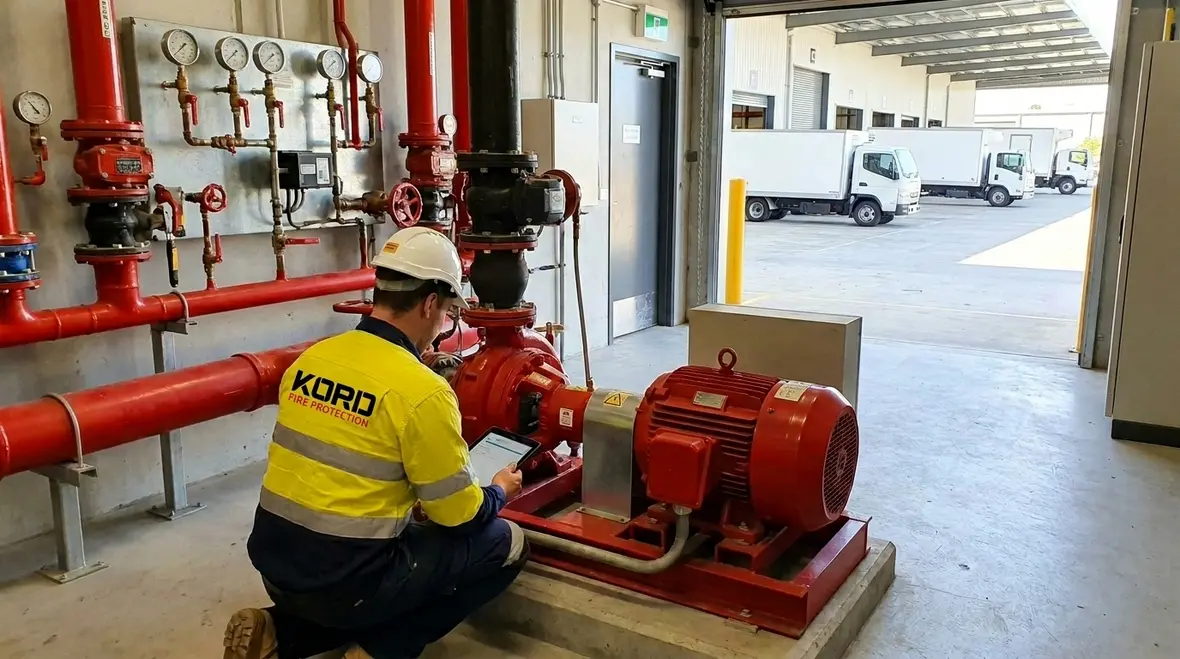
AS 2118 Sprinkler Pump Design Standards in Australia
Quick Answer: AS 2118 sets the sprinkler pump design standards that help protect industrial, retail, and commercial sites across Australia. Our company, Kord Fire Protection, partners with engineers, asset owners, and installers to align pump selection, hydraulics, electrical supply, and testing so the system performs when it matters.
When a site demands reliable fire sprinkler operation, AS 2118 becomes the quiet rulebook behind the scenes. In the first place, this standard guides how sprinkler pump systems should be designed so they deliver the right pressure and flow in real fire conditions. Then it helps reduce guesswork, delays, and costly rework during commissioning. And importantly, it supports consistent outcomes across Australia, from warehouse districts to retail precincts and busy facilities that cannot afford downtime.
Early in the project, it also helps to connect design decisions with real maintenance expectations. That is why many facilities pair sprinkler pump planning with broader compliance and service considerations, especially where ongoing inspection and testing will matter just as much as the initial installation. In that context, Kord Fire Protection supports stakeholders who need practical coordination from design through commissioning, instead of discovering important details after the pump room is already crowded, expensive, and suddenly everybody’s problem.
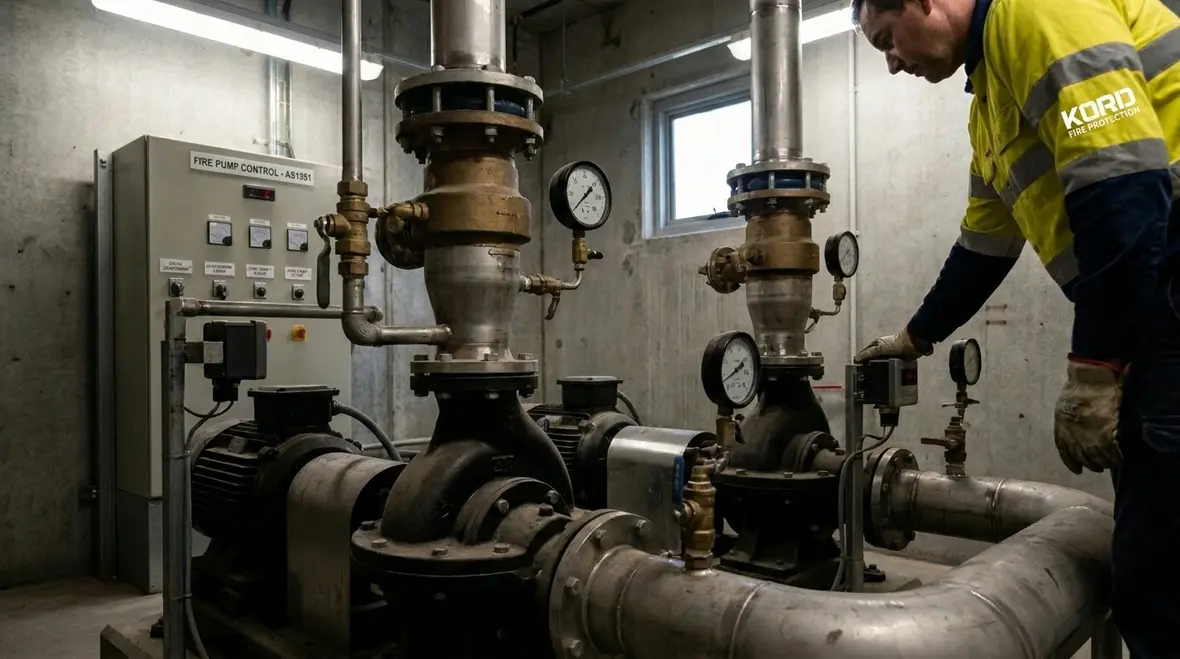
What the AS 2118 sprinkler pump design guide is trying to prevent
Fire safety designers do not aim to be dramatic. Instead, they aim to avoid failure modes that show up at the worst time, such as insufficient pump capacity, unstable pressure, poor control logic, or unreliable power supply. Because sprinkler systems depend on pumps when the water supply is not enough, pump design becomes the difference between a controlled response and an avoidable catastrophe.
In practice, this is where AS 2118 earns its keep. It pushes teams to calculate correctly, document decisions, and test so the installed system matches the intent. Without this, stakeholders end up doing the classic “we thought it would work” dance, which is funny only until it is not.
For industrial, retail, and commercial facilities, these risks multiply. There are often mixed hazard uses, complex pipe networks, and fluctuating water conditions. Therefore, pump design must handle real site demands, not idealised drawings that look great in a meeting room.
Why failure prevention starts before equipment arrives
A lot of pump room pain starts long before a pump is ever delivered to site. If hydraulic assumptions are loose, access requirements are ignored, or the relationship between stored water, controls, and downstream demand is treated like a future problem, the whole project inherits stress that shows up later as delay, redesign, or awkward explanations during testing. In other words, prevention under AS 2118 is not just about picking a pump. It is about making sure the whole arrangement is ready to behave properly when the system needs to move from standby to action without hesitation.
How designers use the data to size and select the pump
Next, designers translate the sprinkler system hydraulics into pump requirements. First they determine the required flow and pressure at the most demanding operating point, then they select pumps and duty arrangements that meet those needs. After that, they consider friction losses, pipe materials, and any special components that affect flow.
Meanwhile, Kord Fire Protection supports this process by checking the whole chain, not just the pump curve. For example, pump selection has to work with the actual system layout, controller settings, and isolation arrangements. If a project team sizes a pump on paper but ignores site constraints, the result can be a system that performs differently during tests. And yes, that can lead to rework, which nobody loves, unless they are paid overtime for it.
When proper sizing happens early, it reduces friction during procurement and installation. It also improves the odds that commissioning runs smoothly, because the team can validate performance against the design intent instead of chasing surprises.
Data points that matter more than people first assume
This stage is where details stop being boring and start being expensive. Designers need credible duty points, realistic pressure requirements, known pipe losses, and a clear understanding of how the most hydraulically demanding area affects the pump selection. A pump that looks heroic on a brochure can still be the wrong choice if the site conditions, power arrangements, or control settings pull the actual performance away from the design target. Good selection is less about optimism and more about disciplined matching of site data to system behaviour.

What reliable performance means for control, power, and alarms
It is not enough for a pump to exist. It must respond correctly under fire conditions. That means dependable controls, stable start sequences, and logic that coordinates with tank levels, pressure switches, and flow signals where applicable. Then it needs an electrical setup that can survive the operating scenario, including correct cabling, protection, and panel integration.
Also, reliable performance includes alarm and status reporting so facility teams know what is happening and when. Therefore, the design should define how the system indicates pump running, fault conditions, and any supervisory signals that trigger maintenance action. This keeps operations from becoming a mystery novel written in flashing lights.
Kord Fire Protection acts as the vital link between design intent and practical implementation. Our team helps coordinate control panel requirements, verify installation details against commissioning expectations, and prepare documentation that supports compliance and ongoing maintenance. In other words, we help ensure the system behaves the way it was supposed to behave, not the way it chooses to behave after hours.
Controls should reduce uncertainty, not create a fresh category of it
The whole point of reliable control logic is to make the response predictable when the rest of the situation is not. If the pump starts late, faults are not clearly indicated, or supervisory signals do not tell maintenance teams what has changed, then the design has left too much room for confusion. Clear control philosophy, practical alarm reporting, and properly coordinated electrical integration give operators confidence that the system will communicate honestly, rather than waiting until a test day to reveal a personality disorder.
How duty, standby, and redundancy should be handled
Fire sprinkler pumps often work in duty and standby configurations to improve resilience. However, redundancy is only valuable when it is engineered and commissioned correctly. Designers must consider pump starting reliability, cross connections, and how the system switches from duty to standby under real conditions. Then they must validate that the standby pump can start and reach required performance within the necessary timeframe.
In addition, redundancy needs to align with the site’s operational needs. Industrial facilities may require low downtime during maintenance, while retail centres may prefer arrangements that reduce disruption to normal activities. Consequently, the design should consider serviceability, access, and the testing schedule from day one.
This is another place where Kord Fire Protection becomes a vital partner. We help stakeholders plan commissioning and maintenance workflows so the system stays reliable across its lifecycle. And because fire protection is a business function, not a hobby, this reduces operational risk and supports predictable scheduling.
Redundancy only works when the backup is genuinely ready
A standby pump is not a decorative gesture. It has to start, perform, and integrate into the system under realistic conditions, not just exist as reassuring equipment in the room. That means the switching strategy, testing method, isolation arrangement, and maintenance access all need to support reliable use over time. Otherwise, the project may technically include redundancy while still delivering a system that becomes fragile the moment the primary pump is unavailable.

Commissioning and testing that actually prove the design
After the pump system is installed, commissioning must confirm performance. That means testing the pump operation, verifying set points, checking alarms, and validating that the system delivers the expected pressure and flow at defined operating conditions. Importantly, testing should follow a method that reflects how the system will operate during a real event.
Further, documentation matters. Teams need clear test results, calibrated readings, and records that show the system meets the design basis. Without that, future maintenance becomes guesswork, and guesswork is never a good substitute for evidence. It also creates headaches when audits and upgrades arrive.
Here, Kord Fire Protection helps projects move from “installed” to “proven.” We coordinate testing steps, support commissioning readiness, and ensure the system’s performance aligns with the intended outcomes. Therefore, facilities gain confidence that their pump operation is not just compliant in theory, but dependable in practice.
Proof matters because memory is a terrible commissioning record
If a system passed a test once but nobody can produce clear records, settings, or calibrated readings later, the project has created uncertainty instead of confidence. Proper commissioning is about repeatable evidence. It should show what was tested, how it was tested, which set points were confirmed, and whether the alarm and control behaviour matched the design basis. That gives owners and maintenance teams something better than folklore to rely on when future inspections, faults, or upgrades show up.
Project delivery across Australia for commercial and industrial sites
Australia spans climates, building ages, and water supply behaviours. So, teams need a delivery approach that manages risk across different regions and asset types. Industrial sites may have complex services and strict access controls. Retail environments often involve ongoing operations, so outages and disruption must be controlled. Meanwhile, commercial facilities need coordination across multiple stakeholders and trades.
When delivery teams work in silos, pump systems suffer. Therefore, a coordinated partner helps connect engineering, installation, and commissioning outcomes. Kord Fire Protection supports this coordination through consistent processes, clear communication, and hands on engagement across the job lifecycle.
And yes, we do like to make this part less painful than it sounds. Fire pump work can feel like a logistics puzzle with extra paperwork. Yet when the process runs properly, everyone benefits: the facility gets a reliable system, the project team gets fewer surprises, and compliance becomes less of a last minute scramble.
Consistency across projects is what keeps standards useful
A standard only helps if teams can apply it consistently across very different environments. Warehouses, shopping centres, mixed use sites, and commercial buildings all bring their own complications, but the need for dependable pump performance stays the same. Coordinated delivery keeps those differences from turning into avoidable problems. It also helps owners move from reactive decision making toward a more stable, documented, and testable fire protection outcome.
FAQ
Final call to action
If your project needs sprinkler pump design that holds up under testing, Kord Fire Protection should be a key partner from planning through commissioning. Our team supports coordination, installation quality, and proof based testing so industrial, retail, and commercial sites across Australia get dependable fire performance. Reach out today to discuss your system requirements, duty and standby needs, and commissioning priorities. Because when fire protection matters, “close enough” is not a design philosophy.