AS 2419 Fire Pump Deficiencies and Compliance Guide
Quick Answer: AS 2419 helps facilities manage and verify fire pump performance with care. This article highlights common deficiencies inspectors find, why they matter to real-world fire conditions, and how Kord Fire Protection can act as a trusted partner to keep pumps compliant, reliable, and ready when it counts.
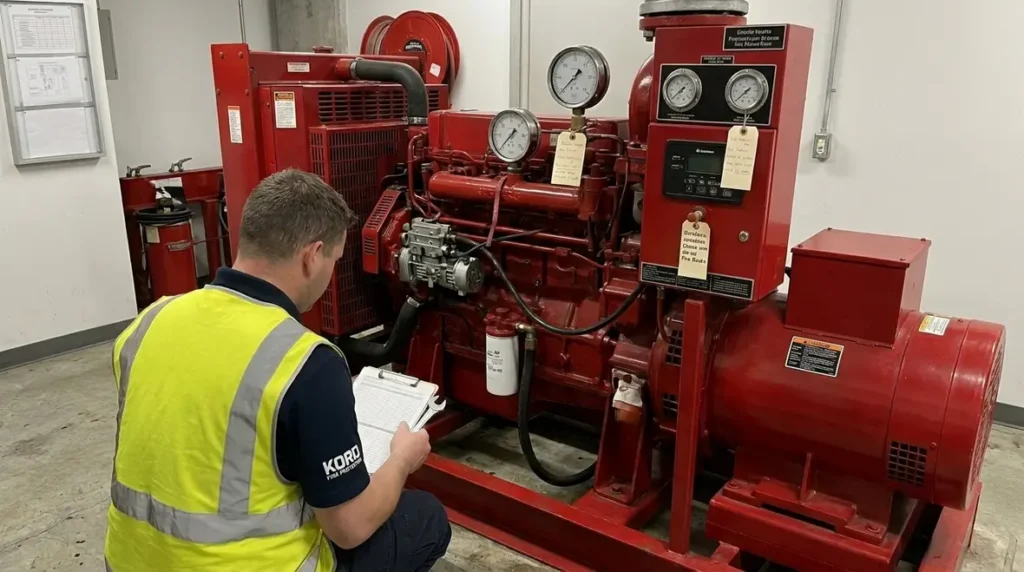
When fire pumps fail, they do not fail politely. They fail at the worst possible time, usually when stress levels are high and everyone is suddenly doing math with shaking hands. That is why AS 2419 sits at the center of proper fire pump management across industrial, retail, commercial, and facilities work in Australia. It sets expectations for testing, maintenance, and performance so systems deliver the pressure and flow they were designed to provide.
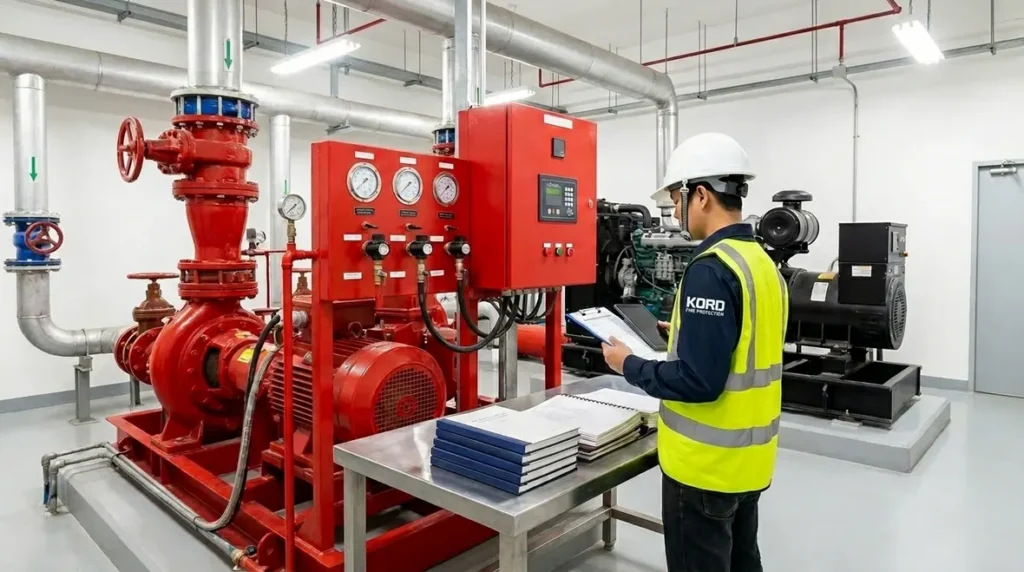
For facilities that need broader support beyond a single inspection cycle, Kord Fire Protection’s fire protection services fit naturally into a practical compliance plan, especially when pump performance, testing records, and system reliability all need attention at the same time.
In the rest of this guide, our third person focus stays practical: what deficiencies to watch for, how they show up during inspections, what risks they create, and how Kord Fire Protection helps teams close gaps fast and document the work properly.
AS 2419 Fire Pump Deficiencies: What usually goes wrong
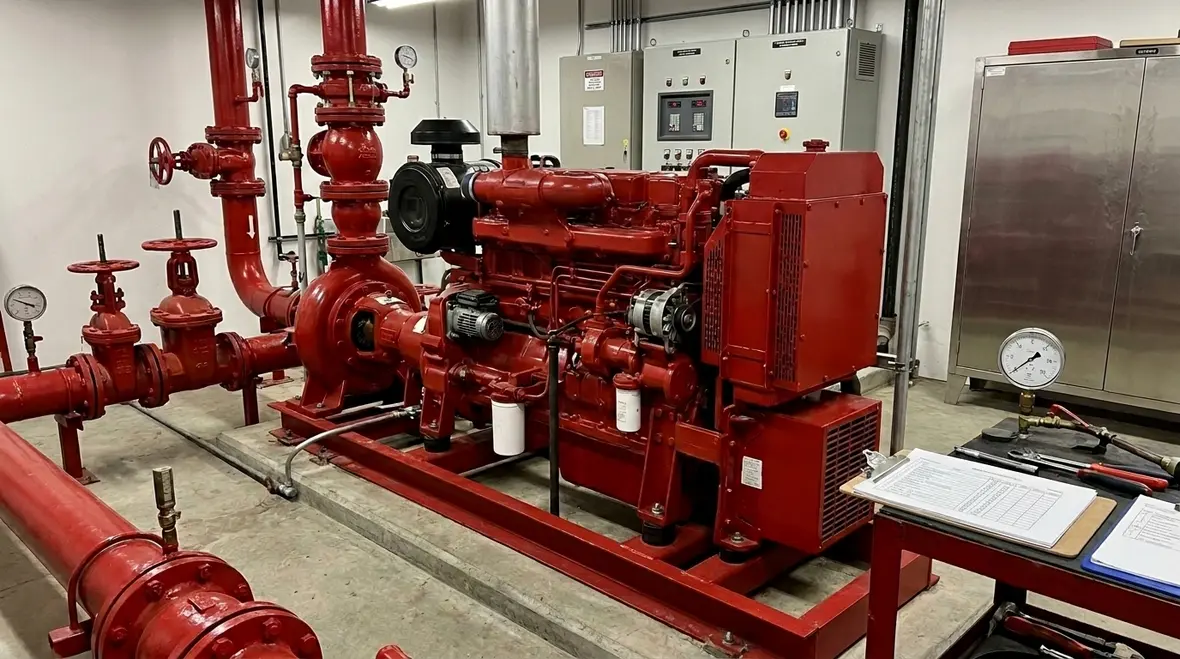
Fire pump issues often start small, then build into bigger problems because teams delay corrective action or rely on outdated assumptions. Even when someone says “it passed last year,” the pump may still hide weaknesses that only appear under the right duty point. Then, when a real incident happens, the system behaves like a stubborn appliance that has decided it only works when it feels like it.
The deficiencies that inspectors keep seeing
- Inadequate controller calibration that drifts over time and misreads starting and stopping conditions
- Faulty sensors that report pressure incorrectly, leading to wrong control responses
- Electrical problems such as loose terminations, ageing cables, or weak batteries that affect reliability
- Poor pump alignment that causes vibration and wear, which reduces performance and raises the chance of failure
- Unmaintained relief and test arrangements that prevent accurate verification during commissioning and routine tests
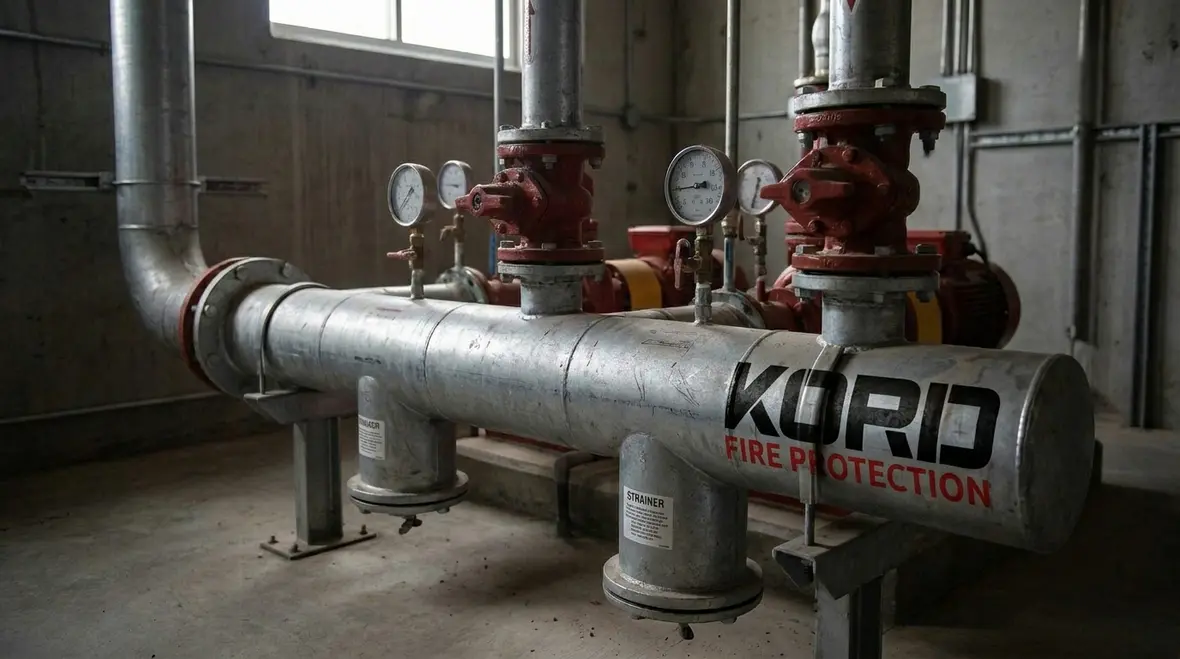
- Blocked strainers and suction issues that restrict flow and delay the pump’s ability to build pressure
Just because the pump runs does not mean it performs. Therefore, inspection teams should look beyond “it starts” and confirm the pump can reach required duty conditions and hold stability under demand. That small shift in mindset is where a lot of compliance improvement begins, because the goal is not simply mechanical motion. The goal is dependable fire protection performance when the whole building is counting on it.
Pressure, flow, and the duty point: where deficiencies hide
Many deficiencies relate to how the pump performs at the actual system demand, not just at a test headline value. For instance, a pump may start quickly, yet still fail to deliver the expected flow at the pressure range the system requires. Consequently, the fire scenario can unfold slower than planned, and sprinklers or hydrants might not receive effective water distribution.
Why a passing start is not the same as a passing system
- Curve mismatch where the pump, impeller wear, or operating setup shifts performance from what design documents assume
- Air or vapour entrainment on suction, which can reduce net positive suction head available to the pump
- Valve seating issues such as partially closed isolation valves, sticking check valves, or inconsistent relief behavior
- Pipework changes from past works that unintentionally alter friction losses
- Controller setpoint drift that impacts starts, stops, and pressure maintenance cycles
Then comes the part everyone underestimates: system components outside the pump. Pipework, valves, gauges, and strainers affect results just as much as the pump itself. So, a strong service partner checks the full chain, not only the motor and pump body. That matters because a healthy pump can still look bad in service if surrounding components are quietly sabotaging the outcome.
This is also where documentation from earlier works becomes more than filing cabinet decoration. If pipework was modified, if valves were replaced, or if setpoints changed after other upgrades, those details need to line up with the current operating reality. Otherwise, everyone ends up comparing today’s pump behaviour to yesterday’s assumptions, which is not a winning strategy for compliance or safety.
Electrical and control reliability: the “boring” failure mode
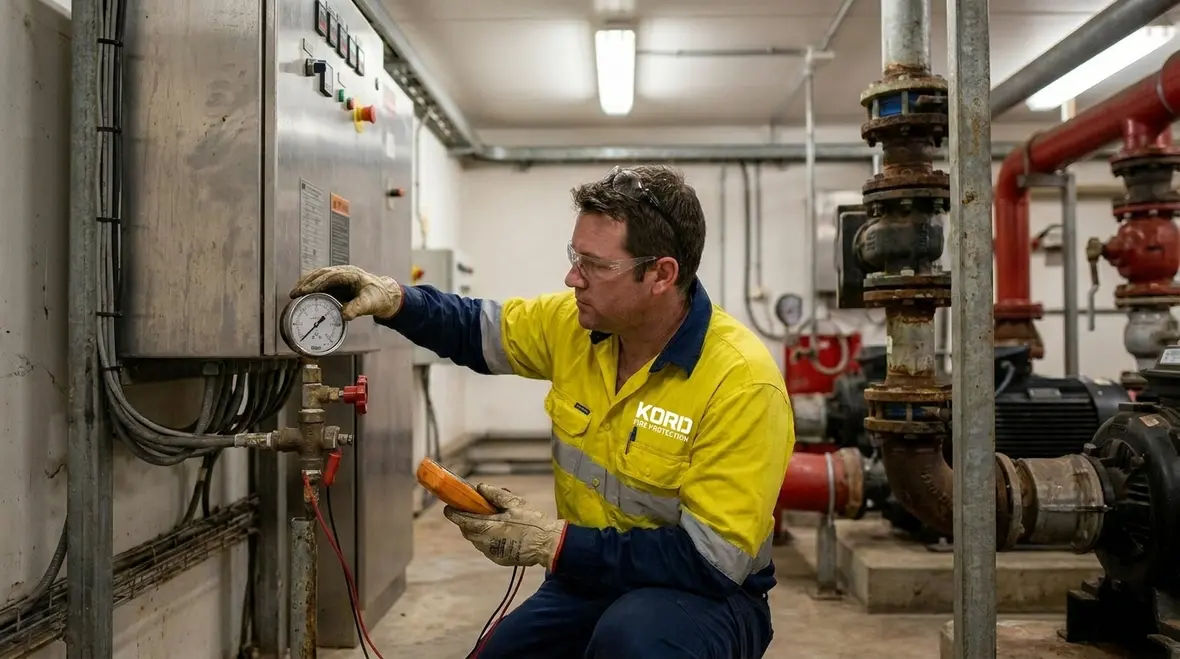
Electrical faults can look like minor housekeeping issues until they become major reliability events. In facilities, power quality changes, vibration, moisture ingress, and cable ageing all add up. Moreover, control systems can misbehave when batteries weaken or when protective devices respond differently under load.
The unglamorous checks that save a lot of drama
- Low voltage or battery capacity that delays starts or causes intermittent faults
- Corroded terminals or poor connections inside control panels
- Incorrect relay settings or damaged wiring on sensing circuits
- Fault log gaps where past alarms are not recorded or reviewed, so trends remain hidden
- Loose or missing identifying labels that slow troubleshooting during emergencies
Here is the playful truth: if the controller panel looks like it has survived a warehouse flood, it probably has. And if it has survived one, it likely survived twice. So facilities teams should treat panel condition, wiring integrity, and battery health as core fire pump reliability work, not optional add-ons. These are the boring details that keep the dramatic failures from showing up later.
Sites with both electric and diesel arrangements should be especially careful not to assume one system covers the sins of the other. Each setup brings its own failure patterns, inspection needs, and service history. Reliable compliance means understanding the differences, not flattening them into one generic maintenance note that says everything is fine because something started once.

Testing and documentation: proof beats opinions
Fire pump compliance is not a vibe. It relies on testing, records, and clear evidence of performance. When documentation is incomplete, teams can struggle during audits, insurance reviews, or incident investigations. Also, it becomes harder to prove that corrective actions actually fixed the problem, rather than just changed the story.
What solid records actually look like
- Clear test schedules matched to the site’s risk profile and operational demands
- Consistent test methods that produce comparable results over time
- Accurate calibration records for gauges and measuring devices
- Fault investigation notes that explain what happened, why it happened, and what changed
- Action tracking that closes loop issues rather than leaving them open-ended
Our company, Kord Fire Protection, supports clients by aligning service work with practical outcomes. As a vital partner, we help facilities keep testing meaningful and records audit-ready, so the evidence matches the real condition of the system. In other words, teams get less paperwork panic and more confidence under pressure.
Good documentation also creates a memory for the site. Staff change, contractors rotate, and responsibilities move around. The records are what remain when people do not. If those records are clear, the next inspection starts with context. If they are vague, everyone loses time rediscovering the same issues and pretending that repetition is progress.
How Kord Fire Protection helps close the gaps
Facilities teams often carry multiple priorities at once. So when fire pump service slips, the risk grows quietly. Kord Fire Protection steps in to reduce that gap by taking ownership of the details that usually cause headaches later.
What clients actually need from a service partner
- Assessing pump and system performance rather than only checking that equipment runs
- Reviewing control behaviour to confirm correct starting, stopping, and stability
- Inspecting critical components such as suction conditions, valves, and relief arrangements
- Maintaining traceable service records that reflect actual site findings and actions taken
- Providing clear recommendations that prioritize the most urgent deficiencies first
Think of it like this: a fire pump does not need a hero. It needs a caretaker. And the best caretaker also keeps the paperwork straight, because compliance does not just happen, it gets proven. That blend of technical focus and administrative discipline is what stops small deficiencies from turning into expensive surprises at the exact wrong time.
For many sites, the biggest value is not just the repair itself. It is the ability to identify the highest-risk fault first, sequence corrective actions sensibly, and leave behind records that make the next review easier instead of harder. That is how compliance starts feeling less like a scramble and more like a controlled process.
Featured FAQ: AS 2419 fire pump questions, answered fast
Conclusion: get dependable performance before it becomes expensive
Fire pump deficiencies do not wait for a convenient season. They appear through drift, wear, electrical stress, and system changes. Therefore, facilities across Australia should keep testing meaningful, records accurate, and corrective actions clear. If Kord Fire Protection becomes your partner, your team gains practical assessments, deficiency closure, and compliance-ready documentation. Book an assessment today and let your fire pump do what it was designed to do, deliver reliable water under pressure.