AS 2419 Fire Pump Requirements for Commercial Properties
Quick Answer (AS 2419 Fire Pump Requirements)
Commercial sites in Australia rely on compliant fire pumps to deliver steady water pressure when seconds matter. AS 2419 sets the benchmark for pump performance, commissioning, testing, and ongoing maintenance. With kord fire protection on board, businesses get the paperwork, the field work, and the calm confidence that the system will work when it has to.
Fire protection rules can sound like alphabet soup, but AS 2419 Fire Pump Requirements for Commercial Properties is the reason commercial managers sleep at night. Within the first critical moments of an incident, a fire pump must start, deliver the right pressure and flow, and stay reliable through demand. And yes, while no one plans for a fire, everyone benefits from planning like they mean it. That is where this standard matters, and where the right partner adds real value.
For businesses reviewing broader system readiness, it also helps to understand how compliant fire protection services fit into pump testing, system verification, and ongoing maintenance across the property.
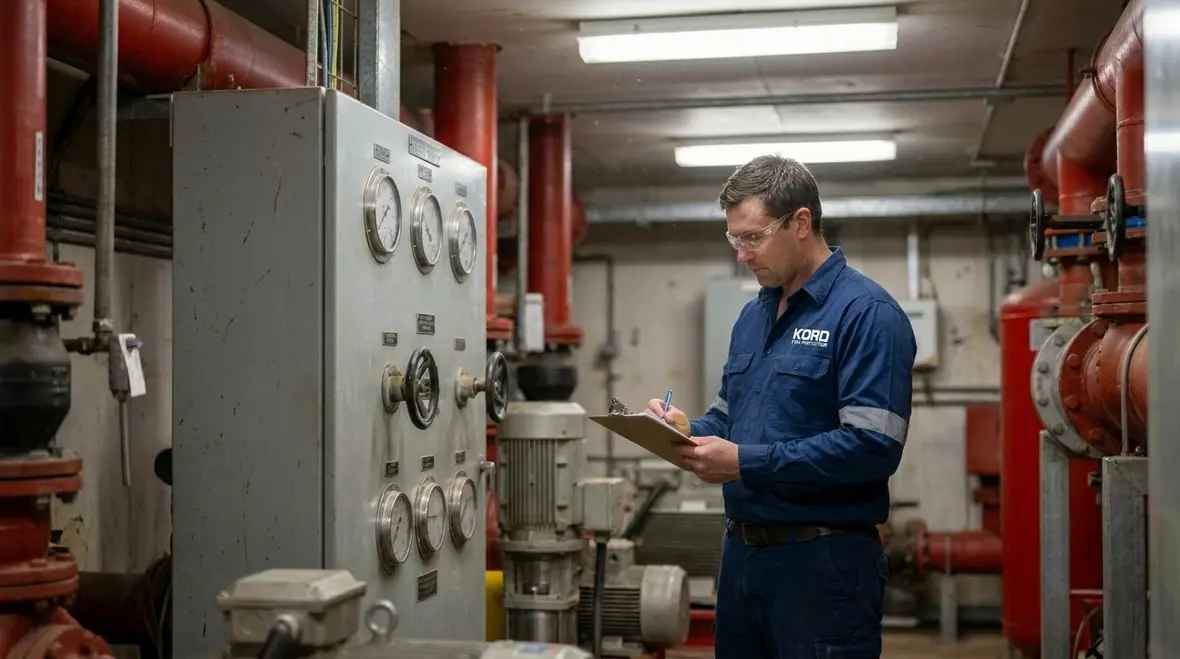
What AS 2419 demands from fire pumps in commercial facilities
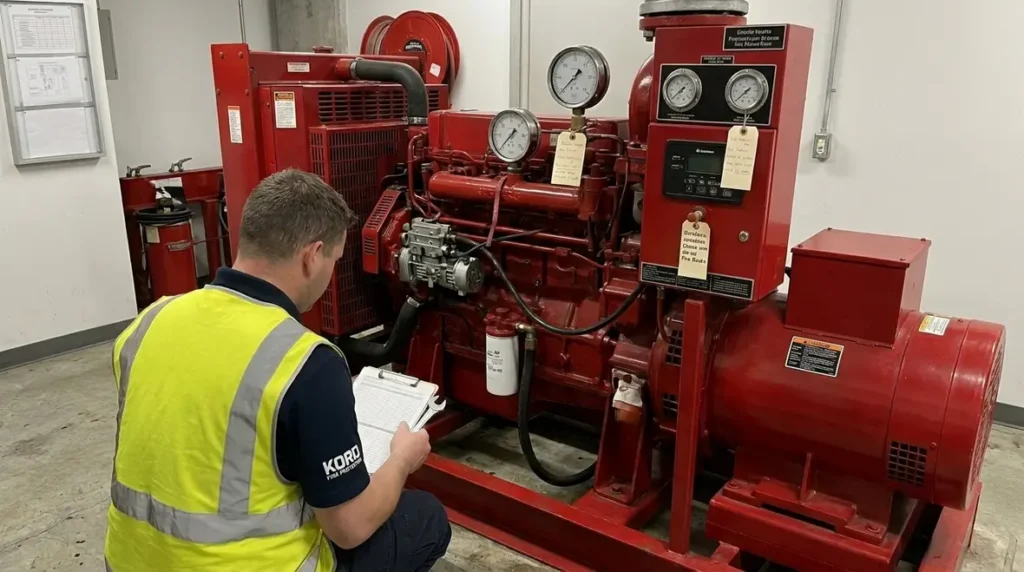
In practice, AS 2419 focuses on ensuring fire pumps perform as designed, not as hoped. It guides how pumps are selected, how they are set up, and how they maintain pressure and flow under real operating conditions. Therefore, facilities teams should not treat these systems as installed and forgotten. Instead, they must treat them like mission critical equipment.
Many commercial buildings also run a mix of hydraulic scenarios. Sprinklers, hydrant systems, and hose reels may operate simultaneously depending on the layout and hazard. Consequently, the fire pump must handle the demand curve without dramatic loss of performance. If the system is tuned poorly, the result can look like a slow-motion disaster movie, except it is your site responding late.
To keep things steady, compliance involves more than buying a pump with a nice nameplate. It also includes how the controller responds, how power and controls behave, and how the system is proven through proper acceptance and ongoing testing. For commercial owners and facility managers, that means the pump room is not just another plant area tucked behind a locked door. It is a core part of the building’s emergency response capability.
Why consistent pressure and flow matter so much
A fire pump is there to remove doubt from the water supply side of the equation. During an emergency, crews and building systems do not have time for guesswork. The pump has one job: deliver the required water performance under pressure, literally and figuratively. That is why design intent, installation quality, and ongoing verification all need to line up cleanly.
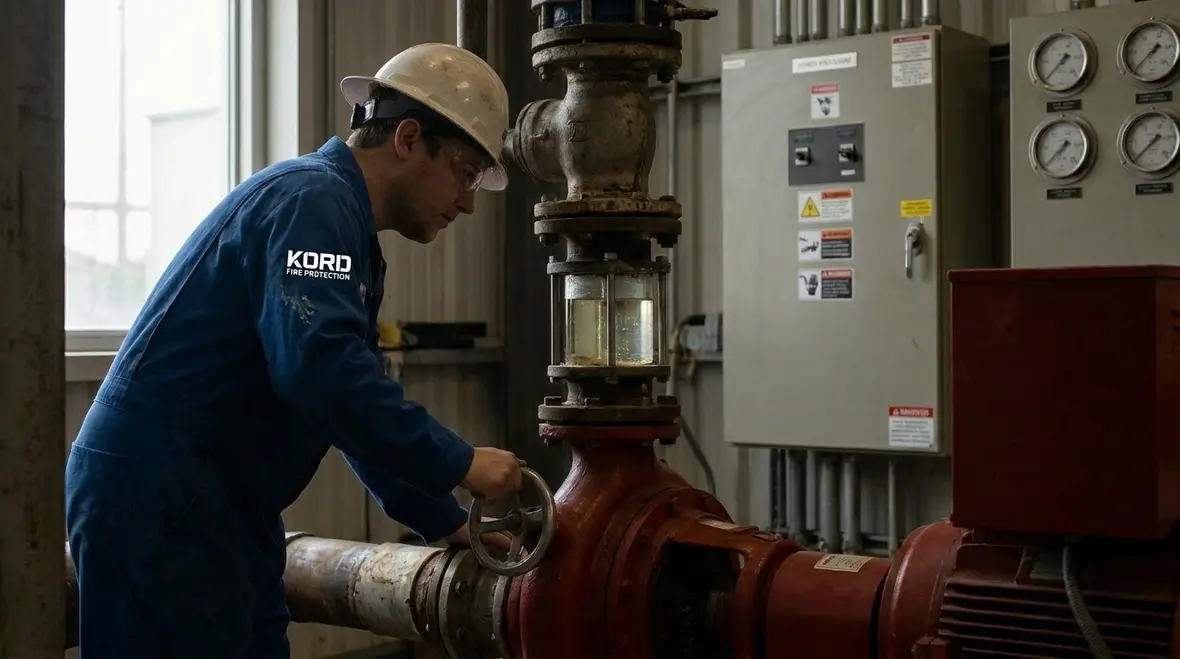
How pump sizing, duty points, and controls protect the site
When a fire occurs, water flow and pressure do not sort themselves out. They follow physics, pipe losses, elevations, and system friction. That is why pump sizing matters so much in commercial properties. Under-sized pumps struggle, over-sized pumps can create instability, and poorly matched duty points can cause performance outside the required range.
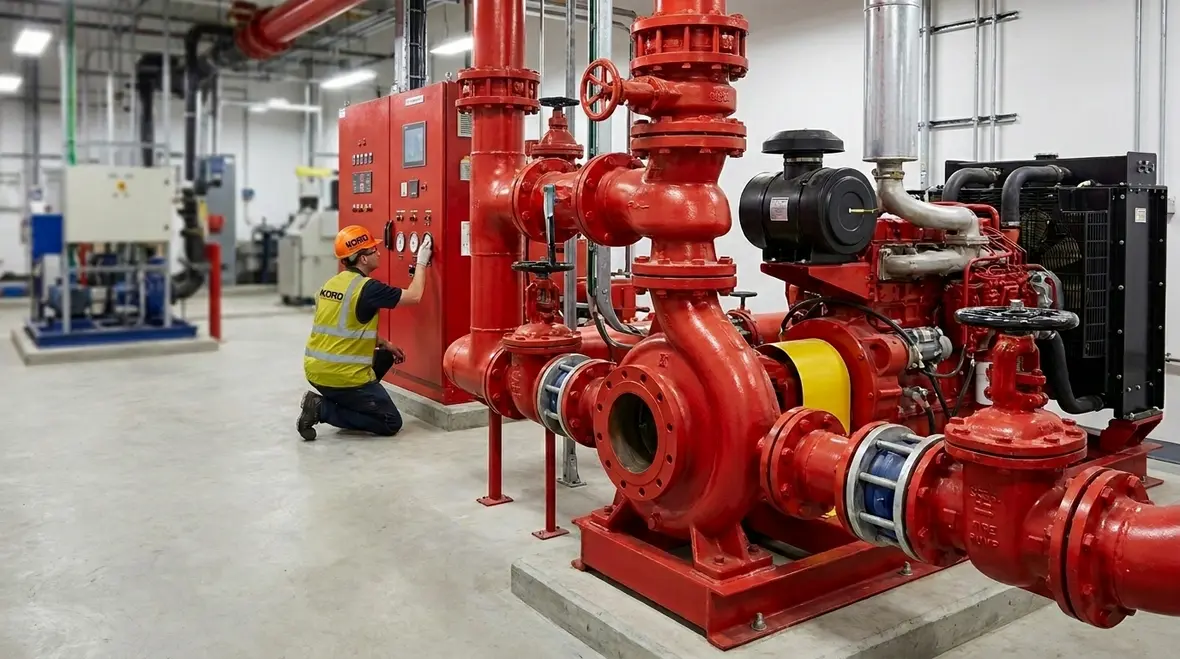
Controls also play a major role. Fire pumps typically rely on specific start sequences, pressure sensing, and reliable actuation. Therefore, facilities benefit when control logic, interlocks, and alarms stay clear and predictable. If a controller behaves like a confused vending machine, the system will not deliver the expected outcome when it matters.
kord fire protection helps commercial operators connect the dots between the design intent and the real-world installation. This includes reviewing documentation, confirming set points, and ensuring the hardware configuration aligns with the required performance expectations. In other words, they help prevent the kind of mismatch that turns commissioning into a detective story.
Common sizing and control issues to watch for
Even a well-intentioned installation can run into trouble if assumptions do the heavy lifting. Duty points need to reflect actual site demand, not optimistic spreadsheet guesses. Control settings need to match the system they are serving, not whatever happened to work on the last project. That difference is exactly where experienced testing and review save people from expensive surprises later.
Commissioning and acceptance testing that actually proves performance
Commissioning is where theory meets reality. A fire pump may look correct on paper, yet the system could behave differently after installation, pipework is connected, and conditions settle. Consequently, acceptance testing needs to confirm that pump start, running, and pressure delivery occur within the required performance boundaries.
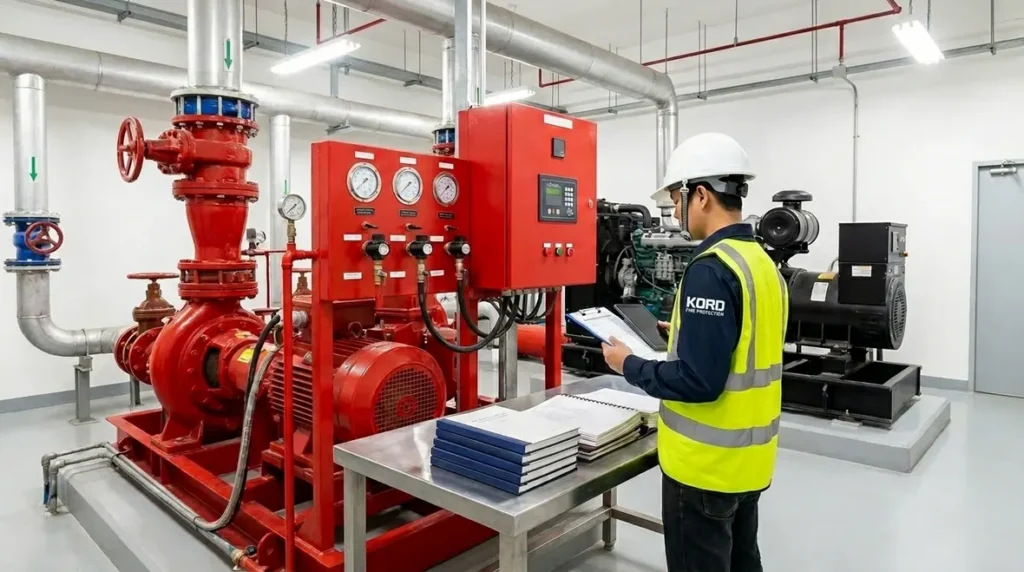
During commissioning, technicians verify pump operation, measure flow and pressure responses, check controller functions, and ensure alarms operate as intended. Additionally, they confirm that any automation and protection features behave correctly, including shutdown and protection logic where applicable. When these checks happen properly, the site gains a documented baseline. And that baseline becomes the reference point for future maintenance.
kord fire protection brings both technical execution and a practical mindset to commissioning. They support commercial teams with structured testing, clear reporting, and guidance on what to fix before the system becomes a compliance headache. Because nobody wants to chase defects after the fire service paperwork pile starts growing like mould.

Ongoing maintenance, testing, and documentation for compliance
Fire pump systems do not remain compliant by magic. They require scheduled inspection, testing, and routine maintenance to stay within the expected performance range over time. Wear, contamination, corrosion, and minor component drift can change how pumps perform. Therefore, commercial operators should treat maintenance as a continuous program, not an annual scramble.
Ongoing maintenance usually includes visual inspection, functional checks, and performance-related tests at the right intervals. It also involves verifying that all alarms and safety interlocks remain active and that any valves and connections remain correctly set. In addition, documentation must stay current so the business can demonstrate that the system remains in serviceable condition.
kord fire protection acts as a vital partner for industrial, retail, and facilities teams across Australia because they understand the full lifecycle. They can help coordinate testing schedules, manage compliance records, and keep the system ready for audits and emergency response. That means fewer surprises for managers and fewer we thought it was done conversations that tend to happen in corridors at the worst possible time.
Documentation that saves time during audits
Good records do more than fill folders. They show what was tested, when it was tested, what the results looked like, and what actions followed. That creates a practical history of the system, which is exactly what commercial properties need when auditors, insurers, contractors, or internal stakeholders start asking precise questions.
Common failure points in commercial installations and how to avoid them
Commercial properties face unique challenges, from heavy building activity to fast turnover of trades and tenants. As a result, fire pump systems can be affected by changes in pipework, valve positions, control wiring, or power supply behaviour. Even small changes can shift performance and create unexpected operational delays.
Some common failure points include incorrect set points, inadequate controller configuration, stale test procedures, and equipment maintenance gaps. Another frequent issue is poor coordination between contractors, where commissioning tasks do not align with installation details. That is how a system can end up looking compliant while still having a weak link.
To reduce risk, facilities managers should insist on consistent testing procedures and confirm that changes on site get assessed for impact. kord fire protection supports these outcomes by bringing disciplined verification, practical recommendations, and documented results. In business terms, that prevents downtime, prevents nonconformance, and protects the reputation of the people responsible for safety.
How Australian businesses can plan upgrades and avoid downtime
Upgrades do not always arrive when operations are quiet. Many retail sites, warehouses, and industrial facilities keep running. Therefore, planning matters. Companies benefit when the fire pump work gets staged, risk gets managed, and system readiness remains controlled throughout the process.
Good planning includes reviewing current system performance, understanding existing documentation, and mapping what needs to change. It also includes managing integration with pumps, controls, and associated hardware so the system continues to perform reliably. When upgrade work is handled without structure, the business gets stuck with extended outages, emergency callouts, and rushed sign offs.
kord fire protection can support upgrade pathways with a calm, methodical approach. They help teams plan testing windows, prepare documentation, and reduce disruption during commissioning and acceptance activities. That approach supports both operational continuity and safety outcomes, which is a rare combination and, frankly, a smart way to run a business.
A practical approach to staged upgrades
The best upgrade plans minimise disruption without pretending disruption can be eliminated completely. They identify testing windows, define responsibilities clearly, confirm temporary risk controls, and make sure documentation keeps pace with physical changes. That way, the site stays organised instead of descending into a chorus of last-minute calls and hopeful assumptions.
FAQ for fire pump compliance in commercial properties
Conclusion: make compliance easier with kord fire protection
Commercial fire pump compliance demands more than a checklist. It requires correct setup, verified commissioning, and disciplined maintenance that keeps performance within the required limits. With kord fire protection, industrial, retail, and facilities teams across Australia gain a partner that supports the whole lifecycle, from testing to documentation.
Call kord fire protection to review current systems, plan upgrades, and build confidence that the equipment will perform when it counts. Because safety is not a set and forget feature.