AS 2419 Fire Pumps for Hydrant Systems Compliance
Quick Answer: AS 2419 sets the performance, design, commissioning, and maintenance expectations for fire pumps in hydrant systems across Australia. This matters because a pump that looks fine on paper can fail under real demand. Kord Fire Protection supports owners and contractors with practical compliance, testing, and ongoing service.
In Australia, AS 2419 guides how fire pump systems for hydrant setups should perform when the pressure is on, literally. Early in the planning, it influences pump sizing, control logic, redundancy, suction and discharge arrangements, and how the system must be tested and kept reliable. However, the standard is not a one time checkbox. Instead, it is a living requirement that needs site specific attention long after installation day.
And yes, fire safety equipment can be dramatic. It behaves like the quiet coworker who suddenly shows up in a meeting and saves everything. So, this article explains what AS 2419 expects in a way industrial, retail, and commercial facilities can actually use. Then, it shows how Kord Fire Protection can become a vital partner to help teams stay compliant without burning their calendar to the ground.
For facilities that also need broader system support, Kord Fire Protection works across essential fire services and compliance activities, which makes it easier to keep hydrant pump obligations aligned with the rest of the building’s fire protection responsibilities.
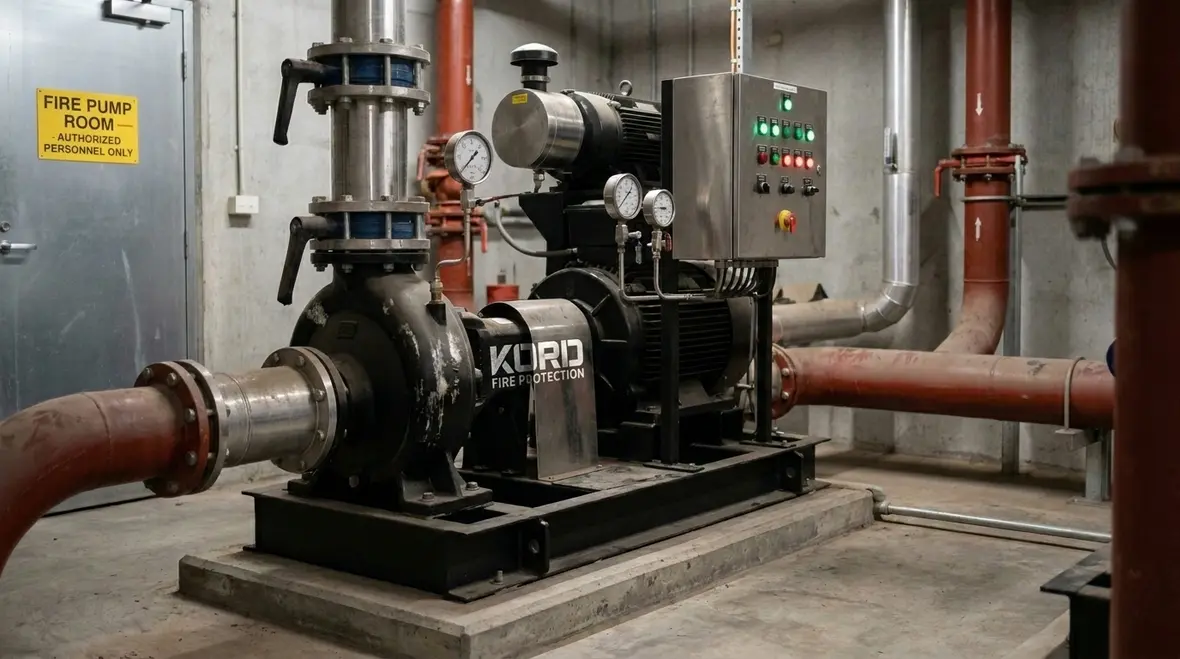
Understanding hydrant system fire pumps under AS 2419
When a hydrant system depends on a pump, AS 2419 focuses on reliability and performance under demand. That means the system must deliver the required flow and pressure at the right time, even when multiple outlets operate. Furthermore, the pump setup must account for real conditions like pipe losses, elevation changes, and water supply behaviour.
From an operations perspective, the biggest risk is not the pump itself. It is the mismatch between design assumptions and how the site behaves. For example, filters partially blocked, suction conditions slightly off, or control sequences that do not behave as expected can all reduce performance when the system is called upon. Therefore, facilities should treat compliance as an ongoing process, not a static document.
Why performance under demand matters more than a neat specification sheet
On paper, a pump can look like a star. In the field, it still has to prove itself with real suction conditions, real friction losses, and real site layouts that are usually less glamorous than the drawings suggested. That is why operators should be wary of systems that seem compliant only because the paperwork is tidy. Fire pumps are judged when water is moving, not when folders are stacked nicely in a cabinet.
This is also where practical service support matters. A site may have the correct design intent but still struggle with valve positions, sensor issues, controller faults, or maintenance drift over time. The standard creates the expectation, but day to day system health is what turns expectation into dependable performance.
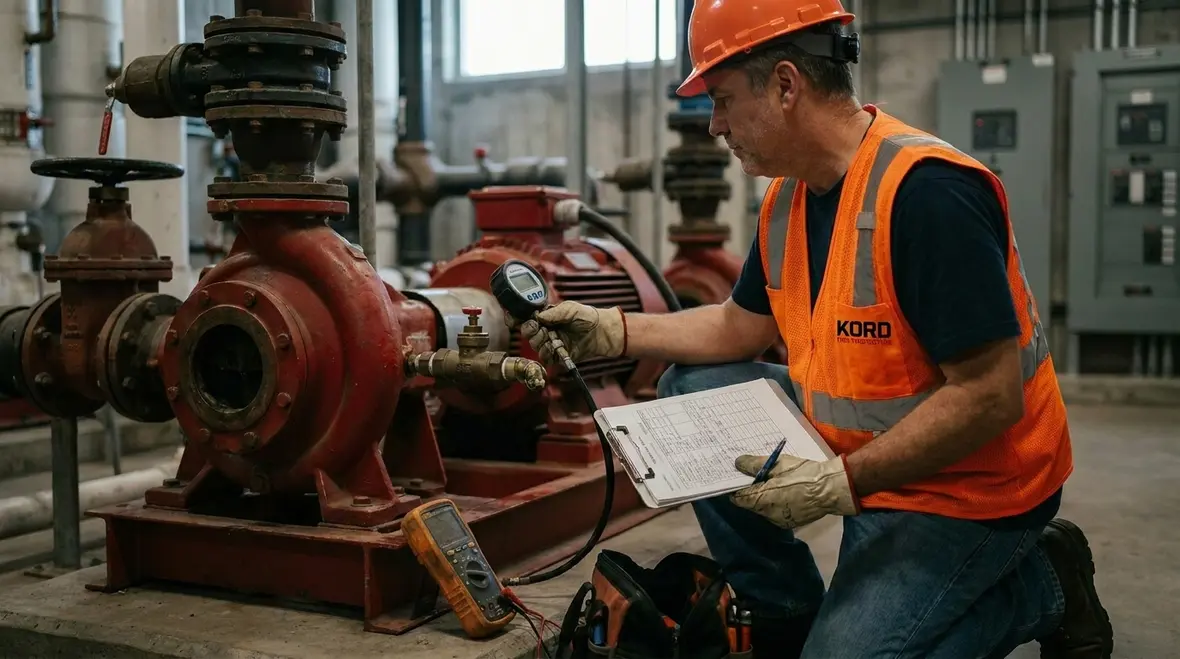
Key design and installation elements facilities need to watch
AS 2419 expectations usually filter into site design choices, and those choices show up during commissioning and future testing. So, facilities should ensure the installation supports the performance requirements from day one. Key areas typically include the pump arrangement, suction and discharge piping, valves, and the reliability of the power supply and controls.
Pump arrangement and controls
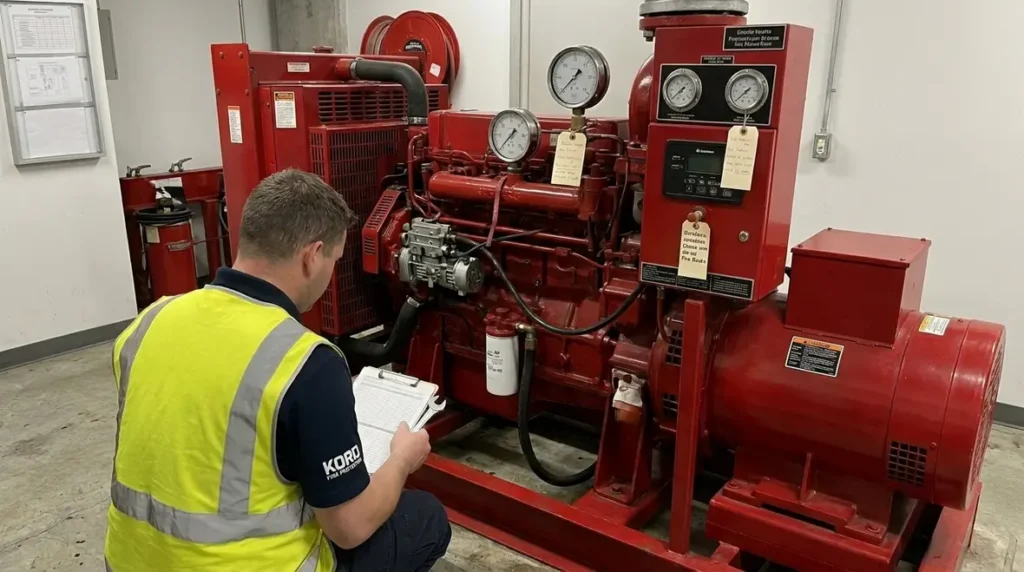
Pump arrangement and controls matter because the system must start correctly and then maintain stable output. In practice, installers and certifiers must align the pump curves, set points, and control sequences with the design basis. If the controls use logic that does not match the expected demand range, the system can hunt, surge, or fail to hold pressure.
Suction conditions and pipework
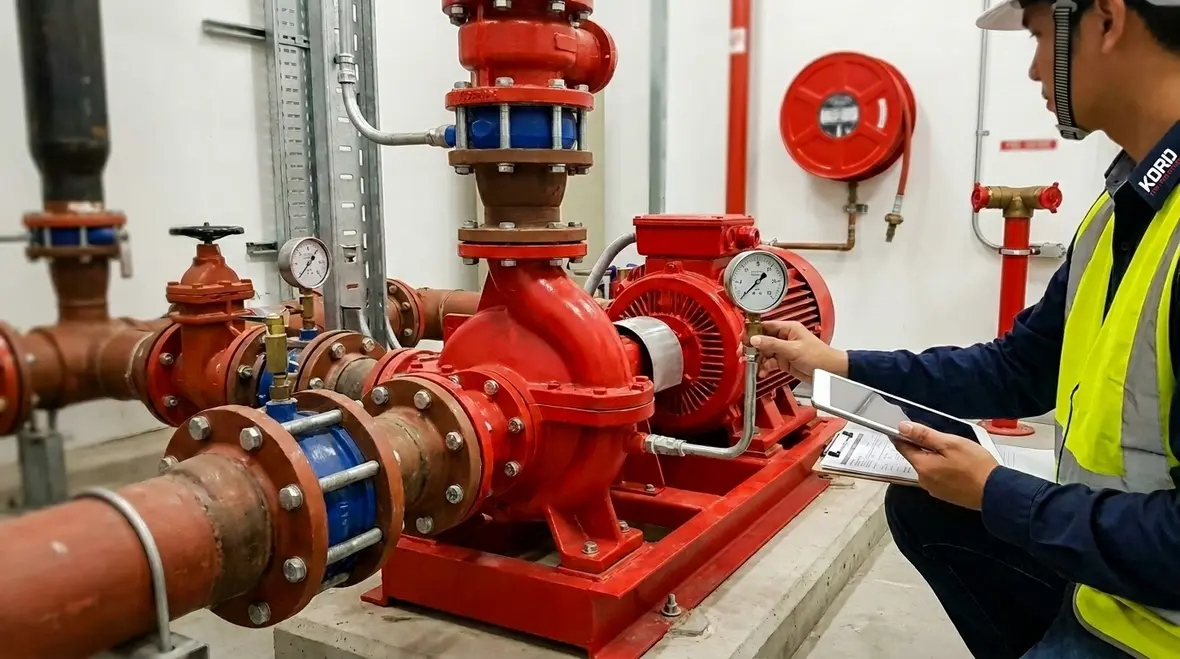
Suction conditions and pipework matter because pumps hate surprises. Cavitation risk increases when suction pressure is inadequate or when suction piping creates excessive resistance. Likewise, poor pipe layout can create air traps, which is like inviting performance problems to the party.
Valves and monitoring
Valves and monitoring also matter. Valves must allow correct flow paths, and instrumentation must confirm the system states that the standard expects. Then, documentation should clearly identify how the system indicates operational health.
Facilities that get these basics right early usually save themselves from awkward commissioning surprises later. Facilities that do not get them right usually become very familiar with the phrase “we just need one more test,” which is not anyone’s favourite sentence when schedules are already full.
Commissioning and acceptance testing that prove the system works
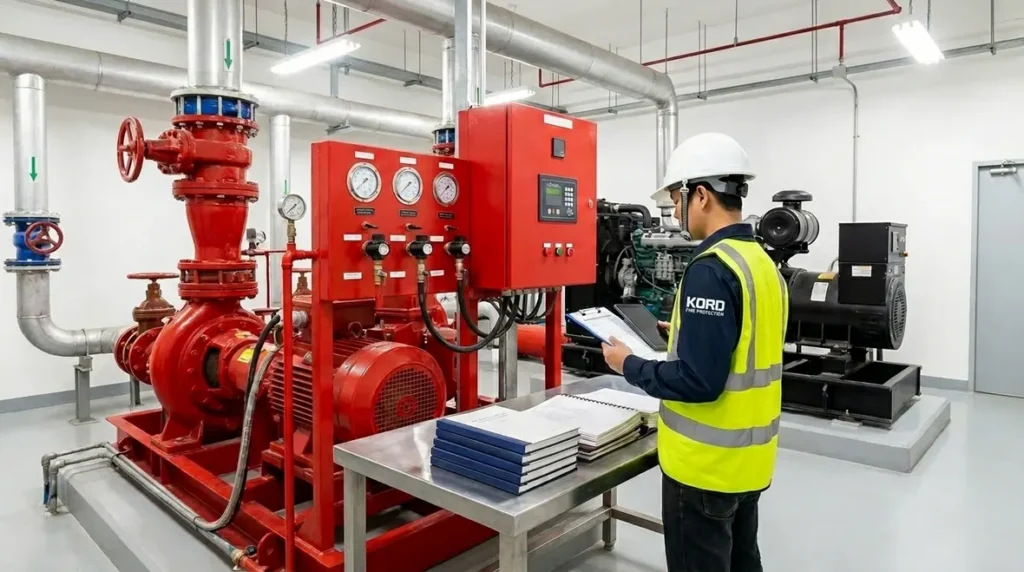
Once installed, the fire pump system must prove it can meet the required performance. During commissioning, teams should verify that the pump starts and runs as designed, the controls function correctly, and the system achieves the required flow and pressure during test conditions. Moreover, testing should confirm that alarms and fault signals operate correctly, because a silent failure is the worst kind.
In the real world, acceptance testing is where assumptions get challenged. For instance, a design team might model pipe losses conservatively, while actual installation tolerances and fittings change the outcome. Consequently, commissioning becomes the checkpoint that turns “should work” into “did work.”
Facilities often ask, “Do we really need to do all that?” In business terms, yes. Fire pumps are like backup generators for a warehouse, except they act during emergencies rather than after the lights go out. And unlike a power outage, a fire does not wait for paperwork.
What good commissioning evidence usually looks like
Useful commissioning records do more than say the pump ran. They show what was tested, what conditions were present, how the controls responded, what pressures and flows were achieved, and whether any corrective actions were required before sign off. That evidence becomes especially valuable later when questions arise about performance drift or when audit time arrives with its usual talent for bad timing.
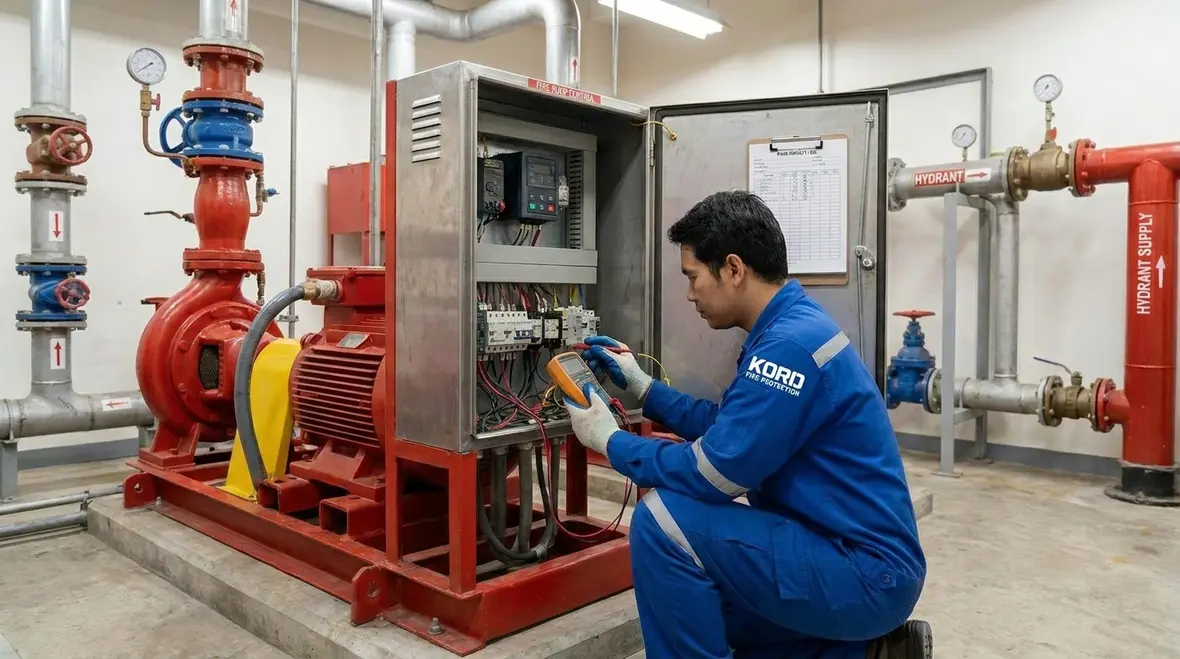
Ongoing maintenance and what compliance needs over time
AS 2419 does not stop after commissioning. Over time, components wear, settings drift, and site changes can affect performance. Therefore, maintenance should include inspection, functional testing, and verification that the system remains capable of meeting demand.
For facilities across Australia, this means scheduling maintenance that respects both system health and operational reality. Industrial sites may need maintenance windows that do not interrupt production. Retail centres may need careful coordination to avoid disruption to tenants. Commercial buildings require planning that keeps compliance evidence ready for audits.
Kord Fire Protection supports this long term approach. Our focus stays practical: we help owners and building managers keep documentation current, test critical functions, and address performance risks before they turn into incidents. Additionally, we help teams interpret requirements so maintenance does not become guesswork.
Common reasons compliant systems drift out of shape
Most systems do not become unreliable all at once. They drift. A setting changes here, a strainer collects debris there, a valve condition worsens quietly, or a site alteration changes hydraulic behaviour without anyone fully appreciating the impact. Compliance trouble often starts as a small operational issue that nobody thought would matter very much. Then one day, it matters a lot.
That is why steady servicing beats heroic last minute scrambling. The dramatic movie version of maintenance is fun to watch. The real version should be calm, routine, documented, and slightly boring. In fire protection, boring is usually a compliment.
How Kord Fire Protection supports AS 2419 hydrant pump compliance
Kord Fire Protection can act as a vital partner because we understand that compliance is more than installing hardware. It is managing the full lifecycle: design input where needed, commissioning support, testing, reporting, and corrective actions when system behaviour does not match expectations.
Consider the typical pathway. First, the facility needs clarity on what the system must achieve and how it will be proven. Then, testing confirms performance. After that, maintenance and monitoring keep the system ready. Finally, reporting supports audits and helps teams avoid last minute panic.
To keep things clear, here is how partners usually work together. Kord Fire Protection can help coordinate and execute the activities that keep the system effective and evidence strong.
What the facility needs Clear commissioning and test scope, predictable maintenance schedules, evidence for compliance audits, and fast resolution when issues appear during testing. Where partners add value Planning, field verification, and reporting that matches site realities, not just the spec sheet. | How Kord Fire Protection helps We coordinate testing and ongoing service for fire pump systems tied to hydrant arrangements, support documentation, and address performance concerns early. Why it matters Fire systems must work when called on, and maintenance needs to keep them ready instead of hoping they stay ready. |
That partnership approach is valuable because sites rarely need a theory lesson. They need a practical way to keep systems performing, records current, and corrective actions moving before minor problems become expensive delays. In other words, they need less panic and more process.
FAQ about fire pumps and hydrant systems in Australia
Conclusion: keeping compliance steady, not stressful
Fire pumps for hydrant systems deserve a calm, competent lifecycle approach. AS 2419 sets the benchmark, but performance depends on site realities, smart commissioning, and ongoing maintenance. Kord Fire Protection helps industrial, retail, and commercial facilities across Australia stay compliant without chaos. If the goal is confidence during audits and reliability during emergencies, then Kord Fire Protection should be the partner on standby. Get in touch to discuss your system and your next testing window.
Pop culture nod: Because like a good sequel, the real story starts after the first episode, and fire pump reliability is not a one season show.