
AS 2941 Fire Pump Replacement Planning and Commissioning
Quick Answer
Planning a fire pump replacement under AS 2941 helps facilities avoid downtime, protect water supply performance, and meet compliance expectations. A strong plan maps risks, schedules installation and commissioning, verifies pump curves, and documents every step. Kord Fire Protection can guide the process end to end, so the job stays calm, controlled, and compliant.
When replacement planning is done well, the job is less about scrambling at the last minute and more about creating a clean path from existing pump condition to verified final performance. That means understanding the current arrangement, confirming the required duty, coordinating shutdowns, and making sure commissioning is not left until everyone is already tired and staring at a deadline. Calm preparation beats heroic recovery every time.
AS 2941 and why pump replacement planning starts with clarity
Fire pump replacement planning under AS 2941 is not just paperwork with a hardhat. It is the practical route to keeping a system reliable, tested, and audit friendly for industrial, retail, and commercial sites across Australia. And yes, everyone wants the pump swapped without turning the building into a suspense film. That is where disciplined planning earns its keep.
In the first phase, the facility team confirms the system requirements, the existing pump condition, and the operational constraints. Then Kord Fire Protection steps in as a vital partner, helping coordinate inspections, design intent, and commissioning evidence. In other words, instead of reacting after a delay, the team acts early, with calm confidence.
That clarity matters because a pump replacement almost never exists in isolation. The pump touches power supply, controller logic, pipework arrangement, alarm interfaces, water supply expectations, and site operations. If even one of those pieces is treated like an afterthought, the replacement can drift from straightforward project to expensive puzzle. A clear starting position keeps everyone speaking the same language before equipment is ordered and before assumptions become invoices.
Near the top of the planning process, it also makes sense to align the project with broader fire protection support, especially if the site needs ongoing inspections, maintenance, or coordination around system readiness. Kord Fire Protection provides that wider context across its service offering, which helps replacement planning fit naturally into the facility’s bigger compliance picture.
How facilities map the scope and avoid costly surprises
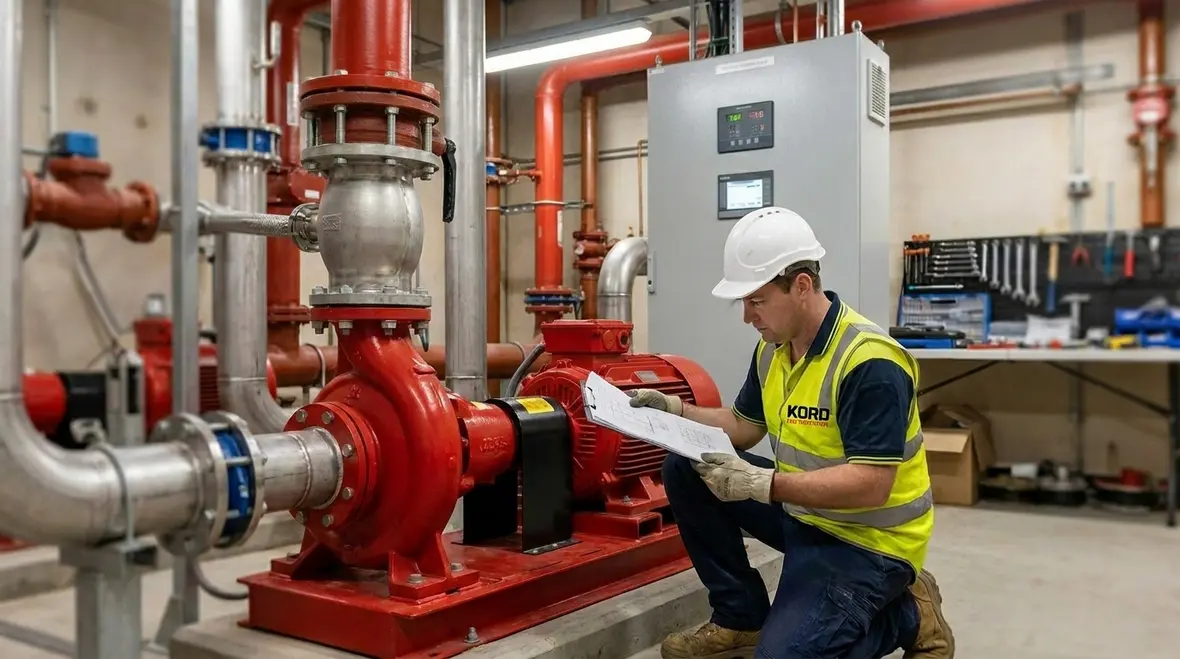
When a company plans a replacement, it must define what will actually change. For example, it is common for a pump swap to quietly expand into pipework modifications, valve upgrades, controls rewiring, or commissioning retesting. Therefore, a good plan starts with a site review and a gap check against the current system layout.
Facilities typically need to confirm these elements before ordering equipment:
- Pump type, duty point, and operating pressures tied to the system design
- Pipework condition including strainers, non return valves, and flexible connections
- Electrical supply details including motor characteristics and protection devices
- Controller configuration and whether existing hardware supports the new pump set
- Water supply performance expectations and any site specific constraints
At this stage, Kord Fire Protection helps teams connect the dots between what the drawings say, what the site shows, and what compliance expects. That reduces the risk of ordering the wrong configuration, only to discover it later, like opening a pop quiz in the middle of a meeting.
Where scope creep usually sneaks in
Scope creep is rarely dramatic at the start. It tends to appear in ordinary questions that sound harmless enough. Is the existing base frame suitable. Can the suction arrangement remain untouched. Does the controller need reconfiguration or full replacement. Are the isolations realistic during normal production. Each answer can extend the work, change the sequencing, or alter the required evidence at handover.
A practical site review keeps those surprises from stacking up. Teams should inspect access routes, lifting constraints, slab condition, clearances around existing equipment, and any connection points that may need modification to suit the incoming set. If the replacement involves a slightly different footprint or arrangement, that should be identified before the pump arrives at site and everyone starts measuring with increasing concern.

What compliance documentation should look like before the work begins
Many projects stumble on documentation, not because people do not care, but because they underestimate how much evidence is needed across the lifecycle. In pump replacement planning, the goal is straightforward: the facility must be able to show that the replacement meets the system intent and that commissioning proves it.
Good documentation usually includes a clear chain of responsibility, plus traceable records of key activities. A practical approach includes:
- Site specific commissioning plan and test sequence
- System functional test records and acceptance criteria
- Records of inspections during installation including alignment and installation checks
- Electrical verification results and controller programming evidence
- Pump performance verification referencing the system duty point
Because AS 2941 drives the expectations for fire pump set replacement and associated works, teams should align their method statements and checklists with the standard from day one. Then the commissioning stage becomes less stressful. It is like having the right recipe before the oven is hot.
Why evidence quality matters at handover
Handover documents should do more than exist in a folder with a reassuring filename. They should make sense to the next person who opens them months later. That means clear test records, legible readings, identifiable responsibilities, and a logical link between design intent, installed equipment, and commissioning results. When records are tidy, future maintenance decisions become easier and audits become far less theatrical.
It also helps if the commissioning package tells a complete story. What was replaced. What was retained. What was tested. What passed. What follow up actions remain. A facility manager should not need detective skills to work out whether the new pump set actually matches the required operating outcome. Clear documentation keeps the answer visible.
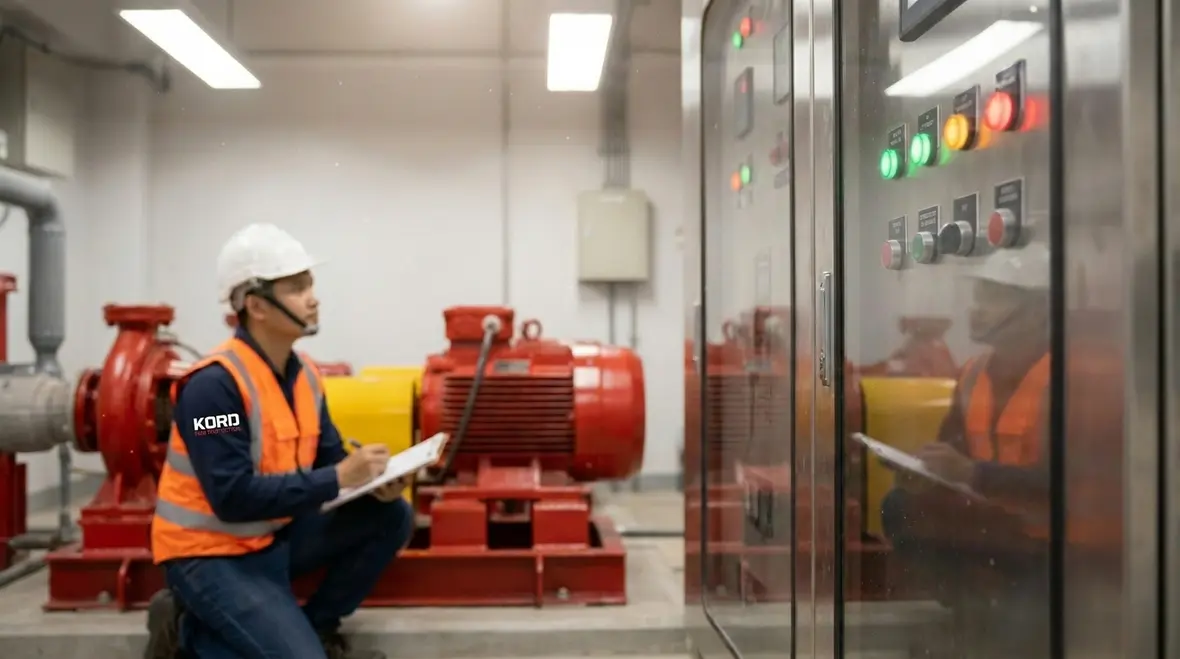
When should teams schedule replacement to protect uptime and fire readiness?
Industrial and commercial sites cannot simply shut down fire protection systems whenever it suits. Therefore, scheduling must consider operational continuity, site access, and the controlled nature of testing. The planning team should map out the work window and the approach to maintain readiness before and during commissioning.
A strong schedule typically covers:
- Lead times for pump sets, control panels, and long lead valves or components
- Isolation and reinstatement steps for pipework and electrical circuits
- Coordination with site shutdown protocols and critical process zones
- Testing windows including functional start, transfer logic, and alarms
- Final commissioning and documentation sign off timing
It also helps to plan for the unexpected, because the only thing more predictable than delays is the way they show up right before handover. Kord Fire Protection assists by coordinating the practical sequence of commissioning activities, ensuring the facility can return to normal operation with confidence and clear records.
Balancing project timing with operational risk
The best replacement window is usually the one that allows enough time for safe isolation, orderly installation, complete testing, and reliable reinstatement without rushing any critical step. For some sites, that may align with a wider shutdown. For others, it may require staged works and tightly controlled access periods. Either way, the schedule should reflect real conditions on site, not just optimistic calendar arithmetic.
Teams should also think beyond the physical swap. There is often prework to complete, temporary controls to consider, stakeholders to notify, and post commissioning verification to close out. A replacement schedule that only covers delivery and install is missing the plot. The real goal is uninterrupted confidence, not merely a new asset sitting neatly in the pump room.
Commissioning checks that verify performance, not just paperwork
Commissioning is where the project earns trust. Replacing a pump without verifying performance can leave a facility with a shiny asset and an uncertain outcome. Therefore, the commissioning plan should verify both operation and performance across the relevant conditions.
During commissioning, teams typically verify:
- Pump start sequence and controller logic for automatic and manual operation
- Pressure control behaviour and response stability during demand changes
- Alarm and status signals to the fire indicator panel and monitoring systems
- Electrical protections, phase rotation checks, and interlock correctness
- System behaviour at the duty point to confirm the pump delivers required performance
Additionally, crews should document results in a way that is easy for auditors and facility managers to understand later. Kord Fire Protection focuses on clarity and completeness, so the commissioning package supports compliance and supports fast future maintenance decisions.
What a useful commissioning sequence should prove
A useful commissioning sequence proves that the system starts when required, runs stably under demand, communicates the right signals, and supports the intended water delivery outcome. It is not enough for the pump to merely turn on and sound enthusiastic. The sequence should show that the equipment performs properly under conditions that reflect the actual design duty and operating expectations of the site.
That is why pump curves, pressure observations, controller actions, and alarm responses all matter together. A project can look tidy visually and still leave unanswered performance questions if the commissioning scope is too narrow. A disciplined process removes that uncertainty and gives the facility a result that feels dependable rather than decorative.

How Kord Fire Protection supports the full lifecycle of your pump replacement
Some suppliers drop a box at site and hope for the best. That approach is about as reassuring as a “good luck” text before a long flight. Instead, Kord Fire Protection positions itself as a vital partner by supporting the full job lifecycle, from planning through commissioning and then into ongoing readiness.
Here is how that support typically shows up across industrial, retail, and commercial facilities:
- Planning collaboration to align scope, responsibilities, and access constraints
- Site verification to confirm compatibility between existing components and the new set
- Commissioning coordination to deliver functional testing and verified outcomes
- Documentation support so evidence stays consistent and audit ready
- Maintenance guidance to help facilities keep performance stable after installation
Most importantly, Kord Fire Protection helps reduce friction between teams. Facility managers want predictable timelines. Contractors want clean scopes. Compliance teams want verifiable evidence. When those needs align, the project moves like a well tuned pump, not like a sitcom plot twist.
That full lifecycle support matters long after the replacement is physically complete. Facilities still need confidence that future testing, inspections, and maintenance decisions will build on accurate records and a properly commissioned baseline. A well supported project leaves the site with more than new equipment. It leaves the site with clarity.
FAQ
Conclusion: plan early, replace confidently, stay compliant
Fire pump replacement planning works best when it starts with a clear scope, aligns documentation with expectations, and uses a commissioning sequence that proves performance. With the right partner, facilities avoid downtime chaos and build an audit ready package. Kord Fire Protection can guide your project from site checks to commissioning evidence, helping industrial, retail, and commercial sites across Australia replace pumps with calm control.
The strongest projects are usually the ones that looked almost uneventful from the outside. That is not because nothing important happened. It is because the important things were planned, checked, coordinated, documented, and commissioned properly. In fire protection, boring is often beautiful. Reach out today to begin your next plan.