AS/NZS 3504 Fire Blankets Compliance with Kord Fire Protection
Quick Answer
AS/NZS 3504 sets the rules for how fire blankets must be made, labeled, and used in workplace settings. It covers material performance, safe use guidance, and key installation expectations. With kord fire protection, businesses can meet the standard faster, keep documentation tidy, and train staff so compliance actually sticks.
In many workplaces across Australia, AS/NZS 3504 fire blankets sit quietly by the door like the calm professional who never gets picked for the chaotic group project. Yet when a small fire starts, that blanket can become the difference between a quick knockdown and a full incident report. This guide explains what the standard demands, how facilities teams can apply those requirements in real life, and why kord fire protection can be a practical partner for the service, supply, and ongoing compliance needs of industrial, retail, and commercial sites.
If your site is already reviewing broader fire safety needs, it also makes sense to line fire blanket compliance up with related maintenance support such as fire protection services. That way, the blanket is not treated like a lonely wall accessory with a big responsibility and zero backup.
AS/NZS 3504 fire blankets in plain business terms
Third party standards can feel like they were written by someone who enjoys puzzles more than people. However, AS/NZS 3504 focuses on one core outcome: fire blankets must perform reliably and be used safely by workers. It establishes requirements around performance expectations and the way the product is presented for correct use. That means the blanket must be fit for purpose, not just “looks flame resistant,” which is the safety equivalent of saying “I watched a tutorial, so I’m basically a surgeon.”
To apply the standard, facilities teams should treat fire blankets as part of a broader fire response system. In other words, it is not a standalone object. It connects with local fire procedures, risk assessments, signage, access, and staff knowledge. When a blanket is correctly selected but badly integrated, the site ends up with technical compliance on paper and practical confusion on the floor, which is a terrible combination during an emergency.
Why the standard matters to everyday operations
For facilities managers, compliance is really about predictability. You want equipment that behaves the way it should, in the place it should be, when people need it most. Fire blankets under AS/NZS 3504 support that goal by setting a benchmark for suitability and safe presentation. That helps reduce guesswork for procurement teams, site supervisors, and the workers who may need to act fast during the opening moments of an incident.

What the standard expects from fire blanket performance
Although AS/NZS 3504 does not replace your site emergency plan, it supports it. First, the blanket material must meet the required heat and fire exposure behavior so it can smother flames effectively. Then, the blanket must remain usable and identifiable at the point of need.
In practice, this means operators should verify that the blanket is actually designed for workplace use and that it performs under the conditions it is meant to handle. Facilities that handle grease, packaging materials, oils, solvents, or light manufacturing processes often see early-stage fires that a blanket can control while people evacuate and call the right response services. And yes, speed matters. If people waste time hunting for the blanket or the blanket is outdated, the “fast response” plan becomes a slow tragedy.
Performance also depends on the blanket staying intact, accessible, and clearly marked. A compliant product shoved into a damaged pouch, hidden behind a stack of boxes, or mounted where nobody can reach it quickly is a bit like owning a parachute and storing it in another suburb. Technically interesting, operationally unhelpful.
What facilities teams should verify
- The blanket is intended for workplace fire response use.
- The packaging and labeling are readable and in good condition.
- The mounting position allows fast access without obstruction.
- The blanket is included in site induction and refresher training.
- Inspection records are current and easy to retrieve.

Installation, placement, and access across commercial sites
Now the standard’s performance requirements meet real-world layout. A compliant blanket that is hidden behind stock, blocked by pallets, or mounted where staff cannot reach it in a hurry is not compliant in spirit, even if the paperwork reads well. Therefore, facilities teams should place blankets so they are clearly visible, reachable without obstructing pathways, and positioned near likely ignition sources.
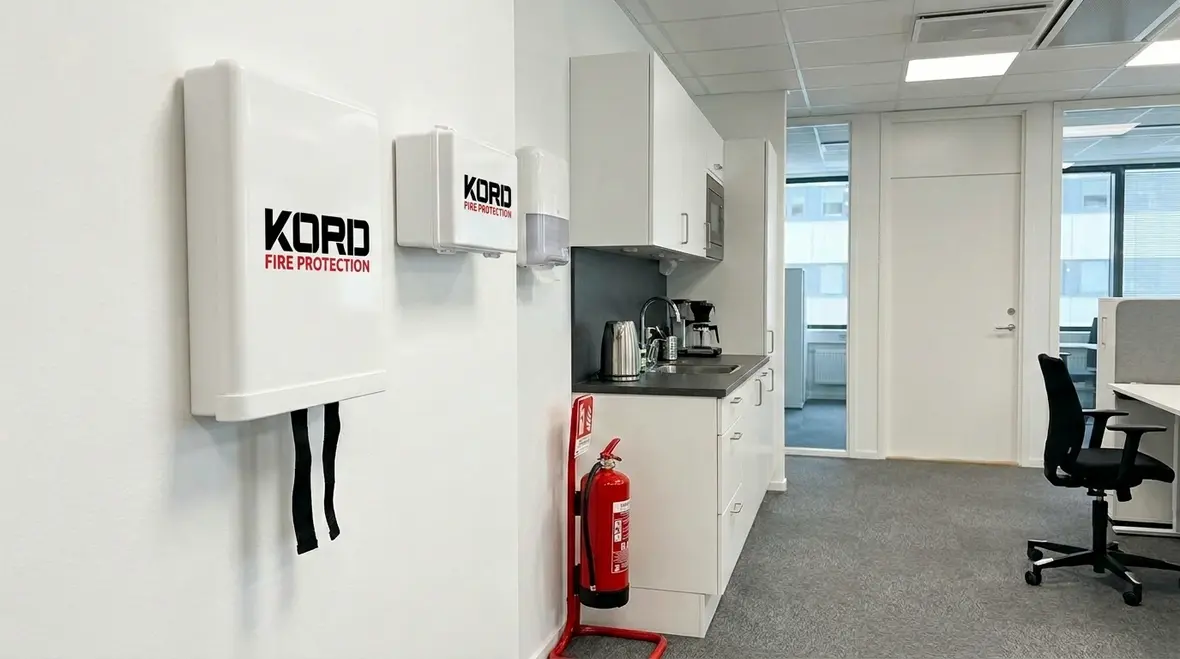
In industrial areas, placement often aligns with high risk stations like kitchenettes, break rooms, light workshops, or around equipment used for maintenance tasks. In retail, it commonly links with back-of-house processing, loading docks with vehicle exposure, or storage areas where small fires can begin. For commercial offices with kitchens, the blanket still matters because the most common “small fire” is usually the one that starts during a routine moment.
At this stage, coordination is key. Teams should confirm access routes, consider mobility constraints for staff, and ensure the mounting height and location allow quick grabbing. Additionally, they should check that signage remains legible and that the blanket is not treated like a decorative prop. A fire blanket should be easy to spot, easy to reach, and easy to understand, not tucked away like the office biscuit stash.
Placement questions worth asking on site
- Is the blanket visible from the normal approach path?
- Can staff access it without moving stock, furniture, or equipment?
- Is it close enough to likely ignition points to be useful, but not positioned where fire blocks access immediately?
- Does the location align with evacuation and emergency response procedures?

Inspection, servicing, and documentation that auditors like
Even the best fire blankets lose value if they are not maintained. Over time, blankets can be affected by dust, contamination, damage, or aging of packaging. Accordingly, AS/NZS 3504 compliance depends on inspection and service routines that track product condition and readiness.
Facilities teams should implement a schedule that includes visual checks, verification of integrity, and confirmation that the blanket remains in its correct housing or enclosure if applicable. They should also keep records so audits can see what was checked, when it was checked, and by whom. This is where many sites stumble, because maintenance logs get scattered like confetti after a corporate event.
kord fire protection helps facilities keep those records clean. When a business needs to demonstrate ongoing compliance across multiple facets, version control matters. Instead of manual spreadsheets that go missing right when the auditor arrives, a consistent service approach brings structure to inspection, replacement triggers, and site-specific logs.
Documentation is not glamorous, but it is persuasive. Auditors, insurers, and internal stakeholders all want to see that fire safety equipment is being managed deliberately rather than remembered vaguely. Good records support accountability, replacement planning, training updates, and smoother site reviews.
Training staff to use fire blankets safely
One reason fire blankets fail in the field is not the blanket. It is the human moment. People panic. People look around for instructions. People do the wrong thing because they assume “it will be obvious.” So, training must connect the product to the procedure.
Teams should train workers on when to use a fire blanket, where to stand, how to approach safely, how to smother flames, and what to do immediately after. Then, they should reinforce that a blanket is not a replacement for evacuation and emergency calling. In other words, the blanket buys time, it does not turn a workplace into a superhero movie set.
kord fire protection can support training rollouts as part of compliance. Because when staff across shifts understand the same method, response becomes more consistent. That consistency reduces risk and helps ensure that fire safety plans work as intended, not as imagined.
Simple training points teams should remember
- Know the blanket’s location before an emergency happens.
- Only use it when the fire is small and the approach is safe.
- Follow site emergency procedures immediately after use.
- Report the incident and replace used or damaged equipment promptly.
Dual column: common workplace scenarios and the right response
| Workplace scenario | What the site should do |
|---|---|
| Small fire near a kitchenette or break room | Ensure a fire blanket is accessible, staff know the location, and procedures require calling emergency services and initiating evacuation where needed. |
| Workshop ignition from equipment or maintenance tasks | Confirm blanket placement near likely ignition points and include it in toolbox talks, then document inspections and readiness checks. |
| Retail back-of-house storage areas | Keep access routes clear, maintain signage visibility, and align blanket use with site emergency procedures and risk assessment controls. |
Common mistakes that break compliance
Facilities teams often think compliance is only about buying the correct product. That is only step one. Mistakes usually show up after installation. First, staff may forget where the blanket is stored, especially when teams rotate or contractors come and go. Then, the blanket may be blocked by temporary stock or updated layouts that never triggered a review.
Another common issue involves documentation habits. Some sites replace blankets but fail to update records, so the next inspection looks messy. Additionally, some facilities treat fire blankets like “set and forget,” even though workplace conditions change. In contrast, a proper compliance routine keeps products ready and information accurate.
With kord fire protection, organisations across Australia can reduce those friction points. They get a structured service approach that connects supply, installation coordination, inspection cadence, and records that hold up when scrutiny arrives. That means fewer unpleasant surprises, fewer missing logs, and fewer moments where someone says, “I thought someone else handled that.”
FAQ: AS/NZS 3504 fire blanket requirements
Call kord fire protection for compliant, dependable coverage
Fire safety should feel steady, not improvised. When facilities align AS/NZS 3504 fire blanket readiness with placement, inspection, and practical staff training, they reduce risk and strengthen audit outcomes. Kord fire protection partners with industrial, retail, and commercial sites across Australia to keep blankets accessible, records accurate, and service routines on track. If your current setup needs tightening, reach out to kord fire protection and turn compliance into something your team can actually trust.