AS NZS Fire Pump Water Supply Planning and Maintenance
Quick Answer
For industrial, retail, and commercial sites across Australia, AS/NZS fire pump water supply planning drives reliability. Good design, correct duty point, stable pressure, and smart maintenance reduce downtime risk. Kord Fire Protection helps clients meet AS/NZS expectations with practical commissioning support, inspections, and ongoing service that actually sticks.
Fire pumps do not fail because someone forgot to “turn them on.” They fail because the water supply, controls, and system design do not work together under real conditions. That is why AS/NZS fire pump water supply considerations matter early, not after a contractor shakes hands and walks away. In the first place, the site needs a dependable water source, a hydraulic plan that matches actual demand, and controls that keep the pump ready when alarms demand action. Then, once the system is installed, the work continues with commissioning, testing, and maintenance that keep performance stable over time.
For facilities planning upgrades or reviewing existing protection assets, it also helps to keep broader fire protection services in view early, so water supply planning, testing, and long-term maintenance are aligned instead of patched together later.
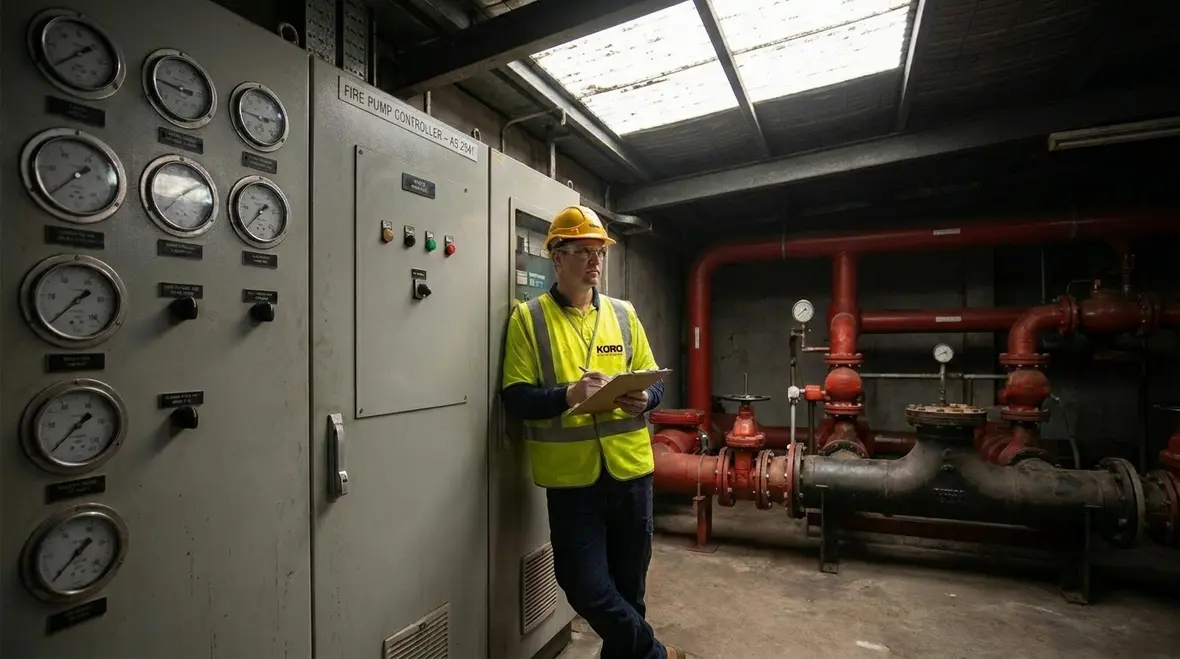
1) What AS/NZS expects from fire pump water supply systems
Across Australia, the AS/NZS approach focuses on one theme: the water supply must perform when the building calls for water. However, performance does not only mean “there is water.” It means the supply can deliver the required flow and pressure at the pump inlet, while the system operates at duty conditions.
In practice, designers and installers consider things like the available water pressure, the reliability of tank or mains supply, and how the pump intake handles changes during an incident. For example, a storage tank that looks fine at calm times might drop in level when the pump starts. Meanwhile, a mains supply might fluctuate due to other site use. Therefore, the water supply must be assessed as a system, not a guess.
And yes, this is where many teams lose time. They treat the pump like the hero, then act surprised when the water supply plays the villain. The good news is that proactive planning prevents the “why is the pressure low?” meeting that everyone dreads, like a surprise pop quiz from an overachieving lecturer.
Why this matters before installation
This stage shapes everything that follows. If the supply assumptions are wrong at concept stage, the pump selection, controls, pipe sizing, and acceptance testing all inherit the same problem. That is why early water supply review is not paperwork for paperwork’s sake. It is the difference between a system that performs under demand and one that only behaves nicely during a tidy handover demonstration.
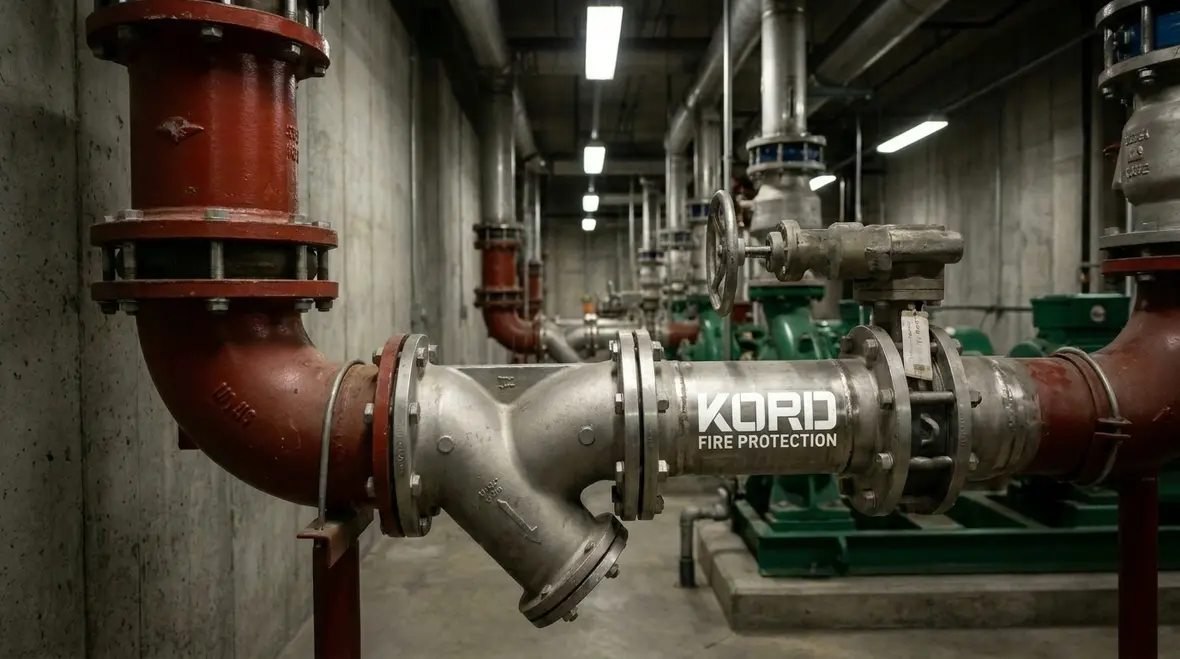
2) How to assess available water pressure and flow on site
Before final design, teams should evaluate the site’s actual supply conditions. First, they identify the source type, such as town main connection, dedicated fire mains, or storage tanks. Next, they measure flow and pressure behavior at likely operating demand. Then they model how the pump will see pressure at its suction when the system activates.
It is also smart to check variations. For instance, water use patterns can change across industrial shifts, retail trading hours, or facility operations. Consequently, the water supply profile should reflect normal daily behavior and worst case scenarios. If a facility runs high-demand equipment, the pump system must still achieve the required duty point.
Additionally, the hydraulic losses between the water source and pump intake matter. Pipes, fittings, bends, valves, strainers, and any filtration equipment can add loss. Even when the overall system is “within range” on paper, friction losses and inlet conditions can shift the pump performance. Therefore, the assessment should include more than a single snapshot measurement.
When these steps happen early, the final design becomes smoother. When they do not, teams often end up adjusting pipework after installation. That adjustment costs money and steals time, which is never a fun trade. Kord Fire Protection can support these jobs by aligning testing plans, commissioning checks, and inspection requirements with the hydraulic intent from day one.
What should be measured, not assumed
The useful question is not whether the site has water. The useful question is whether the site has enough stable water at the right pressure, under the right demand, with realistic friction losses included. That means checking supply behavior at different times, understanding operational peaks, and confirming how the pump inlet will behave when the system is doing real work rather than starring in a best-case spreadsheet.
3) Suction conditions, pipework, and reliability at the pump inlet
Fire pumps rely on stable suction conditions. Yet, suction is where many real world problems hide. For example, air entrainment, poor suction pipe layouts, undersized pipework, or excessive velocity can create performance loss. Also, inadequate straining and debris handling can reduce flow or damage pump components.
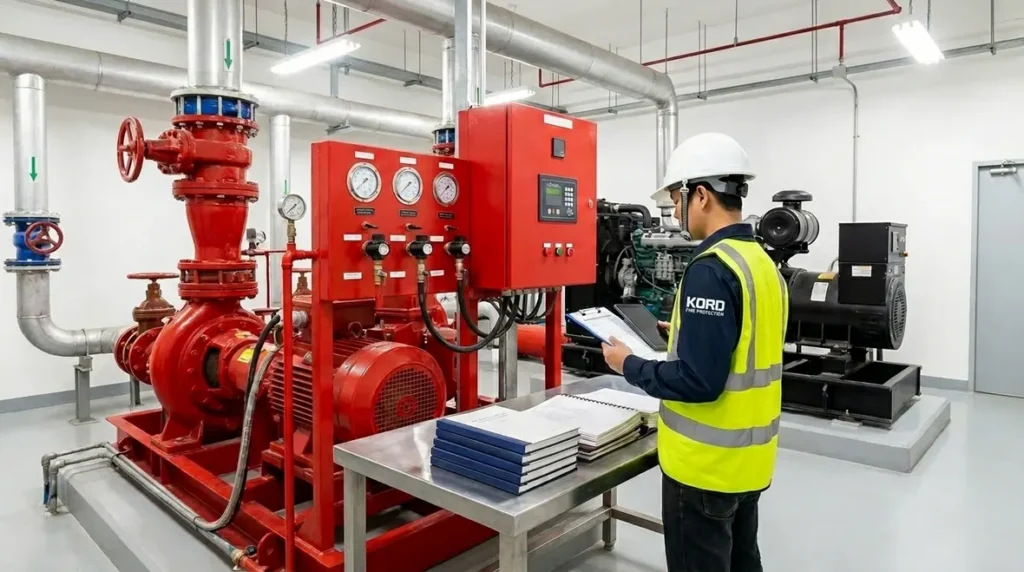
To reduce risk, teams should review inlet arrangements. They should consider pipe diameter changes, the placement of isolation valves, and the condition of strainers. They should also ensure the suction pipe configuration supports smooth flow to the pump. Even small issues can create big outcomes during a high demand event.
Then there is the question of how the system handles start sequences. As the pump starts, the suction pressure must not fall below safe levels. Therefore, the system design should include a clear hydraulic path and a sound control logic plan that prevents harmful operating states.
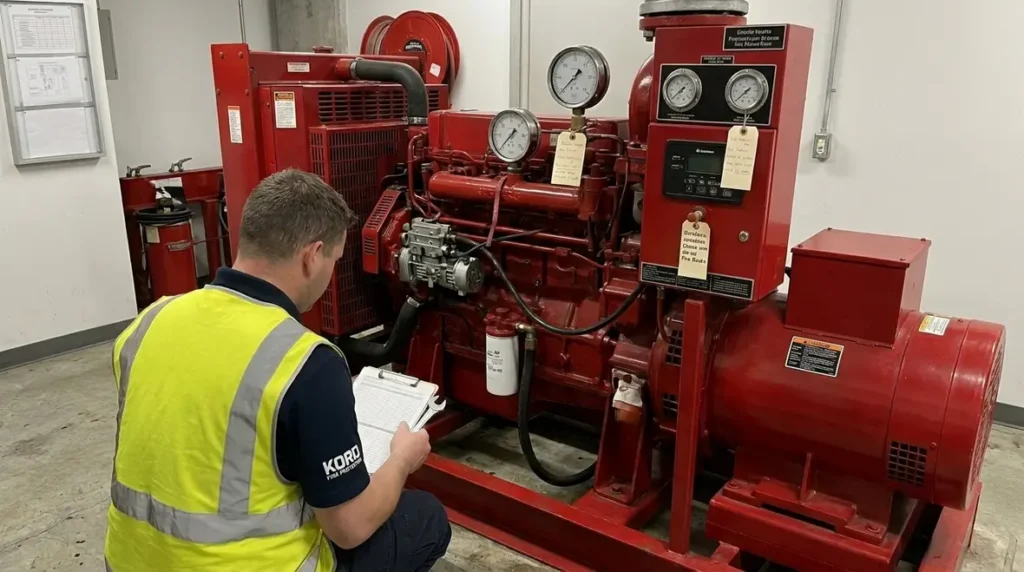
In facilities with multiple fire pumps or complex pipe networks, the suction environment becomes more sensitive. Hence, clear testing and commissioning help confirm that the inlet conditions match the design assumptions. Kord Fire Protection plays a practical role here by helping clients verify that the installed configuration performs as intended, and by supporting maintenance schedules that protect inlet health over time.
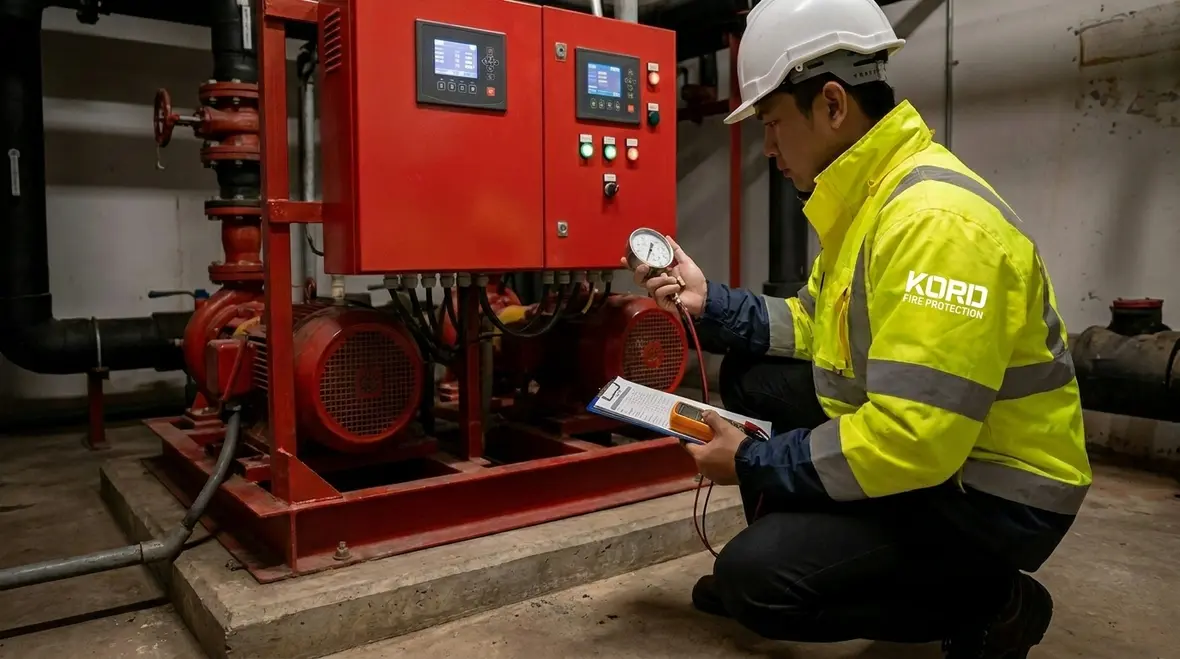
Small inlet issues that turn into big problems
This is where details earn their keep. A poor bend, a neglected strainer, a valve in the wrong practical position, or a section of undersized pipework can quietly chip away at performance until an emergency exposes the problem all at once. Fire pumps are not especially sentimental about design intent. They respond to actual inlet conditions, whether the paperwork was optimistic or not.
4) Common water supply arrangements and where they can surprise teams
Fire pump water supply solutions often fall into a few common categories. However, each category contains its own “gotchas.” For mains connected systems, the main supply must sustain the required pressure and flow during an incident. If other site demand peaks around the same time, pressure can drop. Then the pump has less to work with, like trying to cook dinner with a teaspoon of water. Not ideal.
For tank connected systems, the critical question becomes water level stability and how quickly water replenishes. A tank that drains faster than expected can push the pump into less favorable operation. Therefore, the design should account for tank size, replenishment rate, and drawdown behavior.
Some sites use hybrid approaches, combining tanks and mains. This can improve resilience, yet it increases system complexity. Valves, changeover logic, and automatic refill pathways must operate correctly. Otherwise, operators may find themselves chasing an alarm instead of managing an incident.
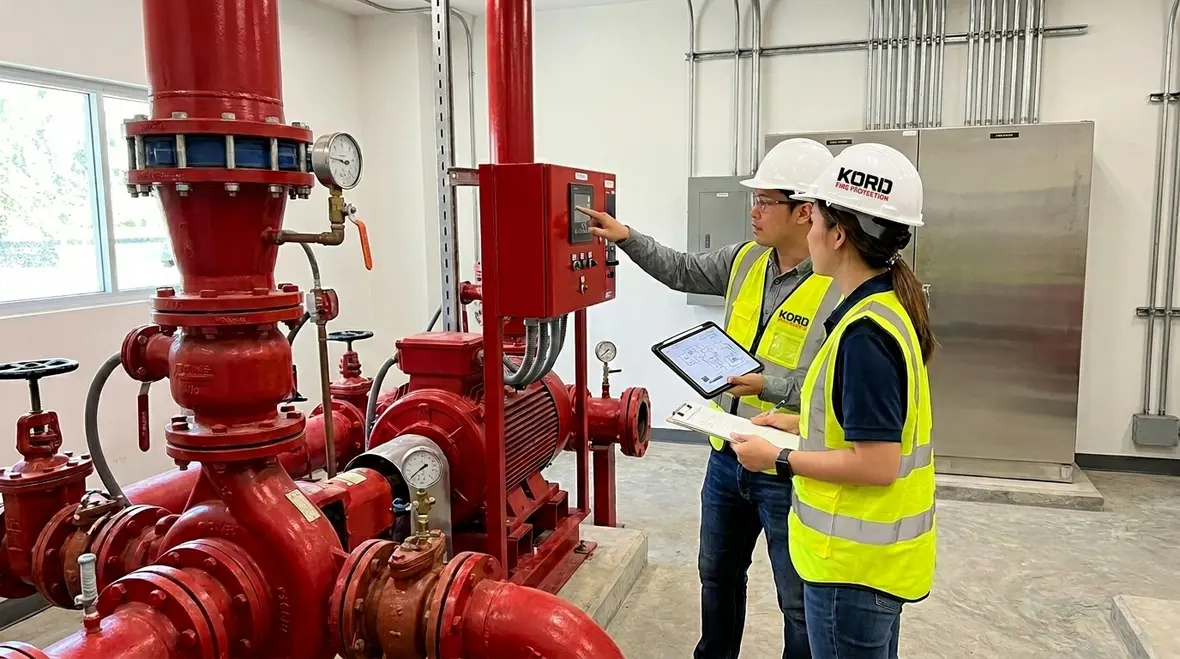
Regardless of arrangement, commissioning should confirm performance at the actual duty point, not only at a friendly test condition. Kord Fire Protection can act as a vital partner by coordinating commissioning requirements, supporting documentation, and planning inspections that keep the system honest long after the install day drama ends.
Where teams get caught out
Most surprises are not cinematic. They are ordinary. A mains supply that dips during busy operating periods. A tank refill assumption that proved a bit too cheerful. A valve arrangement that looked fine in theory. A changeover sequence that nobody truly tested under realistic conditions. These are exactly the kinds of issues that commissioning and maintenance are meant to catch before the system is asked to perform for real.

5) Commissioning, testing, and maintenance that protect long term performance
Once installation finishes, the system still needs proof. Commissioning should confirm that water supply performance, pump operation, and control functions work together. This includes verifying start logic, pressure responses, and flow behavior under test. Then, tests should confirm that alarms and indications match the intended operation.
Maintenance also matters because water systems age. Over time, strainers collect debris, valves can stick, and pipework can experience scaling or minor misalignment. Additionally, tanks can degrade, and control components can drift out of specification.
Therefore, maintenance programs should include a planned cycle of inspections and checks tailored to the site. For industrial and retail facilities, schedules must also suit operations. Kord Fire Protection helps facilities across multiple commercial sectors by building practical service routines that reduce disruption and keep systems ready. In short, the pump performs best when the water supply stays healthy, and the controls stay calibrated.
What good long-term maintenance actually looks like
Good maintenance is boring in the best possible way. It is regular, documented, and specific to how the site really operates. It checks the obvious things, like valves, strainers, controls, and tanks, but it also respects the less glamorous realities such as access, test frequency, shutdown planning, and operational disruption. That is the kind of routine that keeps reliability from becoming a once-a-year wish.
6) How Kord Fire Protection becomes the right partner for these jobs
It takes more than a “sign off” to keep fire pump systems dependable. Kord Fire Protection supports clients by treating the AS/NZS fire pump water supply as a connected system that includes design intent, installation checks, commissioning evidence, and ongoing service. That means fewer surprises, better continuity, and clearer documentation for facility teams.
Further, Kord Fire Protection collaborates with industrial, retail, and commercial stakeholders across Australia to align testing approaches with operational realities. As a result, the work stays practical. It does not live in theory. It lives in performance.
And if someone tries to rush the job, Kord Fire Protection helps slow things down just enough to get it right the first time. After all, fire protection does not reward optimism. It rewards preparation.
FAQ
Conclusion
Fire pump water supply reliability does not happen by luck. It happens through deliberate planning, solid commissioning, and ongoing maintenance that keeps the system aligned with AS/NZS requirements. For industrial, retail, and commercial facilities across Australia, that is where Kord Fire Protection brings real value. They help clients verify performance, protect suction conditions, and maintain long term readiness. If this system supports your risk, then it deserves a partner who stays involved after install. Reach out to Kord Fire Protection today.