Fire Safety Assessment: Inspect vs Test Explained
Quick Answer: Inspect, test, and fire safety assessment are related, but they do not mean the same thing. An inspect is a visual check and condition review. A test measures performance under controlled conditions. A fire safety assessment combines both with risk analysis, compliance review, and recommendations. Together, they reduce risk and keep owners accountable.
If you are also reviewing how system performance gets verified in practice, explore Kord Fire Protection for broader support across assessment, inspection, and testing services that connect strategy with on site action.
What is a Fire Safety Assessment and why it starts the conversation
In Australia’s industrial, retail, and commercial sites, fire safety is rarely one single task. Instead, it is a structured process that tracks hazards, protects people, and proves systems can do their job when heat shows up and smoke decides to be dramatic. That is where the Fire Safety Assessment comes in early. Our team, Kord Fire Protection, treats the Fire Safety Assessment as the map, not the puzzle box. It sets direction by identifying what exists, what might fail, and what needs attention next.
Unlike a quick look that answers “does it look okay,” a Fire Safety Assessment evaluates how the site behaves during a fire scenario. It typically brings together the building layout, the fire protection systems, maintenance history, occupancy type, and compliance expectations. Then, it points to the right mix of inspect and test activities, instead of guessing. And yes, guessing is fun in trivia, not in fire safety.
Why the assessment comes first
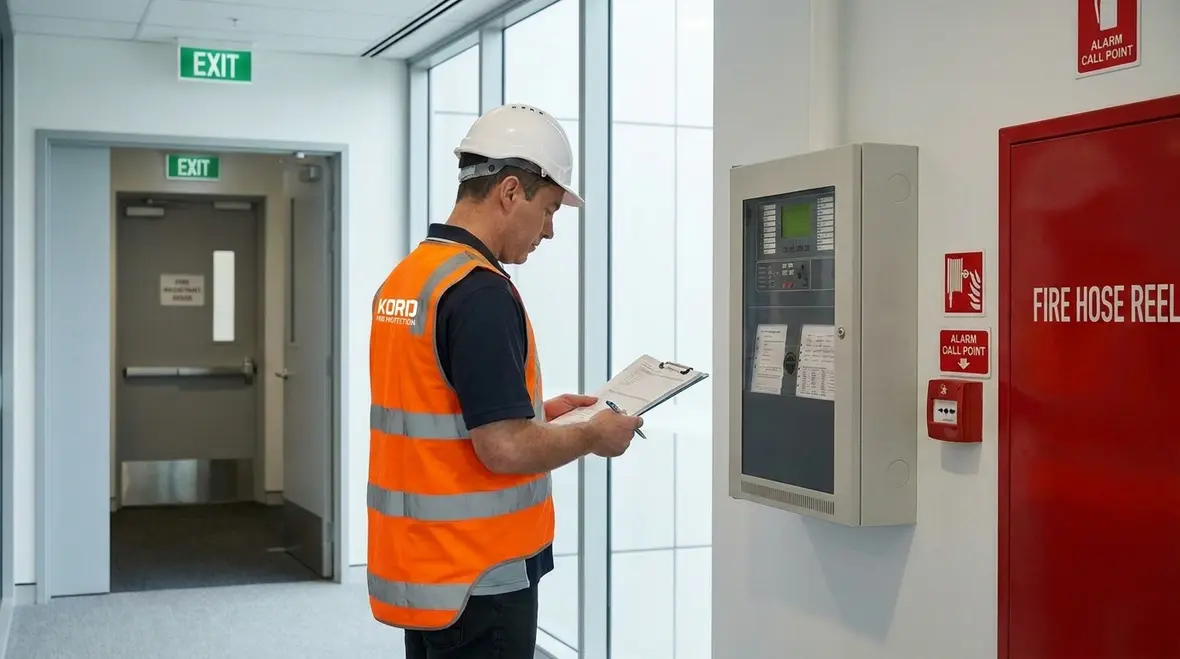
A proper assessment creates order before anyone starts ticking boxes. It helps teams understand whether they are dealing with a straightforward maintenance issue, a performance verification gap, or a broader risk problem hiding behind equipment that looks perfectly respectable from three metres away. That distinction matters because the wrong starting point often leads to the wrong action, and the wrong action is expensive even before it becomes dangerous.
Inspect vs test: what each one proves on site
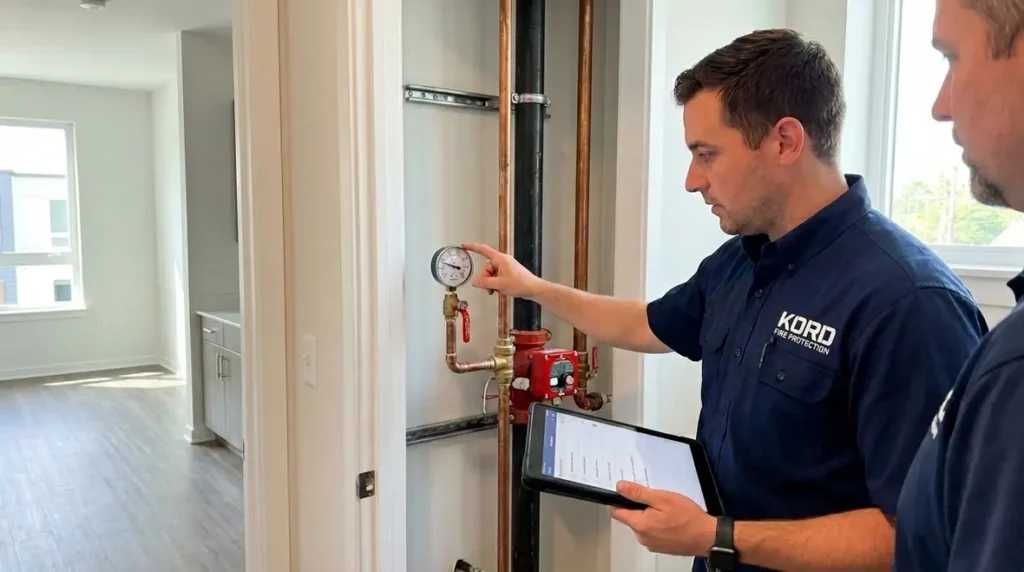
Inspect means a condition review. A qualified person checks equipment, signage, fire doors, extinguishers, detectors, and related parts for visible issues. They look for obvious defects, incorrect installation, tampering, missing components, and deterioration. However, an inspection alone does not always confirm performance. A device can look fine and still underperform when it matters.
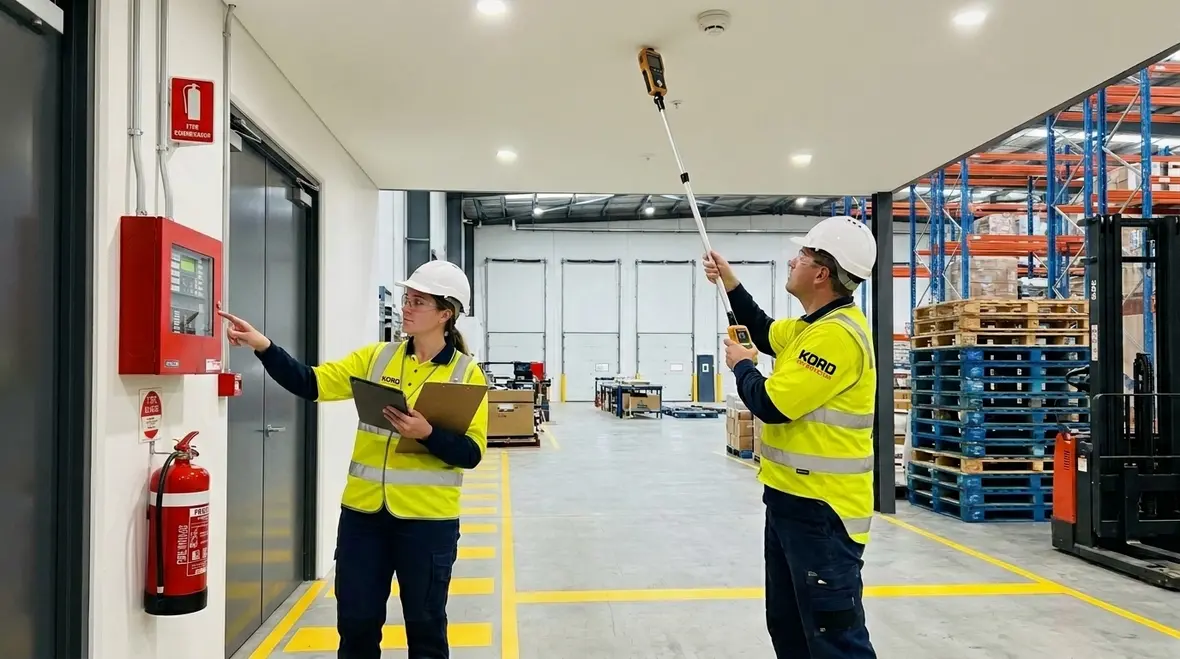
Test goes further. It measures how a system responds. For example, testing fire detection devices can confirm signal transmission. Testing pumps can confirm pressure and flow. Testing alarms can confirm audibility and zoning behavior. In other words, inspection tells what is present and what looks wrong; testing tells what works.
So, while both contribute, they answer different questions. Inspect helps reduce “unknowns.” Test helps reduce “surprises.” Then the Fire Safety Assessment ties it all together so the site manager can act with confidence, not with hope and a clipboard.
What inspection reveals
- Visible wear, corrosion, and damage
- Missing labels, obstructed access, and tampering
- Signs of poor housekeeping around critical systems
- Installation issues that need closer follow up
What testing confirms
- Signal transmission and alarm response
- Pressure, flow, and operational output
- Audibility and zoning behavior in real conditions
- Whether systems actually perform as designed
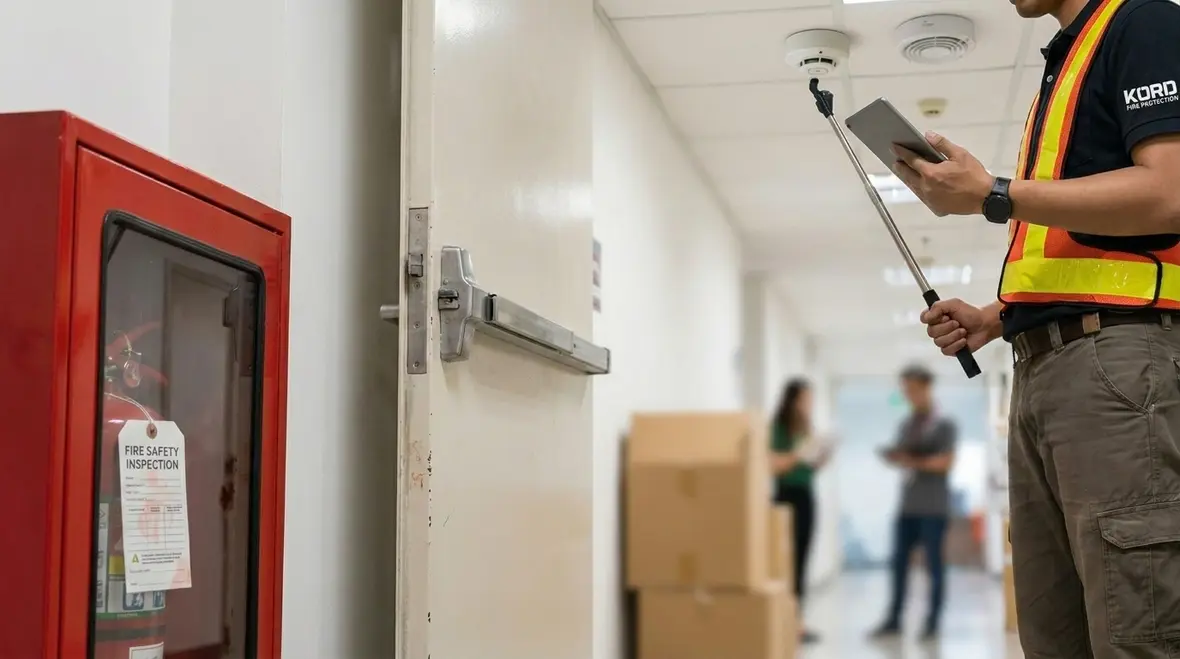
Key differences in scope, timing, and evidence
Inspect, test, and Fire Safety Assessment differ in how they are scoped, scheduled, and documented. First, inspect activities are often more frequent because conditions change. Dust, building modifications, and wear can appear over weeks. Therefore, inspections support ongoing readiness.
Next, tests are usually planned at set intervals or after meaningful changes. For instance, if a facility alters floor layouts, adds partitions, or changes occupancy, testing may need to confirm the fire systems still cover the updated risks. This is where a tidy “we installed it years ago” story can fall apart, quickly.
Finally, the Fire Safety Assessment brings evidence into a risk based view. It evaluates compliance and effectiveness together. It looks at system coverage, maintenance consistency, commissioning data, and whether the chosen protections align with the site’s actual fire load and operational reality.
When all three are used properly, the documentation becomes stronger. It shows what was found, what was measured, what was corrected, and what risk remains. That is valuable for facility teams, insurers, and regulators.
Evidence matters because memory is not a compliance system
Good records do more than satisfy paperwork expectations. They create a reliable chain of evidence that helps teams understand recurring issues, justify remediation budgets, and demonstrate that identified risks were taken seriously. If a defect keeps appearing, the trail should show whether it was repaired, patched, ignored, or politely renamed in the hope it would disappear by itself.
How a Fire Safety Assessment informs compliance and risk control
A strong Fire Safety Assessment does more than list defects. It translates findings into actions. For industrial, retail, and commercial facilities across Australia, the assessment process often considers:
- Occupancy and activity: how work, storage, or retail operations influence ignition sources and evacuation needs
- Protection systems: detection, alarm, suppression, emergency warning, and other relevant engineered solutions
- Fire compartments and passive protections: fire doors, penetrations, and compartment boundaries that stop spread
- Maintenance alignment: whether inspections and tests match the systems’ criticality
- Operational practices: changes in equipment, housekeeping, and contractor work that can disrupt protection
Then, it recommends priorities. That matters, because fire safety budgets are not infinite. Meanwhile, risks are not equally distributed. Therefore, the assessment helps teams focus resources where failures would cause the most harm or downtime.
For example, an investigation might find alarms are present but not tested for audibility across all areas. Or it might reveal that certain areas were added later and not properly integrated into the existing detection strategy. Without a Fire Safety Assessment, these gaps can stay hidden like that “harmless” flickering light that somehow never gets fixed.
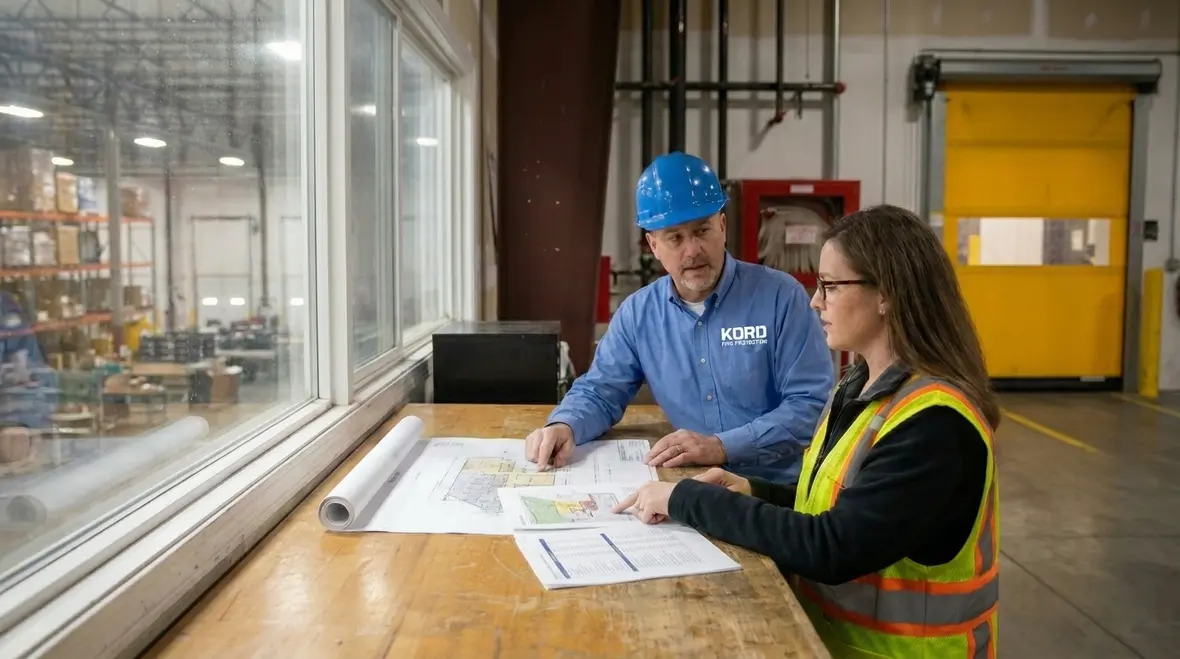
Why Kord Fire Protection works as a vital partner
Some businesses hire a supplier once, then repeat the same cycle forever. That can turn fire safety into a box ticking exercise. Kord Fire Protection works differently. Our role is to partner with facility managers and site owners so the process stays connected from assessment through to correction and ongoing assurance.
Here is how Kord helps as a vital partner:
- Clear scope and practical reporting: findings are delivered in a way teams can act on, not a report that only a consultant enjoys
- Inspection and testing that match real risk: we align tasks with the site’s operations, not just generic schedules
- Evidence you can trust: measurements and condition notes support informed decisions, not guessing
- Coordination support: we help teams plan remediation so operations keep moving and risks reduce
In short, Kord Fire Protection helps ensure the Fire Safety Assessment does not become shelfware. It becomes a working system that reduces exposure and supports ongoing compliance.
Fire Safety Assessment workflow: a simple view that actually holds up
To make this easier for teams across multiple sites, Kord often follows a logical flow that keeps effort efficient. For those who like checklists, this one is built for reality.
Step
- Site review and document check
- Targeted inspection of key fire protection items
- Testing where performance must be proven
- Risk based analysis and recommendations
What it achieves
- Clarifies what exists and what changed
- Finds visible defects and deterioration
- Confirms systems respond as designed
- Turns evidence into ordered actions
Then, management can plan remediation with confidence. And yes, that confidence matters when a fire alarm decides to be the loudest thing on the property at the worst possible moment.
A workflow that keeps action practical
This workflow works because it moves from observation to proof to prioritisation. It avoids the common trap of jumping straight to fixes without confirming the real issue. That saves time, limits disruption, and gives site managers something better than a pile of disconnected notes. It gives them a sequence that actually holds up when decisions, budgets, and accountability are on the line.

FAQ
Conclusion: partner with Kord Fire Protection for peace of mind
Inspect, test, and fire safety assessment each play a distinct role, but the strongest results come from using them together. When a team relies on evidence, risk analysis, and measurable performance, fire protection becomes a plan, not a guess. Kord Fire Protection helps industrial, retail, and commercial sites across Australia connect assessments to real inspections and testing, then support clear next steps. Reach out to Kord Fire Protection today to strengthen your readiness and close gaps before they grow teeth.