Fire Sprinkler Maintenance Adelaide for Offices and Warehouses
Quick Answer: Fire sprinkler systems in Adelaide offices and warehouses must stay reliable, not just “mostly working.” Routine inspection, testing, and maintenance help manage pressure, detect corrosion, and confirm heads respond as designed. This protects people, operations, and insurance outcomes. Kord Fire Protection can act as a dependable partner for ongoing compliance and performance.
If your team is also reviewing broader site readiness, Australian fire sprinkler services should sit in the same conversation as maintenance planning. It fits naturally, because a system is only as useful as the attention it receives after installation.
Fire sprinkler maintenance Adelaide for offices and warehouses
In Adelaide, fire sprinkler maintenance Adelaide is not a “set it and forget it” job. Sprinklers live in real environments: dusty warehouses, humid loading bays, busy office plant rooms, and the occasional paint splash or storage clutter that no one admits to. Therefore, facilities managers need a maintenance plan that keeps systems ready when seconds matter.
In this article, third party guidance is replaced with practical direction. It explains what teams should check, how to schedule inspections for commercial and industrial sites, and why a partner like Kord Fire Protection can make the difference between paperwork and dependable fire protection.
Why this matters beyond the checklist
A sprinkler system does not need to be visibly broken to be underperforming. It can look neat, labeled, and perfectly respectable while pressure slowly drifts, heads collect contamination, or building changes start stealing proper spray coverage. That is why maintenance matters so much in offices and warehouses. It keeps the invisible problems from turning into very visible consequences.
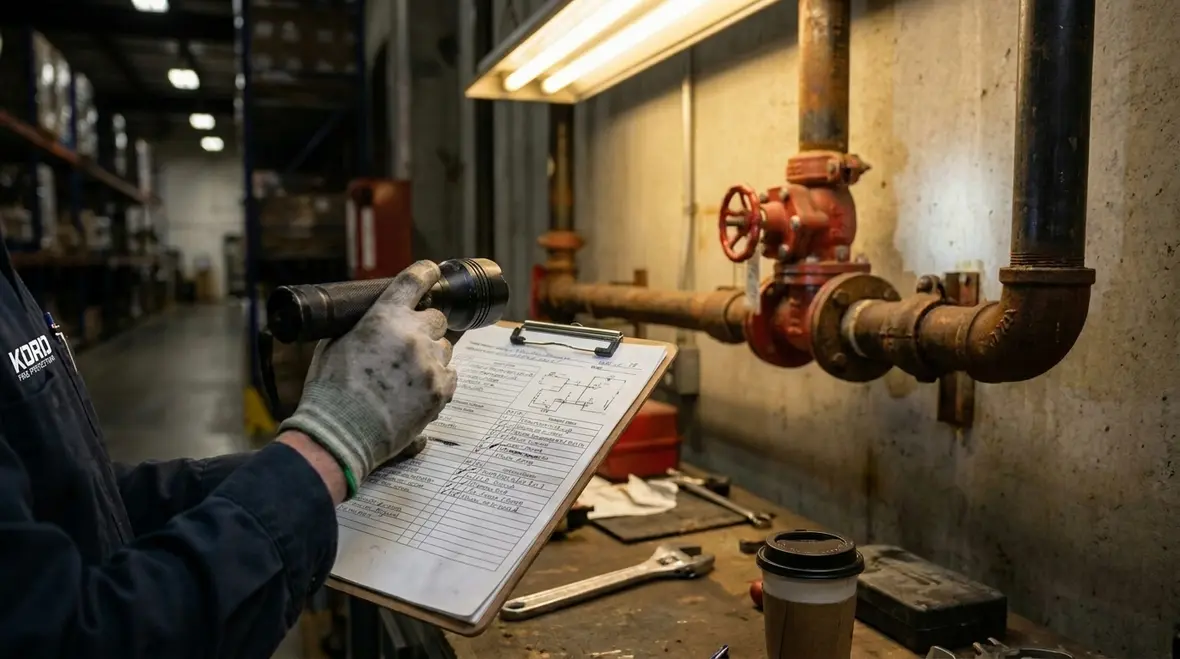
What systems fail in the real world?
Most sprinkler issues do not start with dramatic failures. Instead, they begin quietly, then stack up like unpaid invoices. Over time, this can lead to partial performance, delayed activation, or compromised coverage.
Common real-world causes include:
- Corrosion inside piping, especially where moisture sits or where water quality is not managed well
- Physical damage to sprinkler heads from forklifts, maintenance work, or careless rework of ceilings
- Obstructions such as stored goods, shelving changes, or new partitions that reduce effective spray patterns
- Valve and control problems where supervisory switches, gauges, or tamper indicators drift out of normal settings
- Water supply variations that change pressure and flow due to site upgrades, new mains, or changing demand
And yes, sprinklers can get “creative” when renovations happen. If someone changes ceiling layouts or reconfigures racks without informing the fire protection team, the system may still look correct but fail to deliver what it was designed to deliver.
The small warning signs teams usually miss
This is where experienced maintenance becomes useful, because subtle signs often show up before a serious defect does. Maybe a gauge reads a little differently than it did last quarter. Maybe one section of pipe starts showing early surface corrosion. Maybe a sprinkler head near a service corridor has been clipped, painted, or partly hidden by a last minute fitout adjustment. None of these feels dramatic in isolation. Together, they create risk with surprisingly good attendance.
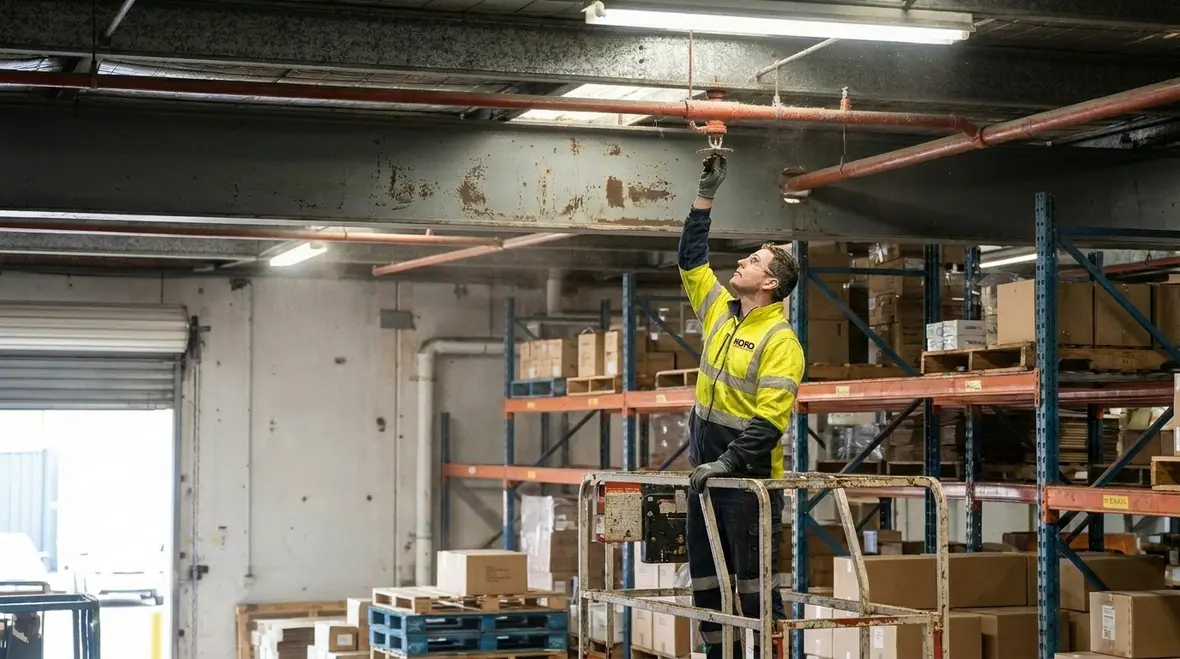
How inspections and testing should run
A strong maintenance program connects inspection, testing, and documentation into one routine. Consequently, it helps prevent a situation where an annual visit looks good, but a system’s condition slowly worsens between visits.
Teams typically focus on the following areas during service visits:
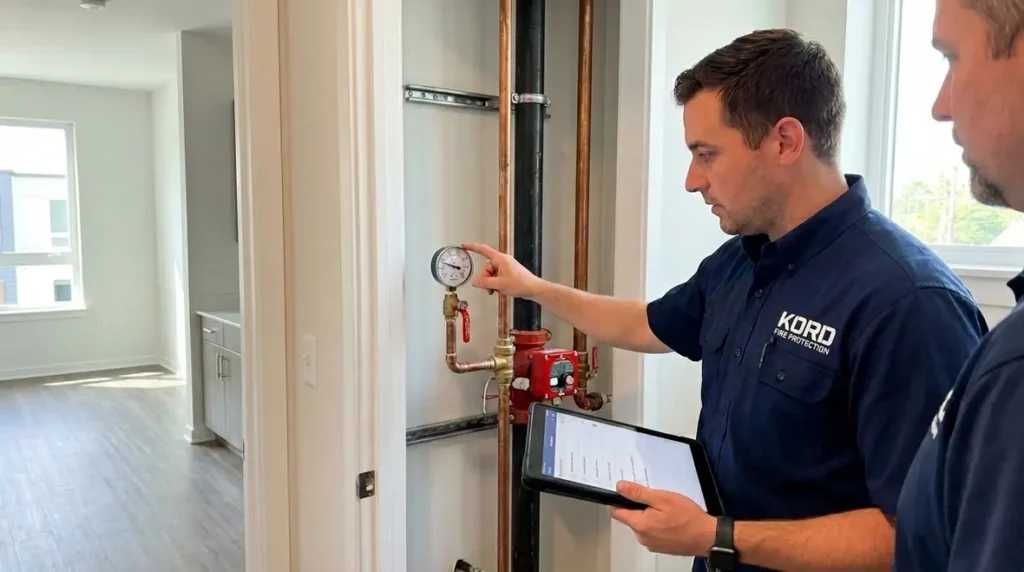
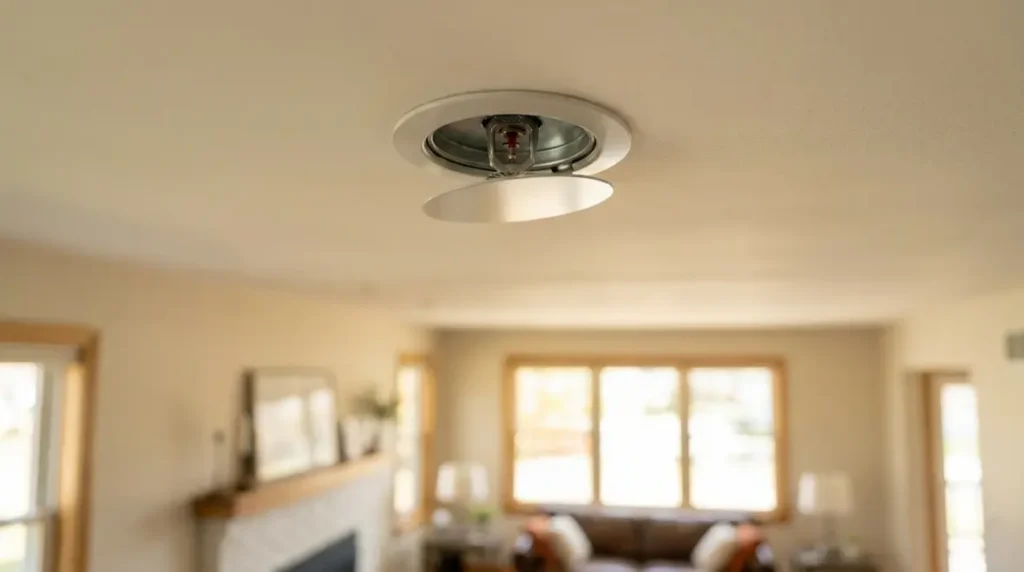
- Visual inspections of sprinkler heads, pipework, hangers, and identification labels
- Verification of clearances so sprinklers do not end up behind storage or services that block discharge
- Inspection of valves for correct positions, signs of leakage, and proper supervision
- Checks of gauges and alarm interfaces to confirm the system signals correctly
- Water supply verification where applicable, to confirm pressure and flow match expectations
- Record keeping that supports compliance, audits, and insurance requests
To keep schedules practical, facilities often use site risk. For example, a warehouse with frequent dock activity may need more frequent observation and faster response to damage reports. Meanwhile, office areas might focus more on ceiling penetrations, new partitions, and changes to services. Both benefit from a plan that adapts instead of repeating the same generic checklist each time.
What good maintenance documentation actually does
Documentation is not just there to make the folder look busy. It gives facilities managers a running story of how the system is behaving over time. That means trends can be identified, repeat faults can be escalated properly, and budget decisions can be made with something stronger than guesswork. When insurers, auditors, or internal stakeholders ask what has been done and why, clear records stop that awkward silence from becoming part of the safety plan.
Maintenance for offices versus warehouses
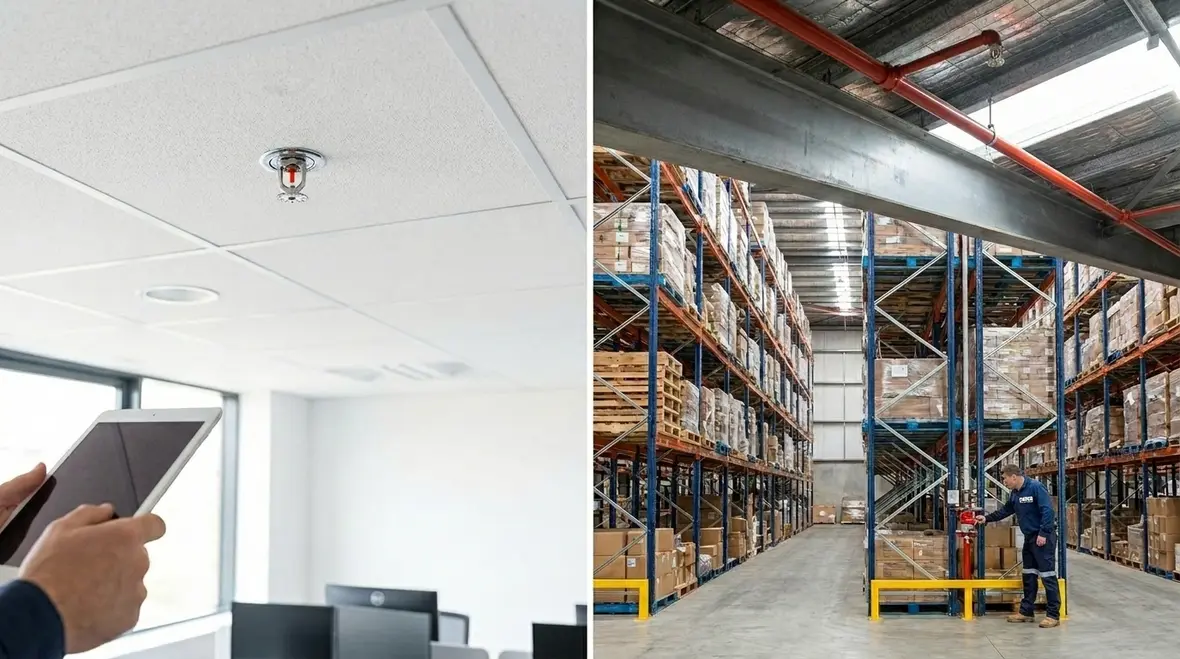
Office and warehouse sites share sprinkler technology, yet the environment changes the priorities. Office spaces often see more ceiling alterations and HVAC changes. Warehouses see more mechanical impact, storage density changes, and higher dust load.
Office-focused priorities usually include:
- Monitoring changes to ceiling tiles, bulkheads, and soffits
- Ensuring light fixtures, cable trays, and ductwork do not block spray patterns
- Confirming access pathways remain clear for inspections and servicing
Warehouse-focused priorities usually include:
- Checking for physical damage around racking, walkways, and loading bays
- Verifying that storage height and placement follow the approved requirements
- Inspecting for corrosion risk in exposed or moisture prone areas
So, while the equipment is similar, the work method differs. And that is where Kord Fire Protection becomes valuable. They support facilities across multiple facets in Australia, which means they understand how each site type behaves when operations keep moving.
Why site changes deserve immediate follow up
Moves, adds, and changes are where many otherwise decent systems get into trouble. A warehouse can change rack layout for operational efficiency and accidentally interfere with sprinkler performance. An office can add partitions, lighting, or cabling and create coverage issues above the ceiling or below it. The lesson is simple: if the building changes, the fire protection conversation should change with it. Waiting until the next scheduled visit is convenient, but convenience has never been a recognized fire engineering principle.
Why Kord Fire Protection fits as a vital partner
A sprinkler system performs best when the people maintaining it understand how your site changes. Kord Fire Protection helps facilities avoid the usual trap: maintenance treated as a once a year event, instead of an ongoing risk management service.
Here is how the partnership supports real outcomes:
- Clear service planning that fits operational schedules, so teams do not shut down production for “just one thing”
- Practical reporting that helps stakeholders understand what to fix first, based on risk and system impact
- Fast response coordination when damage is detected after trades work or equipment movement
- Compliance support through structured documentation that assists audits and insurance conversations
- Professional continuity so the same knowledge stays with your facility over time
In business terms, Kord Fire Protection helps you protect people and assets, while reducing avoidable downtime. In practical terms, they help stop the classic “we thought it was handled” situation. Because in fire safety, hope is not a maintenance strategy. It is just a feeling, and feelings do not control water flow.
FAQ: fire sprinkler maintenance and compliance
Conclusion and call to action
Fire sprinkler systems protect lives and keep businesses moving, but only when maintenance stays active and informed. For industrial and commercial facilities across Australia, a scheduled approach reduces corrosion risk, obstruction problems, and valve and flow uncertainty. If you want dependable support for fire sprinkler maintenance Adelaide, Kord Fire Protection can become your vital partner. Contact Kord Fire Protection today to plan the next service with confidence.