Warehouse Fire Sprinkler Systems Design, Testing and Maintenance
Warehouses have a funny habit of looking organised right up until you imagine a fire moving through them. Then all that height, stock density, racking, packaging, and speed starts to look less like efficiency and more like a challenge with a forklift parked in the middle of it.
That is why warehouse fire sprinkler systems matter so much. They are not there for decoration, and they are definitely not there to make the ceiling look more technical. They are there to protect people, stock, continuity, and the building itself by responding early, applying water where it counts, and buying valuable time for evacuation and firefighting. If you are also reviewing broader site protection obligations, it helps to understand how Australian fire sprinkler services fit into the bigger picture for compliance and long-term risk control.
Quick Answer
Warehouse fire sprinkler systems protect people, stock, and operations by detecting heat, delivering water in the right pattern, and keeping suppression ready for action. They work best when design matches your layout, testing confirms performance, and maintenance stays on schedule. Kord Fire Protection can help manage the full lifecycle.
Warehouse Fire Sprinkler Systems for Warehouses: why the layout matters
Warehouses run on speed, height, and storage density. When a fire starts, those same features decide how fast flames grow and how far heat spreads. That is where warehouse fire sprinkler systems play a central role. Instead of reacting after damage, these systems aim to control a fire early, then hold it down long enough for evacuation and firefighting.
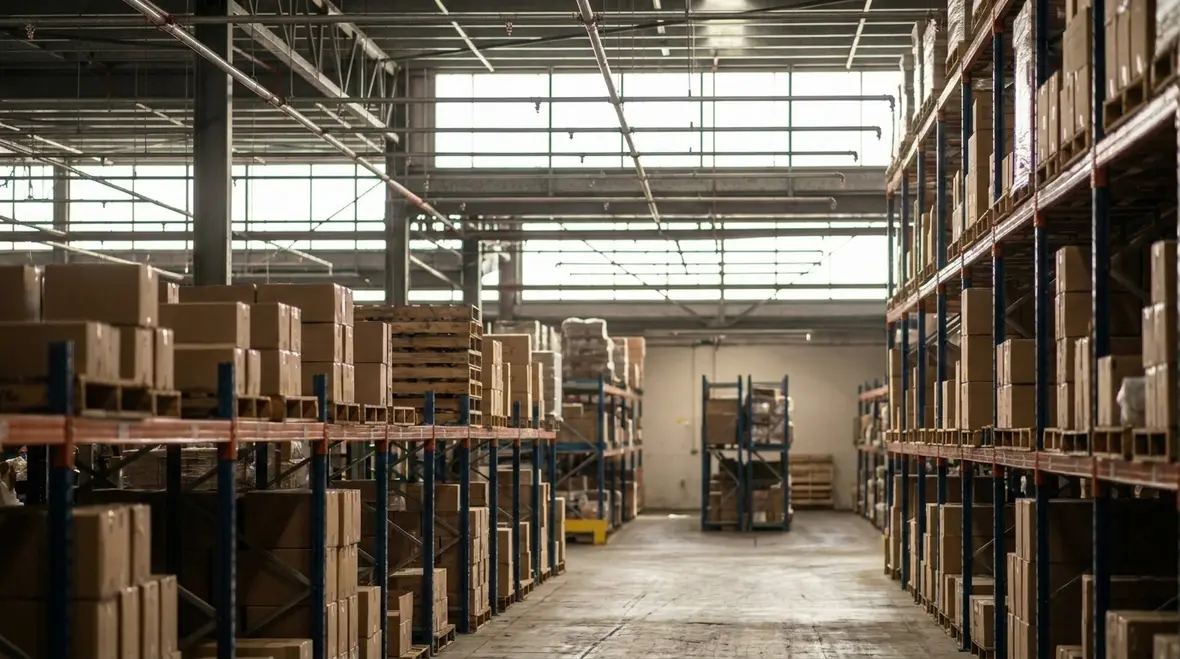
However, good protection does not come from “sprinklers in a box.” It comes from design that respects the building’s reality. For example, ceiling height, rack spacing, beam design, obstructions, and storage type all change how water must flow. And yes, warehouses love obstacles. They are basically obstacle courses with forklifts. So the design must account for the ceiling grid, lights, ducts, and any soffits that can block spray.
Layout matters because a warehouse is rarely just one open volume with identical risk from wall to wall. One corner may hold palletised cartons, another may contain plastics, and another may be subject to constant movement, repacking, or equipment traffic. If the sprinkler design treats those conditions as all the same, performance can drift away from the real hazard profile. A system that looks fine on paper may become far less convincing once the site starts operating at full pace.
Designing the system: from hazard mapping to pipe routing
Designers typically start with a hazard assessment and a clear look at what the warehouse holds. Pallets, cartons, plastics, paper, textiles, and chemicals behave differently when heat kicks in. Therefore, Kord Fire Protection-style planning focuses on the right level of protection for each area, rather than treating the whole building like one big “maybe.”
Next, the design team maps hazard zones across the facility. Then they select sprinkler types, spacing, and mounting height that match the local fire risk. In many modern warehouses, racks create “hidden corners” where heat collects. As a result, the system must distribute water where it counts, not just where it is easiest to install.
Then comes hydraulic calculations, which confirm that the system can deliver the needed flow and pressure at the most demanding location. If that math feels dramatic, picture it like this: the system must perform like a disciplined crew, even when the loudest, hungriest point in the building takes the first hit.
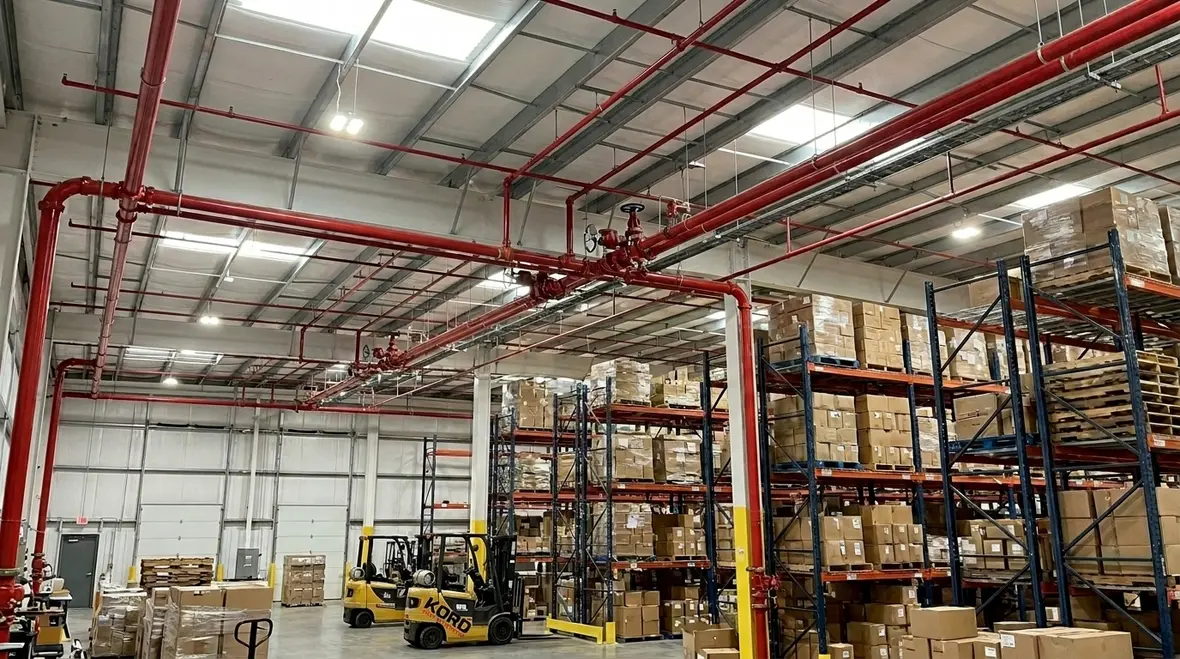
Finally, pipe routing needs to consider maintenance access. If the design hides valves behind walls or creates impossible access, maintenance turns into a long and costly scavenger hunt. A good design keeps critical components reachable while still coordinating with services like HVAC.
What strong warehouse sprinkler design really accounts for
Storage commodity type and how quickly it can contribute to fire growth
Ceiling height, beams, lights, ducts, and other spray obstructions
Rack arrangement, aisle width, and whether heat can build in concealed zones
Hydraulic demand at the most challenging point in the system
Future access for valves, inspections, and service work
When those details are captured early, installation becomes smoother and later maintenance becomes less painful. When they are ignored, someone usually ends up discovering the problem at the worst possible time, which is a truly terrible moment to become interested in pipe routing.
Sprinkler activation and water delivery: how the system holds control
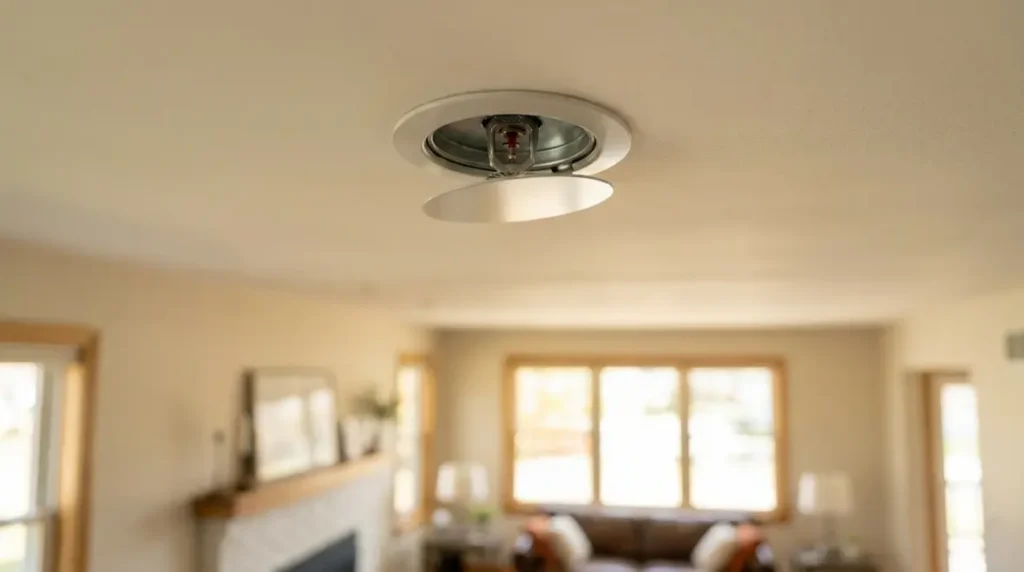
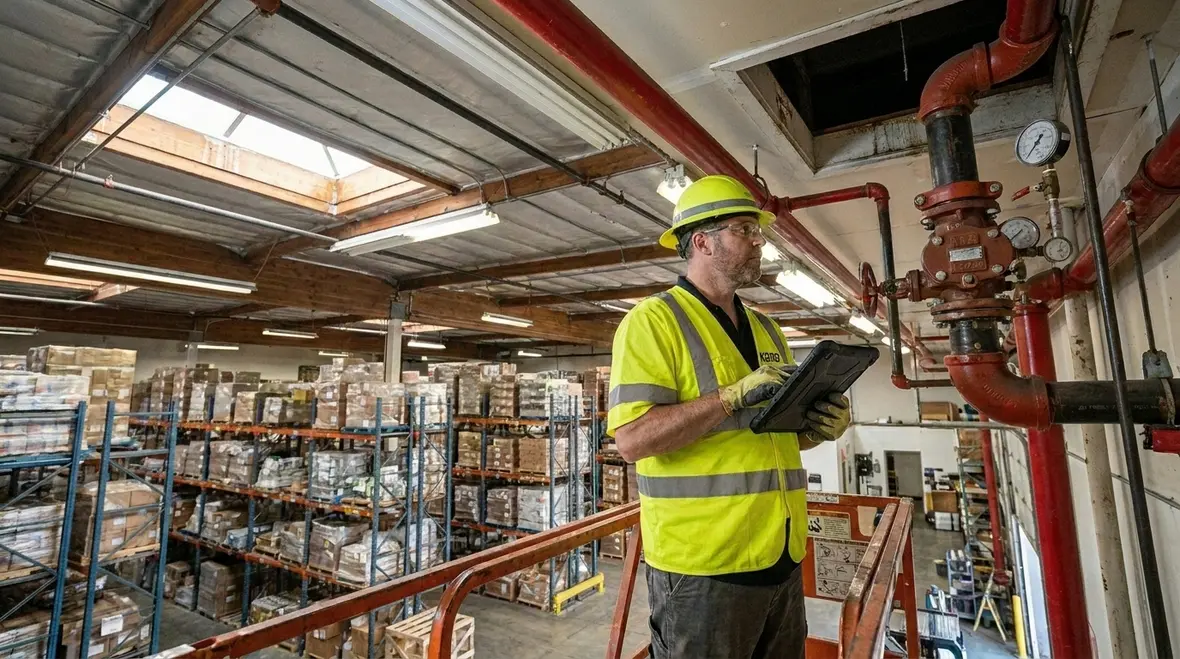
When heat rises to the sprinkler’s response level, the sprinkler activates and discharges water. Crucially, the discharge pattern must land on burning materials so suppression works, not just so water falls somewhere nearby. This is why designers consider obstruction distance, spray coverage, and whether the discharge can reach the target without being blocked by racks or structural elements.
As the system activates, it also draws water through the supply network. Therefore, the design and installation must ensure that water reaches the correct branch lines and that valves, gauges, and control assemblies operate as intended. If a valve sticks, or a pipe section suffers from poor installation, the system may still look “there,” but it will not perform when called.
For Australian industrial and retail facilities, designers also consider exposure conditions such as water supply reliability and seasonal demand. In practice, this means confirming how the system connects to main water, tanks, pumps, and any dedicated fire service features. Kord Fire Protection helps align the full water delivery chain so the system does not rely on luck.
That water path has to function as one complete sequence. The sprinkler head is only the visible end of a much larger system that includes supply, valves, pressure conditions, controls, and physical integrity throughout the network. If one part underperforms, the whole promise of early suppression gets weaker fast.
Testing and commissioning: proving it works before trouble arrives
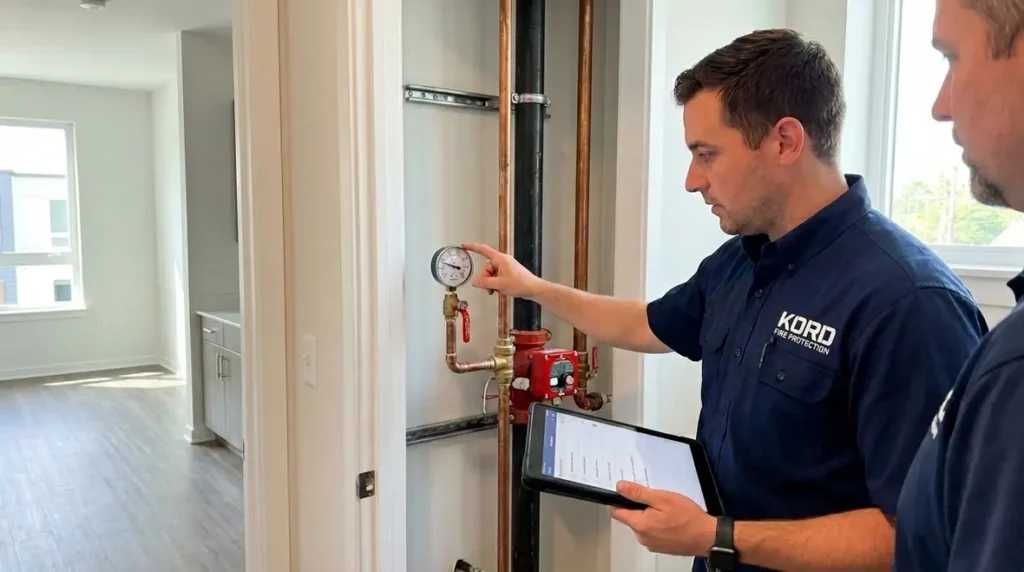
Design and installation only matter if the system performs. Testing and commissioning confirm that the piping, controls, water supply, and alarm interface all operate together. This is where many facilities learn a simple truth: “installed” is not the same as “ready.”
Common testing focuses on key points. First, flow and pressure testing checks that the system can supply water at the required demand. Next, the team verifies valve positions, actuator operation, and any pump start sequences, where fitted. Then they confirm alarm and monitoring interfaces so building staff receive clear signals.
In addition, inspection covers sprinkler installation details. For example, spacing, orientation, obstruction clearance, and pipe hangers must match the design intent. Even small deviations can reduce spray effectiveness, especially in high ceiling spaces and rack-heavy environments.
Also, facilities should expect documentation. Commissioning records support compliance, insurance needs, and long-term maintenance planning. Kord Fire Protection can guide businesses through the process so the system is not only tested, but also properly recorded and understood by the people who operate the site.
Why commissioning records matter after handover
A warehouse does not stop changing just because the installation is complete. Teams move stock, expand racking, add partitions, rework access points, and introduce new equipment. Clear records make it easier to compare the current condition against the original intent so reviews are grounded in facts rather than guesswork and crossed fingers.
Maintenance that actually prevents failures
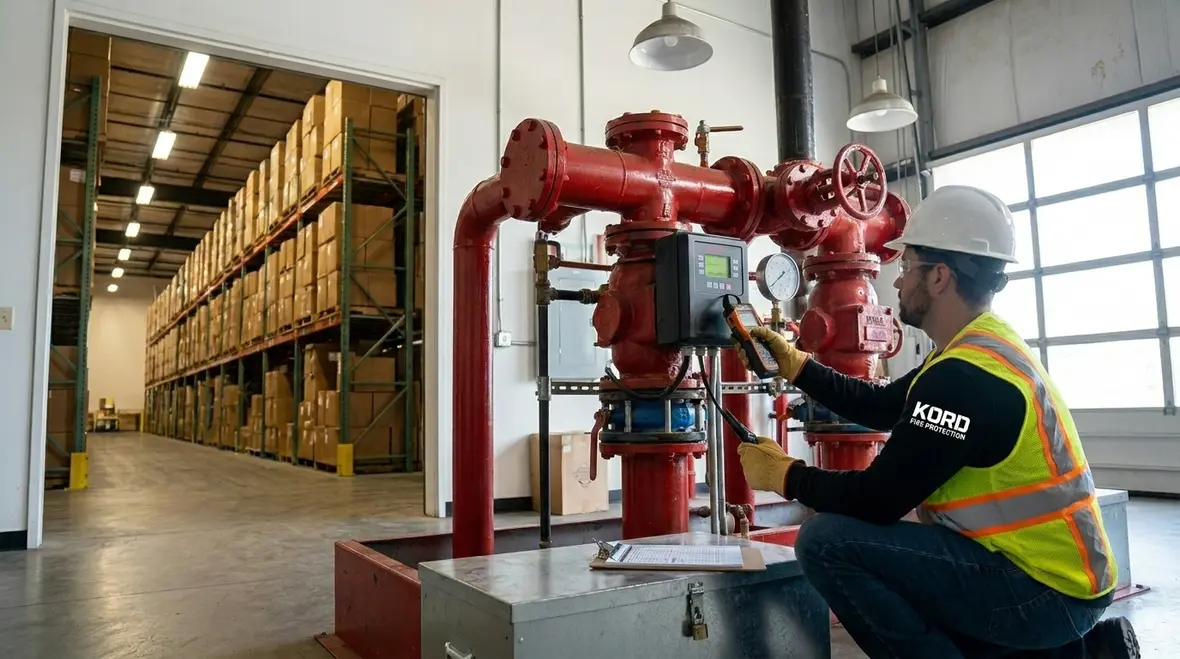
Sprinkler systems demand ongoing care. Over time, changes happen: racking gets rearranged, new signage appears, stored goods shift, and ceiling penetrations get added. Therefore, maintenance must keep up with site evolution.
Effective maintenance typically includes routine inspections, testing of alarms and water flow indicators, and checking the condition of valves and water supply components. Technicians also look for corrosion risks, leaks, and signs of physical damage. When staff report issues early, repair costs stay smaller and downtime stays shorter. Nobody enjoys shut downs, unless they are binge-watching a show they have already “seen.”
Another important part involves verifying system condition in areas affected by upgrades. For example, when a warehouse extends, adds mezzanines, or changes storage height, the system coverage may need review. Kord Fire Protection supports ongoing service so the system aligns with the current use of the building, not just the original floor plan.
Maintenance also includes the discipline of replacing components at required intervals and addressing nonconformities promptly. When businesses stay proactive, the system remains reliable during real incidents, not just during the inspection cycle.
The goal is not simply to tick off a calendar item and call it a day. Real maintenance keeps the system in step with the way the warehouse actually operates. That means looking beyond the obvious and noticing when stock profiles, access routes, or equipment changes begin to affect system performance or serviceability.
How Kord Fire Protection becomes a vital partner in the lifecycle
Fire protection is a business function. It affects risk, compliance, insurance outcomes, and operational continuity. Kord Fire Protection positions itself as more than a contractor that “installs and disappears.” It supports the entire lifecycle of warehouse fire sprinkler systems, from design coordination and installation verification through testing, commissioning, and maintenance planning.
As facilities across Australia shift and expand, having a consistent partner helps reduce gaps. For example, designers, installers, testers, and maintenance teams need to share the same documentation and understand the same performance goals. Kord Fire Protection helps keep that chain tight, so the system stays aligned with the site’s hazards and configuration.
Below is a dual view of what a coordinated partner delivers. One side focuses on readiness, and the other focuses on long-term confidence.
| Lifecycle step | What Kord Fire Protection helps ensure |
Design and planning | Hazard mapping, correct sprinkler selection, hydraulic checks, and practical routing for maintenance access |
Installation verification | Works installed to match design intent, with attention to obstructions, mounting, and pipe integrity |
Testing and commissioning | Flow, pressure, alarm interface, and pump or supply behavior verified and recorded |
Maintenance and reviews | Routine checks, repairs, and re-evaluations after layout or storage changes |
FAQ
Conclusion and call to action
Warehouse fires are not the moment to find out whether a system “should work.” When warehouse fire sprinkler systems receive sound design, clear testing, and disciplined maintenance, facilities gain real protection and confidence. Kord Fire Protection helps industrial, retail, and commercial sites across Australia manage that lifecycle with care and consistency. Reach out to schedule a review, discuss your hazard profile, and build a maintenance plan that keeps your operation protected from the first alarm to the last inspection.