Fire Extinguisher Inspection Australia Checklist 2026
Quick Answer: In 2026, a strong fire extinguisher program checks more than that “tag is still there” feeling. Teams must verify the unit type matches the risk, inspect pressure and seals, check access and mounting, confirm hydrostatic dates, and document everything clearly. Kord Fire Protection can run the whole routine so businesses stay audit ready.
In 2026, fire safety professionals in industrial, retail, and commercial facilities across Australia keep returning to one practical job: our inspect fire extinguisher Australia service must be more than a box tick. It has to stand up to real inspections, real incidents, and real people who ask, “Where is the evidence?”
Below, Kord Fire Protection shares a detailed inspection checklist mindset for 2026. Heady stuff, yes. But it’s also the kind of boring that prevents chaos. And unlike some pop culture villains, you do not want to “wait until the last second” to handle fire protection.
If your team is also reviewing broader fire extinguisher services across site, inspections fit best when they are treated as part of one connected system rather than a once-in-a-while scramble.
Inspection Checklist for 2026
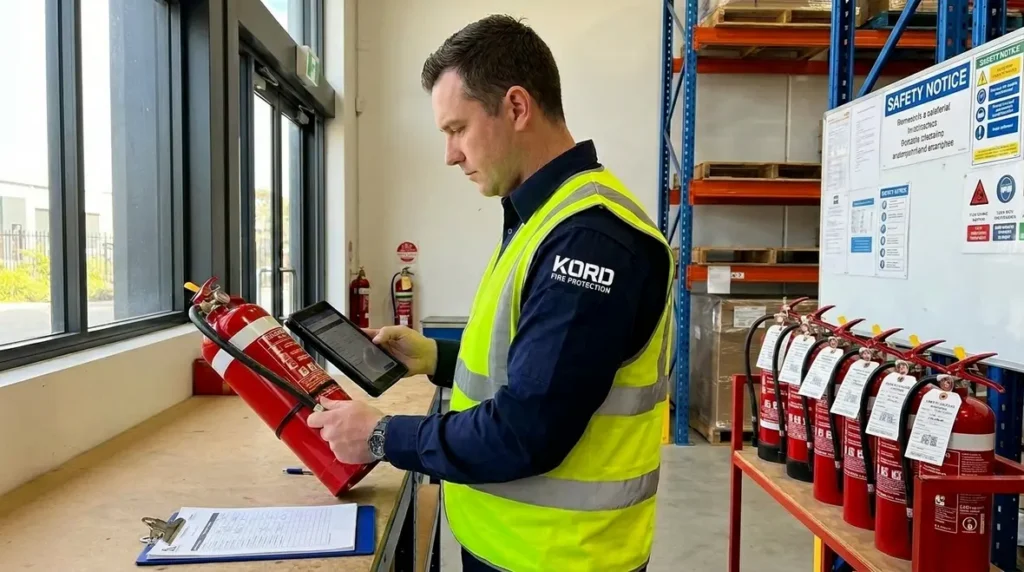
Fire extinguisher inspections in 2026 should follow a simple rule: verify the extinguisher can perform as intended, then record it in a way that holds up. First, start with location and risk fit. Next, inspect the physical condition and labels. Finally, confirm readiness signals like pressure range, tamper seals, and pin position.
When teams do this consistently, they catch issues early, such as leaking valves, damaged hoses, or mismatched units placed in the wrong hazard area. After all, an extinguisher that looks fine but cannot discharge is like a smoke alarm with low enthusiasm.
1) Confirm type, rating, and hazard alignment
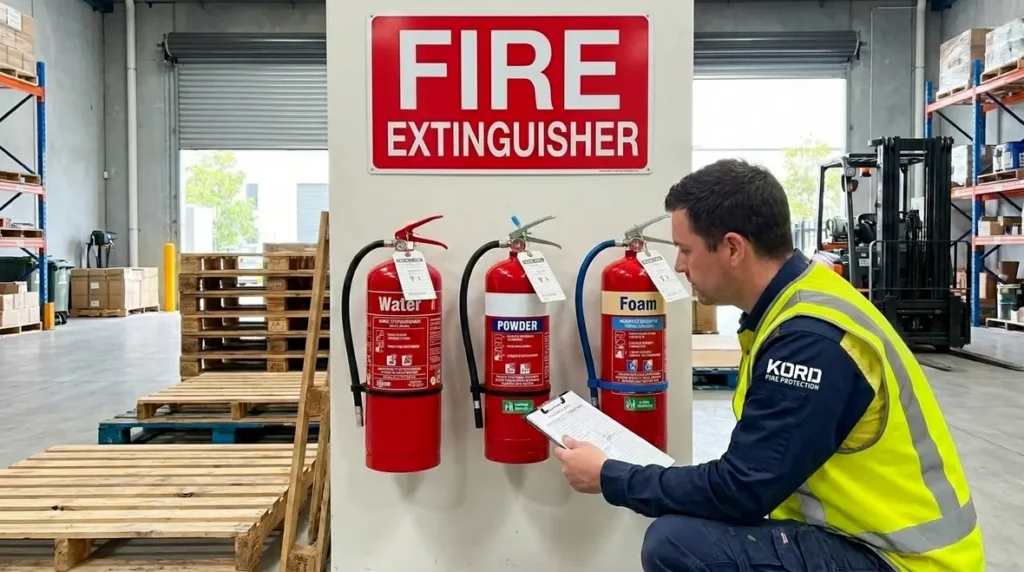
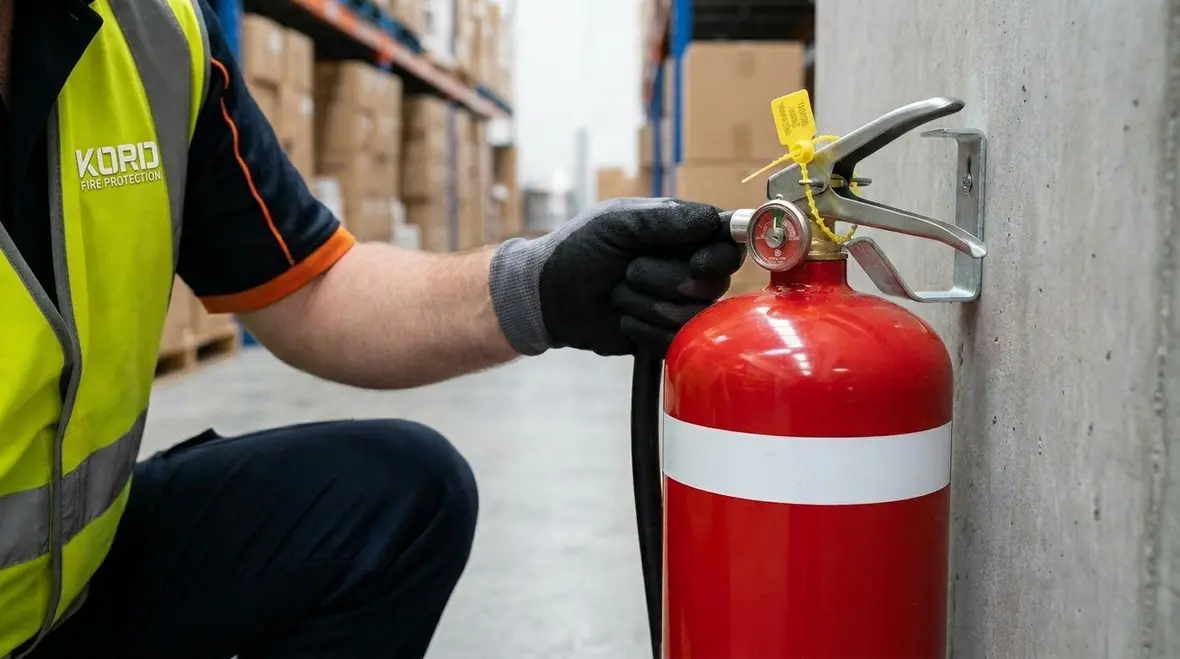
Before anyone touches a wrench or a checklist form, they should confirm the extinguisher matches the hazard. In industrial and commercial environments, the risk profile often changes: a workshop today, a packaging line tomorrow, a store refit next quarter. As a result, the inspection must include a quick check that the extinguisher’s fire class and rating still suit the area.
- Check the label for fire class information and rating
- Verify the unit type is appropriate, such as water, foam, dry chemical, or CO2 where relevant
- Confirm the extinguisher is installed at the correct location for access during an emergency
- Look for signs the area was altered and the original extinguisher choice may no longer fit
Transition note: when facilities update layouts, people often focus on equipment. However, fire protection must update too. Kord Fire Protection helps facilities align extinguishers with floor plans and operational changes, so the inspection reflects reality rather than assumptions.
Why this step matters more than people think
A surprising number of problems begin with the wrong extinguisher sitting in the right-looking spot. The unit may be mounted neatly, the tag may look current, and everyone may feel quietly pleased with themselves, but if the extinguisher type does not match the hazard, that neat little setup falls apart in a hurry. Inspection teams should check whether processes changed, flammable liquids were introduced, electrical risks increased, or storage layouts shifted enough to change the protection need.
2) Check the physical condition and mounting
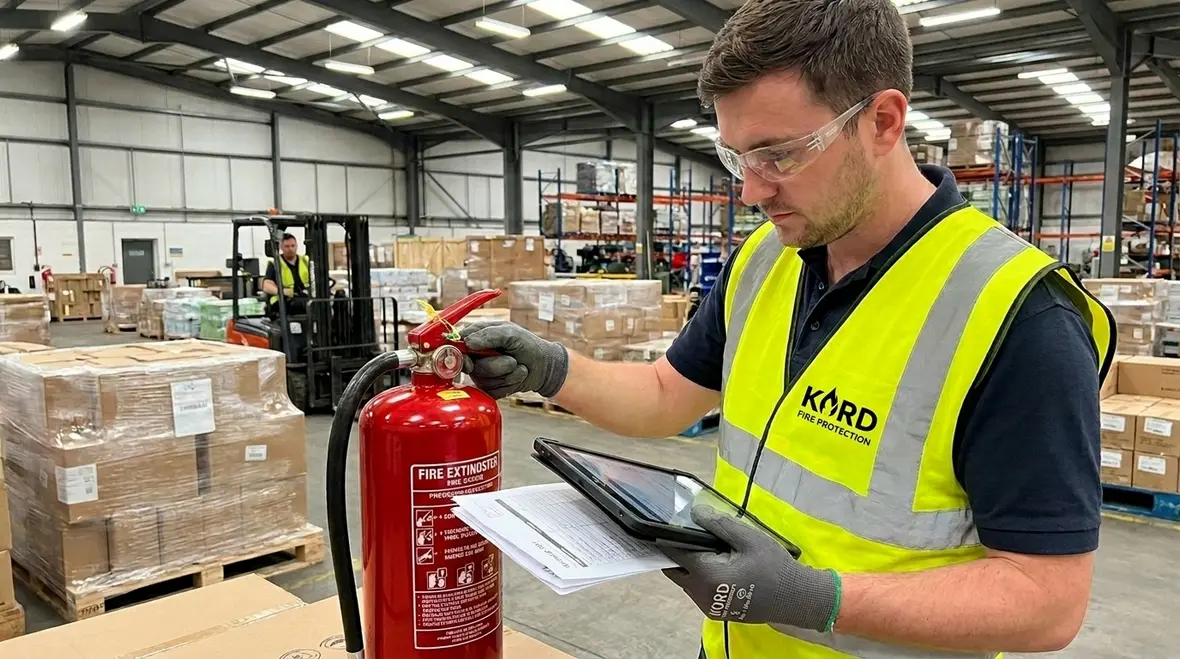
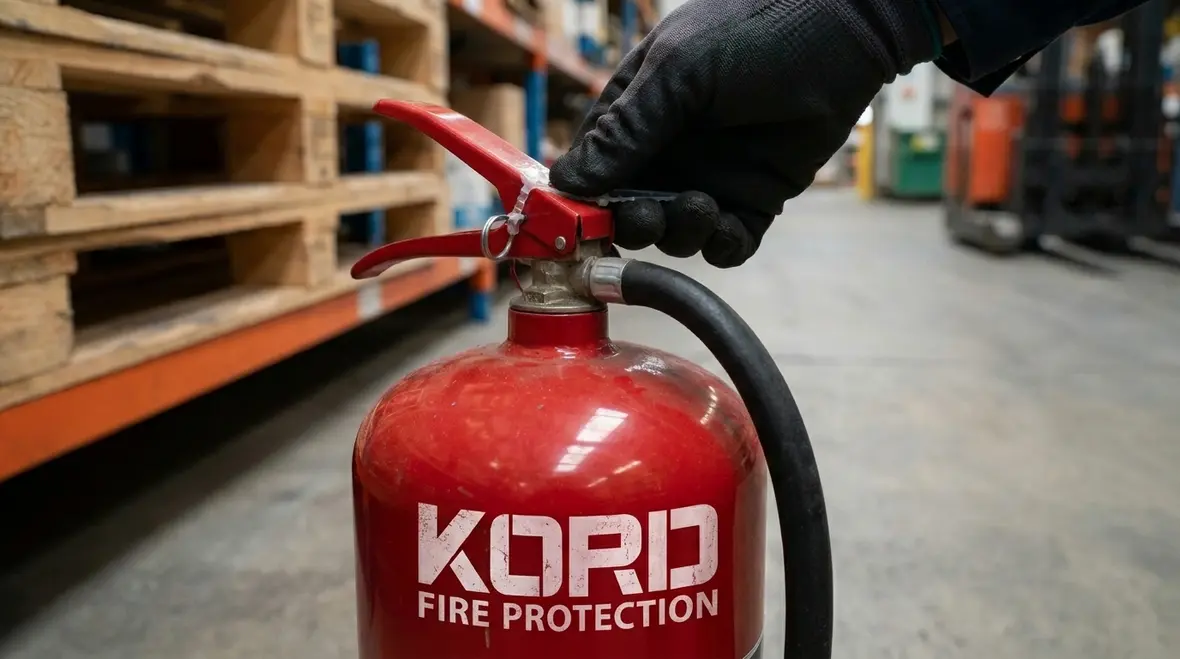
In 2026, the physical inspection is where most “surprise failures” get discovered. The extinguisher should look solid, sit securely, and be protected from damage. If the unit is missing from its bracket, blocked by stock, or exposed to weather or forklift impacts, it will not help when it matters.
- Inspect the cylinder or container for dents, corrosion, abrasion, and leaks
- Check the hose and nozzle for cracks, splits, blockages, or wear
- Verify the mounting bracket is secure and the extinguisher cannot be knocked over easily
- Confirm access paths remain clear and signage remains visible
- Look at tamper seals and the safety pin for correct positioning
And yes, blocked access happens more than people admit. Sometimes it is boxes, sometimes it is pallets, and sometimes it is that “temporary” stack that becomes a lifestyle. A disciplined inspection stops that.
What inspectors should notice immediately
A good visual check is not glamorous, but it is excellent at ruining future excuses. If the cylinder shows corrosion, the hose is split, the nozzle is blocked, or the bracket looks like it has been one bump away from retirement for months, the inspection should flag it. A unit that can be knocked loose, hidden behind stock, or reached only after moving half the storeroom is not properly ready. The same goes for faded signage. In an emergency, nobody wants a treasure hunt.
3) Verify pressure, gauge condition, and readiness signals
Pressure status matters. In many extinguisher types, the pressure gauge indicates whether the unit sits within the required operating range. Additionally, the gauge face and indicator must be legible and not obscured.
- Read the gauge position and confirm it sits in the proper zone
- Check gauge face for damage and ensure it is readable
- Inspect operating instructions labels for clarity and completeness
- Confirm the hose connection and safety components are intact
Transition note: if a gauge looks blurred, the inspection should treat it as a problem, not a mystery. A poorly visible gauge removes confidence during emergencies. Kord Fire Protection can support this step by ensuring units are not only inspected but also maintained to remain in reliable service.
Readiness is more than a needle in the green
People love a simple signal, and the pressure gauge is certainly one of them, but it should never be the only thing that earns a passing glance. Inspectors should make sure the pin is properly seated, the tamper seal remains intact, labels are readable, and operating instructions are still clear enough to help a stressed human make a quick decision. If a unit looks vaguely okay but its directions are worn beyond usefulness, that is not readiness. That is optimism dressed up as maintenance.
4) Review documentation, tags, and evidence for audits
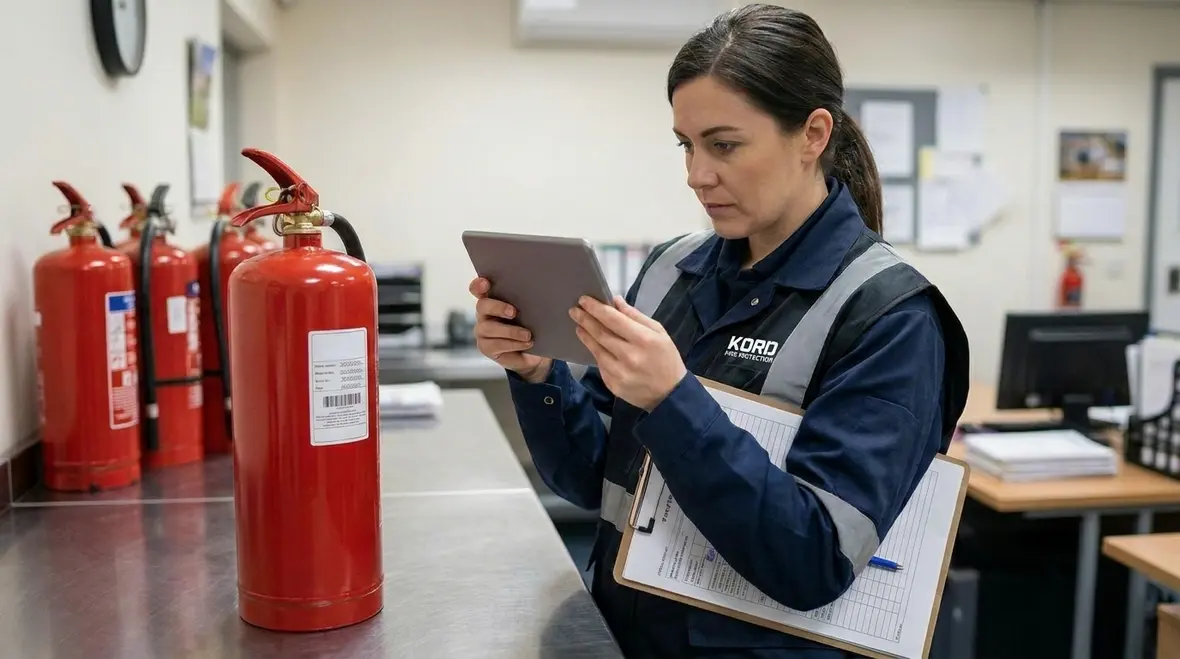
In 2026, documentation is not paperwork for paperwork’s sake. It is proof of control. Many facilities face internal audits, contractor reviews, and insurer questions. Therefore, the inspection record should show what was checked, who did it, when it was performed, and what actions were taken.
- Confirm the inspection tag or label date matches the recorded service
- Record extinguisher location, serial number, and condition notes
- Document any faults and whether the unit was removed for service
- Maintain a clear chain from inspection to corrective action
Transition note: when records are clear, everyone sleeps better, including the ops manager who always gets the call. Kord Fire Protection can also standardize records across multiple sites so teams do not chase spreadsheets like they are lost shopping carts.
What good records actually do
Clear records reduce confusion, speed up follow-up actions, and give decision-makers something better than guesswork. If a unit was found damaged, removed, replaced, recharged, or relocated, the paperwork should tell that story without requiring a detective. This matters even more across multiple sites, where inconsistency can quietly multiply. Audit readiness is rarely about one dramatic mistake. More often, it is about twenty small missing details that pile into one uncomfortable conversation.
5) Understand service intervals and replacement triggers
Inspection does not replace servicing and testing. Over time, extinguishers need maintenance, internal checks, and in some cases recharging or hydrostatic testing based on the extinguisher’s type and schedule. In 2026 planning, facilities should track service intervals early, not when the calendar starts screaming.
- Check external indicators of service history, including test dates
- Plan for periodic servicing based on extinguisher type and manufacturer requirements
- Identify replacement triggers such as corrosion, damaged parts, or failed pressure indications
- Schedule downtime in a way that keeps coverage across the site
Transition note: a replacement plan reduces operational downtime. Instead of scrambling, facilities can rotate units, keep the right coverage, and maintain compliance with confidence. Kord Fire Protection can help coordinate these timelines across industrial and retail sites, where uptime matters.
6) How Kord Fire Protection supports a reliable inspection program
Some businesses try to manage extinguisher checks with ad hoc schedules and whoever is “available.” That approach is fine until it is not, and fire safety does not care about “availability.” Kord Fire Protection acts as a vital partner by creating structure, consistency, and accountability for ongoing extinguisher inspection and related service.
- Support multi site planning across industrial, retail, and commercial facilities
- Standardize inspection checklists and reporting so teams stay aligned
- Identify faults early so corrective action happens before failure
- Coordinate service and maintenance workflows to protect coverage
- Help facilities maintain audit ready evidence year round
Transition note: if a company wants fewer surprises, it needs better systems. Our approach supports the operational reality of Australia, where facilities operate across different risk zones and shift patterns. Also, it keeps the inspection process from turning into an improvised performance review that nobody requested.
Common mistakes to avoid in 2026
- Inspecting only the tag and not the condition, gauge, or access
- Ignoring blocked pathways and damaged mounting
- Letting pressure gauges become unreadable or tamper evidence disappear
- Failing to document corrective actions and unit removal from service
- Waiting until a service interval becomes overdue before planning
Transition note: each mistake seems small alone. Together, they create a gap between “we inspected” and “we were ready.”
A practical way to use this checklist
The best checklist is the one people can actually follow under normal site pressure. Keep it clear, repeatable, and tied to real locations and serial numbers. Make it easy to mark faults, remove units from service when required, and trigger corrective action without a dramatic chain of emails. The more practical the system, the less likely the site is to drift into the dangerous little fantasy known as “we’ll sort it out later.”
FAQ
Final Checklist for 2026 readiness
- Match extinguisher type and rating to the current hazard
- Inspect condition, hose, nozzle, seals, and mounting security
- Confirm gauges are readable and within the proper zone
- Maintain clear records with serial numbers, dates, and actions
- Plan servicing and replacement before intervals become critical
Conclusion and CTA
Fire extinguisher inspection in 2026 succeeds when facilities treat it like a system, not a chore. Kord Fire Protection can help coordinate checks, document outcomes, and drive corrective actions so industrial, retail, and commercial sites stay ready without last minute stress. If leadership wants audit ready evidence and fewer surprises, contact Kord Fire Protection to set up a reliable program for your locations today.