AS 1905 Fire Doorsets Compliance With Kord Fire Protection
Quick Answer
AS 1905 sets the rules for fire resistant doorsets, so they can help slow fire and smoke spread when it matters. It covers design, installation, seals, hardware, and evidence of performance. With the right partner, businesses avoid costly defects and inspections that fail. Kord Fire Protection helps deliver compliance.
Fire doors are one of those workplace essentials people ignore until the day an inspector shows up, the alarm sounds, and suddenly everyone remembers they have a building. That is why AS 1905 fire doors matter. Early in a project, the standard guides how a fire resistant doorset should be built, fitted, and commissioned so it can perform during a real fire scenario, not just during paperwork reviews.
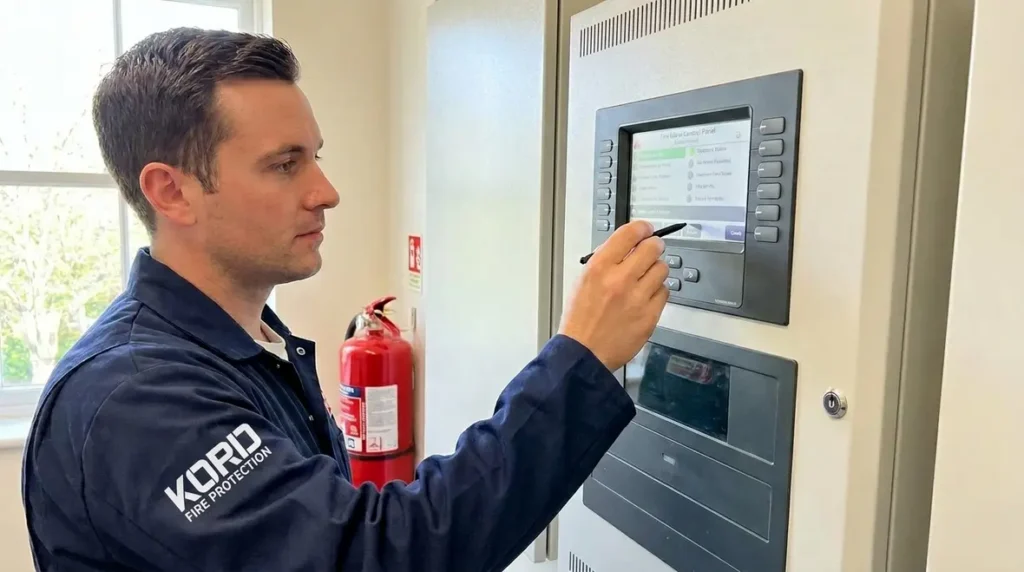
For businesses planning upgrades, maintenance, or fit outs, it helps to work with a team that understands broader fire compliance as well. Kord Fire Protection supports commercial sites with integrated fire protection services, making it easier to keep passive and active systems aligned across the building. Explore Kord Fire Protection’s fire protection services to keep the compliance conversation practical from day one.
What AS 1905 fire doorsets demand from the start
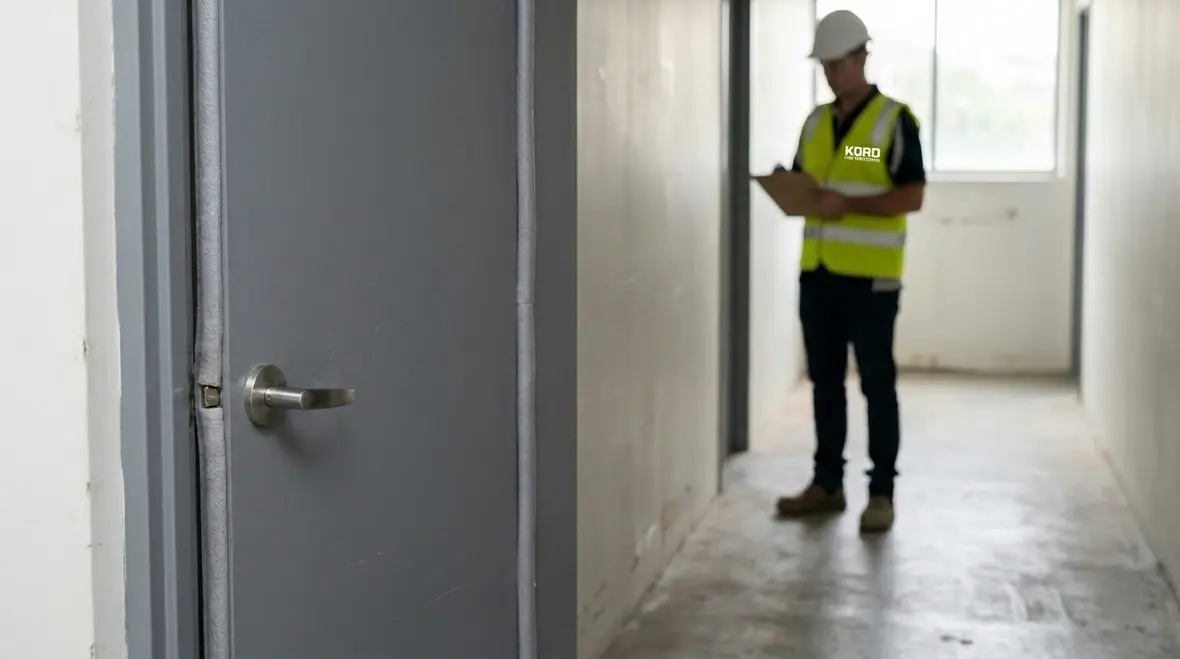
In practice, AS 1905 Explained is about control. It pushes teams to treat fire doors as life safety systems, not like normal doorwork. Therefore, the doorset must match its tested configuration, including the door leaf, frame, intumescent seals, smoke seals, and the hardware set that was evaluated together.
To stay compliant, a facility cannot simply swap hinges, pick a random latch, and call it a day. Instead, the system needs to align with the required fire rating and the test evidence for that exact combination. Otherwise, the performance can drift, and that is when problems start multiplying. Like socks, fire door performance is best when pairs match.
Also, the standard expects the project team to plan the door route and door locations properly. That means thinking about openings in walls, corridors, plant rooms, and retail back of house spaces where risk is real. Then, the correct doorset can be installed with the right clearances and tolerances, so it closes and latches consistently.
Why early planning saves expensive rework
When teams leave doorset decisions until late in the build, they usually inherit awkward openings, rushed hardware selections, and preventable site compromises. A compliant result is much easier when the doorset is specified early, measured correctly, and coordinated with wall systems before everyone is trying to solve ten problems at once.
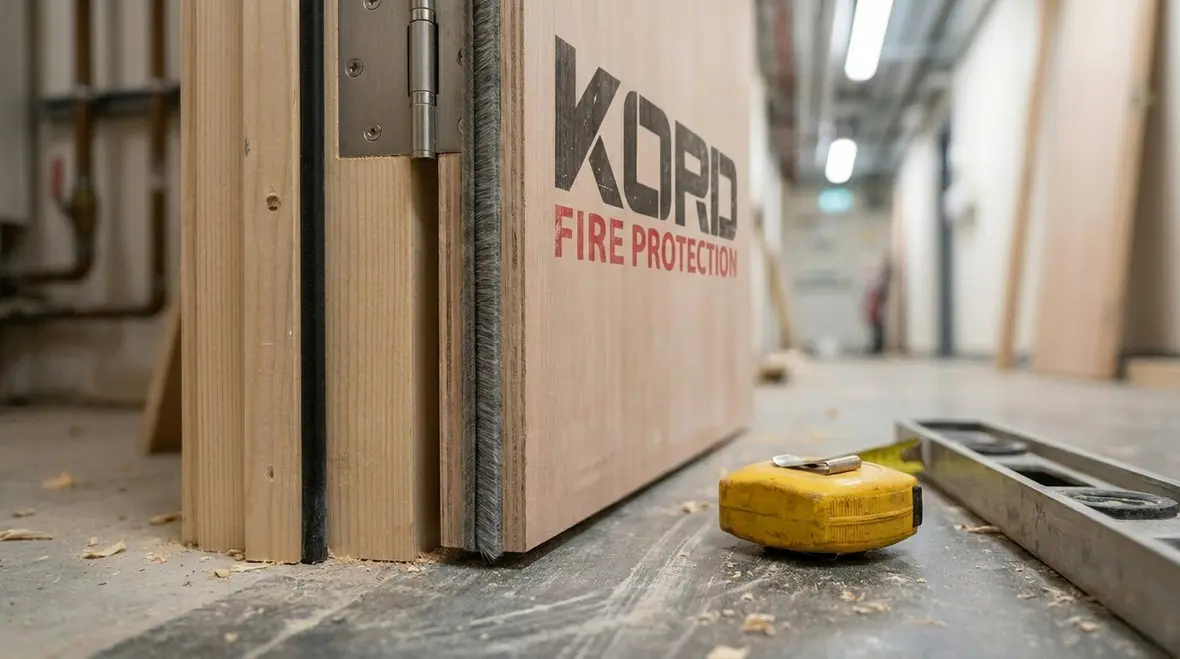
Fire resistant doorset requirements that prevent smoke and fire spread
Fire is only half the story. Smoke travels fast, and it often does the most damage to occupants before flames even arrive. For that reason, AS 1905 focuses on doorsets as a barrier system. Fire resistant doorsets typically include intumescent components that react to heat, plus smoke seals that help slow leakage around gaps.
These details matter because many failures happen at the edges. A small gap at the frame can become an unwanted highway for smoke. Consequently, the doorset must be installed with correct shimming, squareness, and fixing methods. Then, it needs seals and hardware fitted in a way that keeps the barrier continuity intact.
Where facilities teams often get tripped up is when doors are modified after installation. For example, a handle change without approval, door closers adjusted too far, or seals damaged during fit out. Even if the door still looks fine, performance can drop. AS 1905 requirements keep the emphasis on maintaining the tested configuration over time.
Smoke control is where small defects become big problems
A fire door that looks mostly fine can still underperform if the gaps are wrong or the seals are incomplete. That is why routine checks should focus on what happens around the leaf, frame, and latch point, not just whether the door opens and shuts without anyone complaining about it.
How frames, seals, and hardware must align with test evidence
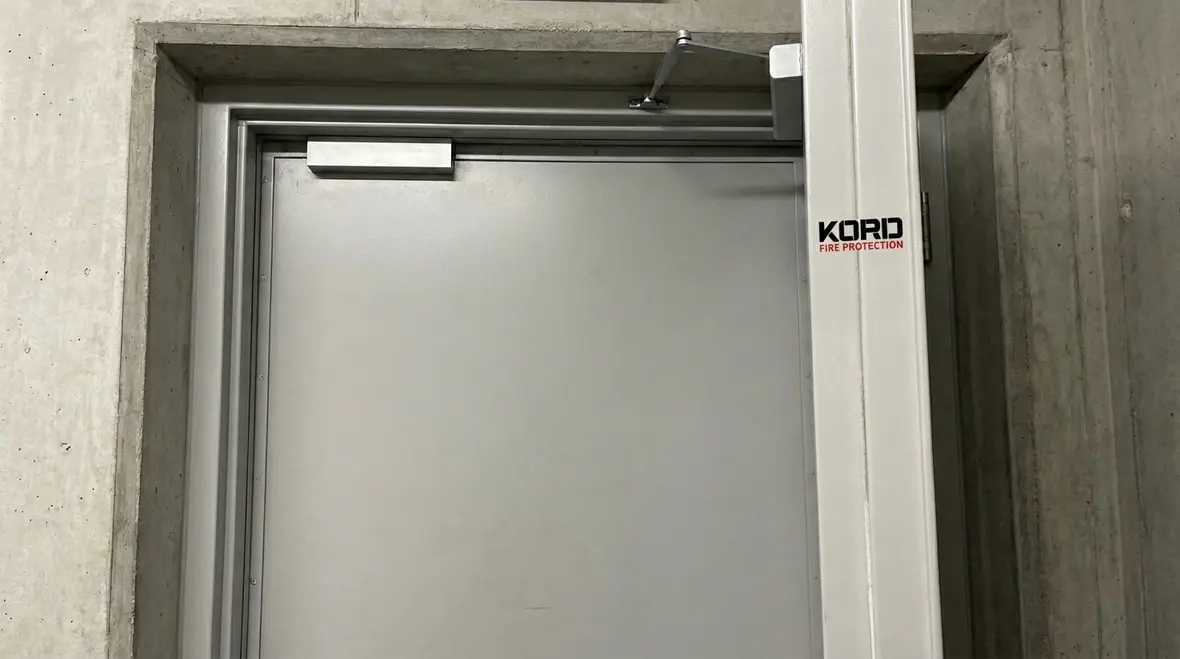
A doorset is not just a door. It is a whole package that includes the frame, rebates, seals, door leaf material, and hardware that was tested to work together. Therefore, doorsets must use the correct components specified by the tested arrangement.
Consider the hinge side first. When hinges are not aligned properly, the door can bind. Then it might not close fully, which creates gaps. Next, think about the closer and latch. If a closer is set too weak, the door may stay ajar. If it is set too strong, it can stress components and encourage damage. Either way, the barrier system loses reliability.
Then there are the seals. Intumescent strips and smoke seals must be continuous and undamaged. If they are cut, missing, or installed incorrectly, the doorset’s response in a fire event can be compromised. In commercial and retail environments across Australia, where doors face traffic and fit out changes, that risk becomes even more relevant.
And yes, people sometimes treat fire doors like normal doors because they look normal. That is like treating a fire extinguisher as an accessory. It is there for a reason, and the reason is not decoration.
Installation quality and commissioning for commercial sites
Even when the correct doorset is supplied, poor installation can derail compliance. AS 1905 Explained often comes down to workmanship and verification. That means the frame must be fixed to the structure properly, the door must swing and close as intended, and the final alignment must meet the tolerances required for the seals and latching to work.
After installation, commissioning matters. Teams should confirm the door closes from its open position, latches without force, and operates without binding. They should also check the integrity of seals and ensure hardware is secure. If a fire door fails routine checks, it should not be “left for later.” Later is how defects become habits, and habits become failures.
Facility managers, industrial maintenance teams, and retail fit out coordinators can use commissioning as a predictable control point. Then, they can build a maintenance routine that keeps the doorset in the condition it was installed in.
Commissioning should confirm more than a polite door swing
A compliant handover checks closure, latching, seal condition, alignment, and hardware security together. If one element is off, the doorset may still feel usable while quietly falling short of the standard it is supposed to satisfy.
Common compliance risks in industrial, retail, and facilities projects
Across multiple building types in Australia, the same issues pop up. First, doors get used as loading bays or service access when people prop them open. Even short periods of wedging can stretch latches, damage seals, and misalign the leaf. Second, ongoing refurbishments can introduce unapproved changes, like new flooring that alters clearances, or new hardware that does not match the tested set.
Third, damage can happen during trades work. A door might be bumped, seals might be torn, and closers might be adjusted without documentation. Because the damage can be subtle, the building team can miss it until an audit reveals it.
Finally, poor documentation creates the appearance of non compliance. If a facility cannot show what was installed, with what configuration, and how it was commissioned, the story becomes harder to defend. That is why a documented approach to AS 1905 compliance helps reduce stress during inspections.
And because we all love surprise delays, avoiding this risk early saves time and costs later. The building team stays focused on operations, not firefighting in the paperwork sense.
Why Kord Fire Protection supports AS 1905 requirements on real jobs
Kord Fire Protection can become a vital partner with this service job by coordinating the full doorset pathway with a compliance mindset. That means assisting customers with correct doorset selection, ensuring the configuration aligns with tested performance, and supporting installation verification so the barrier system works as intended.
Next, Kord Fire Protection helps teams reduce the gaps between design intent and site reality. Therefore, facility managers, industrial operators, and retail stakeholders can expect a smoother process, fewer reworks, and clearer documentation. When a project has multiple storey areas, service corridors, loading zones, and plant rooms, coordination becomes more than a nice-to-have. It becomes the difference between “installed” and “actually compliant.”
Also, maintenance guidance matters. A fire door is only as good as its ongoing condition. Kord Fire Protection can help clients establish practical checks and response steps so minor damage does not turn into major risk.
For teams already managing emergency systems, access issues, and inspection pressure, having one provider across related fire protection needs can simplify planning. That kind of coordination is especially useful when sites are active, tenanted, or moving through staged upgrades where defects have a habit of multiplying the moment nobody is looking.
FAQ about AS 1905 fire doors and fire resistant doorsets
Call Kord Fire Protection for doorset compliance
For industrial, retail, and commercial facilities across Australia, AS 1905 compliance should feel controlled, not chaotic. Kord Fire Protection helps teams get the right doorset configuration, support installation verification, and reduce the risk of rework during inspections. If your next fit out, maintenance program, or upgrade needs fire resistant doorset support, reach out to Kord Fire Protection. Get your project moving with confidence and less stress.