AS 3772 Cooking Fire Protection for Commercial Kitchens Australia
Quick Answer: AS 3772 Standard sets out how to protect cooking areas from fire hazards in commercial settings. It covers key elements like suppression, detection, and installation practices that reduce risk when frying gets dramatic. Kord Fire Protection helps businesses across Australia plan, install, and maintain compliant systems so operations stay safe and open for business.
Cooking can be delightful. Fire, on the other hand, is rarely on the menu. In Australia, AS 3772 cooking fire protection gives facilities a structured way to manage risk in kitchens where heat, grease, and smoke move fast. This standard does not just aim for “less risk.” It sets expectations for how systems should be designed, installed, commissioned, and maintained so they work when they are actually needed. And when it comes time to meet compliance, our company, Kord Fire Protection, steps in as a reliable partner that turns paperwork into practical protection.
For businesses reviewing their wider compliance responsibilities, Kord Fire Protection also supports fire protection services across Australia, helping facilities tie kitchen protection into a broader site safety strategy without making the process feel like a second full-time job.
Understanding AS 3772 cooking fire protection requirements for kitchens
Facilities often assume cooking fire protection is one equipment item and one technician with a wrench. In reality, compliance involves a chain of performance. First, the system must detect a fire condition quickly enough to act. Then, it must suppress the fire in a way that is suitable for the cooking environment, including the behavior of hot oils and grease. Finally, the system must operate consistently during real-world conditions, not just during a test video.
To support this, AS 3772 cooking fire protection focuses on the relationship between hazard type, system design, and installation quality. Therefore, the standard encourages a method that considers the actual cooking process and the physical layout of the kitchen. As a result, two kitchens that look similar can still require different protection approaches.
Here is the business takeaway: when commercial kitchens fail, they usually fail in the “how it was built” stage, not the “what the brochure promised” stage. Kord Fire Protection helps clients avoid that gap by verifying the protection concept against the real environment, so the system matches the job, not the guess.
Why kitchen-specific protection matters
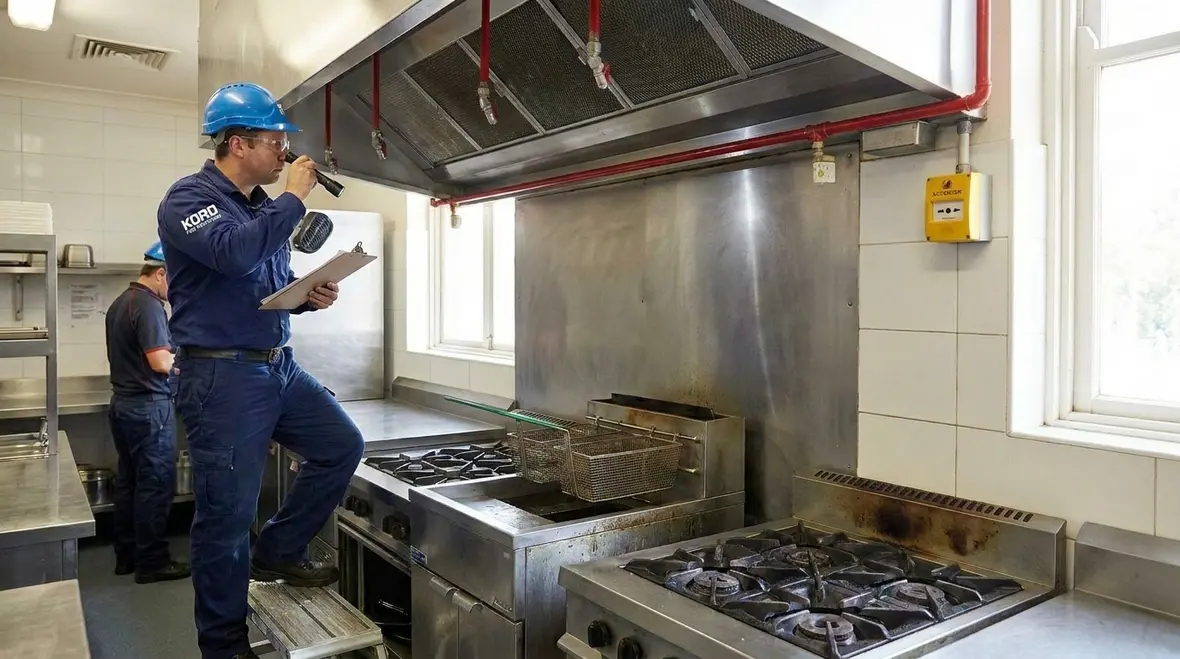
Generic protection thinking tends to miss kitchen-specific behaviour. Cooking appliances produce concentrated heat, airborne grease, and fast-changing ignition conditions that are not quite the same as other fire risks in a commercial building. A fryer flare-up can escalate in seconds, and once grease enters hoods, filters, and duct pathways, the fire problem stops being local and starts touring the premises.
That is why system design has to be tailored to the cooking process itself. Appliance spacing, hood coverage, discharge positioning, and maintenance access all matter. If one part of the setup is off, the whole response can become slower, weaker, or annoyingly theatrical instead of effective.
Where fire risk shows up in commercial cooking areas
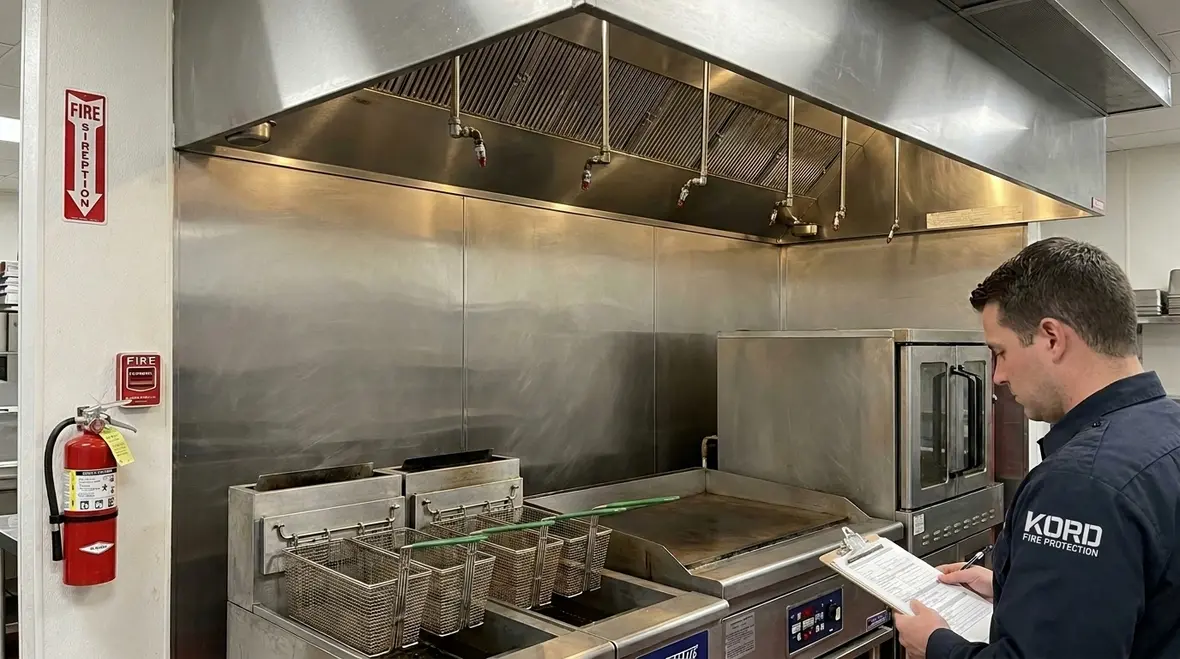
Risk concentrates where heat meets grease and where smoke finds pathways. Commercial cooking areas create specific hazards that can escalate fast. For instance, deep fryers can generate intense heat and flammable vapors. Griddles and charbroilers can ignite grease buildup when airflow and surface temperatures align in the wrong mood. Meanwhile, extraction systems can spread contamination, which makes cleanup and detection more complex.
Additionally, kitchens include more than one ignition source. A facility might have multiple cooking stations, ducts that run to ceiling spaces, grease filters that need maintenance, and control systems that can be interrupted during a fire event. Because fires can spread through ventilation pathways, protection needs to consider both the visible risk at the appliance and the hidden risk in associated spaces.
Transitioning from “where it burns” to “how to stop it,” Kord Fire Protection works with industrial, retail, and commercial facilities across Australia to map these risk pathways. That means the protection strategy accounts for the way smoke, heat, and grease travel, not just the equipment name on the order form.
Common high-risk points facilities should review
Deep fryers and cooking oil storage zones
Grills, griddles, and charbroilers with heavy grease loading
Extraction hoods, grease filters, and duct transitions
Appliance shut-off and system interface points
Ceiling voids or adjacent areas affected by smoke and heat
How compliance is built: design, installation, commissioning, and upkeep
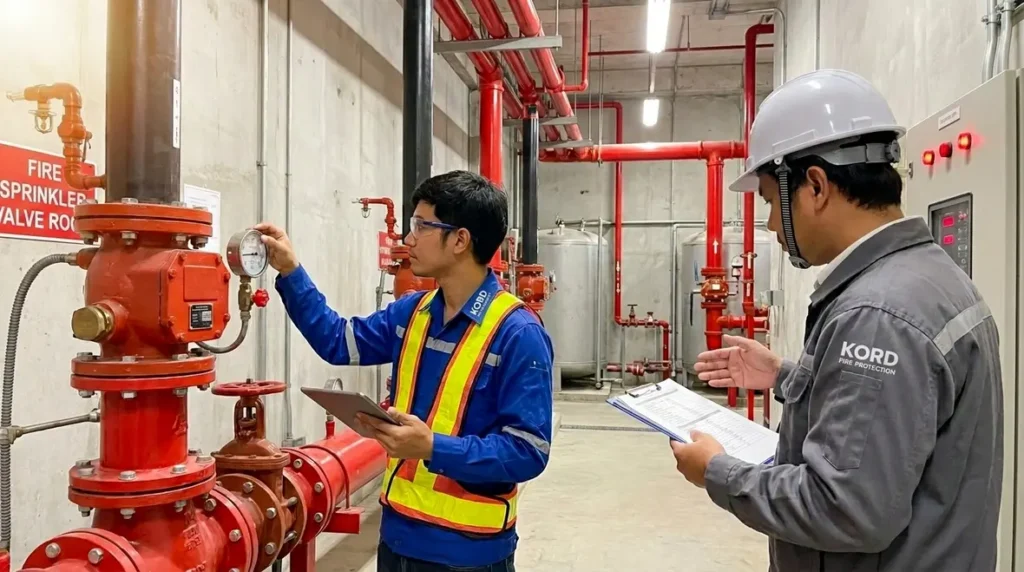
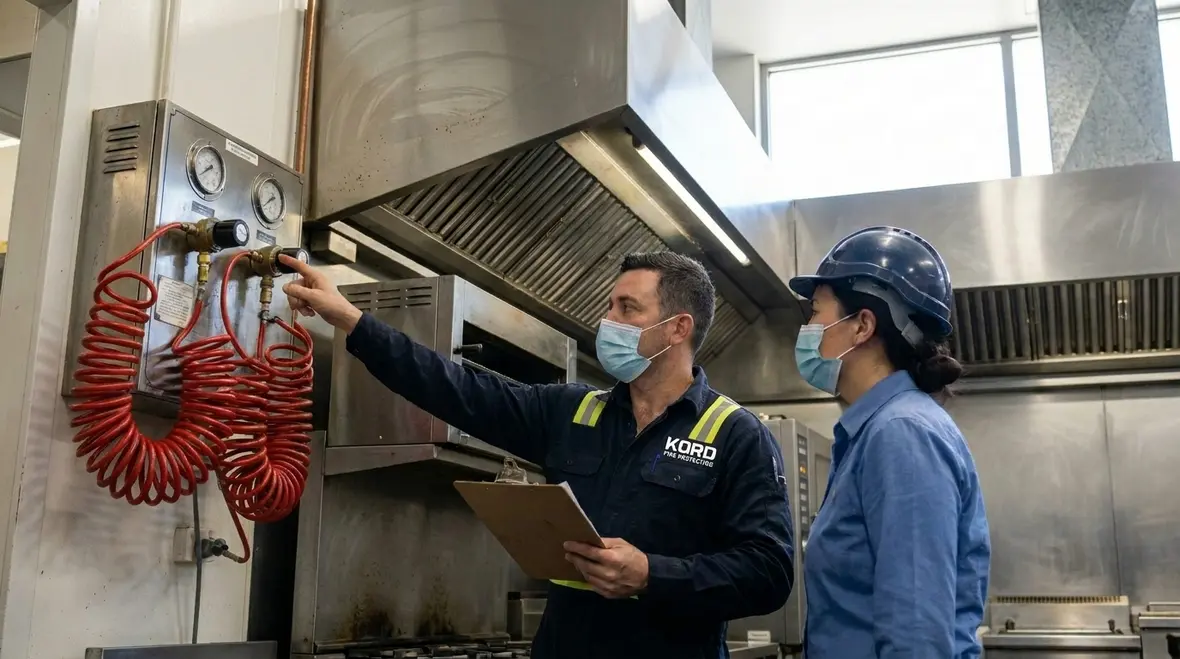
A compliant system does not become compliant just because it was installed once. Instead, compliance depends on ongoing control of performance over time. First, the system design must align with the hazard profile. Then, installation must follow the right layout, correct component selection, and proper integration with the kitchen equipment and exhaust components where applicable.
After installation, commissioning verifies that the system functions as intended. This step matters because it catches issues before they become emergency issues. For example, detection response timing and activation sequencing must match the risk. Also, discharge performance and clearances must be validated. If the system cannot deliver suppression where it needs to go, then it is like bringing a fire extinguisher to a basketball game. You can, technically, bring it. It just will not help much.
Finally, maintenance preserves reliability. Filters, detection devices, and related components can degrade or become contaminated. Therefore, scheduled inspection and servicing should be planned so the system remains ready. Kord Fire Protection helps businesses set up practical service routines that fit real operating schedules, including after-hours support when required.
What strong commissioning should confirm
Detection points are located for real airflow and heat conditions
Suppression discharge reaches the hazard area properly
Control interfaces respond in the intended sequence
Appliance and ventilation interactions have been checked
Records are available for future servicing and compliance review
Key system components and how they work together
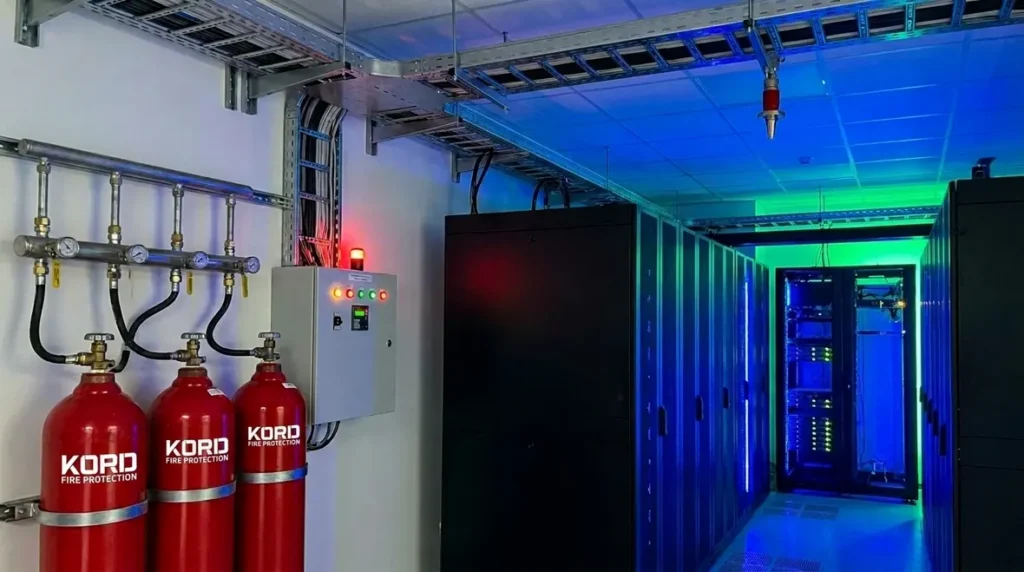
Most cooking fire protection systems rely on a coordinated set of functions. Detection identifies the fire condition. Suppression responds quickly to control flames and reduce heat. In many commercial kitchens, there is also an interface with ventilation and system controls, so the event does not turn into a smoke and damage festival.
Here is the important part: these components cannot be treated like separate products. They must work as a single system. For example, if detection placement does not match the airflow and heat patterns, activation can become late. Likewise, if suppression coverage does not suit the cooking layout, the system might reduce intensity without extinguishing the hazard.
Our approach at Kord Fire Protection is to align the components to the kitchen reality. We look at the appliance arrangement, hood coverage, airflow effects, and maintenance access. As a result, businesses get systems that are designed for the location, not simply installed into it.
The value of an integrated approach
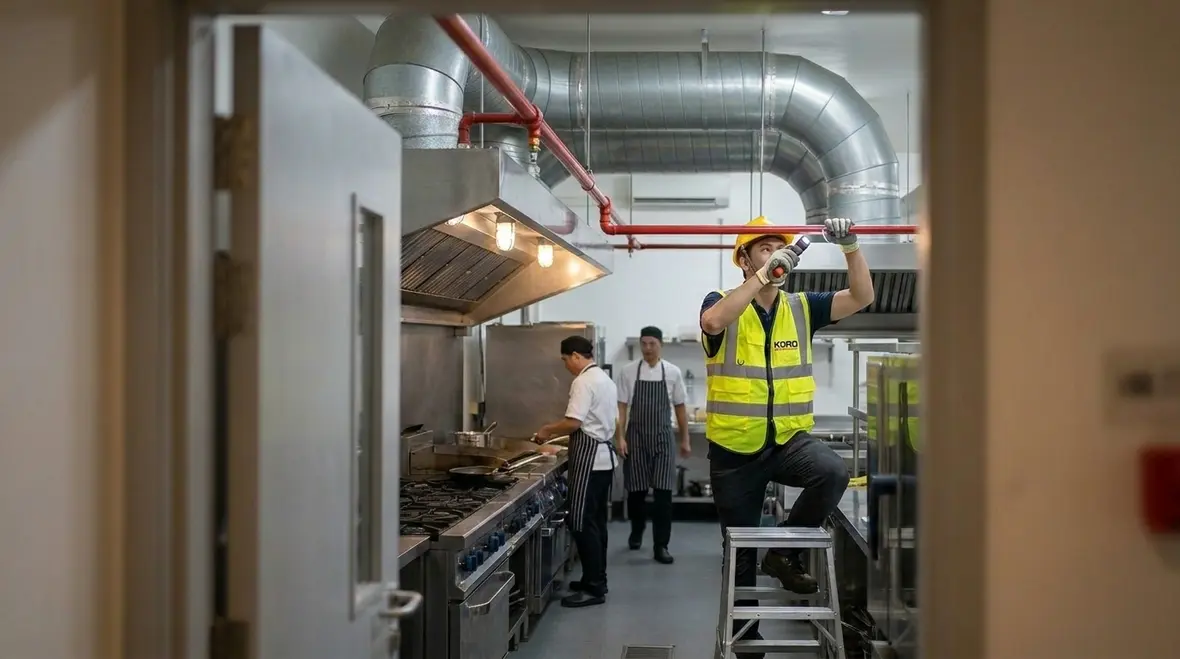
A kitchen system performs best when every part is considered together rather than purchased in a panic and introduced to one another later. Detection, discharge, controls, and servicing access should all support each other. That integrated view helps reduce nuisance issues, improve response times, and make future maintenance far less painful for facilities teams who already have enough on their plate.
For industrial, retail, and facilities teams: reducing downtime and liability
Facilities managers care about two things: safety and continuity. Yet compliance can create anxiety when teams expect disruptions. The good news is that AS 3772 cooking fire protection guidance supports a structured approach, which reduces uncertainty. When protection systems are set up correctly, risk decreases and emergency response becomes more predictable.
In industrial and large commercial sites, kitchens often operate alongside high-value assets and critical production areas. Therefore, a fire event can mean not only repairs, but also shutdowns and lost trade. In retail environments, the kitchen is usually close to customer traffic, so smoke control and rapid suppression matter even more.
To protect operations, Kord Fire Protection focuses on clean project management. We plan installation and service around business hours where possible, and we document processes for internal reporting. Additionally, we help clients keep maintenance records in order, which makes compliance review less painful than trying to find that one receipt from three tax years ago.

How Kord Fire Protection supports compliant outcomes across Australia
Kord Fire Protection acts as a vital partner for the job, not just a supplier. We help clients understand what they need, then we deliver it with a safety-first mindset. Because commercial sites differ in layout, cooking style, and extraction design, we assess the environment before recommending a solution. That way, the design supports the hazard rather than living in a “one size fits all” fantasy.
Next, we coordinate the installation and commissioning so the system performs as required when it matters. Then, we maintain the system with a service plan that fits the facility’s schedule and operational demands. Importantly, we support teams that must demonstrate due diligence to insurers, regulators, and internal stakeholders.
If the job involves new fitouts, upgrades, or compliance reviews, our team works with stakeholders to keep timelines realistic and outcomes measurable. In short, Kord Fire Protection helps businesses across Australia move from intention to reliable performance.
FAQ
Featured snippet questions
Is installation quality important for cooking fire protection? Yes. A system must be installed correctly to deliver suppression where it is needed, and to ensure detection and activation operate as intended.
Why does commissioning matter? Commissioning confirms the system functions correctly before an incident. It helps prevent hidden faults that could delay activation or reduce coverage.
What should facilities document? Keep records of inspections, testing, commissioning, and maintenance activities so internal teams can demonstrate due diligence.
Conclusion: protect the kitchen, protect the business
When a kitchen fire starts, speed and reliability decide outcomes. AS 3772 cooking fire protection provides a clear framework, but results depend on real-world design, installation, and maintenance. Kord Fire Protection helps industrial, retail, and commercial facilities across Australia meet compliance expectations while reducing downtime and risk. If you want a partner who treats safety like a business priority, contact Kord Fire Protection today for an assessment and next steps.