
Fire Extinguisher Inspection in Australia by Kord Fire Protection
Quick Answer: He can take a fire extinguisher for inspection at licensed fire protection businesses, authorized service centers, or local fire safety contractors. In Australia, the best option is a provider that can test, tag, and document results to keep workplaces compliant. Kord Fire Protection can handle this end to end.
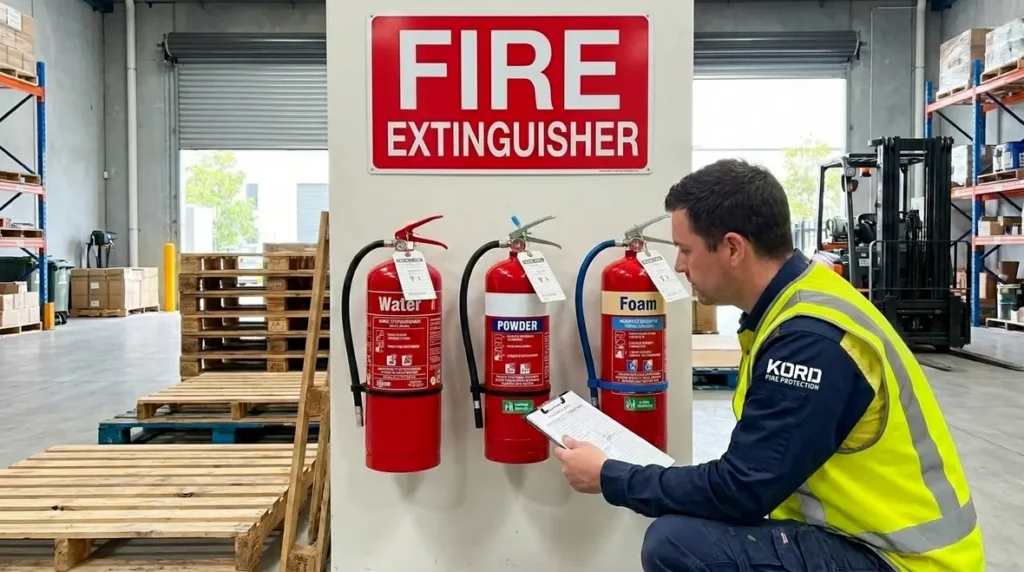
For any industrial, retail, or commercial site, fire extinguisher inspection is not a “someday” task. In fact, delays turn a safety item into a prop, and nobody wants to treat firefighting like a dramatic movie scene where the hero finds the right gadget just in time. Our fire extinguisher inspection service helps workplaces in Australia keep equipment ready, current, and properly recorded.
If your team also manages broader compliance tasks, our fire protection services can support extinguisher inspections as part of a more organised site safety program.
With that in mind, the next sections explain where people take extinguishers, what the inspection actually includes, how compliance works across sectors, and how Kord Fire Protection can become a vital partner on this job. The basic question sounds simple, but the practical answer matters a lot more once you have multiple extinguishers, different risk areas, and a workplace that does not exactly pause for maintenance day with a polite round of applause.
Where to take a fire extinguisher for inspection
The most reliable answer is simple: take it to a licensed fire safety or fire equipment service provider that can perform inspection, testing, and servicing. Across Australia, many sites also use authorized contractors who provide documented results that align with common workplace expectations. That documentation is not just nice to have either. It is the difference between a workplace that knows where it stands and one that starts digging through folders hoping a tag from six months ago tells the whole story.
Typically, a business can arrange service through one of these channels:
- Fire protection service companies that inspect and service portable extinguishers
- Specialist extinguisher recharging and maintenance providers that handle repairs and testing
- Supplier backed service plans when equipment was installed by a vendor who offers maintenance
- Workplace safety contractors that manage asset records across multiple sites
Also, the location matters. If a workplace operates across multiple facilities, using one coordinated provider saves time and reduces missed schedules. That is where our company, Kord Fire Protection, becomes more than a technician. We help organisations run inspection cycles like a system, not a scramble. For a facilities team, that means less back and forth, fewer mystery gaps, and a much better chance of spotting issues before they become a compliance problem or an operational headache.
Why a coordinated service model usually works better
One extinguisher in a small tenancy can feel straightforward. Twenty across a retail site is a different story. Add warehouses, plant rooms, switchboards, loading docks, kitchens, and office zones, and suddenly the job is not “take this item in for inspection” so much as “manage a safety program without losing your mind.” That is why businesses often prefer a provider that can inspect on site, track dates, update records, and tell the team what needs action next in plain language.
What happens during fire extinguisher inspection at a service provider
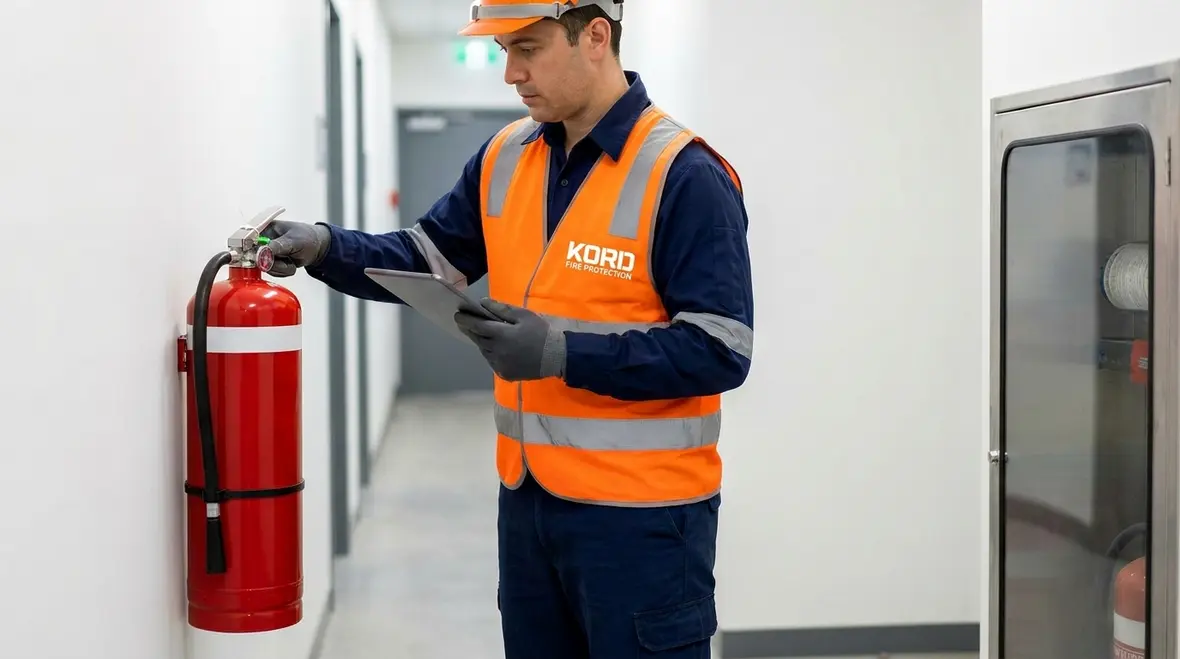
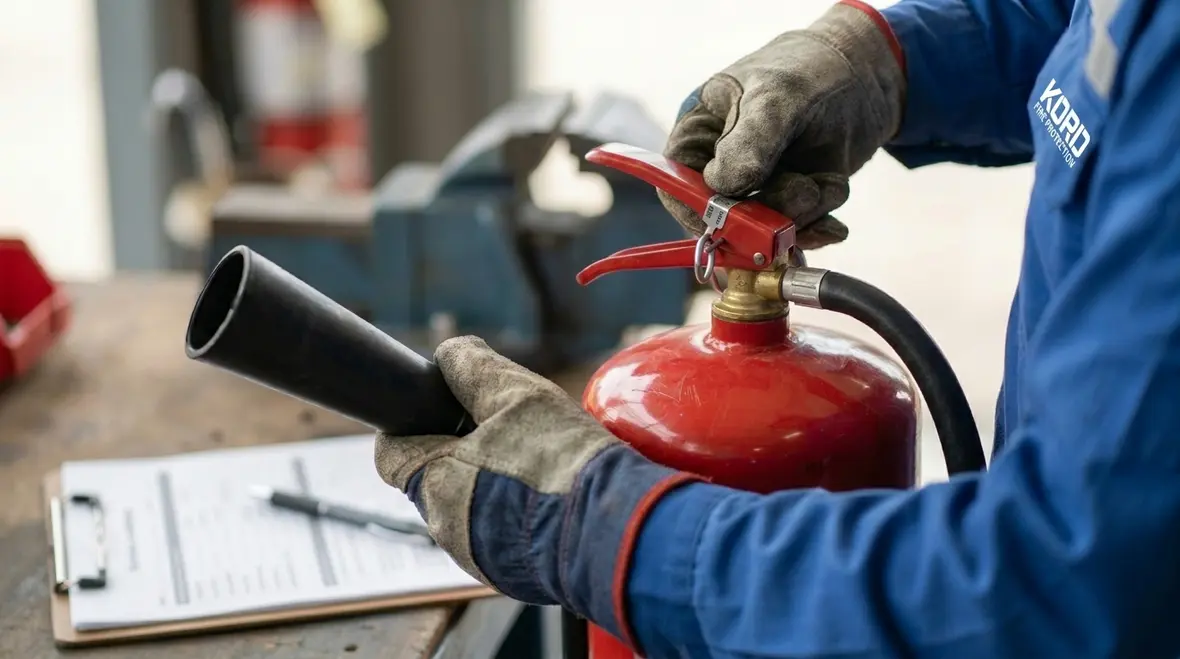
A proper fire extinguisher inspection is more than a quick glance and a sticker. A competent service team checks the extinguisher’s condition, verifies key parts, and confirms it can operate correctly. Then they record the outcome so the workplace can prove due diligence. In other words, it is a process, not a performance. Nobody should be doing the safety equivalent of kicking the tyres and declaring everything “probably fine.”
Depending on the type of extinguisher and its history, inspection commonly includes:
- Visual checks for corrosion, dents, leaks, and signs of tampering
- Pressure or indicator verification to confirm the unit sits within acceptable range
- Hose and nozzle inspection to check for blockages, cracks, or damage
- Pin and tamper seal checks so the safety mechanism remains intact
- Label and classification checks to ensure the unit matches the intended fire risk
When servicing is needed, a provider can also recharge or replace components. And importantly, they should document the work so the business can track maintenance across time. In the real world, documentation is what turns “we think it was done” into “we can show it was done.” Kord Fire Protection focuses on that clarity because audits and incident reviews do not accept vibes. They want dates, records, status, and evidence that the right equipment was in the right place and kept in serviceable condition.
Inspection is also about matching equipment to the risk
An extinguisher can look perfectly respectable and still be the wrong unit for the hazard nearby. That is why classification and placement matter so much. Offices, workshops, kitchens, storage areas, and electrical rooms do not all carry the same risk profile. A strong inspection routine checks the unit itself, but it also helps confirm whether the extinguisher still suits the area it protects. If a site layout has changed, stock has expanded, or equipment has been added, the maintenance conversation should catch that before an emergency does.
How compliance expectations affect industrial, retail, and facilities teams
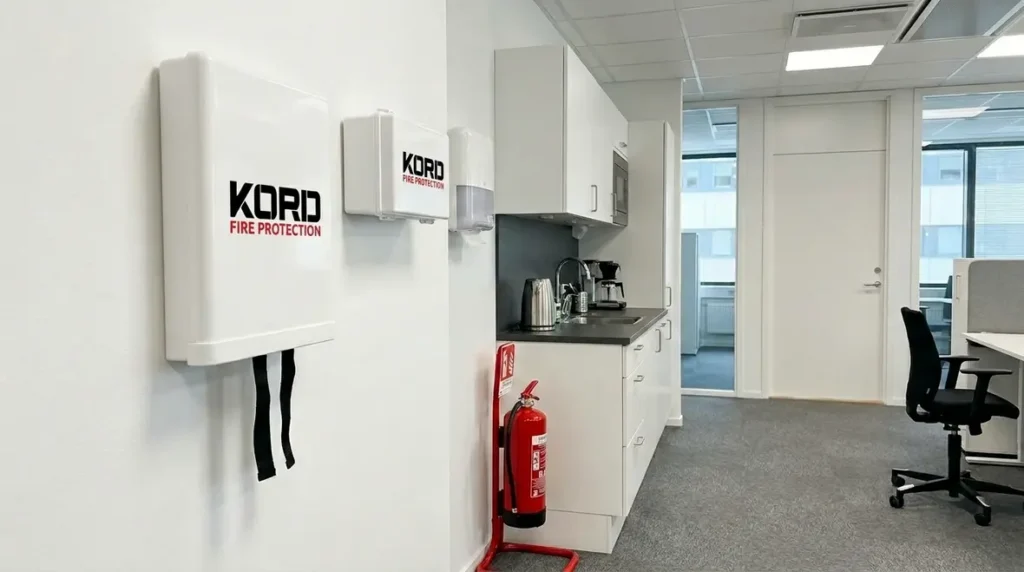
Different workplaces face different fire risks, and that changes how teams schedule inspection and replacement. Industrial sites might deal with dust, heat sources, and machinery hazards. Retail spaces handle electrical loads, storage, and crowd flow. Facilities often manage mixed equipment across offices, warehouses, and plant areas. Even within one organisation, the practical needs can vary wildly from one room to the next.
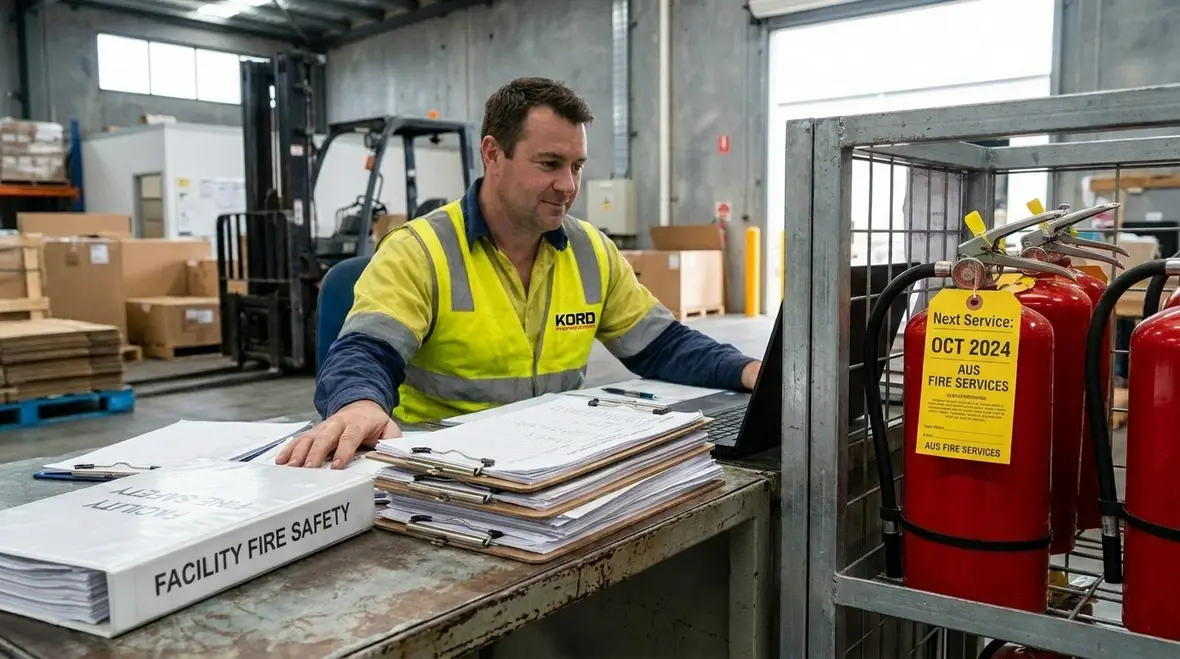
As a result, the extinguisher program needs to stay consistent and practical. Facilities managers and safety officers typically want a simple workflow: tag, inspect, log, schedule, and address issues quickly. Meanwhile, managers also want to avoid downtime and disruptions, because shutting down an operation to move equipment is never fun. Nobody enjoys playing logistics Tetris during peak hours. The easier the process is to follow, the more likely it gets done on time and without endless chasing between departments.
Therefore, a good service partner helps teams align their extinguisher maintenance with site schedules and asset registers. Kord Fire Protection supports this by coordinating inspections across multiple facets of commercial operations in Australia, so the process stays manageable even when the workplace is not. That support matters most when the site is busy, spread out, or handling several competing safety tasks at once.
What facilities teams usually want from the process
Most teams are not looking for dramatic fire safety speeches. They want consistency. They want to know which units were checked, which ones need work, what was completed, and what needs scheduling next. They want records that make sense six months later, not cryptic notes that require detective work and three phone calls. A dependable provider makes the entire program easier to manage because the answers are clear and the next steps are obvious.
Choosing the right service provider in Australia
When choosing where to take extinguishers, the decision should not be based on price alone. A workplace needs reliability, response time, and evidence of work. Also, the provider should communicate clearly and keep service consistent across sites. Cheap and confusing is rarely a winning combination, especially when safety equipment is involved.
Key factors to evaluate include:
- Licensing and capability to service the extinguisher types the site uses
- Documentation with clear records and reporting for safety management
- Scheduling support that fits site operations and peak trading hours
- Process control for tagging, repairs, recharging, and tracking
- Experience across sectors so the provider understands real workplace risks
In addition, businesses should ask how the provider handles items that fail inspection. If a unit shows issues, the workplace needs a fast plan: repair, replace, or remove. Delayed fixes create gaps, and gaps create headaches. Kord Fire Protection works as a partner, not a drop off and forget operation, which matters when safety equipment must stay ready. The right provider does not leave the site wondering what to do next with a failed unit and a calendar already packed with other problems.
Questions worth asking before you book
Ask how the provider tracks service history, how reports are delivered, whether they can support multiple sites, and what the turnaround looks like if something needs urgent replacement. Ask who keeps the records updated. Ask what happens if an extinguisher is damaged, discharged, or found to be in the wrong location. A good provider answers these questions clearly. A great provider answers them before you even have to ask.
Why Kord Fire Protection can become a vital partner
Kord Fire Protection helps organisations treat extinguisher maintenance as a core safety program, not a last minute task. Instead of working like a one time service call, we build a dependable cycle: inspection scheduling, clear reporting, and follow up for anything that needs attention. That means fewer surprises, better visibility across assets, and a process that feels manageable instead of chaotic.
To make it easier to picture the value, here is a side by side view of what teams gain when they work with our company:
| What the team wants | How Kord Fire Protection supports |
| Predictable schedules across facilities | Coordinated inspection plans that fit industrial and retail operations |
| Clean records for accountability | Documented results and clear reporting for internal and external checks |
| Fast response when units fail checks | Practical follow up for repair, replacement, or recharging needs |
| Consistency across multiple risks | Support for mixed asset types across commercial sites |
Also, our approach keeps communication calm and direct. Fire safety should not feel like a juggling act where everyone screams “where is the logbook.” We help teams stay organised, so they can focus on operations and people safety. That is often the hidden value of a strong service partner: less confusion, fewer loose ends, and a lot less time spent trying to reconstruct what happened during the last inspection cycle.
FAQ about extinguisher inspection in workplaces
Need dependable extinguisher inspection now
If a workplace wants extinguishers that actually work when needed, it should stop treating inspection like a once a year guessing game. Kord Fire Protection helps industrial, retail, and facility teams across Australia stay organised with dependable fire extinguisher inspection, clear records, and practical follow up. Contact our team to book a service window and get your program back on track. Because when the moment calls for safety equipment to do its job, “we meant to get that checked” is not the kind of plot twist anyone wants. If you’re in the USA in the California region, we can also assist there with your business’s fire extinguisher service needs.