AS 1670.1 Fire Alarm Design for Reliable Compliance
Quick Answer: AS 1670.1 fire alarm design sets the rules for how systems should detect fire, alert people, and stay reliable. For industrial, retail, and commercial sites across Australia, Kord Fire Protection can help teams plan, design, install, and verify a compliant AS 1670.1 fire alarm that actually works when it matters.
Fire alarm systems sound simple until someone tests the “simple” part at 2:00 a.m. and the building suddenly remembers it has doors, ducts, and bad luck. That is why the AS 1670.1 Standard exists. In the early stages of any project, teams should use AS 1670.1 fire detection and alarm system design to guide layout, device selection, zoning, and performance checks.
Our company, Kord Fire Protection, steps in as more than a supplier. We become the vital partner that helps clients across industrial, retail, and commercial facilities in Australia turn design intent into an engineered outcome. And yes, that means fewer surprises, smoother compliance, and fewer “why is that detector there?” meetings. If your project also needs practical support beyond alarm design, Kord Fire Protection can assist with fire protection services that fit naturally into the full compliance picture.
AS 1670.1 fire alarm in design and why it matters
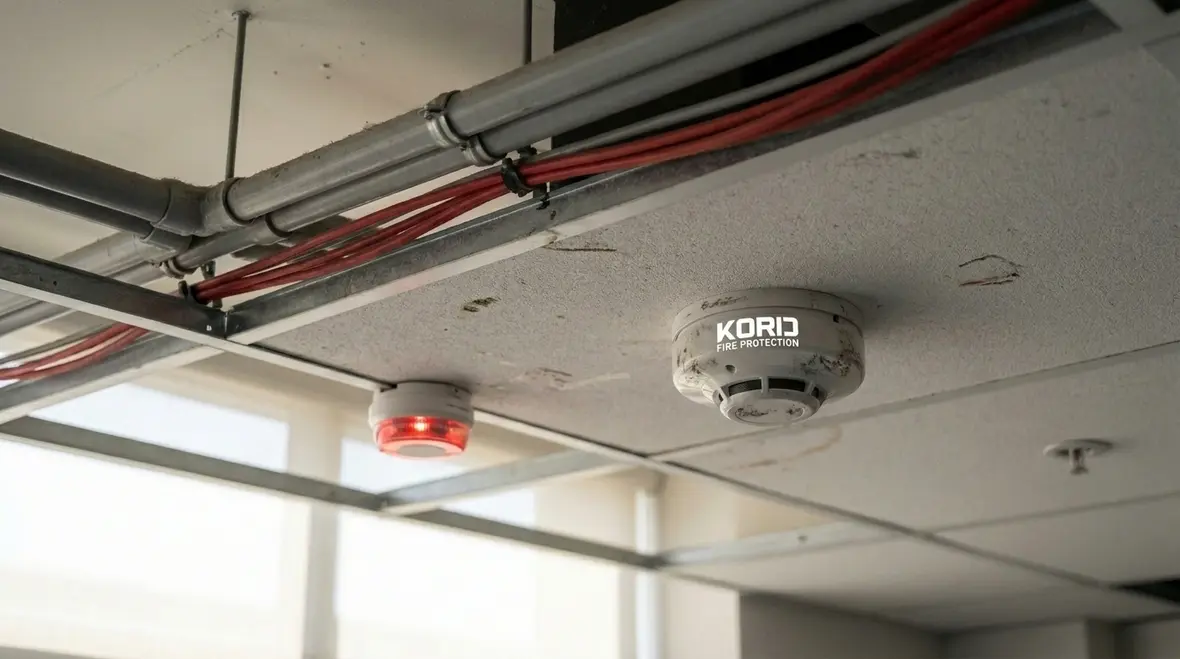
AS 1670.1 fire alarm design focuses on detection and alarm system performance. It helps ensure the system identifies fire conditions early, not late, and alerts people with clear, dependable signals. When a project team follows the standard, it reduces guesswork during installation and commissioning.
In practice, the standard shapes decisions like detector placement, coverage logic, zoning strategy, and interface requirements. For industrial and commercial sites, those choices affect both safety and downtime. After all, a wrong design can mean unnecessary activations, costly callouts, or even areas that remain unprotected. Nobody wants a fire system that behaves like a moody band member.
Even better, using the standard early helps align stakeholders. Architects, electrical contractors, operations managers, and safety officers all benefit when design outcomes follow a known framework. That common language makes reviews faster, site questions easier to resolve, and approvals a lot less dramatic than they otherwise might be.
Reliable design starts before the first device goes on the ceiling
A strong design phase is where projects either build confidence or quietly book future headaches. Before installation begins, teams should confirm how the site is used, what hazards exist, how spaces are divided, and where detection will be most effective. This is also the point where realistic planning saves money later. Moving a detector on a drawing is easy. Moving it after fitout, ceiling works, and programming is where budgets start making sad noises.
How designers build coverage, zoning, and detector placement
Design teams should treat fire detection like good lighting in a shop. If you place it wrong, customers still think it is bright in one area and “mysterious darkness” in another. With a proper design, the system gives consistent coverage.
Under AS 1670.1, designers plan detection zones and layout based on building geometry, fire load, ventilation conditions, and the likely ways smoke or heat would travel. Therefore, they avoid random detector placement and instead choose locations that make sense for how smoke and heat behave in real environments.
A warehouse with tall racking, a retail tenancy with changing displays, and a plant room with heat and airflow issues are not interchangeable spaces. Good design respects that. It considers whether ceiling heights affect response, whether obstructions interrupt coverage, and whether normal site conditions could create nuisance alarms or delayed detection. That is where experienced review matters, because compliance on paper should still make sense once ladders come out and installers actually look up.
- Assessing hazards: Industrial production areas, retail storage, and plant rooms do not behave the same way in a fire scenario.
- Planning zoning: Zoning supports investigation and faster response. It also helps isolate faults without shutting down entire sections.
- Selecting devices: Designers match detector types to spaces. A place with dust, steam, or changing airflow may require a more careful approach.
- Accounting for airflow and obstructions: Racking, suspended ceilings, open mezzanines, and ducted systems can change detection performance.
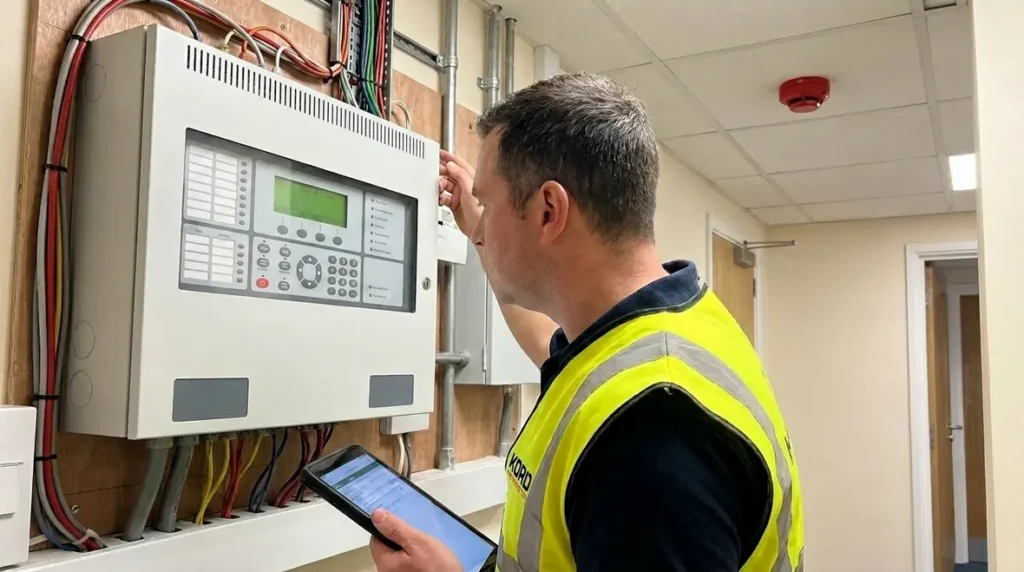
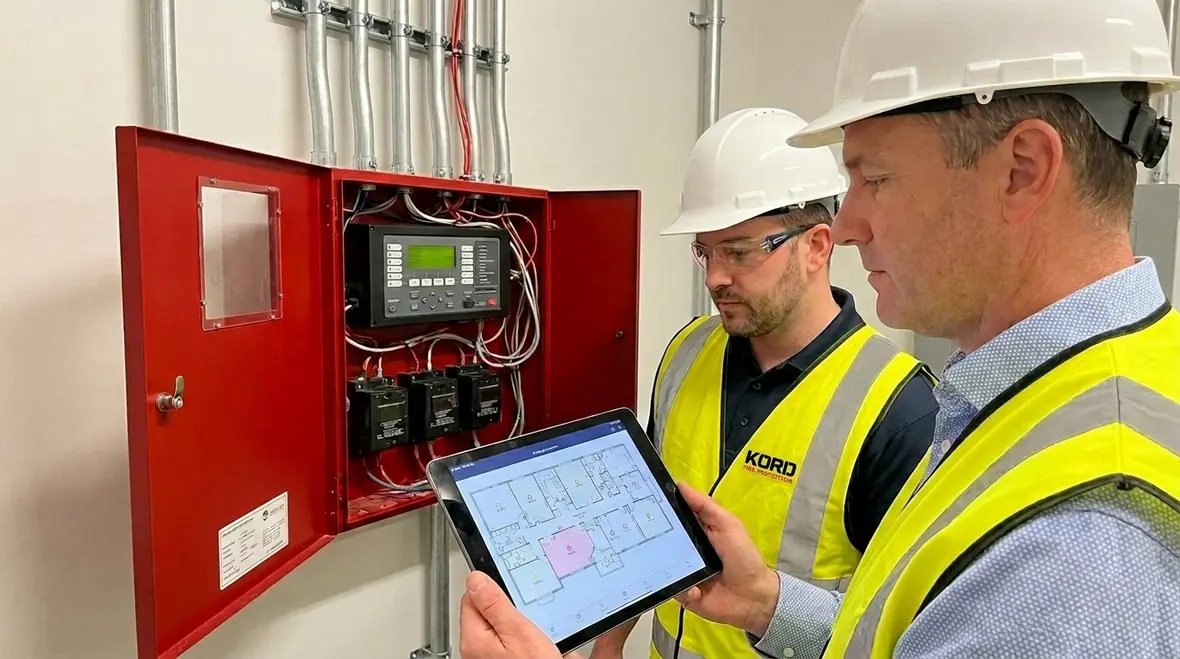
Then, during review, designers should verify that the design remains achievable in the field. That is where Kord Fire Protection becomes a vital partner. We review drawings with installers in mind, so the plan stays accurate once conduits, mounting points, and actual ceiling heights appear. In other words, we reduce the gap between “spec on paper” and “system on the wall.”
Planning alarm signals and people safety outcomes
Once detection coverage is planned, the project must deliver reliable alarm notification. AS 1670.1 fire alarm design supports how the system communicates the emergency to occupants so they can respond quickly and calmly.
Designers should consider audibility and visibility in the real environment. Industrial spaces often include noise, PPE, and operational distractions. Retail spaces include crowds, ambient music, and product displays that can block sightlines. Therefore, teams should design alarm outputs to cut through the everyday distractions.
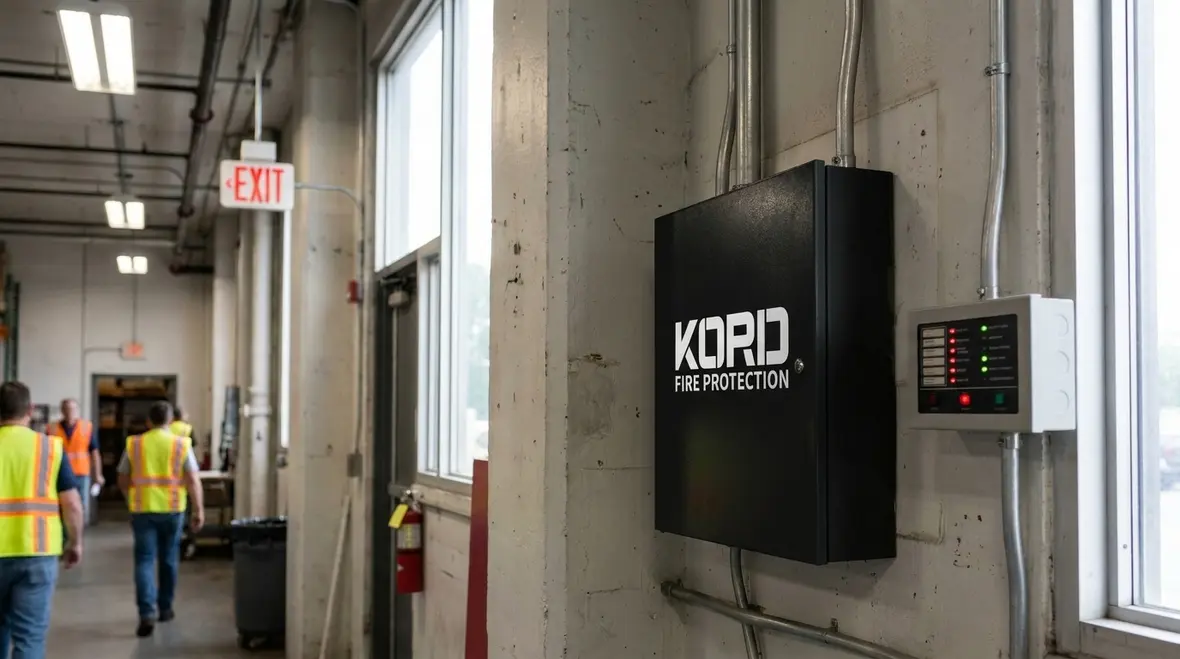
Also, alarm design must work with emergency procedures. If occupants rely on clear instructions, the system must support them. This means correct zone mapping, sensible control logic, and consistent indication at panels and remote annunciators.
Our team at Kord Fire Protection helps clients connect the dots between design intent and on site reality. We support commissioning planning, review indicator placement, and help ensure the alarm strategy aligns with evacuation routes and building operations. Because a compliant system that people cannot perceive is like a smoke test with no smoke.
Notification has to work for real people, not just neat drawings
This is where context matters. A back of house corridor, an open plan office, a noisy workshop, and a customer facing tenancy all respond differently to the same alarm strategy. Teams should think beyond minimum placement and ask a more useful question: when the system activates, will people immediately understand that something serious is happening and where they need to go? If the answer is “probably,” the design deserves another look.
Interfaces, control logic, and integration with site systems
Fire alarm systems in commercial and industrial facilities rarely live alone. They often interface with other building systems such as door hold releases, ventilation shutdown, lift recall, and fire service interfaces. If integration fails, the fire alarm becomes a notification tool rather than a life safety system.
AS 1670.1 provides a basis for designing system behaviour, including how the control logic supports safe and predictable responses. However, integration needs careful engineering. Each interface must match the intended sequence, control voltage requirements, and fail safe behaviour.
For facilities that run 24 7, integration also affects operational risk. Teams should plan commissioning windows and test methods that minimise disruption. Therefore, an experienced partner should help map dependencies and confirm that each interface behaves correctly under test conditions.
Kord Fire Protection approaches integration with that mindset. We collaborate with electrical contractors and facility managers to reduce rework, confirm wiring routes, and document logic so the building team can maintain the system confidently. In the end, everyone benefits: operations gets fewer interruptions, and safety teams gain clearer evidence of performance.
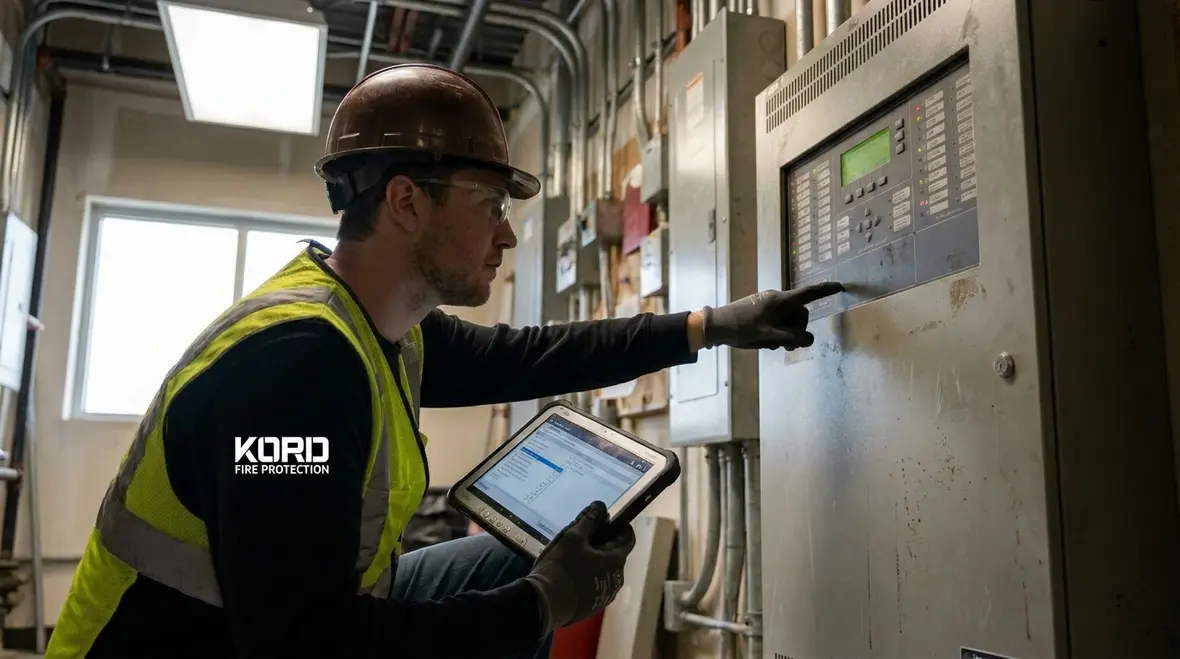
Commissioning, verification, and keeping the system reliable
A design can look perfect and still fail in reality if commissioning and verification skip key steps. That is why teams should plan testing around the actual devices installed, the actual ceiling conditions, and the actual alarm outputs.
For an AS 1670.1 fire alarm to perform as intended, commissioning should verify detection coverage, correct signalling, panel programming, zoning behaviour, and fault indications. It should also confirm that the system can recover correctly after alarm states.
Then, maintenance planning matters. Reliability depends on disciplined inspections, function tests, and timely attention to faults. Many sites treat maintenance like a chore they postpone. Fire protection teams know better. A system that sits quietly for months is not “done,” it is waiting for its next chance to do its job.
Kord Fire Protection supports that full lifecycle approach. We help clients understand what to check, what to document, and what to address first, especially in environments with dust, vibration, or high turnover of fitout changes. And yes, if a retail tenancy layout changes again, the fire alarm design should not stay stuck in the past like an outdated playlist.
Reliability is a process, not a lucky guess
Verification is where theory meets the very stubborn realities of a live building. It is also where small configuration issues reveal themselves before they become major site problems. Clear records, practical test plans, and coordinated handover information all help future maintenance teams keep performance consistent. A reliable system is not the one that passed once. It is the one that keeps passing the moments that matter.

Choosing the right partner for compliance and delivery
Teams often choose contractors based on price alone. In fire protection, that can create hidden costs later, including delayed approvals, repeat work, and rushed retesting. The safer path focuses on capability, responsiveness, and a delivery process that respects the standard from design through commissioning.
Kord Fire Protection partners with industrial, retail, and commercial facilities across Australia because we understand the pressure points. We know how sites operate, how fitouts evolve, and how procurement and compliance timelines can collide. Therefore, we help clients manage the entire job with structure: design support, practical installation guidance, and verification that stands up to scrutiny.
If a project team wants fewer surprises and a smoother handover, this is where a trusted partner matters. We do not just complete paperwork. We help ensure the system is built to perform. That practical attitude is often the difference between a project that merely reaches handover and one that stays dependable once the building is busy, altered, noisy, and generally behaving like a real building instead of a brochure.
FAQ about AS 1670.1 fire detection and alarm system design
Call Kord Fire Protection for a compliant fire alarm job
If your facility needs a new system or a design upgrade, do it the way that reduces risk and delays. Kord Fire Protection can support your project team with practical guidance aligned to AS 1670.1 fire detection and alarm system design, from planning through commissioning and handover. Contact Kord Fire Protection today to review your site, confirm coverage logic, and build a reliable AS 1670.1 fire alarm that performs when it counts.