AS 1670.4 Emergency Warning and Intercom Systems
Quick Answer
AS 1670.4 sets the expectations for emergency warning and intercom systems used in industrial, retail, and commercial facilities across Australia. It helps ensure clear, reliable alerts during emergencies. Kord Fire Protection can support organisations by supplying, installing, testing, and maintaining compliant systems that people can actually use under pressure.
For organisations reviewing broader fire protection needs, Kord Fire Protection can also support fire protection services across Australia so emergency warning systems fit naturally into a more complete life safety strategy.
Emergency Warning and Intercom Systems Under AS 1670.4
Emergency warning and intercom systems governed by AS 1670.4 warning systems help facilities speak clearly when seconds matter. Early on, these systems must guide occupants with intelligible messages, structured tones, and dependable call functions so staff do not improvise. In a real emergency, confusion is the one thing nobody schedules. And yet, it happens.
For industrial sites, retail precincts, and complex commercial buildings, the standard focuses on how warning signals operate, how intercoms connect, and how the whole service stays dependable over time. However, standards alone do not install themselves. That is where Kord Fire Protection becomes more than a vendor. They help businesses turn requirements into systems that work as designed, not as hoped.
What AS 1670.4 expects from warning coverage and clarity
When a facility uses emergency warning devices, the priority stays simple: people must understand what is happening, where it is happening, and what to do next. Therefore, AS 1670.4 warning systems require careful design of coverage zones and signal types. This means the system avoids gaps where alerts fade out like a bad wireless connection in a busy warehouse.
In practice, a compliant approach includes planning for visibility and audibility across the built environment. Sound levels, signal patterns, and message routing must match how people move through spaces. For example, a loading dock and a staff-only corridor behave differently, and the system should reflect that. If management wants accountability, it also needs a system that logs and supports fault finding rather than leaving teams to guess.
Furthermore, the intercom functions must integrate with warning operation. That way, a trained person can relay instructions without causing a second layer of confusion. In other words, the system does not just shout; it communicates.
Coverage planning should match real movement patterns
This is where practical design matters. Warehouses, offices, retail floors, service corridors, plant rooms, and back-of-house zones all behave differently once people, machinery, doors, and background noise get involved. A warning system that looks fine on paper can perform poorly if device locations are chosen without thinking about how the site actually operates. Clear zoning and sensible speaker placement help occupants hear the right message in the right place without creating a wall of overlapping noise.
How intercom design supports controlled responses
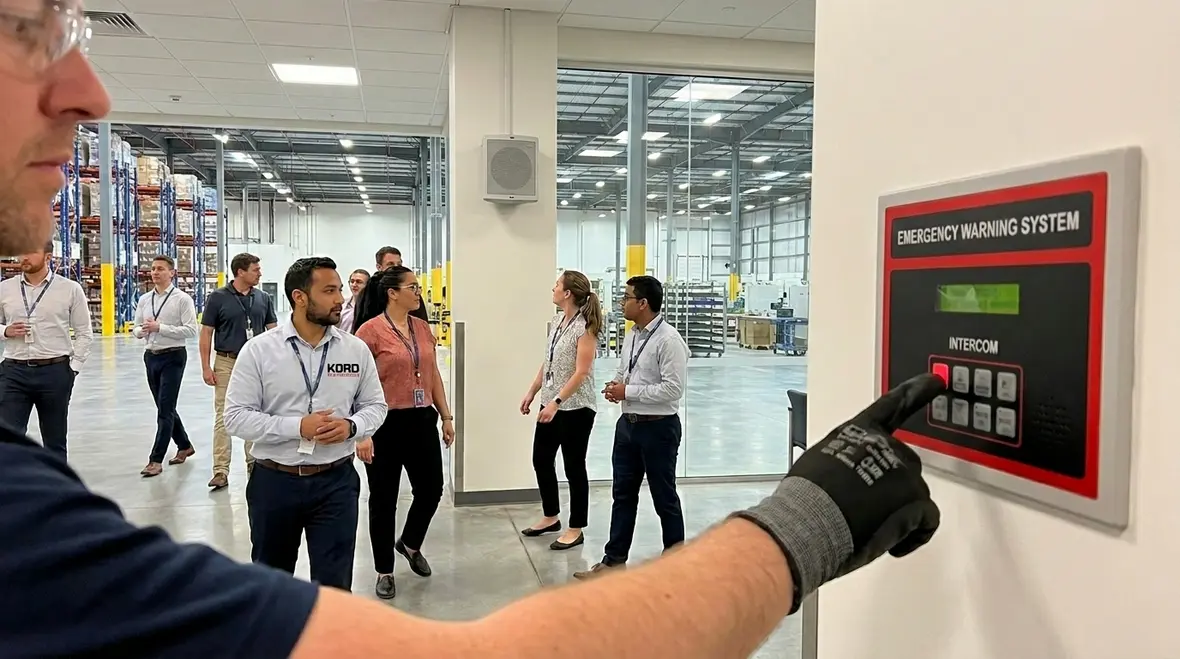
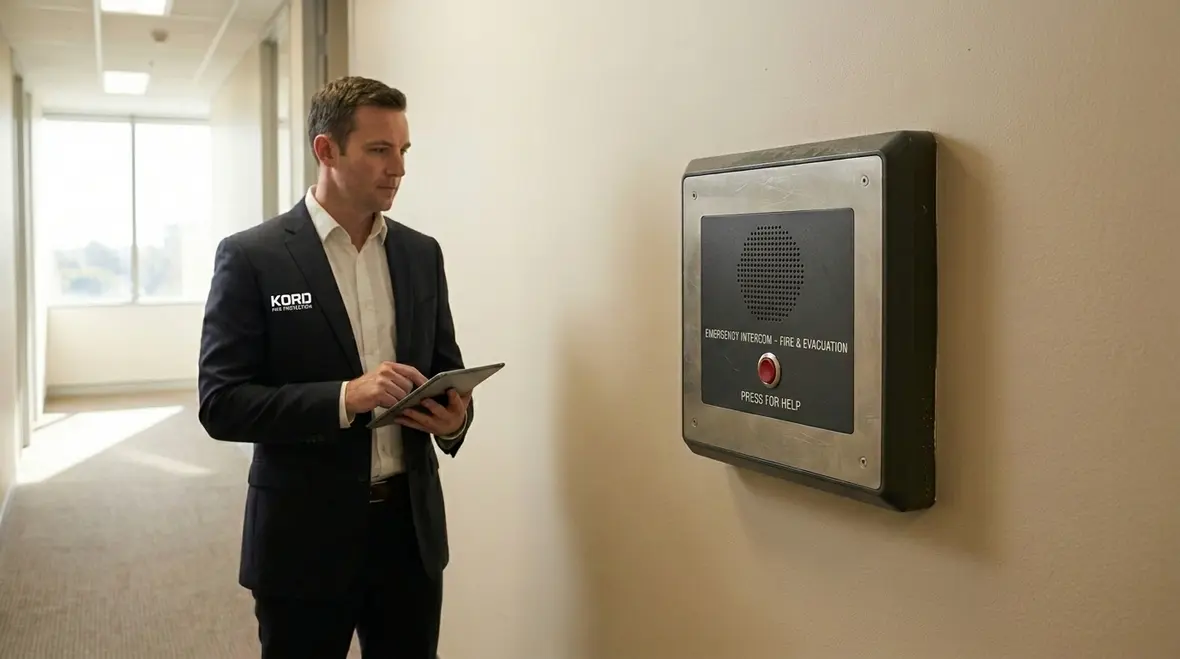
Emergency intercoms exist for one reason: control. During an incident, staff must coordinate actions, notify response teams, and guide evacuation or safe shutdown procedures. To support that, intercom stations need clear selection, intuitive use, and robust operation even during stressful conditions.
For commercial facilities, intercoms often link to areas where staff are not face to face with the command point. Consequently, the design must avoid delays and ensure the right people can speak at the right time. Where a system includes zone calling, the call paths must match building layout, department workflows, and typical occupancy patterns.
At the same time, the intercom should not become a distraction during routine operations. It should remain ready, clear, and easy to switch to when needed. Kord Fire Protection helps organisations map practical call scenarios and then implement them through correct system configuration and installation discipline.
Control only works when staff can use it quickly
There is a big difference between a technically impressive interface and one that a stressed team member can operate in ten seconds. Labels, zone selection, paging paths, microphone quality, and operator training all influence how useful the system becomes when pressure spikes. If the intercom path is unclear, staff can lose valuable time deciding who should speak, where to broadcast, and whether the message even went through.
That is why system planning should include routine scenarios as well as emergency ones. A facility that practices call flows, response hierarchy, and message control is far more likely to keep communications orderly when a real event interrupts the day without warning.
Audibility, intelligibility, and where systems fail
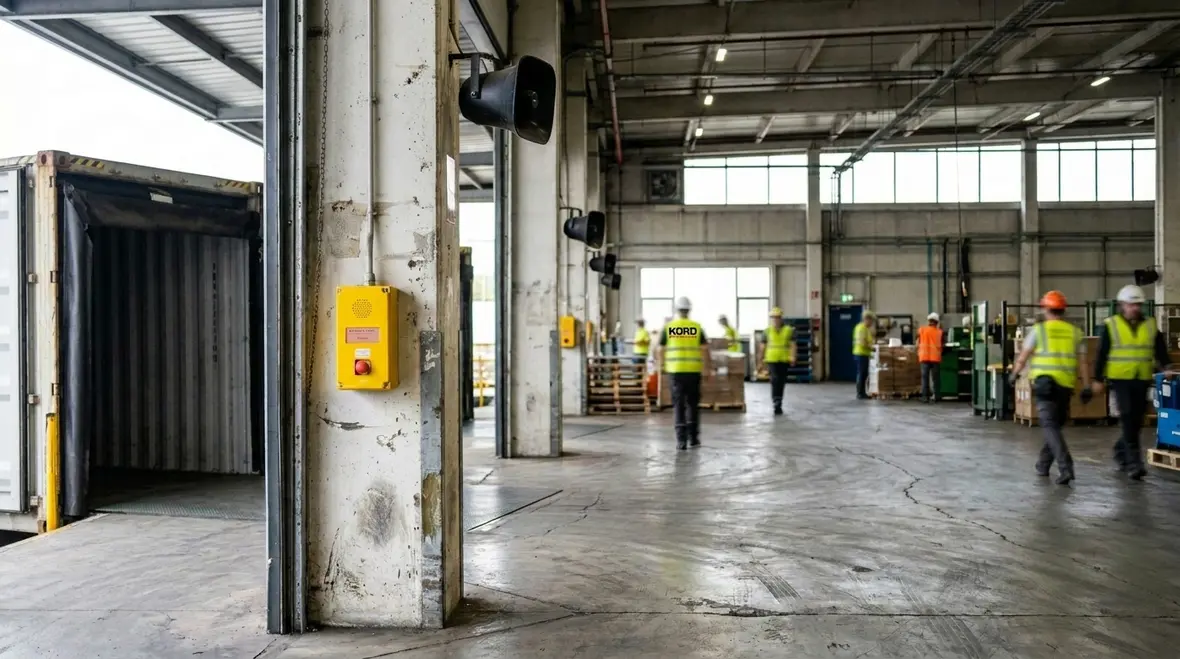
Even good equipment fails when it is not matched to the environment. Therefore, audibility and intelligibility need attention during design, installation, and commissioning. Industrial spaces can absorb sound due to machinery, open areas, and structural materials. Meanwhile, retail environments can introduce noise from ventilation systems, trading floors, and background music that nobody thinks about until an emergency hits.
Consequently, the warning system must deliver signals that cut through real noise conditions. Kord Fire Protection considers these site realities during specification and commissioning. Then they verify the system performance with methodical testing that supports ongoing confidence.
Here is a simple truth: if people cannot hear the warning, the system does not matter. And if the intercom audio cannot be understood, the system creates a risk, not a solution. So, instead of treating commissioning like a checkbox, businesses need it treated like risk control.
Noise conditions are not an afterthought
A quiet meeting room and a noisy receiving dock do not ask the same questions of a speaker system. Reverberation, machinery, forklifts, shutters, music, crowds, and long corridors can all change how a message lands. Smart commissioning checks performance in realistic conditions rather than in an idealised silence that disappears the moment the building becomes busy again.
Installation, commissioning, testing, and maintenance that stand up to reality
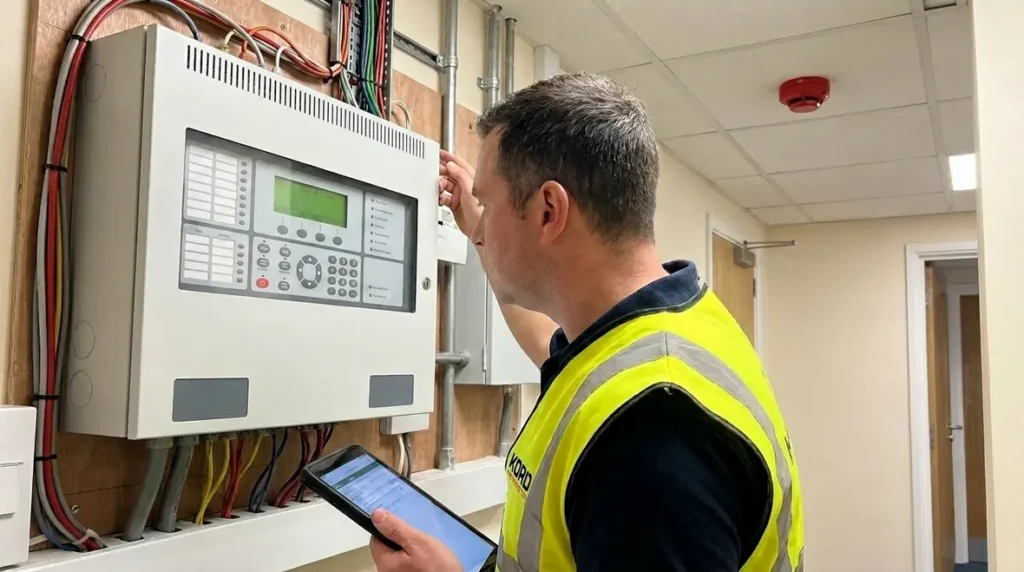
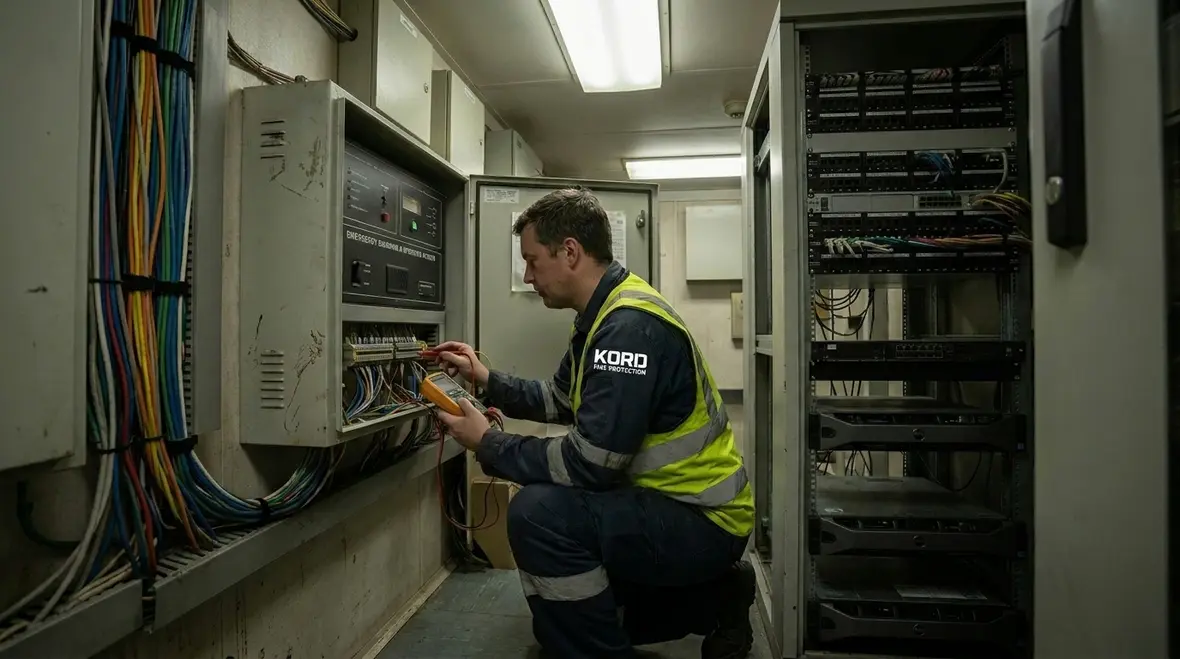
Once design is set, the next step is execution. Installation quality determines how a compliant system performs when it matters most. That includes correct cabling, correct mounting, clean labelling, and correct placement of intercom stations and warning devices.
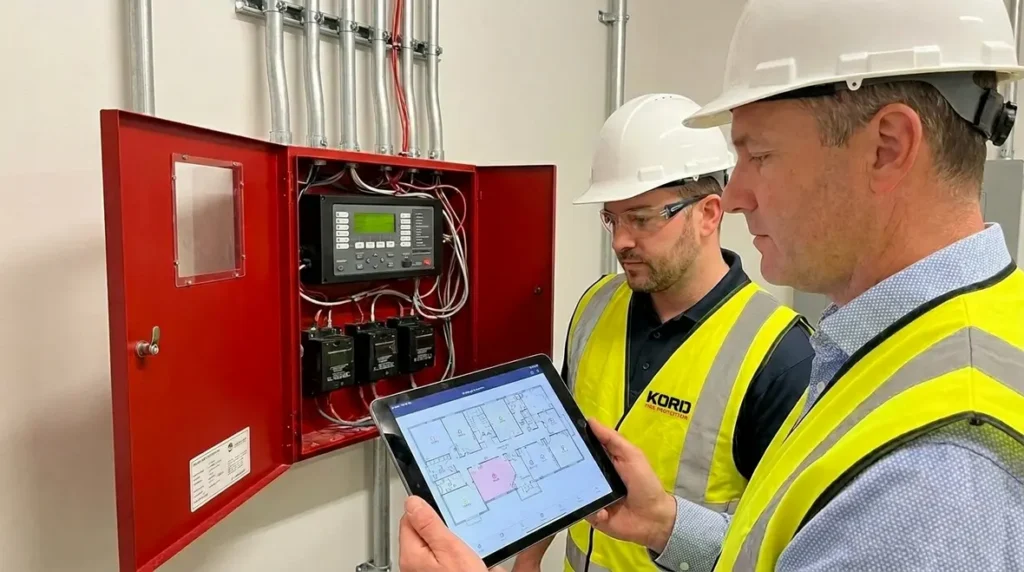
Commissioning then confirms the system behaves as intended across all defined zones and call functions. After that, testing supports confidence over time. In busy facilities across Australia, maintenance schedules can slip. However, the system must remain dependable for the next drill and the next real event.
In addition, Kord Fire Protection can help facilities create realistic operational expectations. They can align system behaviour with staff training routines, department responsibilities, and site evacuation or lockdown procedures. In practical terms, the goal is a system that teams use correctly on the first try, not the third try after the adrenaline kicks in.
Emergency warning and intercom systems are not “fit and forget.” Therefore, compliance readiness requires a maintenance approach that identifies faults early and keeps the system within required performance thresholds. Fault control matters because intermittent faults can hide during routine checks, then surface during a critical moment.
For facilities, a strong maintenance plan does two things. It reduces risk, and it reduces last-minute stress. Teams do not want to scramble for a solution the same week an audit arrives. Kord Fire Protection supports maintenance discipline so businesses can maintain performance and document checks properly.
Also, maintenance should include verification of control functions and intercom operations, not only visual inspection. When the system relies on clear communication, small issues like device misalignment, signal path problems, or degraded output can matter. So, the maintenance process needs to be thorough and repeatable.
Why reliable upkeep saves more than paperwork
Good maintenance does more than satisfy a checklist. It protects the confidence people place in the system. If staff have experienced nuisance faults, weak announcements, or inconsistent speaker output, hesitation can creep in during an emergency. A system that is inspected, tested, and maintained properly gives occupants one less reason to second-guess instructions at exactly the wrong time.
How Kord Fire Protection partners with facilities across Australia
Kord Fire Protection can become a vital partner by turning AS-aligned expectations into working outcomes. They serve industrial, retail, commercial, and multi-facility organisations that need consistent quality across different sites. Rather than treating each job like a one-off, they bring a practical system mindset: plan, install, test, maintain, and support staff use.
In many workplaces, the real challenge is coordination. Procurement, site access, shutdown windows, reporting requirements, and ongoing service planning all compete for attention. Kord Fire Protection helps remove friction by managing the technical steps with clarity and business-friendly communication. And if that sounds like “too easy,” remember this: emergencies do not negotiate, so the best partners do the prep work before anyone has to panic.
Additionally, when facilities update layouts, expand stores, or add new process areas, the emergency warning and intercom strategy should evolve. Kord Fire Protection supports that growth so warning coverage remains correct and communications remain reliable.
Conclusion
Emergency warning and intercom performance cannot rely on guesswork. Facilities need systems that deliver clear alerts, support controlled voice communication, and stay reliable through routine testing and maintenance. Kord Fire Protection helps industrial, retail, and commercial organisations across Australia meet the intent of AS 1670.4 warning systems with practical design support, installation discipline, and ongoing service. Reach out to Kord Fire Protection today to strengthen readiness for the next drill and the next real incident.