AS 1670 Fire Detection and Alarm Systems for Businesses
Quick Answer: AS 1670 sets the rules for fire detection and alarm systems in Australia. It covers design, installation, commissioning, and ongoing testing so systems work when they must. For industrial, retail, and commercial sites, it also supports compliance, reliability, and safety planning. Kord Fire Protection helps teams deliver that outcome.
If you are reviewing the broader picture of building protection, it also helps to consider fire protection services as part of a joined-up compliance strategy rather than treating alarms like a lonely island of responsibility.
AS 1670 fire detection and alarm systems explained for businesses
When a fire starts, seconds matter, and paperwork does not. That is why the AS 1670 fire alarm standards exist: they guide how fire detection and alarm systems get planned, installed, and maintained. Our clients across Australia often face a simple question: will the system perform as intended during real conditions, not just during testing day? AS 1670 answers with practical requirements that protect people, property, and operations.
To keep this clear, we will walk through what the standard expects, how it links to real site risk, and how teams can avoid the common trap of “install it and hope.” Because hope is great for birthdays, not for fire safety.
For businesses, the value of AS 1670 is not just that it exists in a binder somewhere. The value is that it creates a framework for making sensible decisions before an emergency happens. It pushes projects away from guesswork and toward documented intent. That matters in warehouses, offices, retail centres, mixed-use tenancies, and industrial facilities where occupancy, equipment, and daily movement all shape the risk profile. Put simply, the standard helps answer the uncomfortable but necessary question: if something goes wrong at 2:17 pm on a Wednesday, will people hear, understand, and respond to the system the way the design intended?
What AS 1670 expects from detection and alert systems
AS 1670 does not treat fire alarms like a single product you bolt to a wall. Instead, it expects a complete system that detects a fire signal and then alerts occupants and responders. Therefore, design decisions must match site use, layout, airflow, and fire growth risk. In other words, the standard pushes for an approach that feels engineered, not guessed.
Business owners and facility managers typically need three outcomes:
- Reliable detection of smoke, heat, or flame where it matters most
- Clear alarm notification for the people on site
- Documented commissioning and ongoing maintenance that stays current
Furthermore, AS 1670 fire alarm rules support fault tolerance and control of interfaces, so one problem does not quietly degrade the entire system. After all, a fire alarm that fails silently is not an alarm, it is just expensive background noise.
Why complete system thinking matters
A detector can be perfectly fine on its own and still be part of a poor overall system. That happens when panel logic, sounder coverage, power resilience, interfaces, and maintenance access are treated as separate conversations. AS 1670 pushes those conversations back together. It expects designers and project teams to think about initiation, transmission, indication, occupant warning, and fault reporting as linked functions. That is a much better strategy than discovering after handover that a panel reports beautifully in the cabinet room while no one in the tenancy can hear the alarm over forklifts, music, machinery, or Friday afternoon enthusiasm.
How designers choose zones, coverage, and device placement
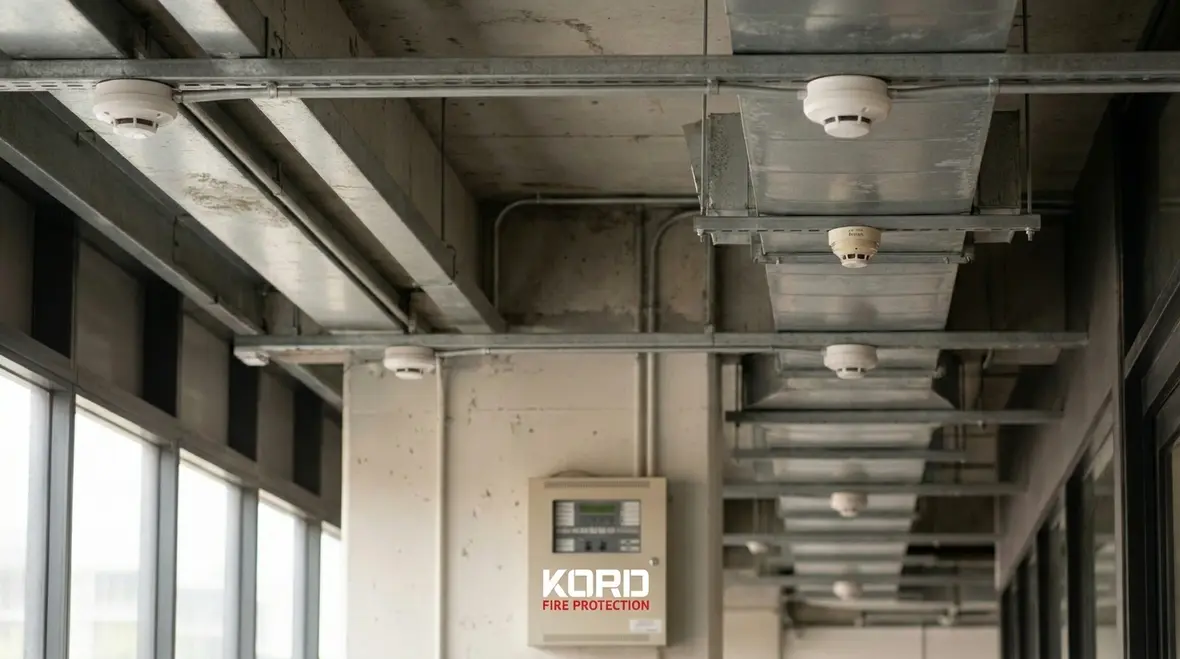
Now the real work begins: turning building plans into a detection strategy. AS 1670 fire alarm design requirements drive choices about detector spacing, zoning, and alerting methods. Meanwhile, the chosen approach must reflect the way fire behaves in the specific occupancy.
For example, industrial sites often include large open areas, storage racks, conveyors, and ventilation systems. Retail spaces add different challenges such as merchandising layouts, stock density, and frequent changes to store fitouts. Commercial facilities can include offices, plant rooms, server areas, and shared corridors.
Therefore, designers typically consider:
- Ceiling height and room geometry
- Air movement from HVAC, extraction fans, and doors opening frequently
- Obstructions like beams, shelving, ducts, and pipe runs
- Paths for people during evacuation, and where audible and visual signals must reach
In practice, a well designed fire alarm system does not just place devices. Instead, it creates a network of decisions that accounts for what the site actually does during daily operations.
The hidden effect of fitouts and airflow
One of the easiest ways to unintentionally weaken a system is to change the building after installation and assume the alarm strategy magically keeps up. New partitions, high shelving, display bulkheads, relocated workstations, acoustic treatments, and revised HVAC patterns can all influence detection effectiveness and occupant notification. That is why zoning and device placement should be reviewed whenever the building changes in a meaningful way. The standard is practical in that sense: it is concerned with how the site behaves in reality, not with preserving a nostalgic memory of the drawings from two fitout cycles ago.
Alarm signalling, control panels, and fault behaviour
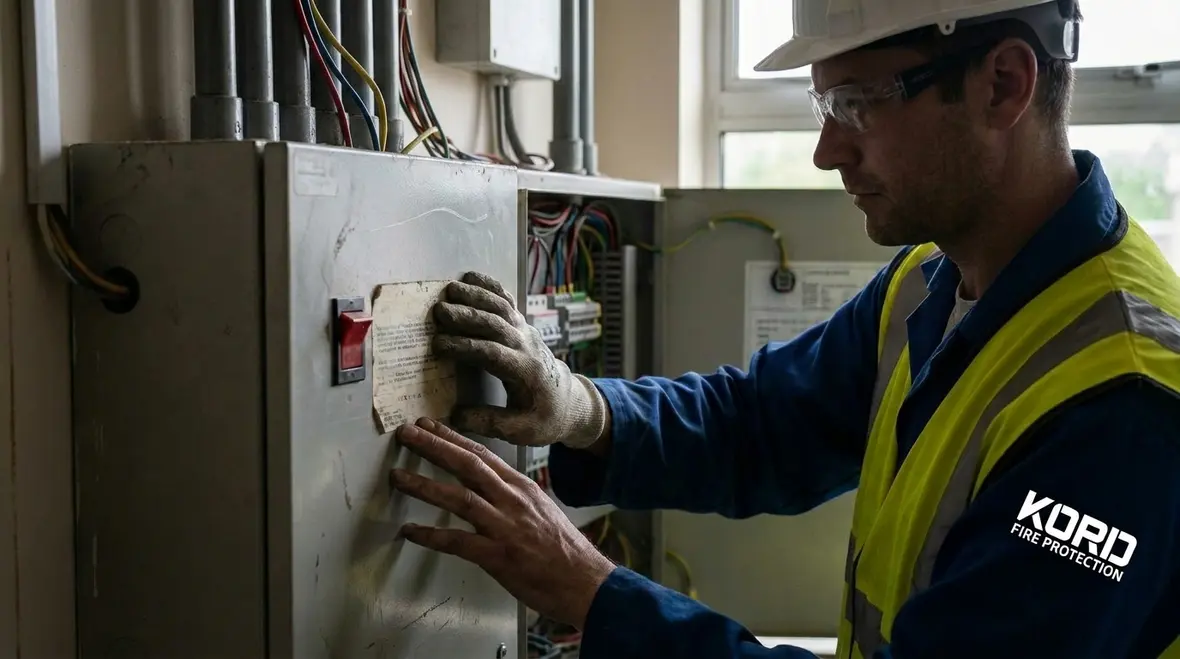
Once detection happens, the system must alert people in a way they can understand quickly. AS 1670 expects alerting systems to operate reliably and to manage priorities, such as alarms versus fault signals. In addition, it supports the use of control equipment that can handle alarms, power faults, and system faults with clear indication.
Many teams underestimate this part. They focus on detectors, then discover later that the control panel settings, notification thresholds, or sound levels do not match how the site evacuates. That is when operations becomes the accidental victim of configuration errors.
A properly designed system also considers:
- Alarm levels for different building scenarios
- Compatibility with interfaces such as door releases, smoke control, or fire service inputs
- Supervision for wiring faults and device faults
Put simply, the system must behave predictably. In an emergency, predictability is calming, and calm beats confusion every time. Even if someone on site tries to do the “Captain America hold the door” move, the alarm still has to work.
Faults should be visible, not mysterious
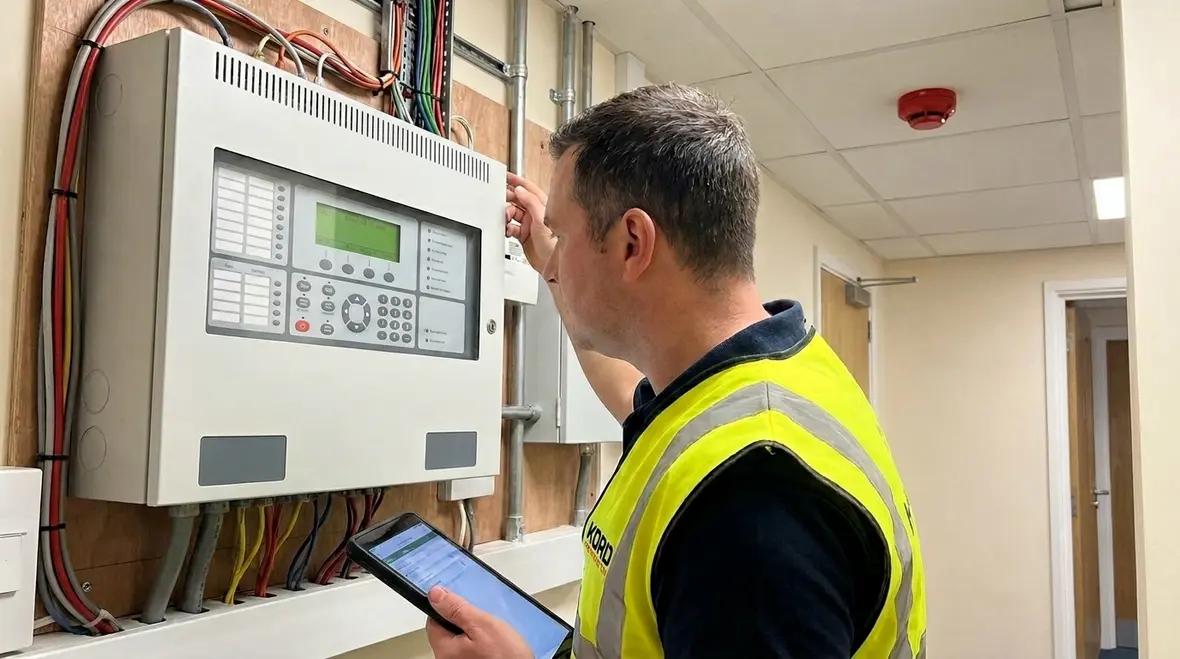
A surprising number of fire alarm headaches do not begin with a dramatic event. They begin with a quiet fault, a disabled interface, a battery issue, or a device that has drifted out of reliable service. Good control and indication equipment makes these issues visible so they can be acted on before an alarm event ever occurs. That is a major reason documentation, panel familiarity, and maintenance records matter so much. You want teams to understand what the system is trying to tell them, rather than stare at an indicator and hope it is merely being decorative.
Commissioning, documentation, and ongoing testing
Fire alarm compliance is not a single event. It is a lifecycle. AS 1670 fire alarm requirements push for commissioning that checks each part of the installation, not just the “it seems fine” stage. Then, documentation confirms how the system works, what it includes, and how it was tested.
After installation, ongoing testing ensures the system remains correct as the site changes. Stock moves, fitouts update, ceilings get modified, and air conditioning systems drift over time. Consequently, testing needs to reflect current conditions, not last year’s version of the building.
Facilities teams often benefit from a structured approach:
- Planned inspections that cover devices, power supply, and panel functions
- Recorded test results and maintenance actions
- Prompt rectification of faults and degraded performance
- Change management so alterations do not break the design assumptions
When this is done well, the system remains trustworthy. When it is done poorly, the system becomes a mystery box, and nobody wants mysteries in life safety.
Commissioning is also where intentions meet evidence. Drawings, cause-and-effect logic, interfaces, battery performance, detector operation, sounder function, and fault reporting all need to be checked in a disciplined way. Just as important, the resulting documentation should not read like a secret code known only to the installer who has since vanished into the sunset. Clear records help facilities teams, service providers, and project stakeholders maintain continuity over the life of the system, which is exactly when continuity matters most.
How Kord Fire Protection becomes a vital partner for compliance
AS 1670 requires more than knowledge. It requires execution with care, coordination, and accountability. This is where our company, Kord Fire Protection, becomes a vital partner with this service and job. We help industrial, retail, and commercial facilities across Australia manage the full pathway from design support to installation quality, commissioning, and maintenance readiness.
Because every site has its own rhythm, Kord Fire Protection works with stakeholders like facilities managers, contractors, and operations teams to align alarm performance with real layouts and real workflows. Also, we support the practical side of compliance: paperwork that makes sense, test records that teams can use, and recommendations that consider what changes will happen next.
In other words, Kord Fire Protection helps prevent the classic scenario where one team installs devices, another team owns the building, and nobody owns the outcome. Fire safety does not forgive that sort of handoff.
Dual-column clarity for a quick comparison is often helpful in projects, so here it is:
| What the standard drives | How a partner like Kord supports it |
| Design that matches the risk and layout | Practical guidance and installation alignment for coverage and performance |
| Commissioning and evidence of correct operation | Structured commissioning checks and clear documentation |
| Ongoing testing and maintenance continuity | Maintenance planning that stays relevant as the site changes |
| Predictable alarm and fault behaviour | Configuration support and fault rectification that protects system integrity |
Why partnership matters after handover
Most systems do not struggle on day one. They struggle later, when faults linger, layouts evolve, records get fragmented, and everyone assumes someone else is keeping an eye on things. That is where a capable partner adds real value. The job is not just to install equipment. The job is to support performance over time, help teams understand what matters, and keep the system aligned with the building it serves. That is less glamorous than dramatic action scenes, but it is vastly more useful.
FAQ about AS 1670 and fire alarm systems
Call Kord Fire Protection for a safer next step
AS 1670 sets the bar, but your site needs more than a checklist. Kord Fire Protection helps industrial, retail, and commercial organisations deliver fire detection and alarm systems that perform in real conditions, stay compliant over time, and remain understandable for the people who rely on them daily. Get in touch for an assessment of your system, commissioning needs, or maintenance planning. Let’s make sure the only thing that fires up is the coffee, not your alarm system.