AS 1851 Electric Fire Pump Maintenance and Testing
Quick Answer: AS 1851 sets clear expectations for maintaining electric fire pumps so they stay reliable when the pressure hits. Regular inspections, functional tests, condition checks, and recordkeeping help reduce failure risk. Kord Fire Protection can run a complete service program, coordinate compliance, and keep downtime low for busy industrial and commercial sites.
In Australia, AS 1851 electric fire pump maintenance is not “nice to have.” It is the backbone of dependable performance for facilities that protect people, stock, and critical operations. And yes, when a fire pump actually needs to work, there is no time for excuses, old seals, or mysterious noise from the motor. Kord Fire Protection supports compliance through structured maintenance, smart testing, and practical reporting that helps site managers sleep at night. While the rest of this guide explains what the program should cover, the key point comes early: a fire pump system only earns trust through consistent, documented care.
For sites looking to tie pump maintenance into a broader compliance plan, Kord Fire Protection also supports fire protection services across Australia, which fits naturally when managers want fewer gaps between inspections, testing, reporting, and follow-up actions.
Electric fire pump maintenance: what AS 1851 expects
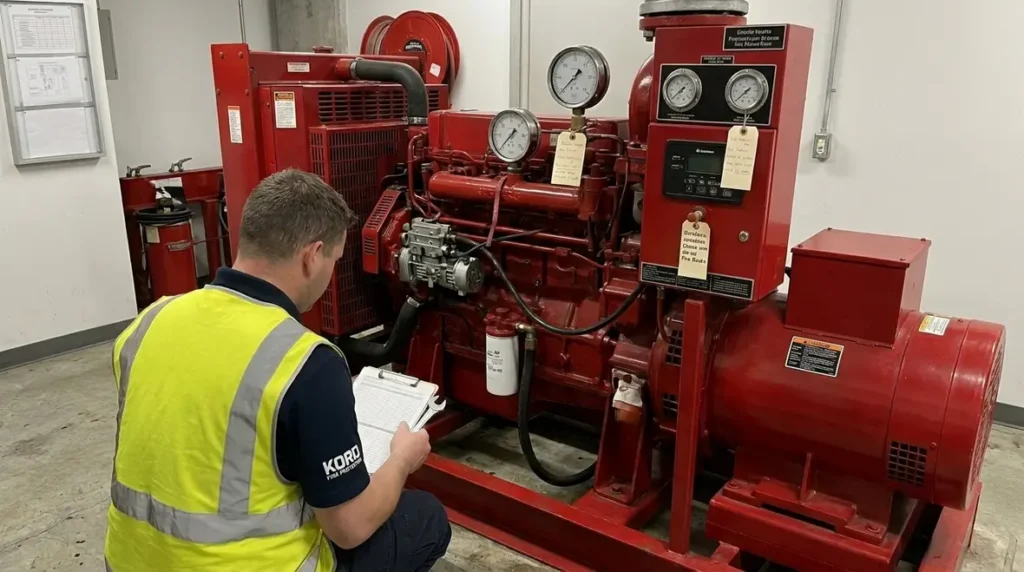
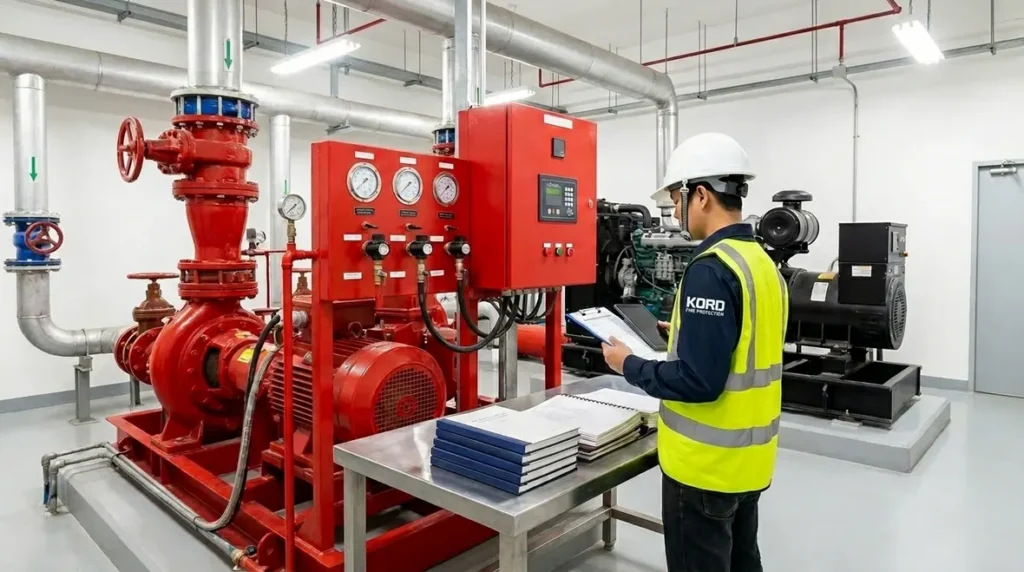
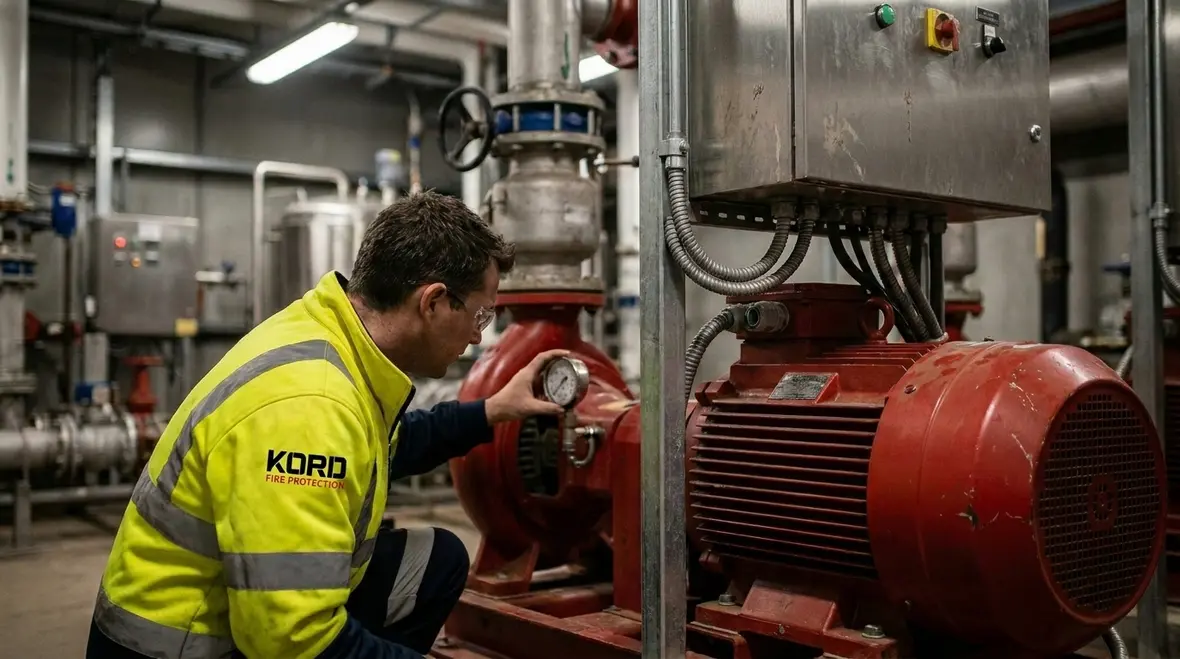
Electric fire pumps sit at the heart of a system that must deliver water flow exactly when it is demanded. To meet the intent of AS 1851, maintenance needs to be planned, repeatable, and evidence based. That means the service provider should not just “check it.” Instead, they should inspect components, verify performance, and confirm the pump system responds correctly under realistic test conditions.
In practice, AS 1851 pushes facilities toward a full lifecycle approach. First, the pump must remain clean and mechanically sound. Next, electrical supply, controls, and protection devices must operate within design limits. Then, the system needs testing that verifies it will start, run, and deliver the required output. Finally, records must show what was checked, what was found, and what was done to fix issues.
Why consistency matters more than last-minute fixes
A pump system can look perfectly calm right up until the moment it isn’t. That is why consistency matters more than heroic, last-minute scrambling. If a site only pays attention when a defect becomes obvious, the maintenance program has already fallen behind. Regular servicing builds a reliable trail of observations, test results, and corrective actions, which makes it easier to spot small changes before they become expensive failures.
This is especially important for commercial and industrial facilities where downtime has a habit of multiplying costs. One issue in the pump room can ripple into compliance headaches, access coordination, contractor scheduling, and awkward conversations nobody was hoping to have that week. A structured program reduces those surprises by giving the site a repeatable method instead of a crossed-fingers strategy.
Inspection checklist for electric fire pumps in commercial and industrial sites
When teams maintain fire pumps properly, they catch problems before they become expensive, loud, and frankly embarrassing during an emergency call. Kord Fire Protection typically works through a structured set of inspections that align with the requirements of AS 1851 maintenance activities. The checks should be frequent enough to detect deterioration and systematic enough to prevent “missed surprises.”
Key areas that maintenance should cover include:
- Pump condition including casing, coupling alignment, base mounting, and signs of corrosion or leaks
- Mechanical seal and bearing health to reduce the risk of sudden seal failure
- Impeller and wear components checked for abnormal wear patterns
- Strainers and suction supply confirmed clear, correctly positioned, and free from blockage
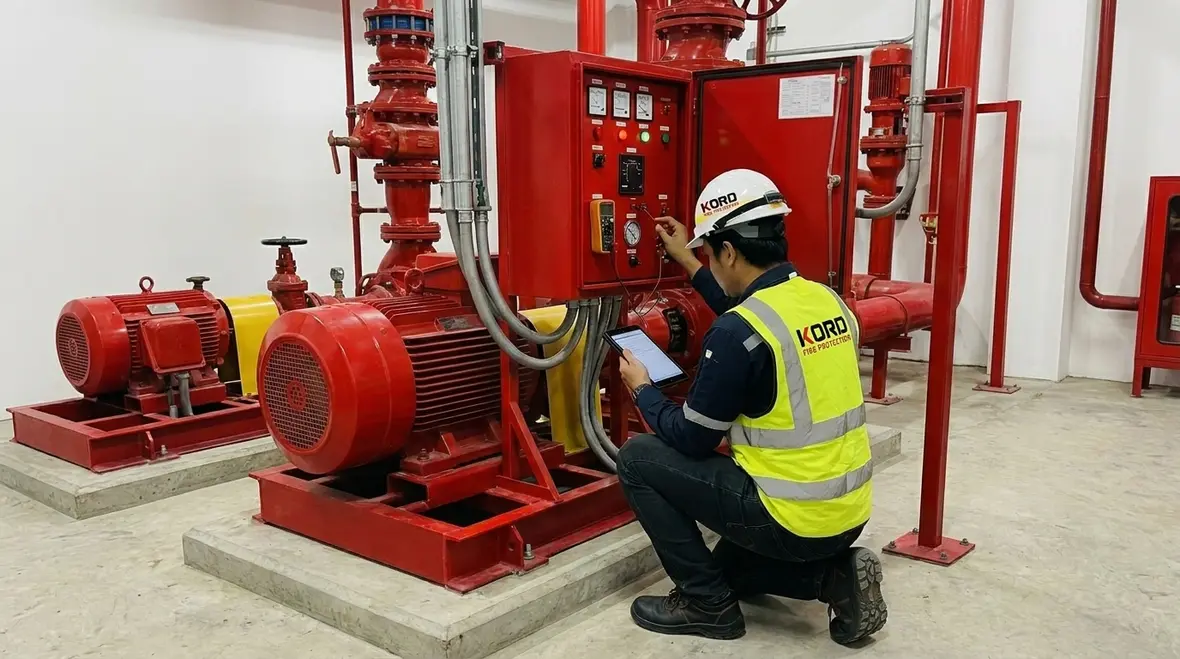
- Control panel status including starting circuits, alarms, and protection logic
- Valves and isolation devices confirmed in the correct operational positions
- Pipework checks for vibration, support integrity, and signs of hydraulic problems
- Electrical supply verification focusing on connections, terminal condition, and continuity where required
Moreover, inspections should also consider the real environment. Industrial plants often include dust, heat cycles, and mechanical vibration from nearby equipment. Retail centres may experience long idle periods between tests, which is when deterioration can hide. Facilities in warehouses and distribution hubs may have limited access, so service planning must reduce disruption while still meeting compliance obligations.
What a smart inspection routine actually looks like
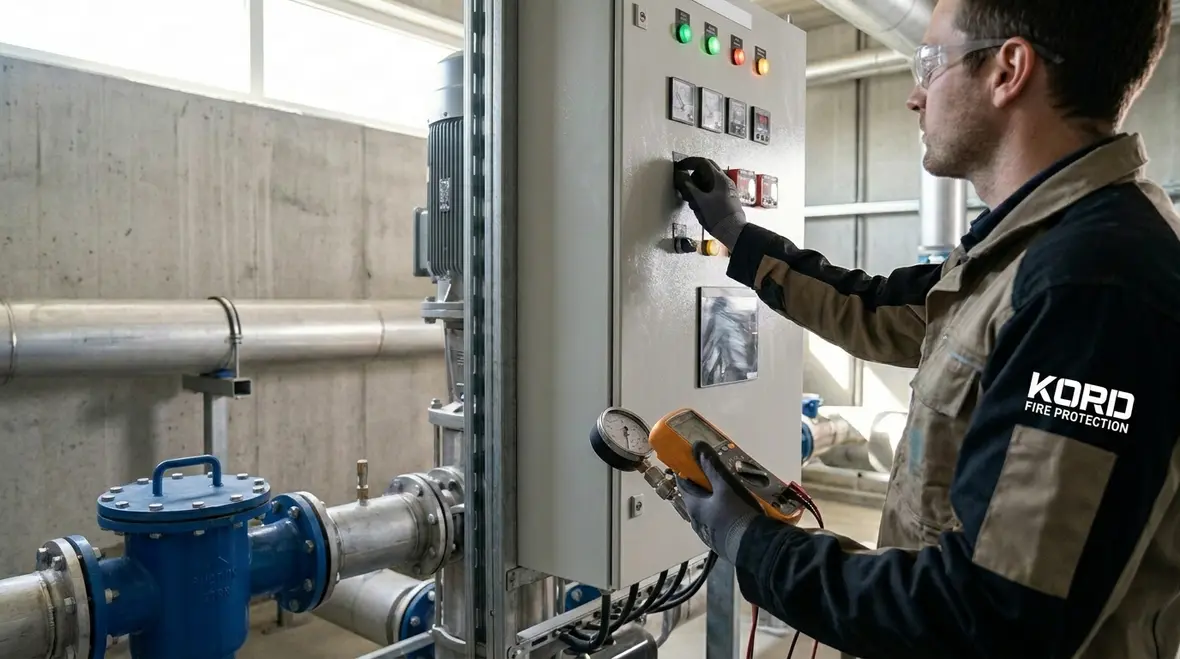
A smart inspection routine is not just a clipboard tour with a serious face. It means the technician follows the same logic each time, confirms critical items in a practical order, and records observations clearly enough that the next service makes sense. If vibration appears to increase, it gets noted. If moisture is found where it should not be, it gets chased to the source. If the control panel starts behaving like it has opinions, that gets investigated too.
This method matters because electric fire pumps rarely move from “perfect” to “catastrophic” without leaving clues. The job is to catch those clues while they are still cheap to fix and easy to explain. That is where disciplined inspections pay for themselves.
Testing and performance checks that keep the system trustworthy
Inspections are important, but testing is where confidence becomes measurable. Fire pump testing should confirm that the system starts correctly, reaches required operating conditions, and performs within acceptable parameters. Importantly, tests should not be treated like paperwork exercises. They must reflect how the pump will behave during an actual demand scenario.
In a solid maintenance program, Kord Fire Protection and the facility team align test activities with operational windows. For example, a distribution centre might schedule testing during off peak hours to minimise impact. Then the service team checks the pump response, verifies flow and pressure behaviour, and confirms that control signals and alarms function as intended.
Common performance verification focuses on:
- Start and stop function for the electric pump, including correct sequence and timing
- Pressure and flow verification to confirm the pump can deliver required performance
- Controller operation including fault response and alarm outputs
- Running behaviour such as stable operation without unusual vibration or overheating
- Changeover logic where duty and standby configurations exist
And yes, the occasional joke is earned here. If a pump fails a test, it is rarely because it “got tired.” More often, it is because nobody looked closely enough earlier. Kord Fire Protection helps sites avoid the classic “it worked last time” trap and replaces it with data, findings, and actions.
Turning test data into practical action
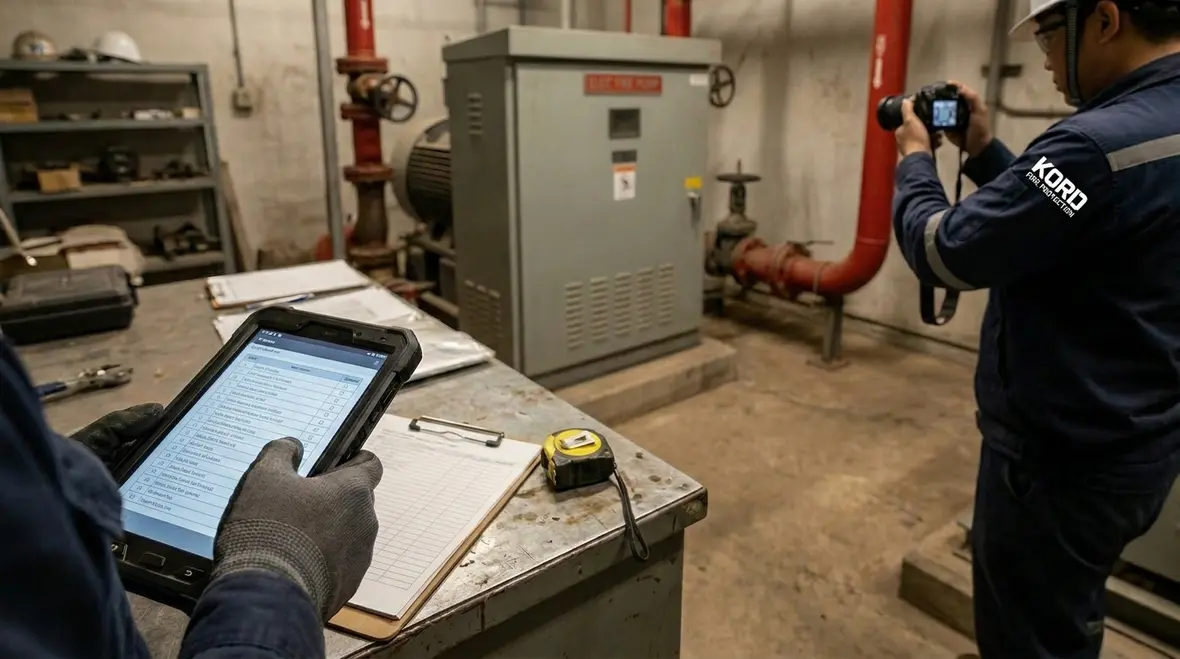
The best testing programs do more than confirm that the pump ran on one particular day. They create a pattern over time. Pressure trends, alarm history, running behaviour, and repeat observations all help the site understand whether the system is staying stable or quietly heading in the wrong direction. That kind of trend visibility is useful because it supports better planning rather than emergency reaction.
If a pump starts normally but delivers odd readings, the answer is not to shrug and hope for the best. It is to investigate whether suction conditions, wear, electrical supply, or controls are influencing performance. That practical mindset keeps the system trustworthy and gives management a much clearer picture of what needs attention now versus what can be scheduled sensibly.
Common faults and how they show up before failure
Electric fire pumps usually fail in predictable ways. The trick is to spot the early signs before the system hits a point of no return. During maintenance, Kord Fire Protection looks for indicators that point to mechanical, electrical, or control related issues. This approach reduces callouts and keeps the facility compliant without constant last minute panic.
Examples of issues that can surface:
- Seal degradation appearing as minor seepage, corrosion around fittings, or early bearing wear
- Reduced flow performance caused by impeller wear, suction restrictions, or valve problems
- Control panel inconsistencies such as repeated fault messages, unstable indicator states, or incorrect start logic
- Electrical connection deterioration including heat discolouration, loose terminals, or signs of moisture ingress
- Air or flow issues linked to system filling problems, trapped air, or suction side obstruction
Furthermore, maintenance should address the cause, not just the symptom. If a reading drifts, the team traces why. If an alarm repeats, the team verifies the trigger condition. This is how facilities avoid the “quick fix now, problem later” cycle that costs time, trust, and sometimes reputation.
Why early warning signs should never be ignored
Small warning signs have a way of becoming very expensive when they are ignored long enough. A slight leak can point to seal trouble. A hot terminal can suggest a connection issue that will not improve with positive thinking. A recurring alarm can reveal a control fault that keeps returning because the root cause was never removed. None of these are especially dramatic at first, which is exactly why they slip through weak maintenance routines.
Sites that respond early usually spend less, plan better, and avoid the stress of discovering the problem at the worst possible moment. It is a much better story for everyone involved, especially the people who would rather not explain why the “minor issue” became a major one.
Compliance records, reporting, and service coordination
In facilities management, documentation often feels like a necessary evil. Yet it is the evidence that shows a site took its responsibilities seriously. When Kord Fire Protection completes maintenance, the reporting should be clear, structured, and linked to what the pump system requires. That way, stakeholders can review results quickly and plan corrective actions without guesswork.
Good records typically include:
- Identified components checked and test activities completed
- Measured results where performance tests apply
- Defects found, risk notes, and recommended actions
- Corrective work completed and any parts replaced
- Next service recommendations and timeline guidance
To help teams manage multiple assets across Australia, Kord Fire Protection can coordinate scheduling around operational demands. Then, it supports a continuous improvement approach, where each service builds on previous findings. If the facility manages other fire safety systems, this coordination also reduces duplicated downtime and streamlines site access.
Kord Fire Protection: a vital partner for AS 1851 programs
Facilities rarely struggle with fire pump maintenance because they do not care. They struggle because maintenance requires consistency, technical depth, and the discipline to document everything properly. That is exactly where Kord Fire Protection becomes a vital partner. The company supports industrial, retail, and commercial sites across multiple facets across Australia, bringing a structured service method and calm project management to what can otherwise become a chaotic compliance task.
Instead of treating each maintenance event as a standalone visit, Kord Fire Protection builds a practical program around the site’s reality. It helps reduce disruption, tracks actions over time, and provides reporting that supports informed decisions. And if someone says, “We will just get to it later,” Kord Fire Protection helps them remember that fire pumps do not wait for later.
FAQ
Conclusion
Electric fire pumps earn trust through disciplined maintenance, proper testing, and clear records. When facilities follow AS 1851 expectations, they reduce failure risk and protect critical operations. Kord Fire Protection helps industrial, retail, and commercial sites across Australia stay compliant without slowing down day to day work. If this needs attention, now is the time to book a service plan and confirm readiness. Reach out to Kord Fire Protection and put your fire pump maintenance on solid ground.