AS 1851 Fire Pump Defect Reporting That Stays Compliant
Quick Answer: AS 1851 Fire Pump defect reporting turns small faults into documented, trackable fixes before they turn into downtime. It guides what to record, how to report, and how to keep evidence for compliance and insurance. Kord Fire Protection helps by inspecting, verifying, and reporting so your pumps stay ready, not just “probably fine.”
In Australia, fire pump reliability is not a “check once and forget” item. It stays under the microscope because when a system is needed, it must perform, every time. That is why AS 1851 matters. Within the first 100 to 150 words, it sets the standard for how fire protection systems are inspected, tested, maintained, and documented, including how defects are reported.
However, the real value of the AS 1851 Fire Pump defect reporting guide shows up after the field work. That is when decisions are made, maintenance gets scheduled, and compliance evidence is assembled. And yes, paperwork can feel like a tax form written by a smoke alarm. Still, when it is done properly, it becomes your best friend during audits, claims, and incident reviews.
For sites that need practical support beyond paperwork, Kord Fire Protection’s fire protection services fit naturally into the process by connecting inspection, maintenance, and reporting so defects do not sit in limbo waiting for someone to “circle back” next month.
What AS 1851 expects from fire pump defect reporting
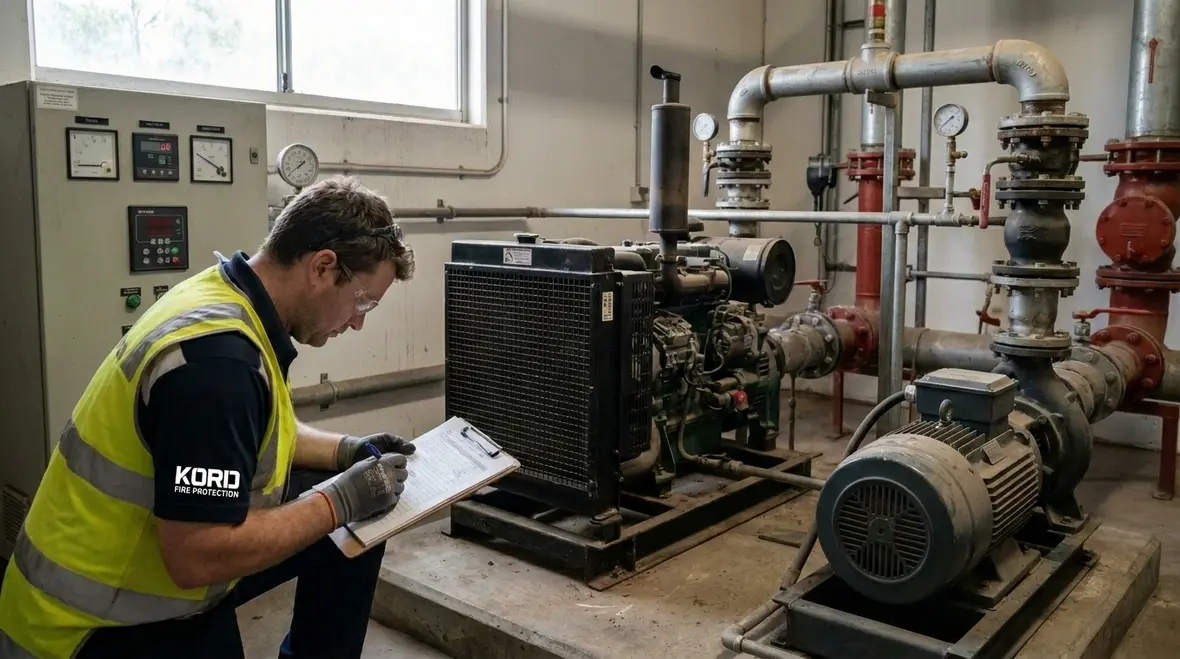
AS 1851 does not just ask teams to find faults. It pushes them to report defects in a way that helps the next action happen. First, the reporting must be tied to the system and its operating intent. Next, it must describe what failed or what is out of spec. Finally, it must support prioritisation, because not every defect has the same risk.
In practice, a defensible report clearly links observations to test results. It also states whether the defect affects pump start, run, pressure control, standby performance, or reliability of associated alarms and interlocks. If the pump does not meet its required performance during testing, the report should make that gap obvious to the people who schedule repairs, not only the people who took the readings.
For industrial, retail, and commercial facilities across Australia, this matters even more. Sites often have strict operating windows, multiple contractors, and complex maintenance cycles. When defect reports are structured well, the team does not waste time guessing what to fix or what “minor” really means.
Why detailed reporting changes what happens next
A vague note might confirm that somebody noticed a problem. It does not help much beyond that. A proper defect report tells the maintenance team what failed, when it failed, how it behaved under test, and why the issue matters operationally. That difference is huge. One creates a trail. The other creates a shrug.
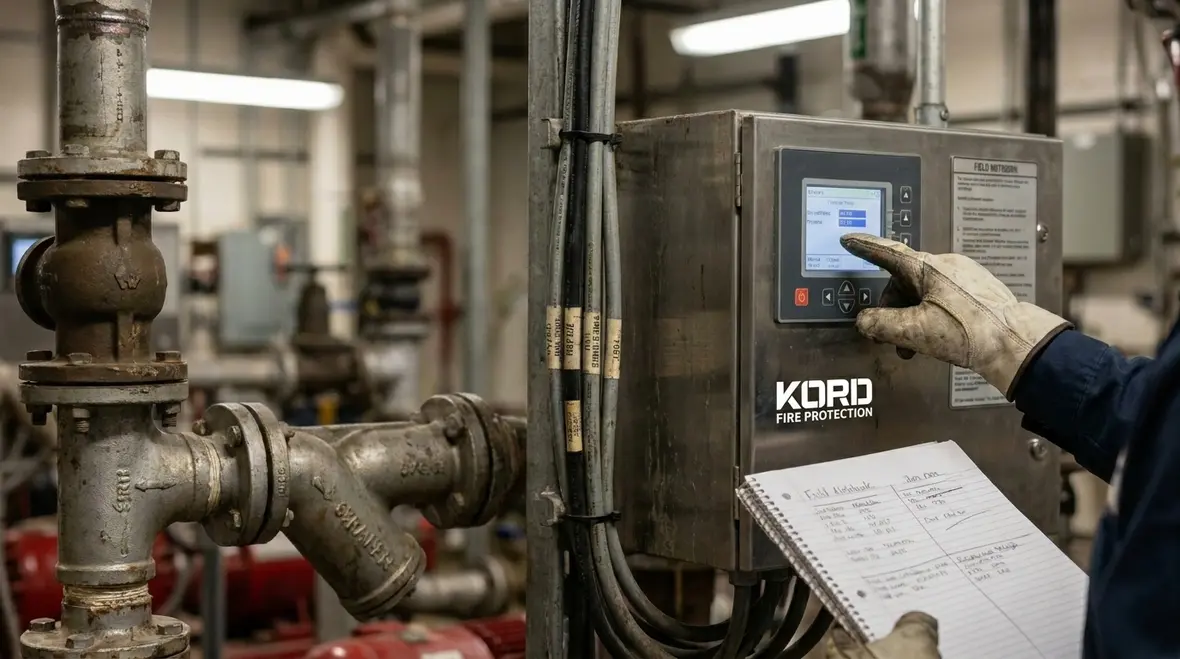
How to identify defects during inspection and testing
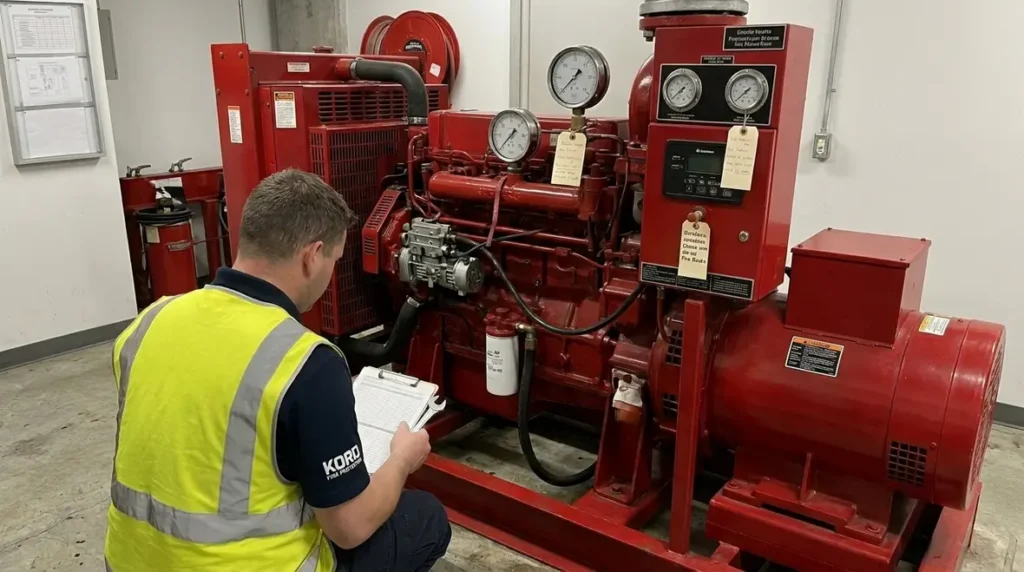
To report defects accurately, teams must identify them consistently. Therefore, inspections should look beyond visible issues and include performance indicators. Typical defect triggers include abnormal pump starts, unexpected pressure deviations, failure to reach target discharge pressure, irregular flow characteristics, or faults in motor control components.
Then there are the supporting parts that people accidentally treat like background scenery. Valves, strainers, check valve movement, pressure sensors, controllers, and cabling condition all influence pump behavior. If a pressure switch chatters or a controller logs an unusual event, that is a defect signal that belongs in the report.
Moreover, defect identification needs to be repeatable. So, the method should align with the test plan and the expected sequence. If the pump runs but stability is poor, the report must capture it. If the pump fails to start on demand, the report must capture the failure mode. And if the pump starts but stops early, that also needs clear documentation, because early stop is not “almost working.” It is a risk.
Common signs technicians should not brush off
- Delayed start response when demand is applied
- Pressure instability that comes and goes like it is trying to be mysterious
- Controller faults or event logs that point to irregular run conditions
- Noise, vibration, overheating, or erratic stop behavior
- Supporting component issues that interfere with reliable pump performance
What a clear defect report should include
A defect report should read like a map for repair work. It should not feel like a mystery novel where the punchline arrives six weeks later.
At minimum, it should include:
- Asset identification: pump unit number, location, and equipment details so no one hunts for the right system
- Test activity: what was tested, when it was tested, and the conditions during the test
- Observed defect: plain description of what did not meet expectations
- Evidence: key readings, recorded results, and controller logs where relevant
- Impact assessment: whether the defect affects performance, reliability, or compliance
- Recommended actions: what maintenance or replacement is required and any urgent escalation notes
- Follow up: target timeframes for rectification and any retest requirements
In addition, the report should keep the language consistent across assets. That way, the facility manager can compare issues across floors, buildings, and sites without translating technician slang. Also, the document should stay audit-ready. When an auditor asks “What did you do and why,” the report should answer without drama.
Risk ranking, timelines, and compliance evidence
Once defects are captured, teams must decide what happens next. Therefore, AS 1851-based reporting should support risk ranking. Some faults impact immediate start and pressure delivery, while others degrade performance over time. When reports clearly state impact, the facility can plan rectification without guesswork.
Typically, higher risk defects should receive quicker action. For example, a fault that prevents pump start on demand, a controller malfunction during run, or persistent pressure instability should move fast. Conversely, an issue that is limited to a non-critical indicator might be scheduled sooner than “later” even if it does not yet stop operation.
Then comes the part everyone loves to postpone, evidence control. Yet evidence is what turns compliance from a “nice idea” into a measurable outcome. Reports should be stored so they can be retrieved during insurance reviews, incident investigations, and audits. If your site runs multiple assets, consistent documentation also reduces confusion when different contractors get involved.
Think of it like this: a fire pump is the bouncer. It does not argue. It just checks the list. The defect report is how you update the list and prove you did it.
How Kord Fire Protection can partner on AS 1851 defect reporting
Some companies treat defect reporting as an admin task after the job. Kord Fire Protection treats it as part of the service itself. Our team supports facility managers across industrial, retail, and commercial sites by delivering clear, test-backed documentation that aligns with the expectations set under AS 1851 processes.
First, we help ensure defects are identified with the right level of detail. Then we build reports that communicate what happened, why it matters, and what should be done next. As a result, rectification becomes more predictable, and maintenance teams spend less time guessing.
Additionally, Kord Fire Protection can help coordinate the full cycle. That means inspections, defect reporting, and follow-up actions that keep the asset in a known condition. When the facility is busy, the worst thing is a long gap between discovery and action. We aim to close that gap with practical reporting and clear recommendations.
And yes, if you are wondering whether this reduces stress for your team, the answer is “absolutely.” Managing fire pump defects without a reliable partner can feel like running a deli counter during a snowstorm. You can do it, but nobody enjoys the experience.
What good partnership looks like on site
It looks like fewer loose ends, clearer records, and less chasing people for answers after the technician has already left site. It also means recommendations are usable, not buried under generic wording that sounds official but says almost nothing. That is the kind of reporting that actually helps facilities move.
Field workflow that makes defect reporting easier
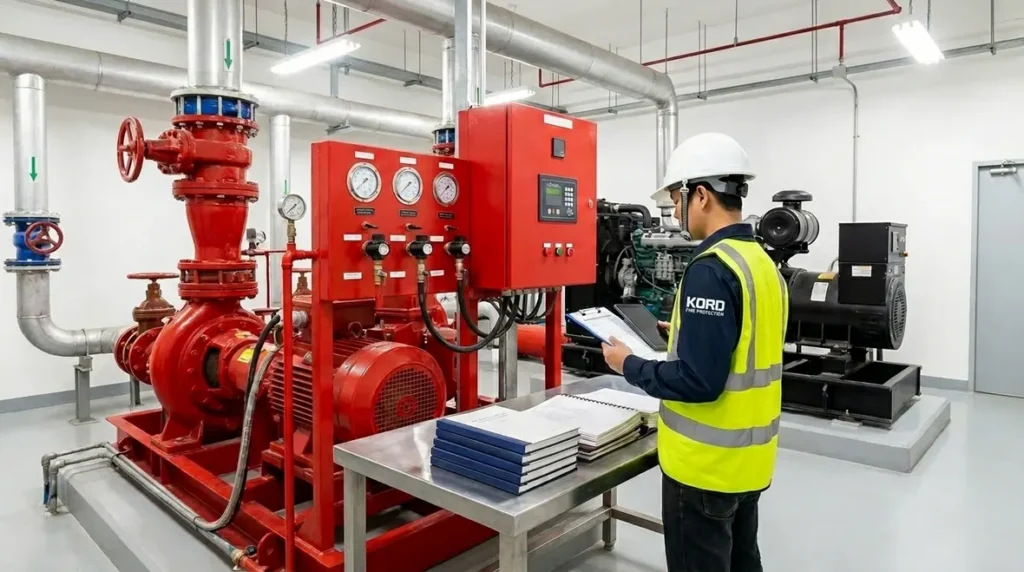
A smooth workflow reduces errors and speeds up responses. So, Kord Fire Protection applies structured steps that fit how Australian facilities operate.
That workflow usually includes:
- Pre arrival checks: confirm site access, pump configuration, and relevant records
- On site verification: check the pump, controller, and key components before testing begins
- Test execution: perform activities in a sequence that supports accurate comparison to expected outcomes
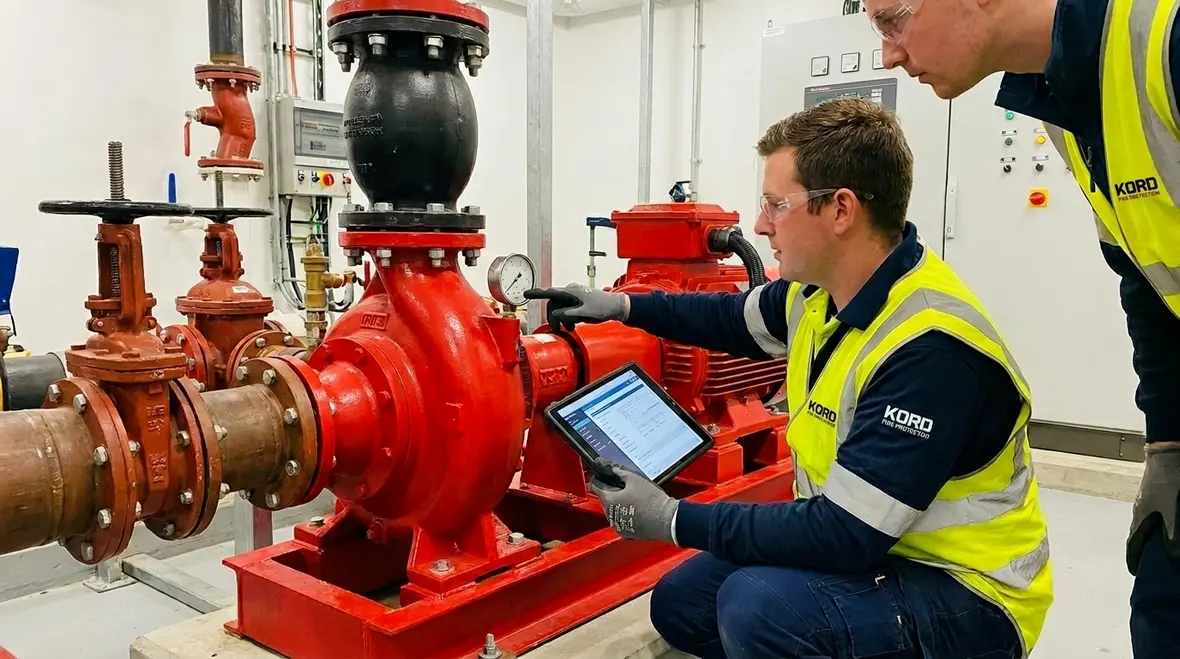
- Instant defect capture: record readings and observations while the details are fresh
- Report review: align defect statements with evidence so recommendations are justified
- Rectification support: assist with retest planning and documentation completion
When teams use this approach, they stop losing information between the workshop and the office. And more importantly, they stop relying on “memory.” Defect reporting becomes a repeatable process, not a one off scramble.
FAQ
Conclusion
Fire pump defects should never hide in vague notes or unfinished paperwork. When teams follow the principles behind AS 1851 Fire Pump defect reporting, they create clear evidence, faster repairs, and stronger compliance outcomes. Kord Fire Protection can be the partner that turns field findings into accurate, actionable reports that facility teams can trust. If your site needs dependable fire pump support across industrial, retail, and commercial operations, contact Kord Fire Protection today and keep your pumps ready for real demand.