Warehouse Fire Detection Challenges and Solutions
Quick Answer: Warehouses need fire alarm systems that can reliably detect slow smoldering and fast flaming events across vast, high-ceiling spaces. The detection challenges come from airflow, dust, obstruction, and changing rack layouts. With kord fire protection as a partner, facilities can get the right design, testing, and ongoing maintenance.
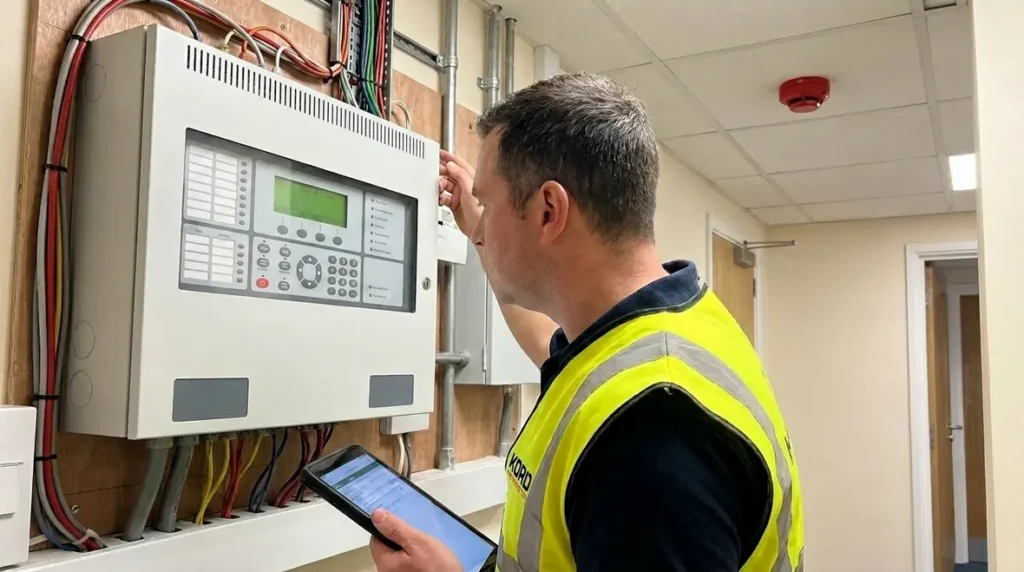
In Australia, industrial and retail facilities often rely on warehouse fire detection to protect inventory, people, and downtime budgets. Yet in large spaces, “installed” can too easily turn into “unreliable,” especially when airflow patterns, ceiling height, and storage density work against the sensors. kord fire protection helps warehouses turn alarm hardware into a dependable detection system, not a box of parts waiting for an emergency.
That also means detection planning should not happen in isolation. A warehouse alarm strategy works better when it lines up with the broader fire alarm systems approach for the site, especially when facilities are balancing compliance, coverage, and operational disruption. Near the top of the project, that context matters because a detector that looks fine on paper can still struggle when real warehouse conditions start doing their usual mischief.
Why large warehouse layouts break typical fire detection
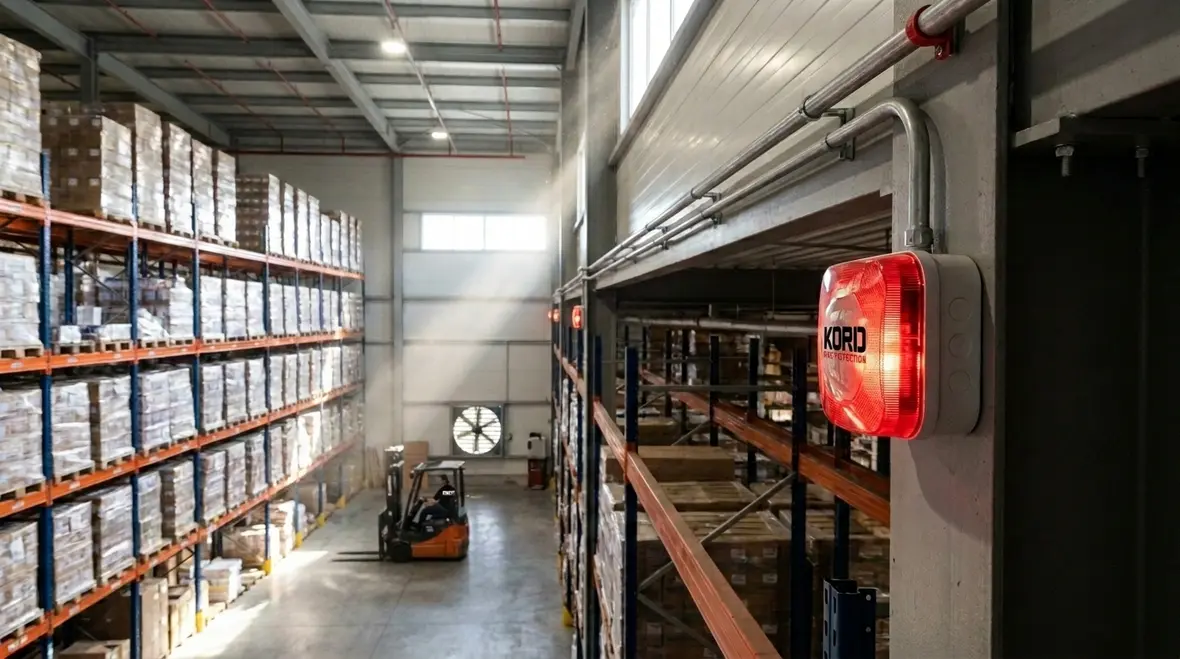
In smaller buildings, fire alarm design can be almost polite. In warehouses, the room fights back. First, the ceiling height spreads smoke, so detectors may see less than expected. Next, racks create pockets where heat and smoke linger. Then, airflow from doors, forklifts, and ventilation systems can push smoke sideways, delaying what the system would normally catch quickly.
As a result, standard spacing assumptions stop telling the truth. Instead, designers must match coverage to real movement and real storage patterns. Otherwise, a system might work perfectly during a test and still underperform during an actual incident. And yes, that is as annoying as finding out the smoke alarm battery expired after you already burned the toast.
The warehouse is not one big open box
That assumption causes plenty of headaches. A warehouse may look open from the roller door, but once you account for pallet racking, stock density, mezzanines, office inserts, and service zones, you end up with a maze for smoke travel. What appears simple can behave more like several smaller environments stitched together, each with its own delay points and blind spots.
This is why effective warehouse fire detection starts with the actual building and not a copied layout from another site. Similar square meterage does not mean similar detection performance. A chilled goods facility, a retail overflow warehouse, and a light industrial store can all carry very different smoke movement patterns even before anyone changes the rack plan again next quarter.
How smoke behaves around racks, stock, and airflow
Fire does not respect floor plans. Even when ignition starts in one corner, smoke can drift through rack bays and rise in uneven layers. For warehousing, this matters because warehouse fire detection depends on the sensor’s ability to sense the right byproducts at the right time.
Several factors commonly interfere:
- Obstructions from pallet rows, mezzanines, and signage that block airflow paths
- Dust and airborne particles that can affect sensitivity and trigger unwanted alerts
- Temperature gradients near loading docks and external walls
- Ceiling fans or air handling units that move smoke before it reaches detectors
Therefore, detection strategy needs to look beyond sensor type. It must account for how smoke and heat travel in that exact facility, under typical operating conditions. That is where good design turns into good outcomes.
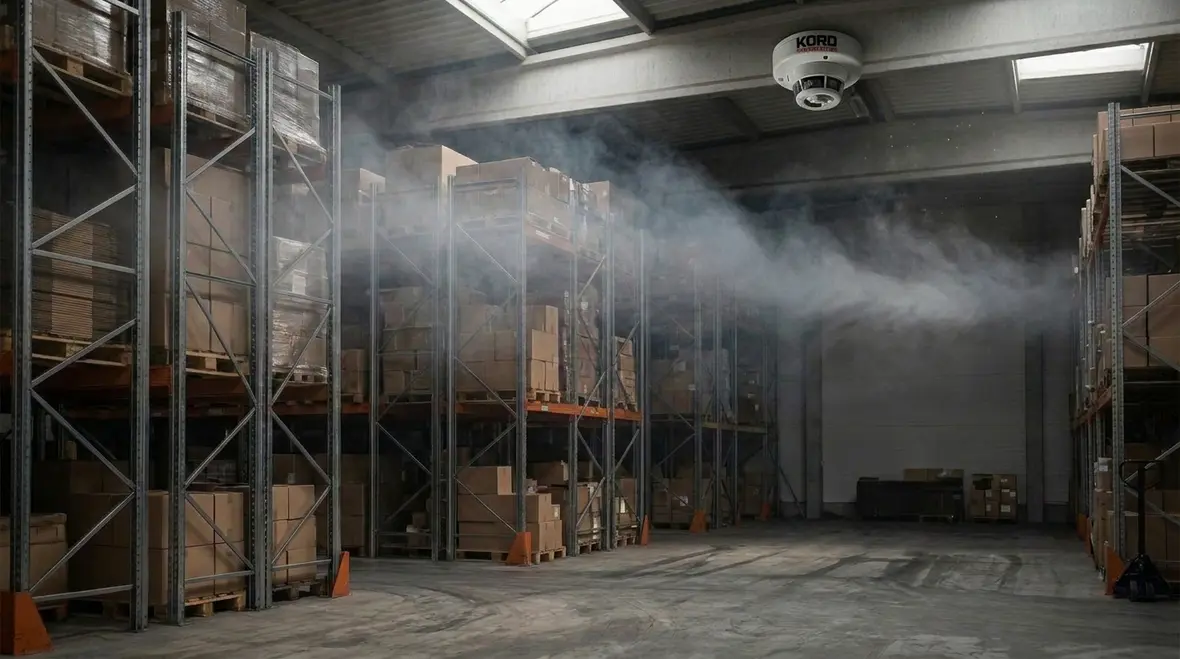
Small airflow changes can create big detection delays
A loading dock door opening for deliveries, a bank of exhaust fans kicking in, or forklifts moving constantly through an aisle can all change the way smoke travels. None of that is dramatic when viewed separately, but together it can alter the path enough that a detector sees diluted smoke later than expected. By then, early warning has already become late warning, which is not exactly a career highlight for the system.
Facilities that experience seasonal temperature swings or frequent dispatch cycles should be especially careful. What happens during a quiet mid-morning inspection may not reflect what happens during peak truck movement, high summer heat, or overnight ventilation changes. Testing and review should follow real operating conditions whenever possible.
Choosing detection types for different fire growth patterns
Warehouses can see everything from slow smoldering in compacted cardboard to fast flaming events near fuels like plastics or solvents. Consequently, a single detection method may not cover the full range of risk.
For example, some hazards produce visible smoke later, while others generate heat quickly. If the system only uses one detection approach, it may miss the early warning window or overload operators with nuisance alarms.
Good solutions usually combine appropriate technologies based on the storage and process:
- Smoke detection for early warning in areas where smoke forms before flames
- Heat detection where temperature rise is more reliable than smoke movement
- Flame detection for rapid, visible flame characteristics in specific zones
- Beam or advanced detection in high-ceiling areas where spot sensors face coverage gaps
Moreover, proper placement matters as much as technology selection. kord fire protection can help facilities select coverage that matches growth rates and smoke behavior, so the alarm system responds with less guesswork and more certainty.
Layering technologies beats relying on one silver bullet
The neatest detector choice is not always the safest one. Warehouses usually benefit from matching devices to the hazard and the geometry of the area, not from trying to make one detector type heroically solve every problem. A receiving zone, battery charging area, packing section, and bulk storage bay may all need different detection emphasis even when they sit under the same roof.
That layered thinking also helps reduce nuisance alarms. If the design respects where dust, heat bursts, exhaust, or temporary activity spikes are likely to occur, operators get a system that is both more trusted and more usable. And trusted alarm systems tend to be the ones people respond to quickly instead of muttering, “It is probably another false one,” which is not the kind of sentence anyone wants floating around in an emergency.
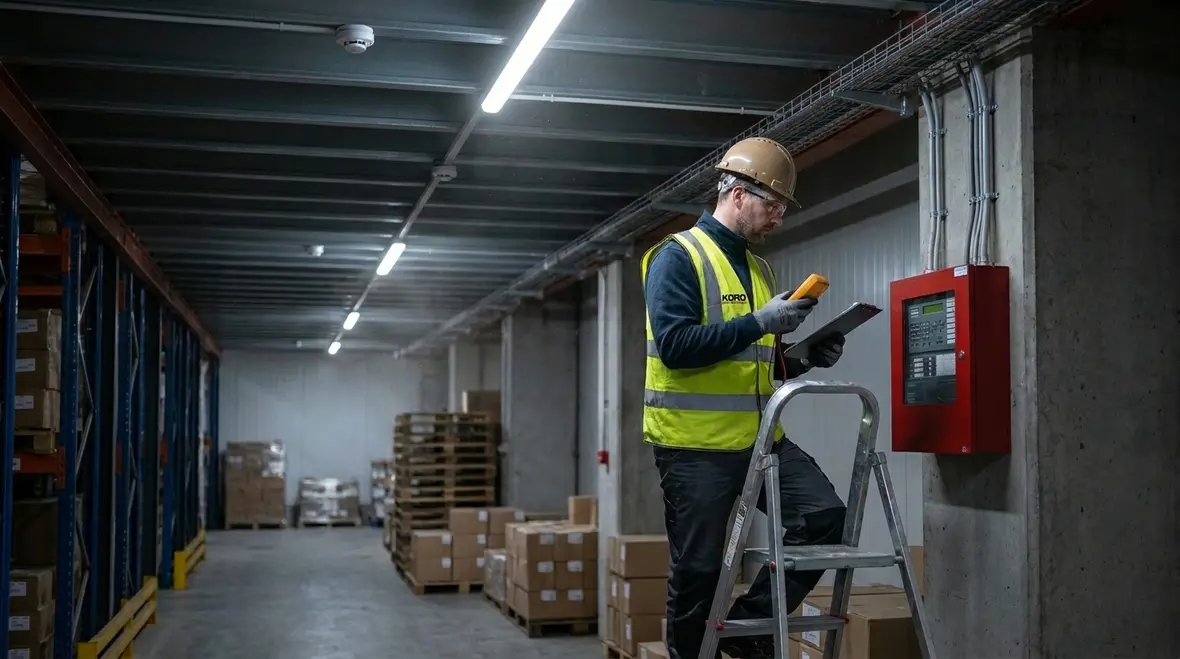
Installation details that decide whether alarms actually work
Even with the right concept, installation mistakes can sabotage performance. If devices sit where airflow prevents smoke accumulation, detectors may see “nothing” while smoke rolls past like a quiet coworker who never reports for duty.
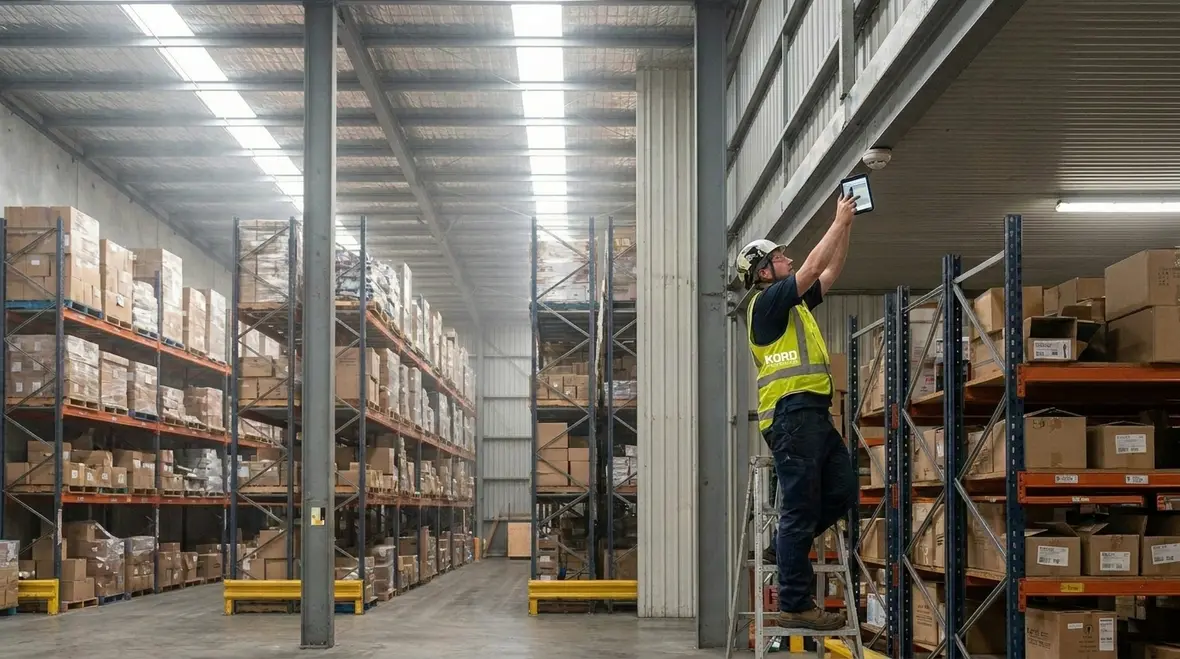
Key installation factors include mounting height accuracy, alignment in beam or aspirating setups, and correct spacing in relation to rack geometry. Also, cable routing and loop integrity affect reliability. A system that looks correct during a walkthrough can still behave poorly if wiring practices degrade signal quality.
Additionally, warehousing changes over time. New racking configurations, seasonal inventory shifts, and temporary partitions can alter smoke pathways. Therefore, a site should avoid “set and forget” thinking and instead plan for future adjustments.
Commissioning should prove performance, not just presence
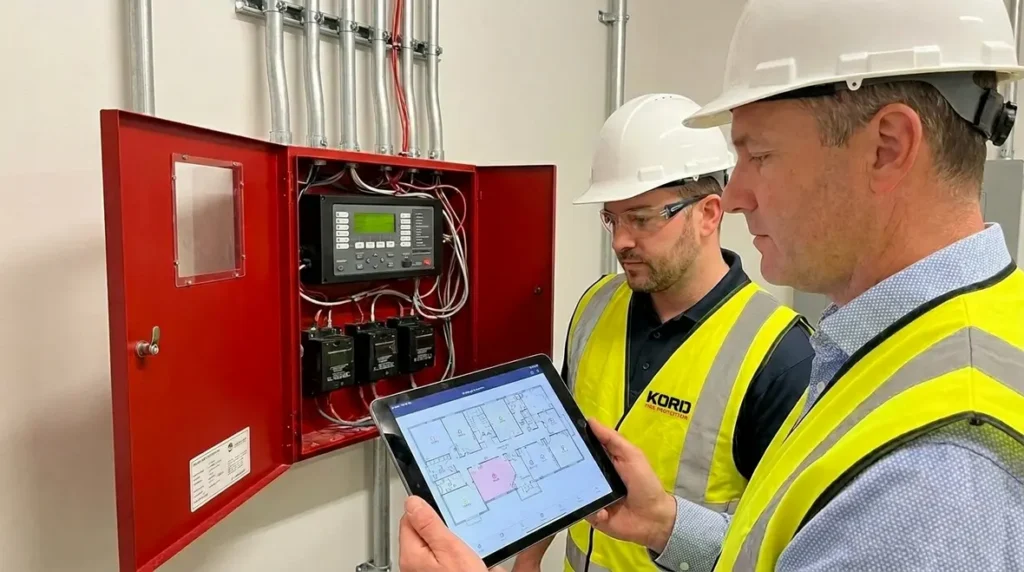
There is a big difference between confirming a detector is installed and confirming it performs well in context. Proper commissioning should look at alignment, communication, panel behavior, zoning logic, and how likely smoke paths interact with the chosen device positions. Otherwise, the site gets a neat checklist and a dangerous sense of confidence.
This is also the stage where documentation earns its keep. Accurate records on device locations, sensitivity settings, testing outcomes, and later modifications make future maintenance far less painful. When a site changes, that history helps teams understand whether a detector issue is new, recurring, or the result of a layout change nobody mentioned until after the problem turned up.
Maintenance, testing, and tuning without downtime drama
Fire alarm systems need care the way industrial equipment does. Otherwise, performance drifts. Dust accumulation can slow detection response, and component ageing can change operating characteristics. Then, when testing finally happens, people discover problems that should have been caught earlier. It is like realizing your forklift maintenance was “probably fine” after the engine lights come on.
Effective maintenance in warehouses often includes:
- Regular functional testing with clear acceptance criteria
- Sensitivity checks and cleaning plans where dust load is high
- Inspection of detector environments, including airflow and obstruction changes
- Verification that control panels, power supplies, and signaling still meet design intent
Furthermore, tuning decisions should be documented. That way, when operators ask, “Why did it alarm last week?” the answer can be factual, not a guessing game. kord fire protection supports facilities across Australia with service approaches that respect operational needs while still meeting safety expectations.
Testing should follow the warehouse as it really operates
A detector can pass a tidy inspection and still disappoint during actual operations if the warehouse behaves differently during busy periods. Testing plans should consider occupancy patterns, airflow changes, dust loading, and access constraints. That does not mean turning every test into theatre. It means making sure the system is judged under conditions that resemble real life more than a perfectly still Tuesday morning.
Good maintenance also supports better decisions when alarms occur. If a site has current records and a clear history of adjustments, teams can identify whether a signal points to a genuine hazard, an environmental shift, or a device needing attention. Without that record, every alarm becomes an argument, and that is a terrible use of everyone’s time.
Partnering with kord fire protection across Australia
Warehouses demand more than a quick installation and a signed certificate. They require a system designed for detection challenges, then supported through testing and ongoing care. That is exactly where a strong partner matters.
kord fire protection works with industrial, retail, and commercial facilities to help align fire alarm systems with real warehouse conditions, including high ceilings, complex rack layouts, and variable airflow. As a result, the facility gains practical confidence: the system will detect earlier, respond more appropriately, and stay dependable over time.
And when the next inventory season rolls in, or a new layout gets approved, the partnership approach helps keep the fire protection strategy current. In other words, it is less firefighting for the alarms, and more fire prevention for everyone else.
FAQ
CTA: Get a warehouse-ready fire alarm plan
If a warehouse can change racking, airflow, and inventory quickly, the fire alarm system must stay aligned with that reality. kord fire protection helps facilities in Australia design, install, and maintain dependable warehouse fire detection strategies that reduce blind spots and improve response confidence. Contact kord fire protection to review the detection challenges in your space, then map the right solution before the next “quick fix” becomes a long outage.