AS 2419 Fire Hydrants Requirements for Safe Compliance
Quick Answer: AS 2419 sets the rules for how fire hydrants must be designed, installed, maintained, and tested so they perform when it matters. This includes layout, pipe sizing, isolation, access, signage, and ongoing inspection. Kord Fire Protection helps businesses meet these needs safely and on time, without last minute panic.
In Australia, AS 2419 fire hydrants do not exist for decoration. They exist so crews can connect quickly, supply water reliably, and keep fires from turning into headlines. Our company, Kord Fire Protection, routinely supports industrial, retail, and commercial facilities across multiple states by translating the standard into clear, buildable requirements that sites can actually deliver. And yes, people sometimes treat hydrant compliance like a minor paperwork task. That mindset lasts until the first hydrant fails a routine check, and suddenly everyone becomes very interested in “boring” pipework.
If your team is also reviewing broader fire system obligations, it helps to align hydrants with your overall fire protection services planning early, not after drawings are frozen and everyone starts speaking in variations of “that should be fine.” The earlier hydrant compliance is folded into the wider fire strategy, the easier it is to avoid awkward surprises during commissioning.
Understanding AS 2419 fire hydrants and what the standard actually controls
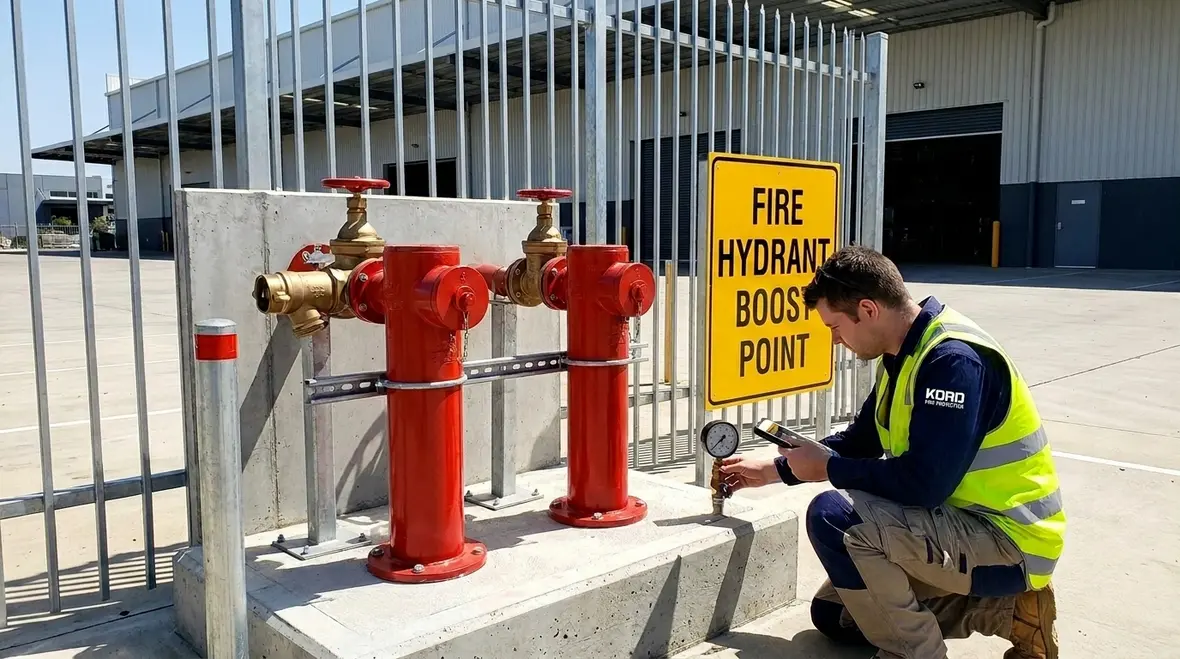
AS 2419 is not just a list of preferences. It sets performance expectations and installation controls that influence whether AS 2419 fire hydrants deliver usable flow under real firefighting conditions. Therefore, the standard addresses how hydrants connect to a water supply, how they sit in the site, and how technicians can access them fast. It also guides how isolation and testing are arranged so maintenance does not guess, and troubleshooting does not become a scavenger hunt.
In practice, facilities managers need to know that compliance touches many disciplines at once. For instance, civil works, plumbing, water supply, and site access all intersect. Consequently, a good installation plan prevents rework and reduces downtime during commissioning. Kord Fire Protection plays a vital partner role here by coordinating the “what the standard requires” with “what the site can build today,” so compliance becomes a workflow, not a scramble.
That distinction matters because hydrants are part engineering, part logistics, and part common sense under pressure. A site may have adequate water on paper, but if the arrangement is confusing, obstructed, poorly isolated, or hard to test, the result is still a system that causes trouble when no one has time for trouble. Compliance, in other words, needs to work on both drawings and asphalt.
Site layout, access routes, and hydrant visibility for fast connection
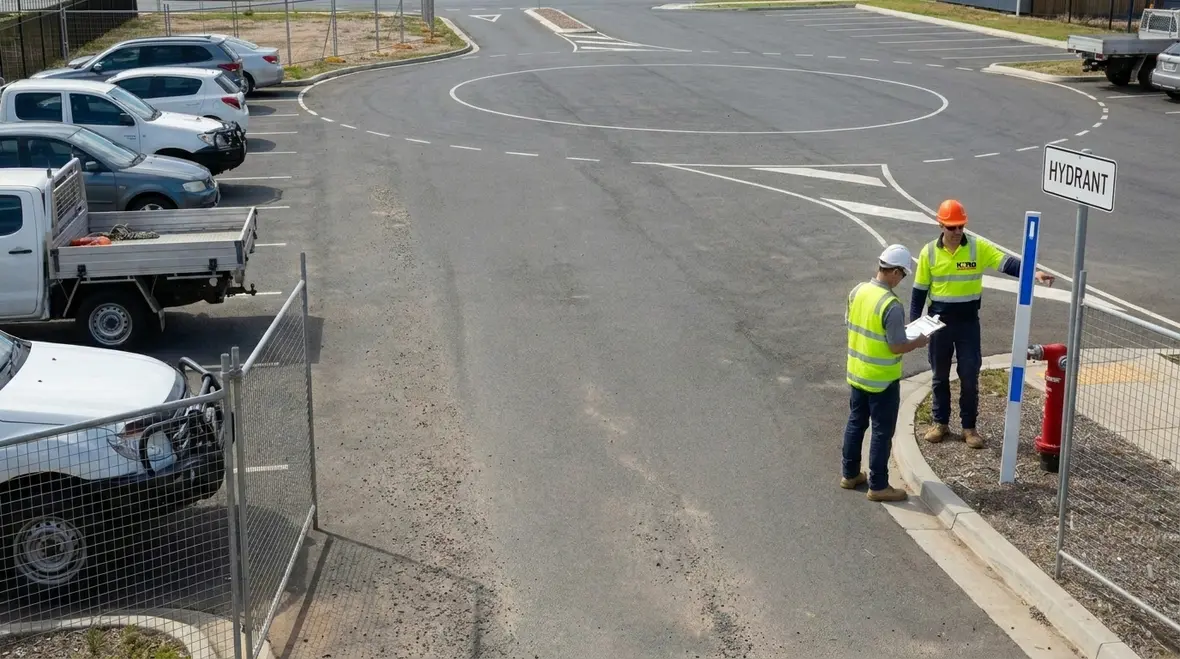
Fire crews operate under pressure, so access and clarity matter. AS 2419 fire hydrants placement requirements focus on ensuring hydrants can be reached quickly, even when parts of a site feel chaotic. Therefore, planners must consider travel paths, turning areas for firefighting appliances, and whether obstructions block reach during an emergency.
Next, visibility plays a large role. Hydrants need clear identification so teams do not waste time locating equipment. Also, signage and location marks must suit the site layout, including car parks, loading bays, and perimeter boundaries. If a hydrant sits behind a locked gate or under temporary fencing, crews lose precious minutes.
Kord Fire Protection supports this phase by reviewing site plans, mapping practical access routes, and aligning hydrant locations with operational reality. In other words, the company helps teams avoid the classic problem of “it meets the drawing, but not the driveway.”
What good hydrant access usually looks like on site
- Approach paths that emergency crews can use without weaving through parked vehicles or delivery chaos.
- Hydrant positions that remain visible from likely arrival points instead of blending into walls, landscaping, or site clutter.
- Signage that is clear enough to guide people who have never visited the property before.
- Enough surrounding space to connect, operate, and move without creating a second problem while trying to solve the first one.
This sounds obvious until a site evolves over time. New bollards appear, storage creeps outward, fencing changes, and someone inevitably decides the best place for temporary materials is suspiciously close to critical fire infrastructure. That is why compliance reviews need to account for how the site actually behaves, not just how it looked on opening day.
Pipework, valves, and supply performance: where most failures start
When fire hydrants do not perform, the cause usually hides in the pipework system. AS 2419 governs key installation aspects such as pipe sizing, routing, and how water reaches each hydrant consistently. It also covers how valves are arranged so crews and maintenance technicians can isolate sections without shutting down an entire facility.
Additionally, proper installation reduces friction losses and improves reliability. That matters because a hydrant connected to inadequate or improperly arranged pipe runs may struggle to deliver the required water availability. Even small installation mistakes like wrong fittings, poor alignment, or careless workmanship can affect performance.
Consequently, testing and verification become non negotiable. A site cannot just “assume it works” after installation. It needs commissioning checks that match the standard’s intent. Kord Fire Protection helps businesses plan pipework verification, coordinate inspections, and maintain a record trail that supports audits and ongoing compliance across industrial, retail, and facilities operations.
Common weak points that deserve attention early
- Pipe routing that looks efficient on paper but adds unnecessary loss or service complexity.
- Valve locations that make isolation theoretically possible but practically miserable.
- Workmanship issues that stay hidden until testing day decides to become dramatic.
- Supply assumptions that were never properly checked against the site’s real demand profile.
None of those are glamorous, but they are exactly the kind of details that separate a dependable system from one that inspires expensive meetings and very little joy. Good hydrant design is often measured by how little chaos it creates later.
Teams looking at adjacent fire equipment obligations may also benefit from reviewing related compliance topics such as inspection and maintenance support so hydrant testing fits neatly into a broader service schedule rather than becoming its own annual panic festival.
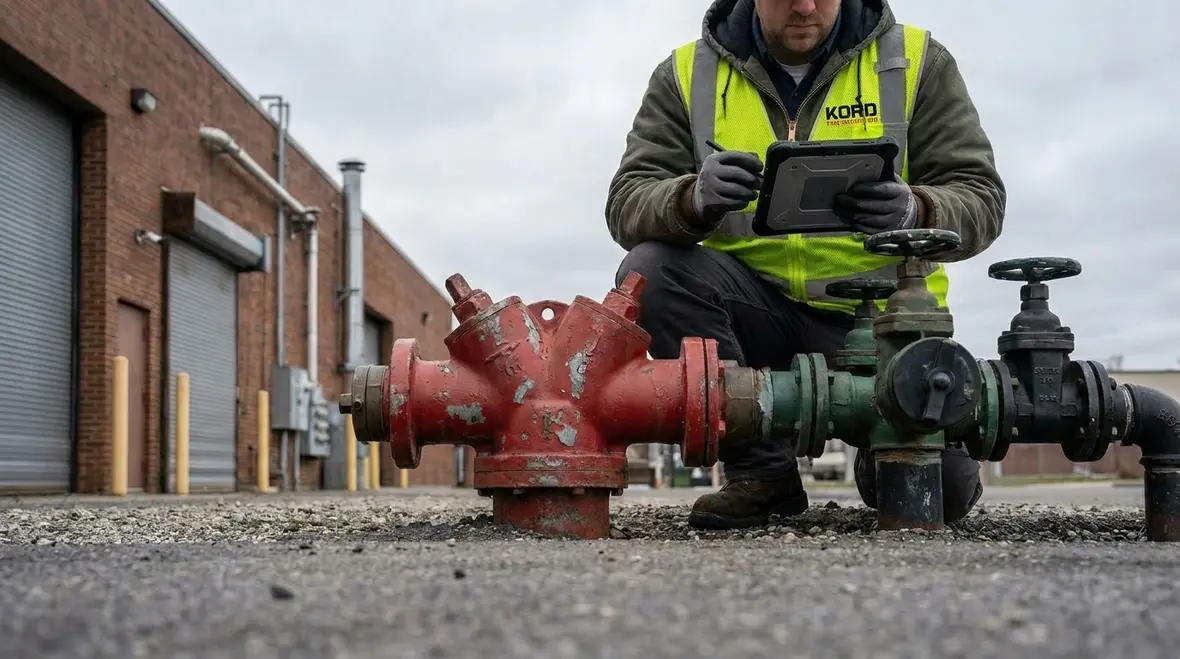
Installation details that keep hydrants serviceable for years
Hydrants spend their lives in the real world. They get hit by vehicles, exposed to harsh weather, and used for routine testing long before any emergency. That is why installation details must support durability, access, and maintainability.
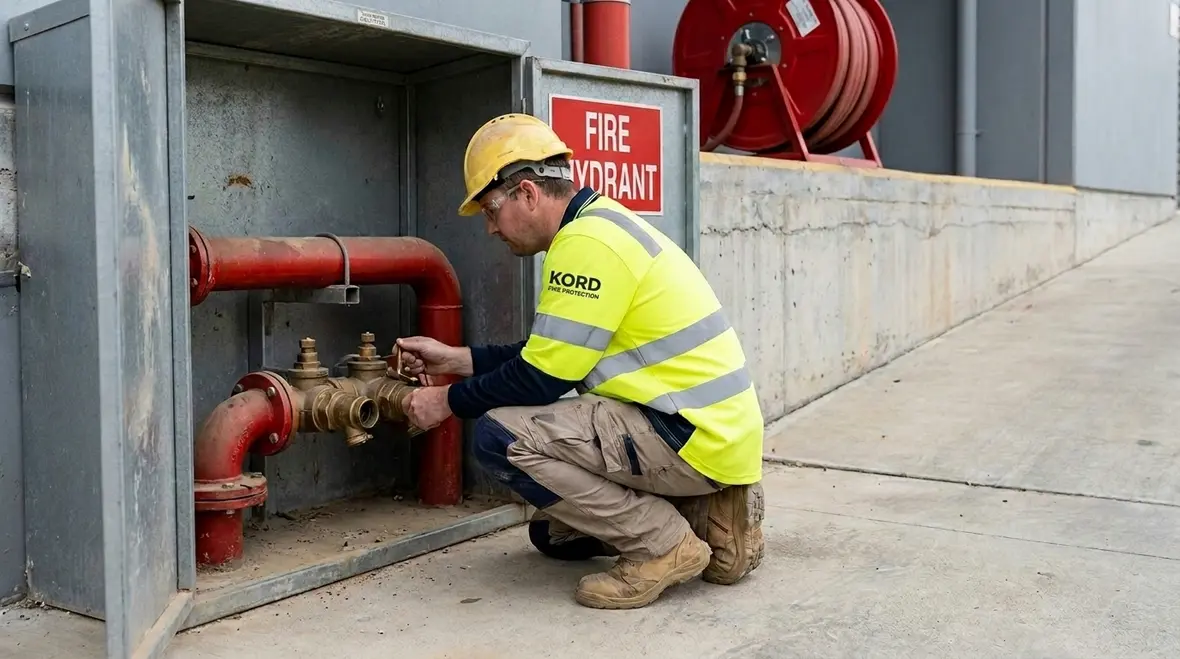
For example, teams must ensure correct positioning, secure anchoring, and protection where damage risk exists. They also need to plan for how technicians will service valves, inspect components, and conduct ongoing checks without dismantling half the site. Furthermore, hydrants must suit environmental conditions such as corrosion risk in coastal or industrial areas.
Then there is the human side. Many facilities have multiple contractors. Therefore, clear handover documentation and installation standards reduce the chance of future work damaging hydrant components. Kord Fire Protection strengthens this by providing structured compliance support that makes handover practical for site teams, not just impressive on paper.
A durable installation is also easier to live with. When access points are sensible, valves are reachable, and protective measures are thought through, routine service becomes faster and less disruptive. That matters because systems that are annoying to maintain tend to be maintained badly, late, or with the emotional energy of someone assembling flat pack furniture at midnight.

Testing, inspection, and maintenance programs that actually work
Compliance is not a one time event. Once AS 2419 requirements are met during installation, the next step is keeping the hydrant system ready. Regular inspection and testing check that flow, access, and components remain fit for duty. Moreover, maintenance schedules should consider site usage patterns and environmental exposure.
When facilities skip maintenance, problems often show up later as poor performance, leaks, or inaccessible equipment. And leaks are not only a reliability issue. They can trigger water damage, cause slip hazards, and create unexpected repair costs. In short, it costs less to maintain than to improvise.
Kord Fire Protection can function as a vital partner by aligning hydrant testing schedules with site risk profiles, coordinating access with operations teams, and documenting results in a way that supports safety management and audits. The company also helps interpret findings so decisions stay focused on reliability, not guesswork.
A maintenance program that actually works is usually simple, consistent, and realistic. It has scheduled checks, clear responsibilities, accessible records, and enough discipline to catch small defects before they audition for a larger failure. Fancy binders do not save systems. Useful routines do.
Coordinating compliance across trades for smoother delivery
Hydrant installations rarely sit with one trade. They involve civil crews, plumbers, water authorities, electricians in some cases, and site stakeholders who manage access and disruptions. Therefore, a compliance plan needs clear ownership, timelines, and communication checkpoints.
To keep projects moving, teams should coordinate early. They can confirm water supply availability, check installation constraints, align access routes, and confirm how isolation valves will operate without interrupting essential services. Also, they should plan how testing will occur during commissioning, including who observes, who records, and who signs off.
This is where Kord Fire Protection helps in a practical, business focused way. The company supports project teams by translating standard requirements into step by step tasks, so stakeholders see what matters, when it matters, and what evidence they need. It is less about “making everyone nervous” and more about making sure the system works the first time, and the tenth time, and every time after that.
FAQ
Conclusion and CTA: Fire hydrant systems earn their keep during emergencies, not during paperwork season. When facilities apply the right AS 2419 installation requirements and then maintain them with discipline, reliability improves and risk drops. If your industrial, retail, or commercial site needs confident compliance support, Kord Fire Protection can partner with your team from planning through testing and ongoing maintenance. Contact Kord Fire Protection today to turn standards into dependable performance.