AS 4428 Fire Alarm Control and Warning Equipment
Quick Answer: AS 4428 sets the rules for fire alarm control and warning equipment in Australia, so systems alert the right people in the right way, every time. It covers design, performance, integration, and testing expectations. Kord Fire Protection helps clients meet those requirements with practical, job-ready support from planning to commissioning.
If you are planning works involving alarm panels, warning devices, interfaces, or commissioning, it helps to align the broader fire system approach early. Near the start of that process, many facilities also review related fire protection services so design decisions and site operations stay on the same page.
AS 4428 fire alarm: what it covers and why it matters
Within the first moments of a fire, seconds feel like hours. That is exactly why the AS 4428 fire alarm standard exists. It outlines how fire alarm control and warning equipment should work, so a system reliably identifies faults, triggers alarms, and drives evacuation or response actions the way the site needs, not the way the equipment “sort of” feels that day.
In practice, industrial, retail, and commercial facilities across Australia face different risks and different human behaviour. Warehouses move stock, shops move people, and offices move paperwork. Therefore, the standard focuses on dependable operation under real conditions: power loss, component failure, and the messy reality of tampering, vibration, dust, and plant room heat.
And yes, while fire safety paperwork may feel like a never ending saga, the upside is simple: better systems reduce confusion, speed decisions, and protect lives and assets. Kord Fire Protection helps clients turn that compliance pressure into a clear project plan.
Why dependable control equipment makes such a difference
This is not just about an alarm making noise. It is about giving occupants, wardens, maintenance teams, and responding personnel a system that behaves predictably. When signals are clear, faults are visible, and outputs follow the intended sequence, people waste less time second guessing what is happening. That matters whether the site is a busy shopping area, a multi tenancy commercial building, or an industrial facility with higher background noise and more moving parts than a Monday morning toolbox talk.
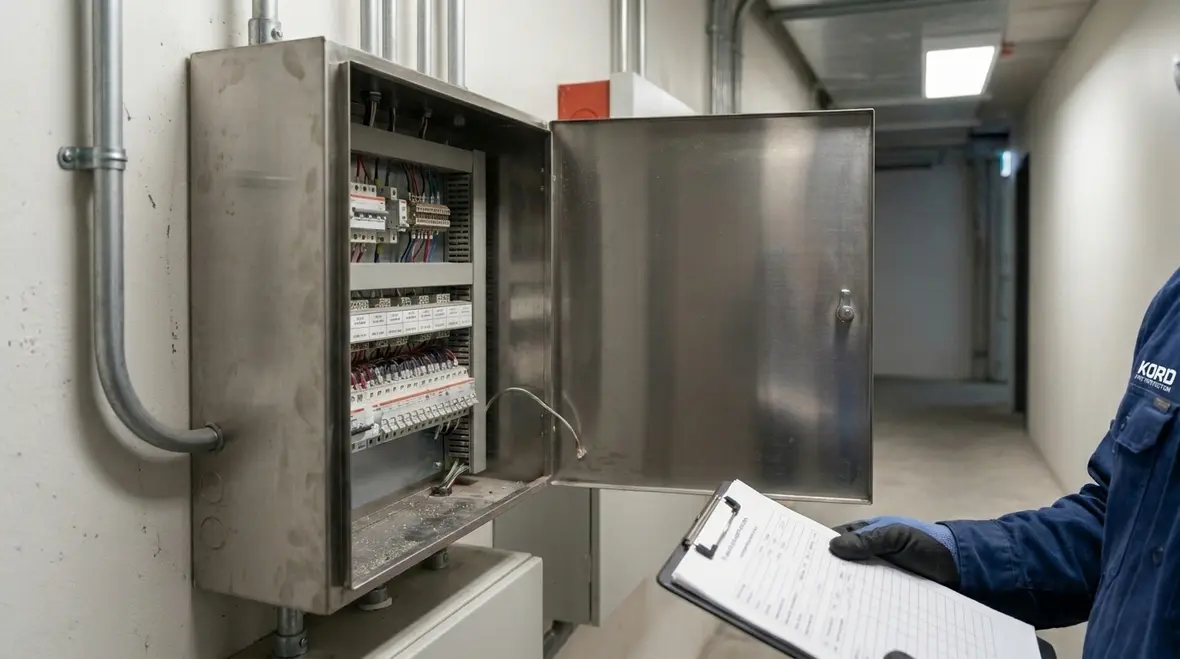
Key functions of fire alarm control units under AS 4428
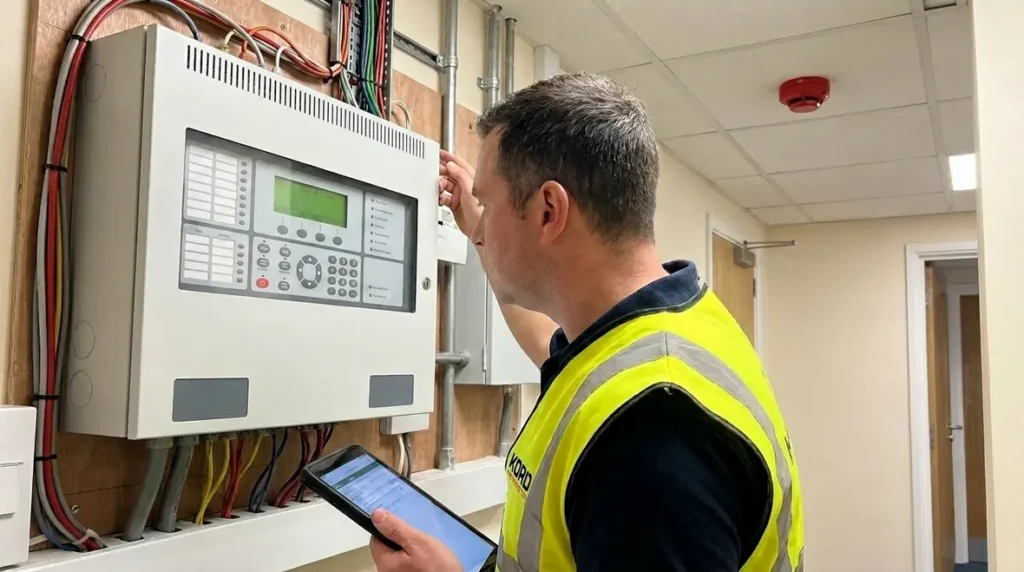
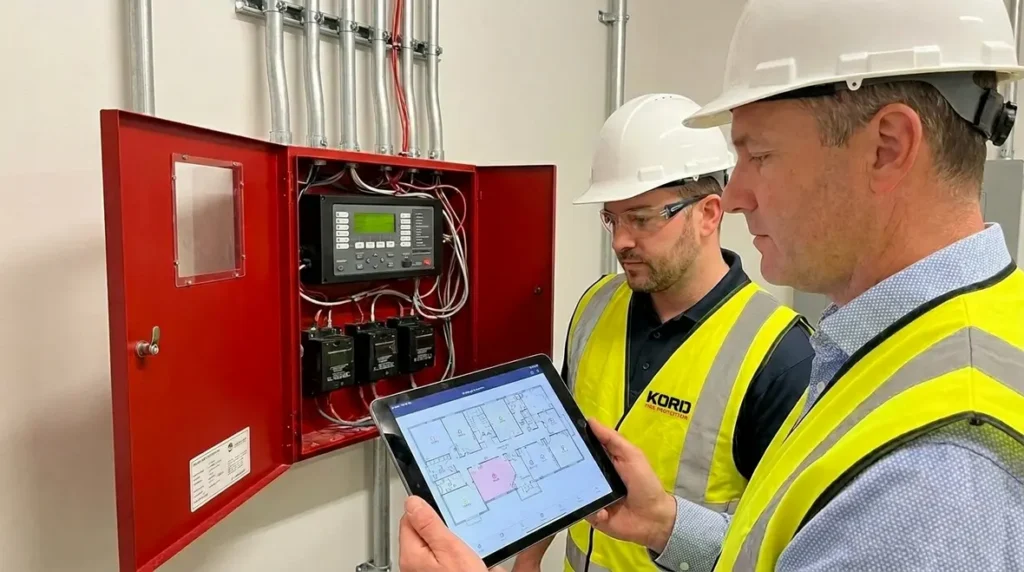
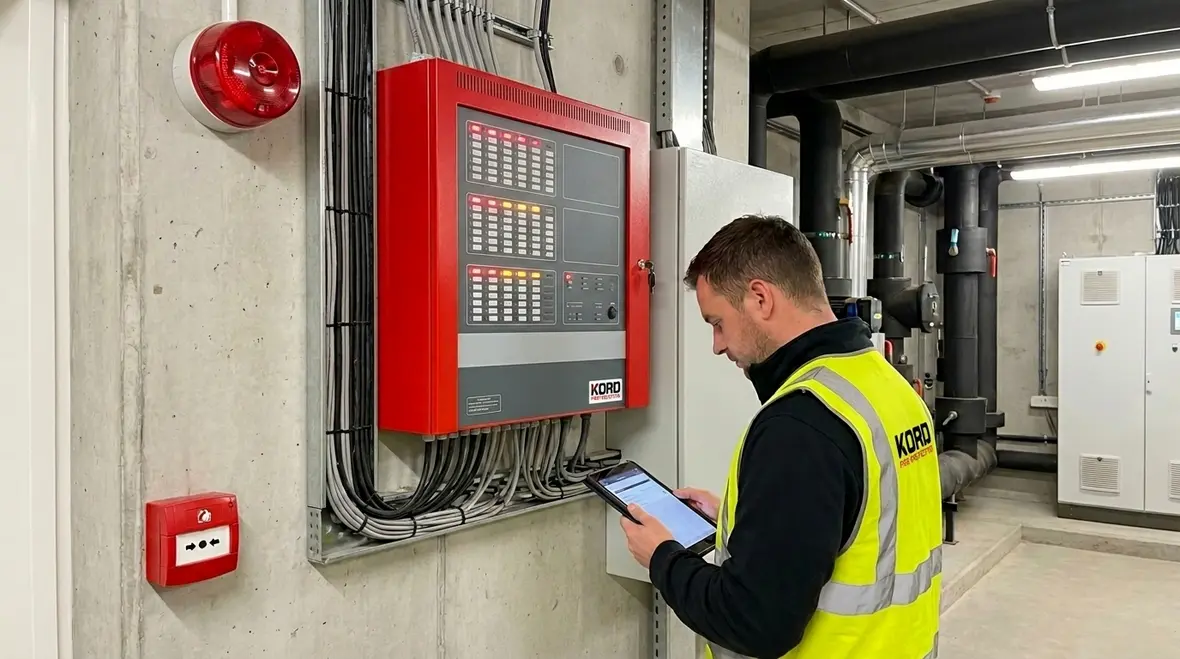
The AS 4428 fire alarm ecosystem does not just “beep when something happens.” It manages signals, supervision, and logic. Fire alarm control and warning equipment must coordinate inputs from detection devices and then activate outputs, such as sounders, strobes, and interface points that other building systems rely on.
Specifically, control units should support:
- Reliable alarm processing so signals convert into clear, ordered alerts.
- Supervision to monitor circuits and detect faults before they become emergencies.
- Alarm output control to ensure warning devices operate as intended.
- Event logging and reporting so maintenance teams can trace what happened and when.
- System fault behaviour so one failure does not silence the whole site.
Transition matters here. For example, when a detector activates, the control unit must move from detection to verification or immediate action depending on the design intent and the site’s risk profile. Then, it must keep warning outputs running even if there are secondary issues. That is where project experience makes a difference.
Kord Fire Protection partners with facilities teams to map equipment behaviour to actual operations, so the system aligns with shift patterns, loading bays, store layouts, and facility control room workflows.
The sequence matters as much as the hardware
A good panel is only part of the story. What matters just as much is how inputs, delays, outputs, and supervision all line up with the building’s actual emergency plan. If the logic is messy, the site response becomes messy too. Clear sequencing reduces hesitation and helps everyone understand whether they are dealing with an alarm, a fault, an isolate condition, or an interface event that needs immediate attention.
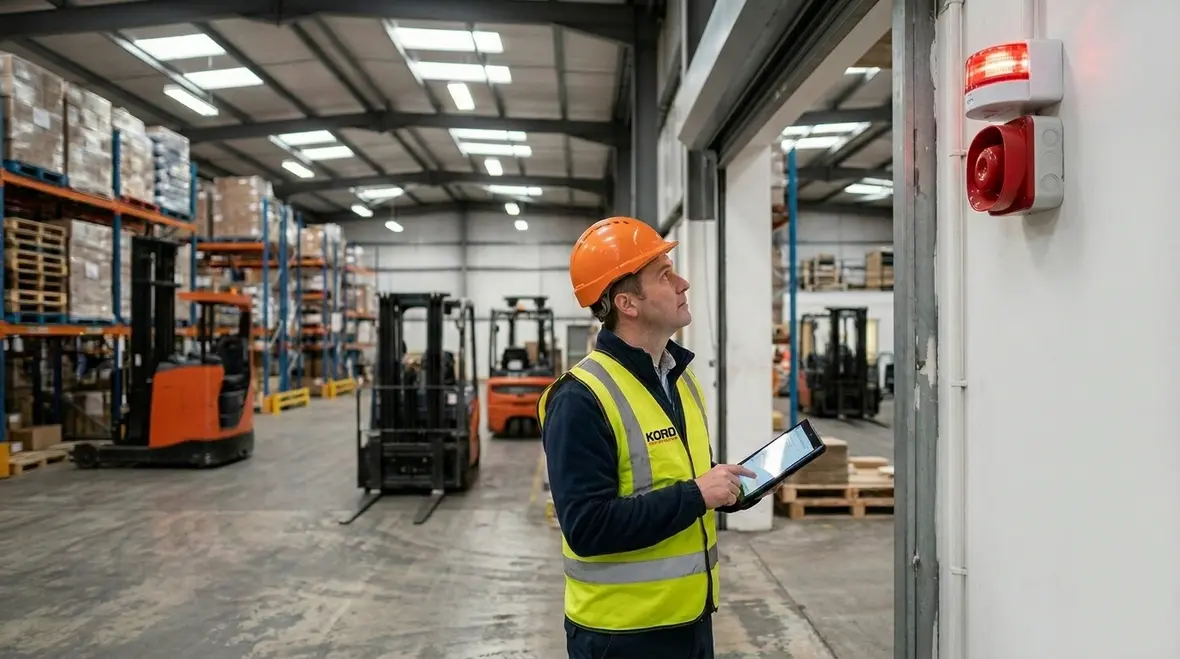
Warning devices, audibility, and the people side of compliance
Fire alarm compliance fails when the warning does not land. In other words, a system can meet the rules on paper and still fail in the real world if sound levels, coverage, and device placement ignore how people experience the space.
Sounders and beacons must consider background noise from plant, refrigeration units, forklifts, and retail fit outs. Additionally, equipment must work for different occupants: some hear less well, some rely on visual cues, and some simply move faster than alarms can “catch them.”
Therefore, best practice includes:
- Coverage planning for all risk zones, not just the easy corridors.
- Device selection that matches the environment, such as visible alarms where background noise masks audio.
- Mounting and spacing so warnings remain consistent across the site.
- Testing strategy that validates warning audibility and visibility, not just wiring continuity.
To keep it simple, think of warning devices like a band. If the drummer is behind the stage and the guitarist is muted, the song does not work. In fire safety, the “song” needs to cut through quickly, clearly, and everywhere it matters.
Kord Fire Protection supports projects by aligning device layout with site operations, then verifying performance during commissioning so the alarm can guide people when decisions get real.
Designing for real occupants, not just empty rooms
People do not experience buildings in neat textbook conditions. They are unloading stock, serving customers, wearing hearing protection, working in noisy plant areas, or trying to find the nearest exit while carrying half their day with them. That is why warning performance has to be considered in context. Good layouts help a system communicate under pressure, not just pass a drawing review.
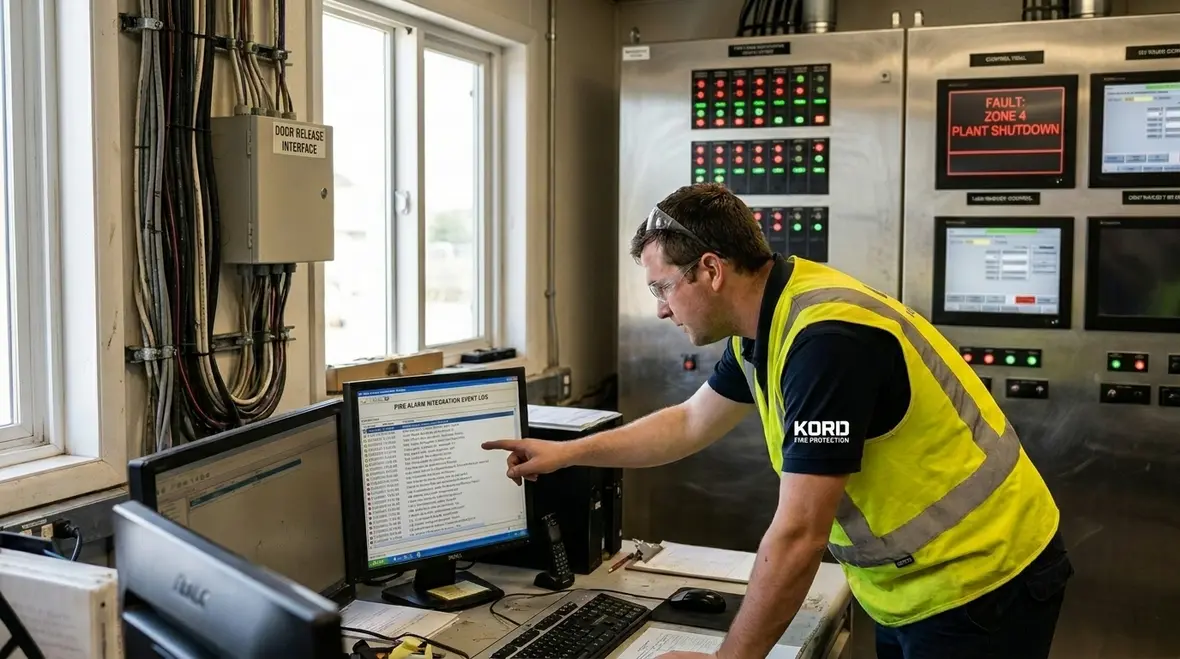
Supervision, fault signals, and keeping the system honest
Most failures do not arrive with dramatic music. They arrive quietly, through loose connections, damaged cabling, or end-of-line device drift over time. For that reason, AS 4428 focuses on how the control and warning equipment supervises circuits and communicates faults.
When a fault occurs, the system must signal it in a way that maintenance teams can act on. At the same time, the alarm function must not be quietly disabled. Transition words are not just for grammar; they describe the sequence that matters: first detect, then report, then preserve the alarm capability where required.
Key points that practical designs address include:
- Fault identification that points technicians to the right zone or circuit.
- Clear indication so staff understand the difference between an alarm and a system fault.
- Fail safe logic so the system does not hide problems until the next test.
- Maintenance alignment so fault messages lead to workable service steps.
In commercial and industrial facilities, where uptime and safety both matter, this directly affects operations. A well supervised system reduces downtime caused by guesswork and prevents “false comfort” where people assume everything is fine because nothing is actively alarming.
Kord Fire Protection helps teams set up the supervision approach so it supports real maintenance processes, not just the standard’s intention.
Integration across industrial and commercial sites
Modern facilities rarely live in isolation. Fire alarms often interface with doors, smoke control systems, plant shutdown logic, lifts, and control room indicators. Therefore, integration becomes a main driver of both safety and compliance outcomes.
When integration is done well, the system communicates in a consistent, predictable way. When it is done poorly, the fire alarm becomes a noisy system that triggers the wrong behaviours, or triggers nothing at all because other parts did not receive the right signals.
Common integration needs include:
- Interface outputs for alarms, control functions, and monitored outputs.
- Coordinate response with site emergency procedures and muster expectations.
- Control room indication that helps staff interpret events fast.
- Testing and verification that proves linked functions, not just individual devices.
Transition matters again. For instance, a detection event should flow into an alarm response, then into evacuation guidance, then into any shutdown or access control sequence required by the site plan. Kord Fire Protection plans those steps with facility stakeholders so the system behaves like a coordinated team, not like random characters in a workplace sitcom.
Linked systems should respond like a team
The more complex the site, the more valuable coordination becomes. If doors release at the wrong time, fans do not respond correctly, or indicators leave staff guessing, the whole emergency sequence loses momentum. Strong integration planning turns multiple building systems into one understandable response. That keeps the fire alarm from becoming the office gossip of the plant room: loud, confusing, and somehow still missing the point.
How Kord Fire Protection supports AS 4428 projects from start to finish
Compliance should not feel like an obstacle course. It should feel like a process you can trust. Kord Fire Protection steps in as a vital partner by combining practical system understanding with job-ready delivery across Australia’s industrial, retail, and commercial sectors.
Instead of stopping at “we will install and then hope,” Kord aligns scope, documentation, and commissioning with the site’s needs. Therefore, teams get clearer outcomes, faster decisions, and fewer surprises during verification and maintenance handover.
Typical partnership support includes:
- Planning and scoping that matches site risk, layout, and operational requirements.
- Design support for circuit supervision, zoning, and warning coverage logic.
- Commissioning and verification so performance matches the intent, not just the wiring.
- Documentation and handover that maintenance teams can use confidently.
- Ongoing service alignment to keep the system reliable over time.
And here is the joke that keeps everyone awake: fire safety is the one time you want the alarm to be dramatic. Kord helps ensure that drama means clarity, not confusion.

FAQ about AS 4428 fire alarm control and warning equipment
Conclusion and call to action
Kord Fire Protection helps industrial, retail, and commercial clients across Australia plan, install, and verify fire alarm control and warning equipment with confidence. Instead of treating AS 4428 compliance like a last minute scramble, Kord supports a smooth path from scoping to commissioning, with clear documentation and practical handover. If your next upgrade, fit out, or service project needs a partner who takes safety seriously and keeps work moving, contact Kord Fire Protection today.