AS 2441 Fire Hose Reel Installation Requirements Guide
Quick Answer
AS 2441 sets clear rules for installing fire hose reels so they stay ready when seconds matter. This article walks through key requirements such as location, mounting, water supply, and maintenance practices. Kord Fire Protection can guide businesses across Australia to meet the standard without turning the process into a “weekend DIY disaster.”
If your site is reviewing broader fire system performance at the same time, Kord Fire Protection can also support fire protection compliance planning so hose reels are not treated like a lonely side quest while the rest of the building moves on without them.
Fire Hose Reel Installation Basics Under AS 2441 hose reels
AS 2441 Standard: Fire Hose Reel Installation Requirements exists for a reason: when a fire starts, people do not have time for guesses. Our AS 2441 hose reels are designed and selected to help sites perform as expected, and they should be installed in a way that matches the standard, not just “looks neat.”
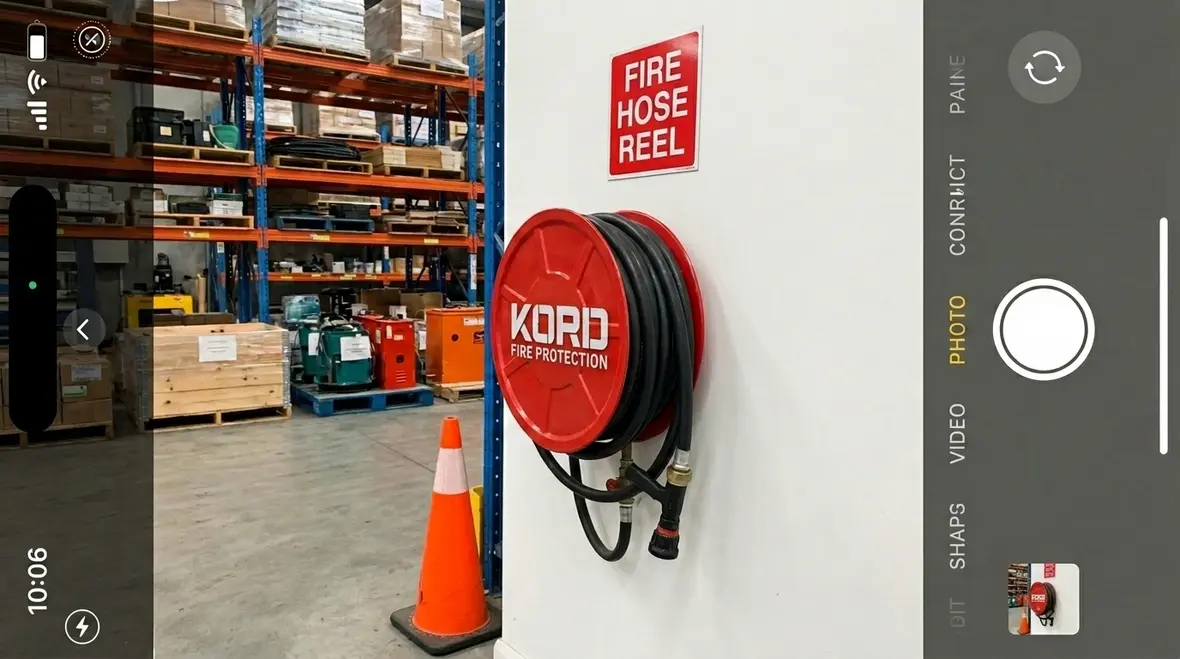
In Australia, industrial, retail, and commercial facilities often carry complex risks. Therefore, hose reels must be placed, connected, and maintained so they deliver water quickly, with the right pressure and flow. And yes, a reel that is mounted behind a stack of pallets can become a sad exhibit in the museum of bad decisions.
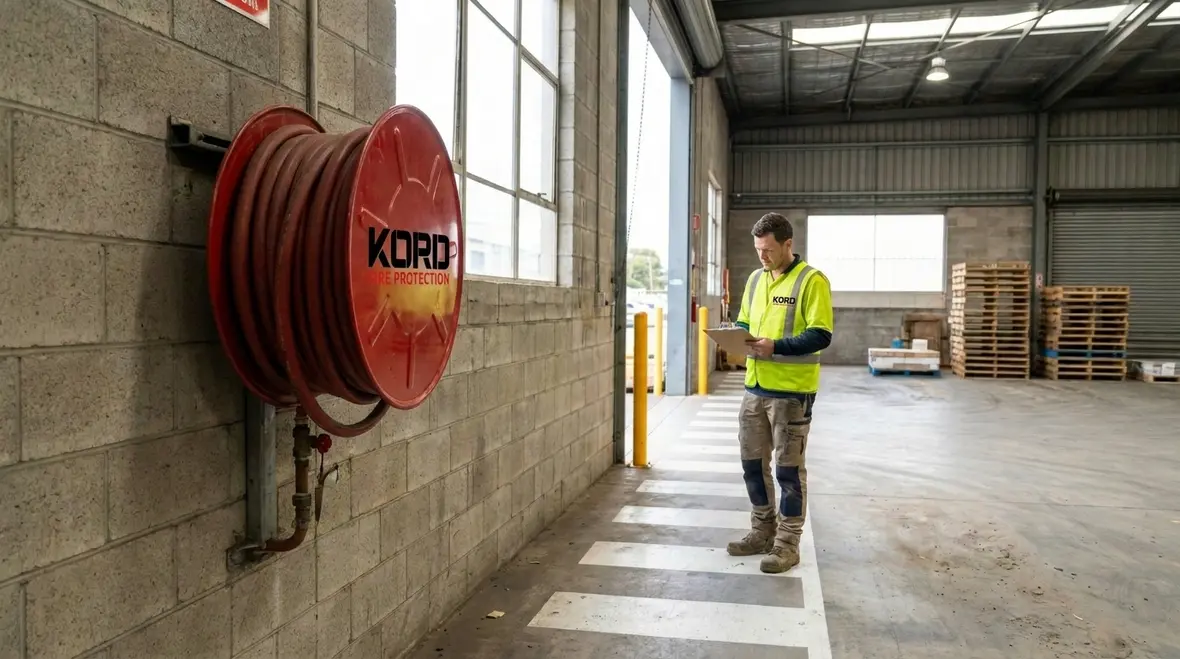
Where hose reels should be installed, and why it matters
For AS 2441 hose reels to do their job, the installed position must support fast access and effective coverage. The standard focuses on practical reach, clear visibility, and the ability for occupants to access the reel without removing obstacles. As a result, facilities should avoid hiding reels in corners where even a determined staff member needs a flashlight and a minor miracle.
Typical considerations include the reel location relative to escape routes, whether the area around the reel stays clear, and how the reel will protect the hazard area. Since layout changes happen over time, Kord Fire Protection often recommends a review during fitouts and refurbishments. That way, the reel does not end up serving a new department, a new racking system, or a new warehouse layout that no one told the fire safety plan about.
Next, the mounting height and orientation must suit the hose length and nozzle reach, while still allowing quick operation. If the reel faces the wrong direction, occupants may attempt to pull the hose and find it fights back like a stubborn shopping cart at the supermarket on a windy day.
Access, visibility, and real-world building layouts
This is where compliance becomes practical instead of theoretical. A reel might appear acceptable on a plan, yet once shelving, machinery, stock cages, doors, or seasonal displays arrive, that same reel can become awkward to reach. Good installation planning leaves room for how a site actually works on a busy day, not just how it looked in an empty tenancy on handover morning.
For larger sites, reviewing travel paths can be just as important as reviewing wall space. If staff need to zigzag around loading areas or navigate a maze of storage to reach the equipment, response time suffers. The standard is there to support quick, confident use, not a scavenger hunt with higher stakes.
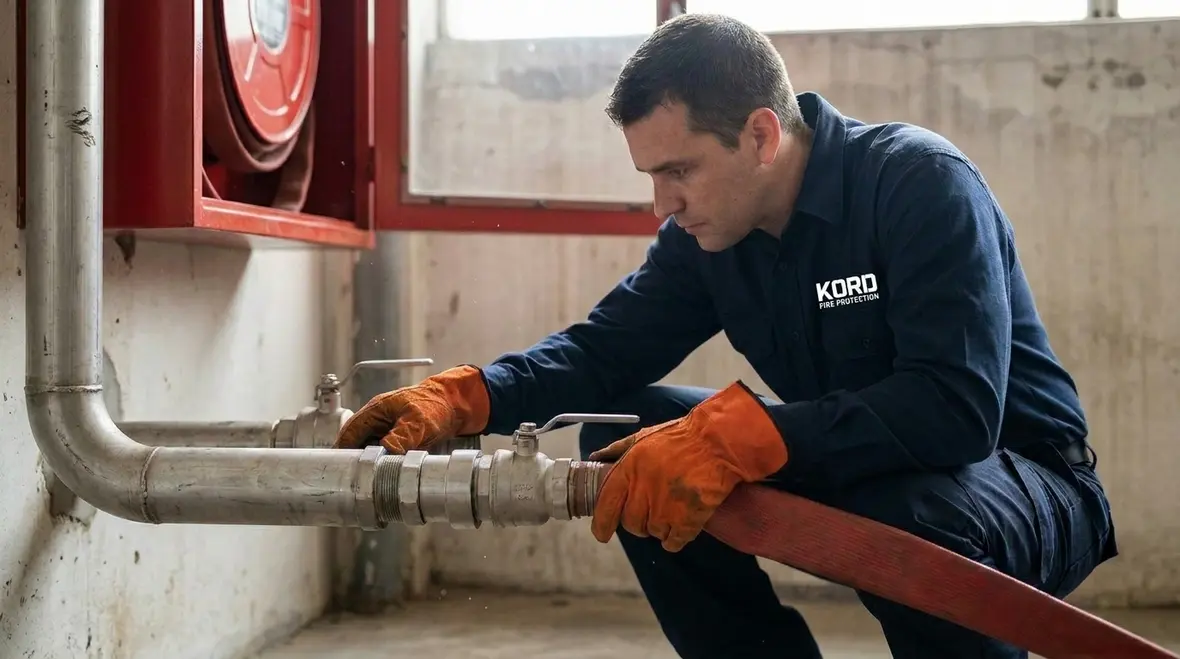
Connection to the water supply and pressure expectations
Beyond placement, the performance relies on a stable water supply. AS 2441 Standard: Fire Hose Reel Installation Requirements addresses how hose reels connect to water systems and how they must operate under demand. In simple terms, the system must deliver water when called upon, not “eventually,” not “maybe,” and definitely not “only after the pump wakes up and has coffee.”
Key points typically include ensuring the correct type of supply connection, protecting the line from damage, and avoiding installations that create risk of leaks. Furthermore, the configuration should maintain consistent performance even if other building systems operate. Kord Fire Protection works with facility teams to coordinate with fire services, pumps, and existing pipework so the hose reel system does not become an orphaned asset that no one fully owns.
Where sites have multiple hazards or varied floor levels, teams should confirm how the water supply behaves in each scenario. Therefore, design alignment matters, and so does verifying that components match the expected duty. That is not just compliance, it is reliability.
Why water performance can make or break the installation
A hose reel is only as useful as the system feeding it. Even a perfectly mounted reel with tidy pipework means little if pressure is inconsistent or flow is compromised by poor design choices elsewhere. Facilities with older infrastructure, staged expansions, or mixed-use zones should pay special attention to how the reel supply integrates with the rest of the fire protection arrangement.
It also helps to think beyond installation day. Valves get touched, tenants change layouts, and services are altered during upgrades. A compliant setup should not be so fragile that one later building change turns the whole thing into an accidental experiment.
Hose, fittings, signage, and the little parts that cause big failures
In real life, hose reels fail in boring ways that feel exciting only after an incident. A hose that kinks, fittings that corrode, or a nozzle that is hard to operate can reduce effectiveness. AS 2441 hose reels must include compatible hoses and fittings, and the installation must support full deployment without snagging.
This is also where workplace behavior shows up. People often brush past reels, store items too close, or replace equipment without thinking about the fire safety impact. Consequently, signage and access control become practical tools, not “decorations.” A clear, visible reel with straightforward operation helps occupants act quickly and reduces confusion during stressful moments.
Our team at Kord Fire Protection focuses on the complete system, not only the reel canister. That means attention to hose management, correct component selection, and ensuring the installed arrangement allows full use. In business terms, it protects the asset value of the installation and the safety outcomes for the people in it.
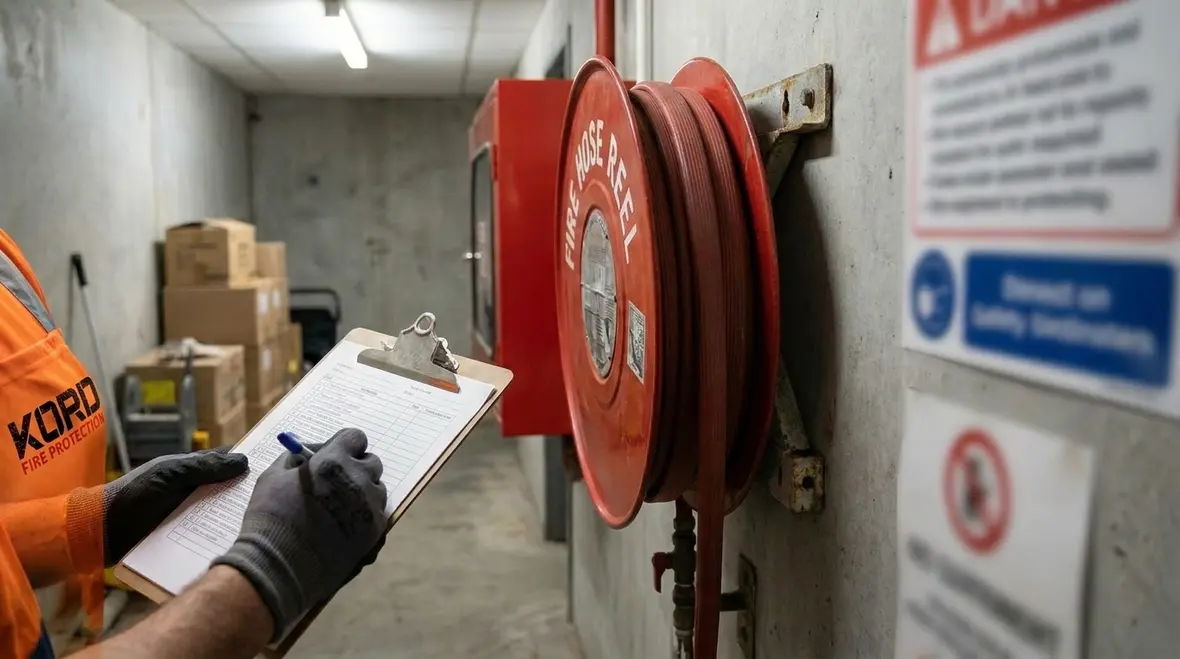
Testing, commissioning, and ongoing maintenance routines
Even a correct installation does not stay correct forever. Water systems change, valves stick, and pipework can suffer hidden damage. Therefore, AS 2441 Standard: Fire Hose Reel Installation Requirements expects testing and ongoing maintenance that keeps performance within acceptable limits. This includes inspection of the reel condition, checking for damage or obstruction, and confirming the system functions properly.
To avoid surprises, facilities should schedule maintenance around operational cycles, not during the busiest trading periods. In retail, that means coordinating with store managers. In industrial settings, that means planning around production schedules. Kord Fire Protection can help businesses set practical maintenance intervals and document outcomes so teams meet audit expectations without disrupting daily work.
Commissioning also matters. When the system gets commissioned properly, it reduces uncertainty about supply performance and installation quality. Then, when inspectors arrive, the site can show evidence that the hose reel system is not guesswork. It is managed.
Documentation is part of the job, not an afterthought
The physical hardware matters, but so does the paper trail. Maintenance records, service notes, and commissioning outcomes help prove the system has been reviewed and kept in serviceable condition. For businesses managing multiple locations, consistent records can save a lot of pain when audits, insurers, landlords, or internal compliance teams come calling.
That documentation also creates continuity. If building managers change, contractors rotate, or sites expand, the next team is not left staring at a reel and wondering what exactly happened here last year.
Compliance planning for industrial, retail, and commercial facilities
Different sites have different risks, and each one needs a sensible approach to compliance. AS 2441 hose reels should align with the building layout, hazard profile, and operational realities. That means facilities often require a coordinated plan that covers design, installation, and verification. In industrial areas, for example, staff may access reels amid machinery and goods movement, so clear access routes and protection from impact become essential.
In retail and commercial environments, customer areas and back-of-house spaces create different access patterns. Therefore, placement must suit how people actually move through the building, not just how a diagram looks on paper. Additionally, facilities that operate across multiple locations need a consistent standard of installation quality and maintenance records.
Kord Fire Protection acts as a vital partner in that process. Our support can extend from assessment and system planning through to installation oversight, commissioning, and maintenance coordination. In other words, the standard stays met, and the business stays focused on running, not firefighting its compliance paperwork.
FAQ about AS 2441 fire hose reel installation
Still need a reliable compliance path?
Fire hose reel compliance should feel steady, not stressful. Kord Fire Protection helps industrial, retail, and commercial facilities across Australia plan, install, and maintain AS 2441 Standard compliant systems with evidence you can stand behind. If a reel location, water supply, or maintenance schedule is unclear, our team steps in to make it simple and correct. Contact Kord Fire Protection today for an assessment and a practical roadmap.