AS 3745 Emergency Planning for Australian Facilities
Quick Answer: AS 3745 sets out how facilities in Australia should plan for emergencies in a practical, coordinated way. It focuses on hazard identification, staffing, procedures, training, and testing. With help from Kord Fire Protection, organisations can turn those requirements into clear plans that work when it matters, not just when auditors show up.
In the real world, emergencies do not politely wait for paperwork to catch up. That is why AS 3745 emergency planning matters for industrial sites, retail centres, warehouses, and commercial facilities across Australia. Early planning protects people, reduces losses, and helps response teams act without guessing. Facilities that also review their broader fire protection needs can build emergency plans that reflect what actually happens on site instead of relying on paperwork that only looks good in a folder. In this article, third person guidance walks through what facilities must include, how to build plans that actually function on the ground, and how Kord Fire Protection can become a vital partner in making the process smoother, safer, and more accountable.
AS 3745 emergency planning basics for facility leaders
AS 3745 emergency planning provides a structured approach to managing emergency events. Therefore, facility leaders should treat it as a living system rather than a one time project. It starts with understanding what could go wrong, then it moves into deciding what people will do, who will do it, and how quickly response actions happen.
In practice, the best plans do four things well. First, they match the site’s risks, layout, and activities. Next, they assign roles with clear authority. Then, they set procedures that reduce confusion during stress. Finally, they include a testing cycle so people learn and improve. Think of it like fire drills, except less “everyone stands around and hopes.”
What makes an emergency plan actually useful
A useful plan is written for the actual facility, not for some mythical perfect building where everyone is calm, every exit is clear, and nobody forgets a thing under pressure. Real plans reflect staffing levels, shift changes, access limitations, and the small operational quirks that become very large problems during an incident. If a document cannot guide action in the first few minutes, it is decoration.
That is why leaders should involve operations, maintenance, supervisors, and the people who know the site in ordinary conditions and bad ones. A polished document matters less than clear actions people understand. If the plan says one thing and the site works another way, the site always wins. Usually at the worst possible time.
How facilities should identify hazards and define plausible scenarios
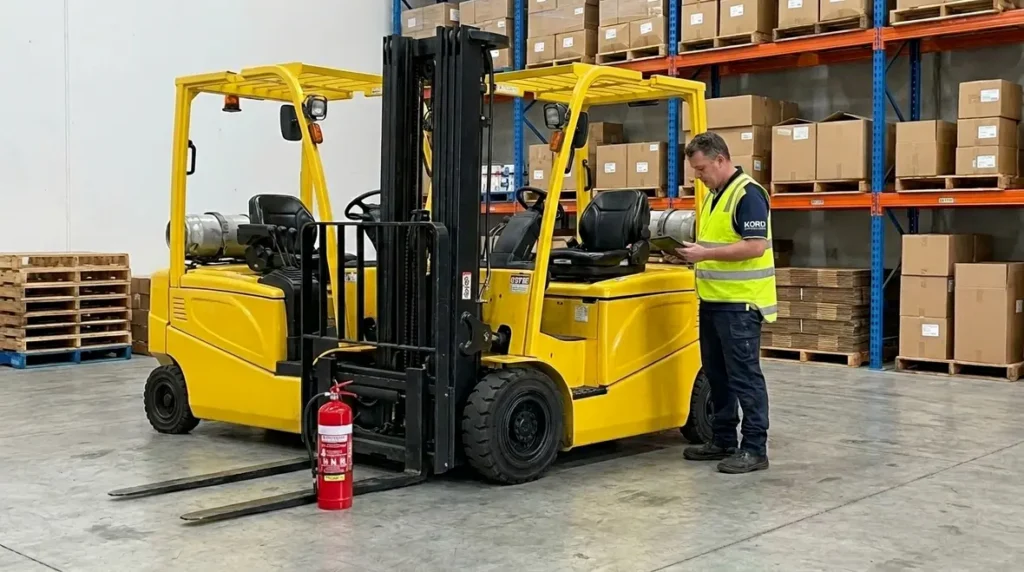
AS 3745 emergency planning begins with hazard identification, but it does not stop at listing risks on a spreadsheet. Facilities need scenarios that reflect how incidents actually unfold on their site. For example, a distribution centre faces different realities than a commercial fit out or a retail tenancy with stock that fuels fire growth. As a result, scenario selection should connect directly to the controls already in place.
To build strong scenarios, organisations should consider:
- Potential ignition sources such as hot work, equipment faults, and electrical risks
- Fuel load and packaging types, including pallet storage and stock stacking practices
- Location challenges such as loading docks, mezzanines, and narrow access routes
- People movement patterns, including shifts, visitors, contractors, and shift handovers
- Process hazards where applicable, such as chemicals, fuels, or compressed gas areas
- Environmental factors such as wind exposure, water supply access, and street access for response
Then, facilities should translate each scenario into expected conditions. For instance, a fire in a storage aisle drives different priorities than a fire near emergency exits. Additionally, smoke spread can change how evacuation routes perform. Therefore, scenarios should prompt decisions, not just describe events.
From risk lists to practical response triggers
A long list of hazards is not the same as an emergency planning tool. Teams need to decide what conditions trigger evacuation, partial evacuation, isolation, shutdown, or external notification. That means asking practical questions. What happens if smoke affects the main egress path? What happens if an incident starts during a shift handover? What happens if the first person on scene is a contractor who knows the job but not the site?
When these decisions are made in advance, the plan becomes faster and more consistent. Instead of improvising under pressure, staff follow defined logic based on realistic conditions. That reduces hesitation, mixed messages, and the classic emergency pastime of six people making seven different decisions.
Emergency roles, communication, and decision making that reduce chaos
When an emergency happens, people rely on structure. That is where an emergency planning framework becomes more than compliance. It defines command roles, responsibilities, and authority levels so that decisions happen faster. Moreover, clear communication reduces contradictory instructions, which is the fastest route to chaos, and also the fastest route to blame.
Facilities should plan for:
- Emergency controller responsibilities, including initiation of procedures and coordination
- Wardens or equivalent roles to guide evacuation and check designated zones
- First response actions that align with site capabilities and fire service expectations
- Contractor and visitor management during an incident
- Communication channels for internal alerts, incident updates, and external notifications
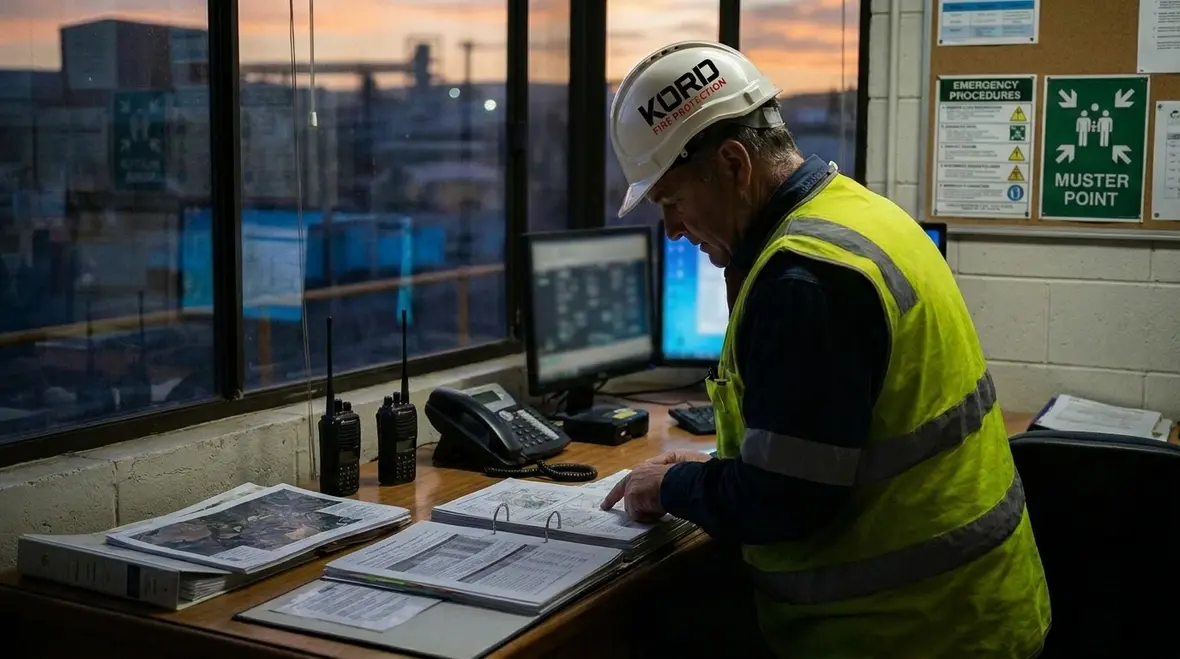
Communication systems need to work under stress. Consequently, plans should include escalation steps, radio or phone fallback options, and predetermined message content. In addition, facilities should decide how information flows from site to stakeholders such as building managers, security, and emergency services. When staff know the route of information, they waste less time trying to “figure it out.”
Why communication usually fails before equipment does
Many response issues begin with unclear language rather than broken systems. If one person says evacuate, another says stand by, and a third says someone else is handling it, the plan is already drifting off course. Emergency arrangements should define who can issue directions, what words are used, and how confirmation happens. Clarity beats drama every time.
This matters even more on sites with visitors, labour hire, contractors, or shared tenancies. Not everyone hears alerts the same way or understands local procedures. A strong communication plan accounts for that and keeps instructions simple, repeatable, and hard to misunderstand, even when the adrenaline has already arrived before common sense.
Evacuation procedures, muster points, and accessibility for all site users
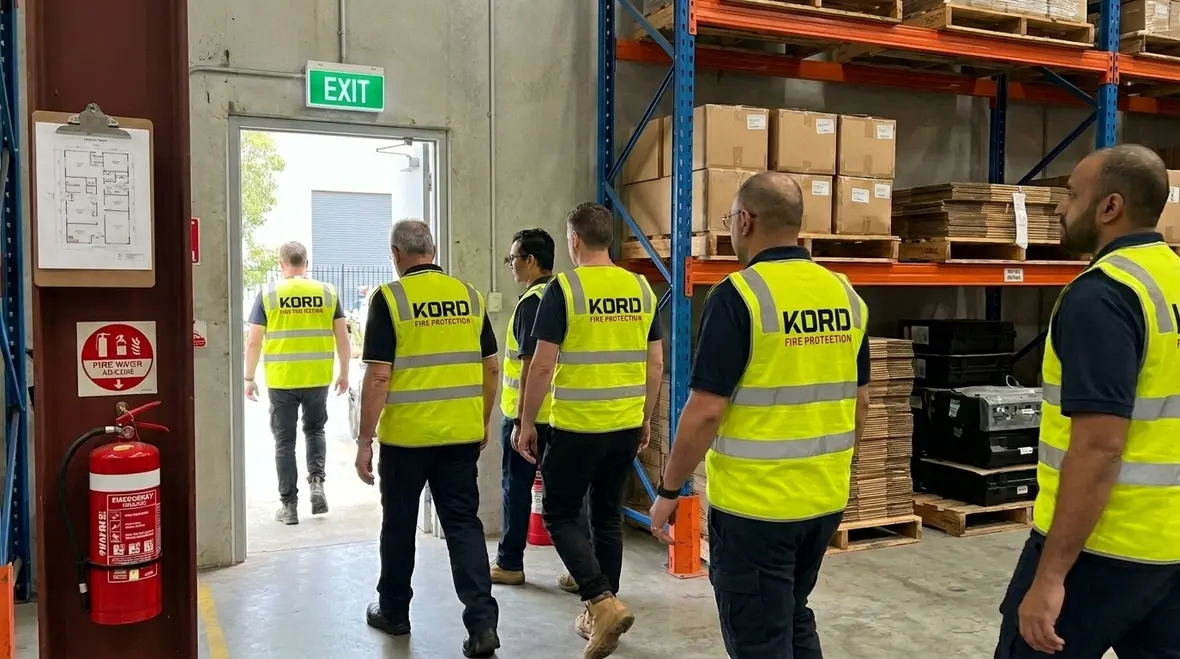
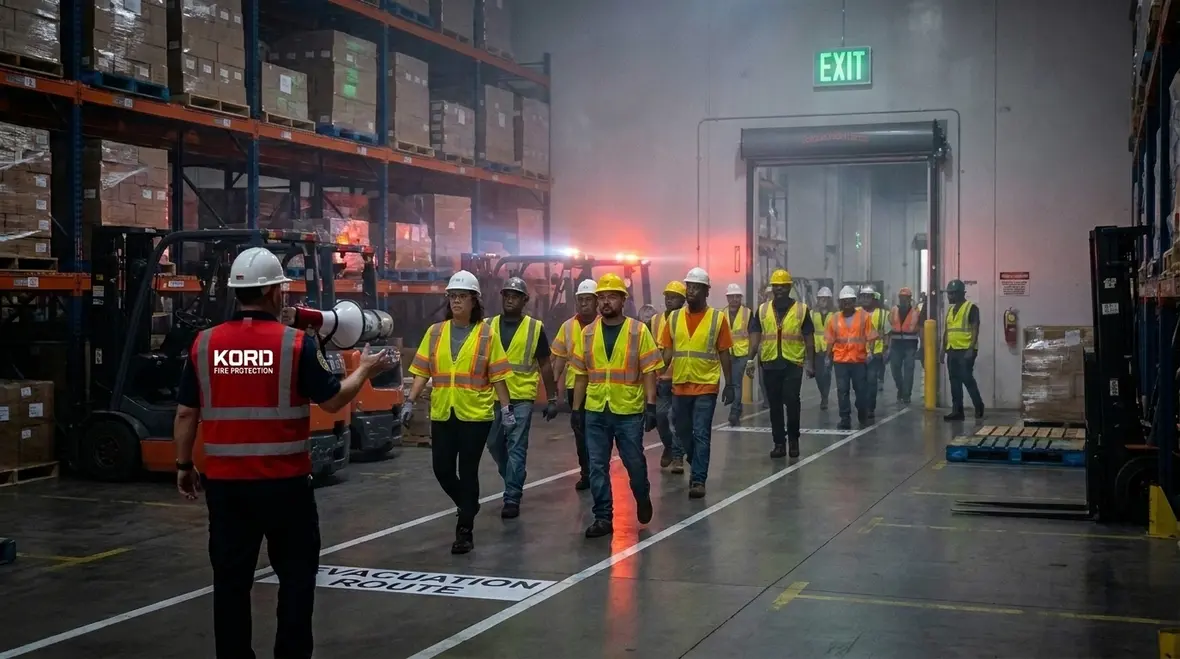
Evacuation planning needs clarity and realism. Therefore, facilities should develop procedures that consider how people actually move in their environment. It is not enough to have signage and a muster area on a map. Instead, the plan should describe what staff do before, during, and after evacuation.
Key elements include:
- Evacuation routes that account for obstructions and typical daily conditions
- Clear instructions for directing people, including those who need assistance
- Staged evacuation where hazards may block primary routes
- Muster point management, including head counts and role handoffs
- Procedures for changes, such as re entry after incident control
Also, facilities should coordinate with building design and safety systems. For example, smoke control measures, fire doors, and emergency lighting influence route safety. Additionally, staff should understand which doors remain functional and how to avoid creating new hazards during evacuation.
Facilities that operate across multiple tenancies or contractors should also manage variations. Accordingly, training should cover shared response expectations and site specific instructions.
Muster points are only useful if the process works
A muster point should be more than a dot on a site map and an optimistic assumption. Teams need to know who checks areas, who brings visitor records if relevant, who reports missing persons, and who communicates with arriving responders. If these handoffs are vague, the muster point becomes a place where uncertainty gathers in an orderly fashion.
Accessibility matters just as much. Plans should consider mobility limitations, temporary injuries, unfamiliar visitors, and the practical challenges of moving people through stairs, ramps, doorways, and shared access paths. A route is only an evacuation route if people can really use it when conditions are poor and time is short.
Testing, training, and review cycles that keep plans current
A plan that never gets tested becomes a plan that fails. Consequently, AS 3745 emergency planning expects a review and improvement process that reflects real learning. Staff training should not be a yearly ritual where everyone nods and then forgets. Instead, training should connect to the scenarios that the facility actually faces.
Effective systems include:
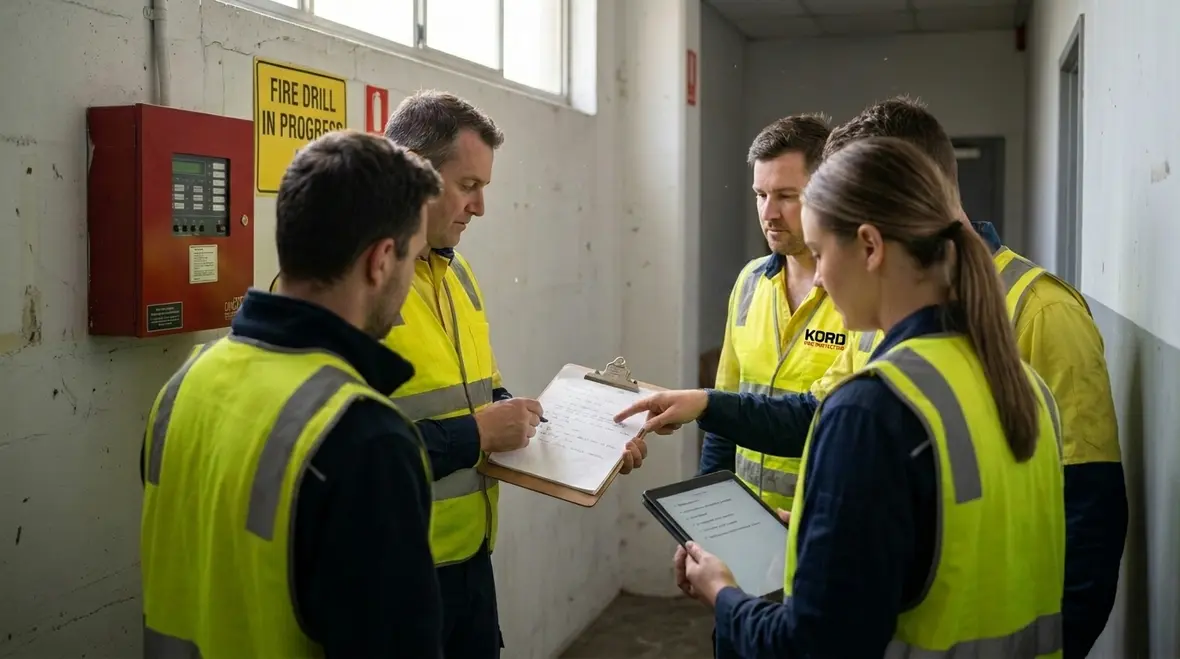
- Regular emergency drills that test evacuation flow and communication
- Targeted training for high risk areas, roles, and shift patterns
- After action reviews that capture issues, fixes, and timelines
- Plan updates after site changes, renovations, or changes in operations
- Documentation that supports accountability and continuous improvement
Facilities should also record drill outcomes in a way that leadership can act on. If drill results show delays, blocked routes, or unclear messaging, the plan must adjust. In other words, the plan should get better with each exercise, not just thicker with more pages.
Review cycles should follow change, not just calendars
Annual review dates help, but they should not be the only trigger. Changes to storage layouts, staffing patterns, tenancy arrangements, contractor access, production processes, or refurbishments can all affect how an emergency unfolds. If the site changes, the emergency plan should change with it. Otherwise the document quietly ages into fiction.
Strong organisations use exercises to test not only movement and alarms but also judgment. They ask whether wardens knew what to prioritise, whether messages were clear, whether fallback communication worked, and whether the scenario exposed new weak points. That is where improvement lives, not in attendance sheets alone.
Why Kord Fire Protection strengthens AS 3745 outcomes
Many organisations try to manage emergency planning with general templates and a best effort approach. Unfortunately, templates do not know the layout, the access challenges, or the daily routines of industrial and retail operations in Australia. That is where Kord Fire Protection steps in as a practical partner.
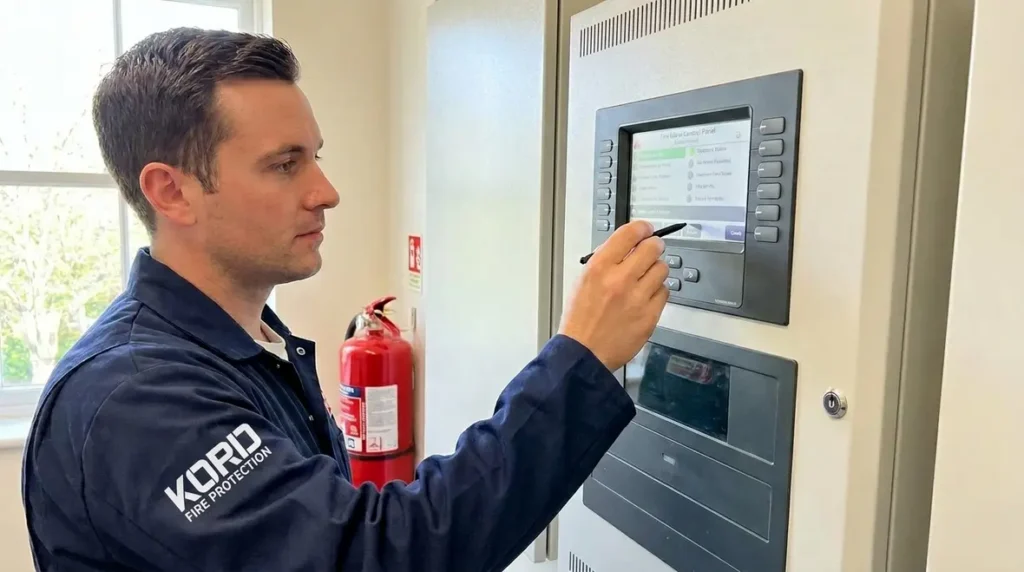
Kord Fire Protection helps facilities connect fire safety systems and operational reality to emergency planning. Therefore, the value is not just in documents. It is in reducing gaps between “what the plan says” and “what happens on site.” Kord Fire Protection can support emergency planning processes by aligning procedures, training needs, and fire safety readiness across the facility.
In addition, Kord Fire Protection can help ensure that fire protection assets and emergency response arrangements work together. As a result, facilities gain stronger coordination, clearer responsibilities, and better readiness for the people who must act under pressure.
And yes, while no one wants to practice for disaster like it is a hobby, the best teams treat training as insurance. It costs less than panic, and it saves more than pride.
Conclusion: make your emergency plan a working system
AS 3745 emergency planning works best when facilities treat it as an ongoing safety system, not a document that collects dust. Therefore, organisations should build realistic scenarios, assign roles clearly, and test procedures so staff learn before stress takes over. If your facility needs a partner who understands operational fire safety across Australia, Kord Fire Protection can help strengthen readiness from planning through practice. Reach out today to align your emergency approach with confidence and clarity.