AS 3959 Bushfire Construction for Industrial, Retail, Commercial
Quick Answer: AS 3959 sets the minimum requirements for building construction in bushfire areas, focusing on ignition risk, ember attack, and how external parts behave during a fire. For industrial, retail, and commercial sites, compliance supports safety, continuity of operations, and smoother approvals. Kord Fire Protection can help turn those rules into practical, tested outcomes.
When bushfire compliance planning starts early, it also becomes easier to align with wider fire protection needs such as commercial fire hydrant system requirements that support site safety and emergency response. That matters because a building envelope can only do so much if the rest of the fire strategy shows up late, confused, and carrying the wrong drawings.
AS 3959 bushfire construction and why it matters to sites that never sleep
AS 3959 overview begins with a simple truth: bushfires do not politely ask permission before they test buildings. They arrive with heat, flames, and a storm of embers, and that combination exposes weak points fast. That is why AS 3959 bushfire construction focuses on how materials and details perform under ember attack and radiant heat, rather than only on the main structure.
For industrial, retail, and commercial facilities across Australia, the stakes are higher than most people think. Downtime costs money, and “we will fix it later” often becomes “we cannot insure it later.” Therefore, sites that handle stock, equipment, customers, or critical operations need a plan that ties compliance to real-world risk. And yes, the paperwork can feel like it was written by a committee of ravens, but the right approach keeps projects moving.
Our company, Kord Fire Protection, helps deliver bushfire-ready protection that aligns with regulatory expectations while supporting practical construction decisions. In other words, we do not just read standards, we help teams apply them. That includes making sure the decisions around the external shell actually work with how the site will be operated, maintained, serviced, and inspected after handover instead of becoming someone else’s extremely expensive mystery.
Why commercial and industrial buildings face different bushfire pressures
A house can suffer a serious bushfire event and still be thought about as one damaged asset. A commercial or industrial site is rarely that simple. A warehouse may hold valuable stock, a retail building may depend on customer access and tenant continuity, and a commercial facility may carry sensitive plant, data, or specialised fitout that cannot be casually replaced. As a result, even a small point of ember entry can create outsized operational consequences.
Understanding asset risk: ember attack and external failure points
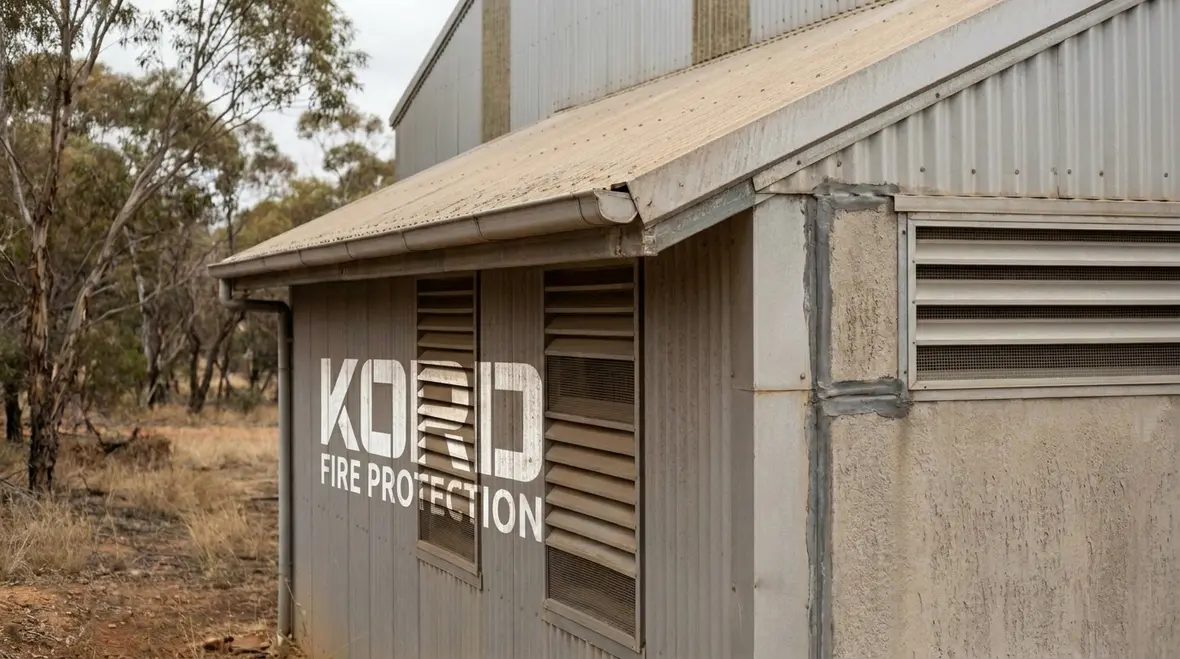
To apply AS 3959 effectively, a facility team must first understand where ignition typically starts. In bushfire events, ember attack often drives the early phase. Embers land on ground-level surfaces, sit in gaps, then find fuel and weak edges. As a result, ignition usually begins at external interfaces and penetrations before it reaches the “big wall.”
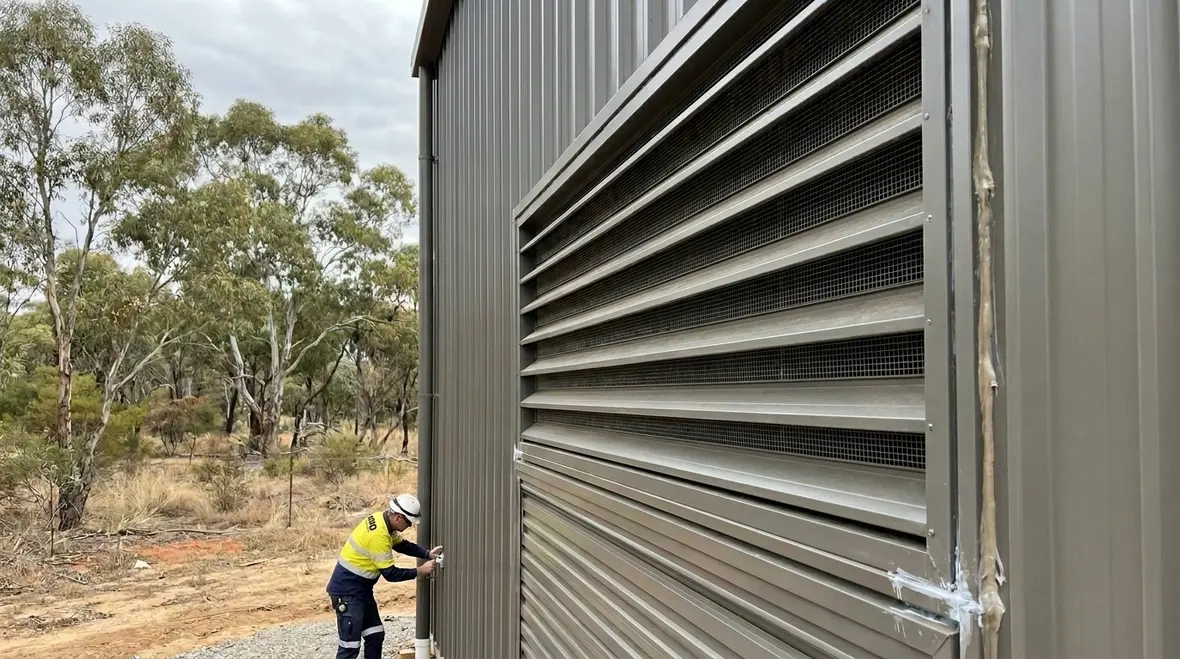
From an operational perspective, that means the building envelope and the “stuff around it” matter as much as the main structure. Key focus areas include roof edges, external ventilation, under-floor or slab edges where applicable, doorsets and louvers, service penetrations, and the way cladding joints get detailed. Additionally, openings and penetrations around pipework, cabling routes, and ducting can become entry points if they are not sealed and protected.
Kord Fire Protection approaches this as a system, not a checklist. We help clients map where embers can enter and then align fire protection and protection measures to those specific exposure points. That method reduces guesswork and avoids expensive rework during construction. It also helps teams stop arguing in circles about whether a tiny detail matters. In bushfire work, tiny details have an annoying habit of becoming headline problems.
The weak points embers love most
- Roof and wall junctions where debris can collect.
- External vents, louvers, and screened openings.
- Service penetrations for cables, pipes, and ducts.
- Cladding joints and transitions between materials.
- Door thresholds, edges, and poorly sealed frames.
- Rooftop plant mounts, hatches, and access interfaces.
Site classification and construction choices that keep approvals on track
AS 3959 bushfire construction is not one-size-fits-all. It depends on site conditions such as the bushfire attack level, terrain, and the way vegetation and hazards sit around the property. Once the appropriate classification is set, the requirements guide what materials can be used and how building elements must be constructed.
For facilities such as warehouses, retail stores, and multi-tenant commercial buildings, the challenge often comes from balancing compliance with performance and cost. Teams might want fast delivery, but bushfire detailing takes time, especially when a project uses complex facades, roof forms, or lots of services.
Therefore, the smartest route is early coordination. Designers, builders, and fire consultants should align on the bushfire requirements before finalising elevations, roof layouts, and services routing. When that happens, the project team can choose compliant options for vents, cladding systems, glazing limits, and sealing methods without redesigning late in the schedule.
Kord Fire Protection supports that coordination by working alongside project stakeholders so fire protection planning stays consistent with the construction envelope requirements. In practice, that helps avoid the classic scenario where the building team completes the shell, then everyone discovers the fire strategy cannot be installed the way it was designed. Nobody enjoys that meeting, especially the person holding the variation register.
Where suitable, teams can also review related protection planning such as fire sprinkler system design for commercial buildings so active and passive measures are considered together instead of as separate design stories that only meet at the punch list.
Details that often get missed: openings, vents, and service penetrations
If a fire consultant could pick one moment to intervene, it would be right before final detailing. Because that is when small omissions turn into big risks. In bushfire scenarios, openings and penetrations control outcomes more than people expect. Even if the main materials meet requirements, weak points can allow embers to enter and ignite internal contents.
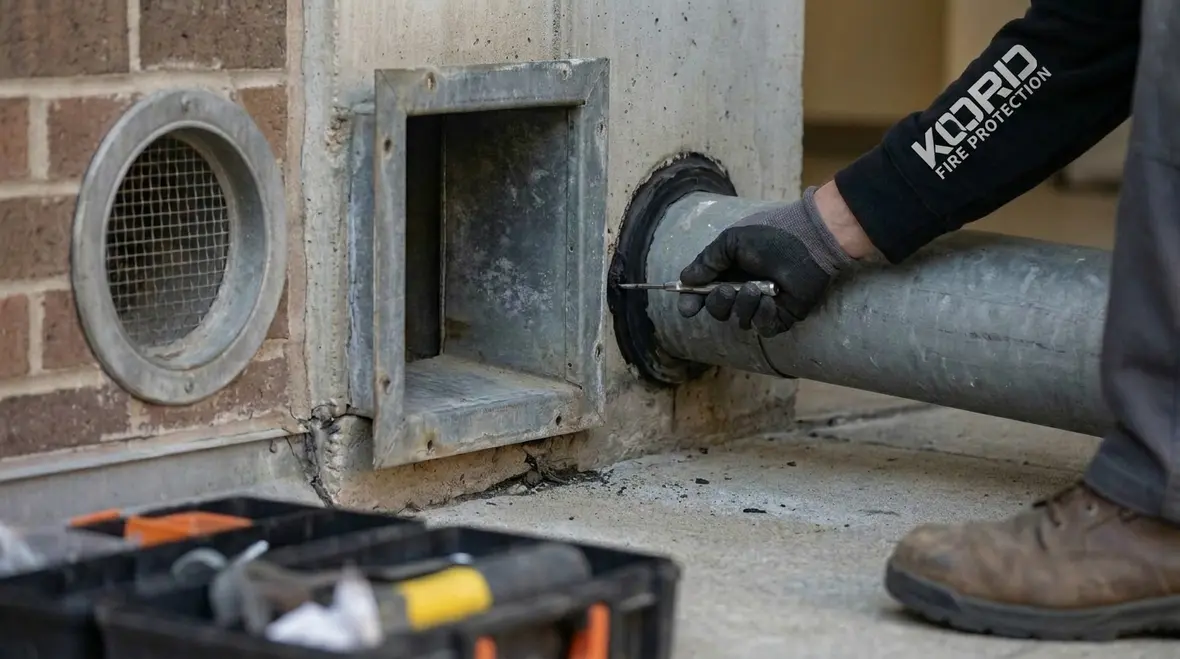
Common high-risk details include poorly sealed junctions around roof penetrations, gaps behind external service fittings, vents that do not have compliant screening or protection, and unprotected openings that act like ember funnels. Also, where cladding meets frames or where different materials interface, joints can become ignition pathways if they are not constructed to withstand ember attack.
Additionally, commercial sites often include larger service runs and more rooftop equipment. Therefore, the surrounding fire protection approach should account for equipment mounting methods, roof penetrations, and access hatches. It is not about making every site “fortress-like.” It is about directing the fire risk where it can be managed, delayed, or prevented.
Kord Fire Protection can help teams evaluate these vulnerable details and incorporate practical solutions that suit ongoing operations, including how systems will be maintained and inspected. After all, protection that no one can service is like a fire extinguisher in a locked cupboard. Technically present, practically useless.
What good detailing usually looks like
- Penetrations are identified early rather than discovered after cladding is installed.
- Openings are screened, sealed, and matched to the required construction approach.
- Interfaces between trades are documented so gaps are not left to chance.
- Maintenance access is preserved so protection does not become impossible to inspect.
- Changes on site are reviewed before they quietly create non-compliant conditions.
Fire protection integration: making the envelope and systems work together
Many teams treat bushfire compliance and fire protection as separate tracks. Then, during inspections, they find out the tracks do not align. To solve this, facilities should integrate fire protection planning with construction choices from the beginning.
For example, if a building design uses specific external materials and edge treatments, the placement and protection of fire services should match those same design realities. That includes how sprinklers, hydrants, fire detection, and alarm systems interact with the building envelope and any protected areas. Meanwhile, access for maintenance and emergency response must stay realistic, not theoretical.
Furthermore, a facility’s internal contents influence the overall risk profile. Retail fitouts can add combustible loads. Industrial storage can concentrate fuels. Consequently, the fire strategy should consider how ember attack could start a fire and how the building will respond quickly enough to protect life and critical assets.
Kord Fire Protection helps clients connect these dots. We work with project teams to build bushfire resilience that supports the wider fire protection intent, rather than layering protection after key design decisions are locked in. That reduces friction and improves confidence for stakeholders and regulators. It also means fewer last-minute surprises where a perfectly good system is suddenly incompatible with the way the roof, wall, or plant area has actually been built.
Building a bushfire-ready program for commercial projects across Australia
For industrial and commercial facilities across Australia, a sustainable approach goes beyond one project at a time. A bushfire-ready program should include risk reviews, documentation control, construction-phase oversight, and maintenance planning. Because bushfire risk does not stand still, and neither should compliance.
Many organisations also need repeatable processes. For example, they may build similar warehouse or retail facilities in multiple regions. Therefore, they can standardise design templates and specify bushfire-resilient detail sets, while still adjusting for site classification. This reduces design drift and keeps projects consistent.
Next, the program should include training and inspection routines that focus on the areas where embers typically win. That means checking seals and penetrations, verifying vent protections, and ensuring that rooftop equipment maintenance does not create new gaps. It also means keeping records so upgrades and inspections remain traceable.
When Kord Fire Protection becomes a partner, it supports this whole-cycle mindset. We help clients keep compliance aligned with construction reality, and we make sure fire protection planning supports the building’s bushfire performance throughout the life of the site. That way the project does not just pass once on paper and wander off unsupervised into the future.
A practical program checklist for ongoing resilience
- Confirm site classification and assumptions early.
- Coordinate bushfire detailing with active fire system layouts.
- Document vents, penetrations, joints, and special interfaces clearly.
- Review construction changes before they affect compliance.
- Inspect maintenance works so new gaps are not introduced later.
- Keep evidence and records organised for future audits and upgrades.
FAQ
Conclusion
AS 3959 bushfire construction is not just a standard to “tick off.” It is a practical method to reduce ignition risk for industrial, retail, and commercial facilities across Australia. When project teams plan early and integrate fire protection with the building envelope, approvals move smoother and confidence goes up. Kord Fire Protection can help turn requirements into buildable details and workable systems. Reach out to discuss your next project and let’s make sure bushfire risk does not get the last word.