Melbourne Extinguisher Compliance Fire Extinguisher Services
Quick Answer: Fire extinguisher services in Melbourne keep businesses ready for fast, real-world response. Kord Fire Protection supports industrial, retail, commercial, and facilities teams with compliant inspections, maintenance, and documentation that stand up to audits. It reduces risk, helps protect staff and assets, and keeps operations moving when the unexpected happens.
When businesses in Melbourne plan their fire safety, Melbourne extinguisher compliance is not a “nice to have.” It is a practical baseline that supports duty of care, audit readiness, and safer outcomes when a fire starts. And yes, a fire extinguisher that looks fine but fails inside an emergency is about as useful as a chocolate teapot during a heatwave. In the rest of this guide, third party services and good internal processes come together, so businesses across Australia can meet expectations, reduce downtime, and keep teams confident.
If your team is also reviewing broader site obligations, it helps to align extinguisher maintenance with related fire protection planning across the building. That way, compliance does not sit in a lonely corner pretending to be a complete safety strategy all by itself.
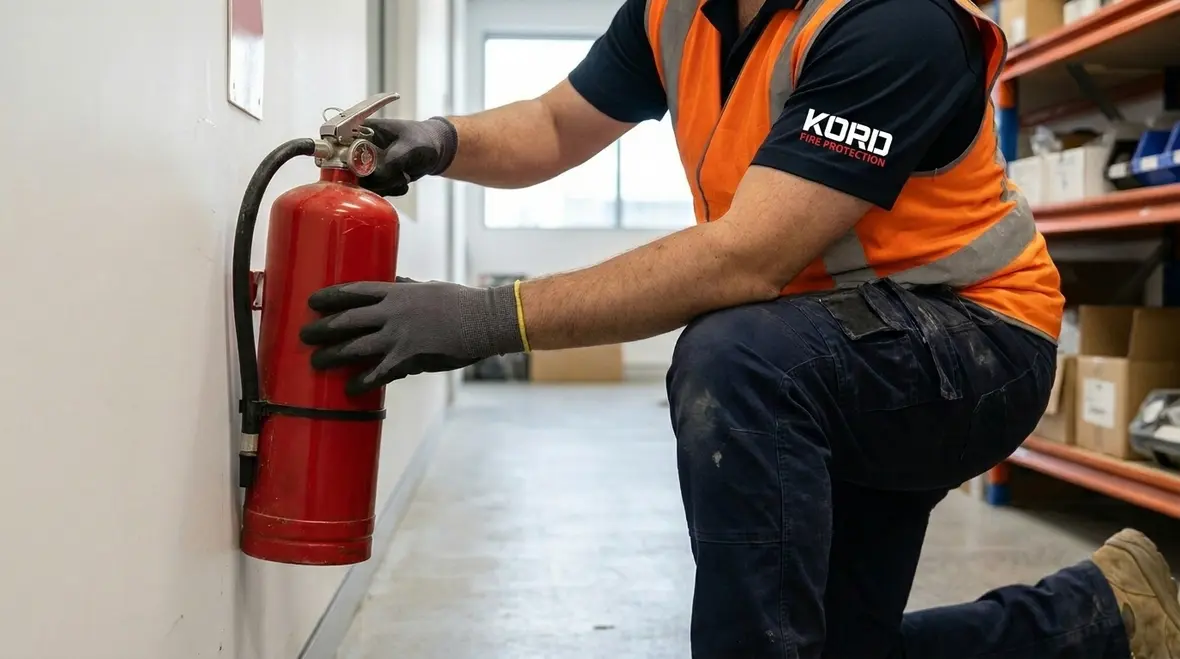
1. What fire extinguisher services do for business readiness
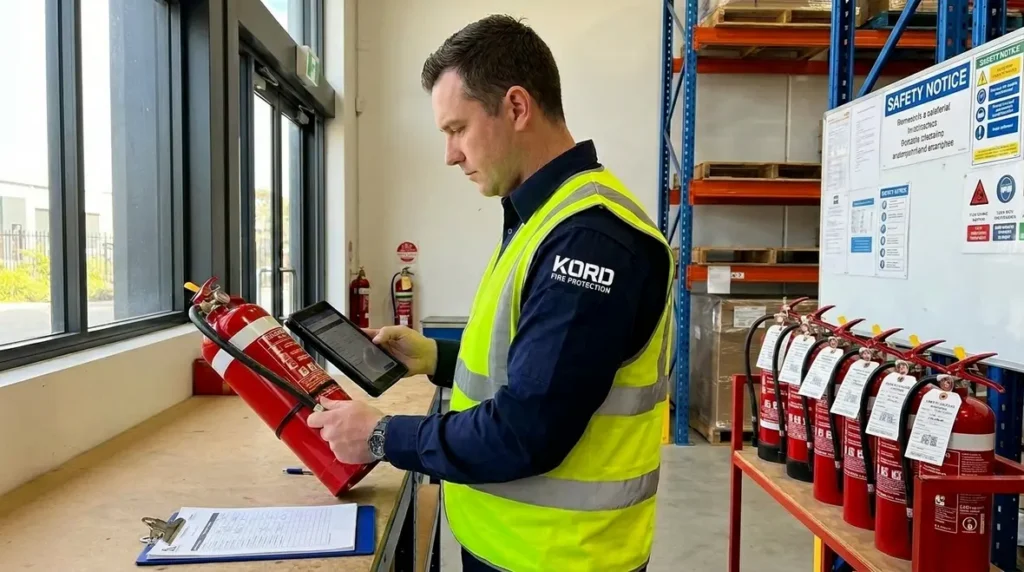
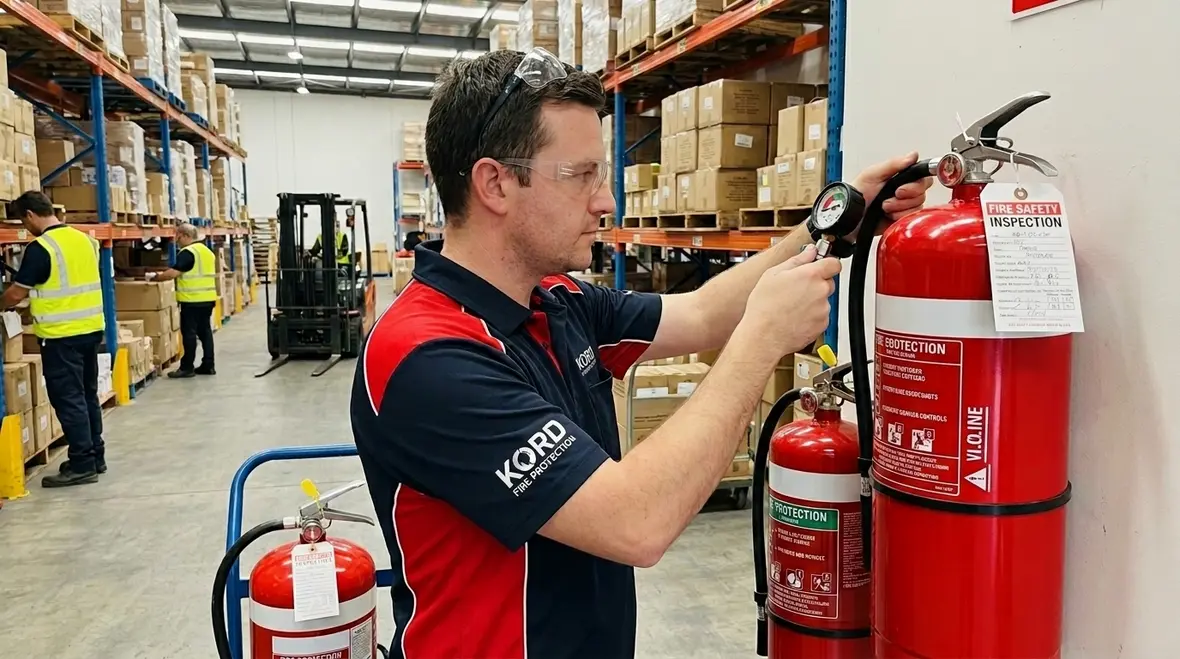
Fire extinguisher services go beyond a quick look and a sticker on the wall. In a business setting, the goal is to ensure equipment will perform under stress, in the right location, and within required inspection cycles. First, technicians check placement, access, signage, and condition. Then they assess the unit’s pressure, seals, hoses, nozzles, and any signs of tampering or damage. After that, they test and tag, and they record outcomes in a way that supports compliance and internal governance.
For industrial and facilities teams, this matters because inspections often reveal hidden problems: cracked brackets, missing units, discharge paths blocked by stored goods, or units that were moved during housekeeping. Meanwhile, retail and commercial sites face different pressures, like busy floor plans and frequent layout changes. However, the service still works the same way: keep extinguishers where people can grab them quickly, and ensure they function when seconds count.
Business readiness also improves when service records are easy to retrieve and easy to understand. A maintenance tag is useful, but a clear report that explains what was checked, what needs action, and what comes next is even better. That is the difference between looking organised and actually being organised.
Why readiness depends on more than visible equipment
A wall mounted extinguisher can create a false sense of security if no one knows whether it is current, accessible, and suitable for the hazard nearby. Businesses that treat servicing as a routine operational task, rather than a once a year scramble, usually have stronger response confidence when something goes wrong.
2. Melbourne extinguisher compliance basics businesses must follow
Melbourne extinguisher compliance typically involves scheduled inspections, maintenance, and documentation aligned to the relevant Australian standards and local expectations. In practice, businesses need clear records that show every extinguisher has been checked at the required interval, and that any faults were corrected quickly. Also, the service should identify which units require servicing, recharging, replacement, or hydrostatic testing depending on type and manufacturer guidance.
Most importantly, businesses must coordinate extinguisher service with their operational reality. For example, industrial sites may need service planned around shutdown windows. Retail venues may need staged access to avoid disrupting staff and customers. Facilities managers benefit when the service team communicates clearly, provides labels and tags promptly, and delivers documents that can be used for audits without last minute panic.
And if someone says, “We’ll do it when things slow down,” that person has never met a fire drill. In business, schedules should be proactive, not reactive.
For businesses wanting a practical service pathway, fire extinguisher services should fit neatly into regular maintenance planning rather than appearing as an annoying surprise just before an audit.

What good compliance looks like in practice
Good compliance is not just about passing inspection day. It means extinguishers are in the right spots, staff can access them quickly, service intervals are tracked properly, and faults are closed out before they become recurring problems. It also means nobody has to search five folders and three inboxes to find the latest report.
3. Types of extinguishers and why correct matchups matter
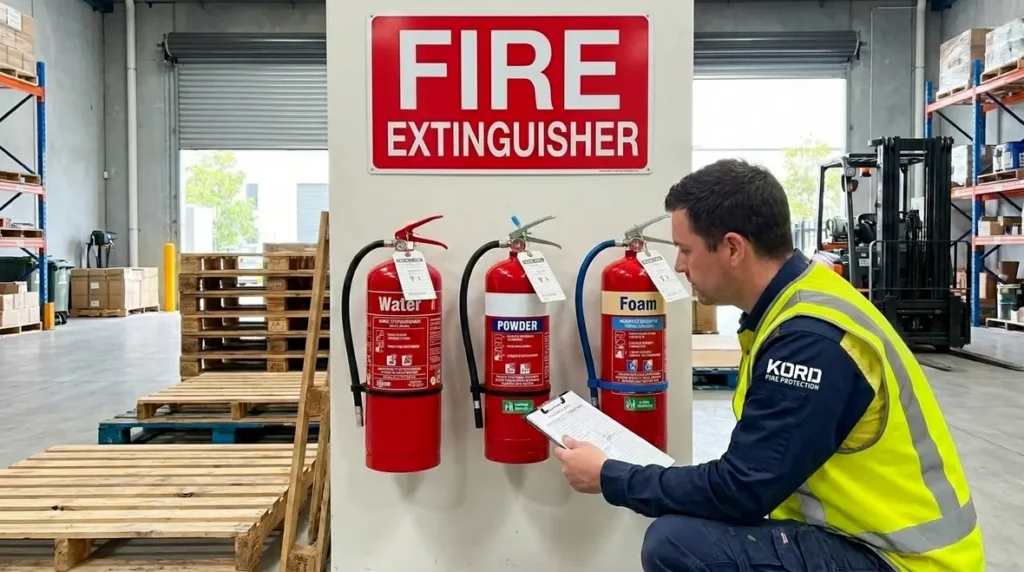
Not every extinguisher handles the same fire. Therefore, businesses need to understand what each extinguisher is designed for, and whether the hazard profile matches the risk areas. Common types include water based units for some ordinary combustibles, foam for certain flammable liquids, dry chemical powders for wider general use, and specialised agents for specific hazards. Some sites also use wet chemical options for cooking oils, especially in commercial kitchens and food preparation zones.
During service, technicians verify the unit’s rating and suitability for the environment. They also check that the extinguisher is the correct model for the area it serves. For instance, an extinguisher meant for one hazard but installed in another is like using a key that fits the door but not the lock. It might feel close, but it will not solve the problem when it matters.
In facilities across multiple facets of Australia, risk evolves over time. Equipment changes, stock levels shift, and new processes launch. As a result, a site that once had “the right” extinguisher mix can drift out of alignment unless it receives ongoing service and risk review.
Hazard changes are sneaky
A new storage area, upgraded electrical equipment, or a kitchen refurbishment can all change what extinguisher coverage is actually appropriate. Risks rarely send a polite calendar invitation before they appear, which is why periodic review matters so much.
4. How service teams inspect, test, and document properly
A strong service program follows a clear workflow. First, the technician performs an on site assessment and confirms the extinguisher location, mounting, and access route. Next, they inspect physical condition, check operating instructions, and assess seals and tamper indicators. After that, they verify gauge readings where applicable, and they check hose and nozzle integrity for signs of degradation.
Then comes the part businesses often underestimate: documentation. In a professional environment, service records should be complete and easy to retrieve. That means each unit is clearly identified, each inspection outcome is logged, and any recommended action is listed in plain terms. Furthermore, businesses should maintain a schedule that tracks due dates for next inspections, servicing, and any required periodic tests.
For industrial and commercial sites with multiple buildings, this documentation becomes a management tool. It reduces “who knows where the records are” meetings, and it supports consistent practice across teams. Also, it helps businesses demonstrate they act responsibly, even when operations move fast.
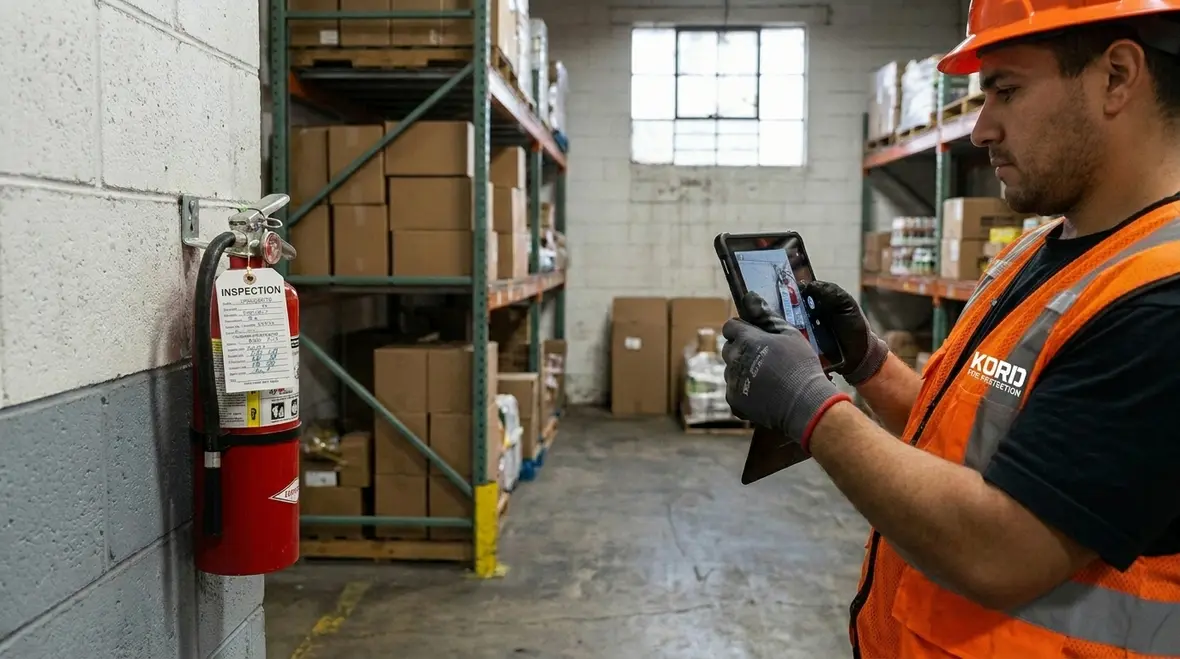
Documentation saves time when everyone is busy
When records are centralised and readable, facilities managers can plan corrective actions faster, support auditors without drama, and avoid that uniquely frustrating moment where everyone swears the paperwork exists but nobody can prove where it is.
5. Why Kord Fire Protection works as a vital partner
Kord Fire Protection supports businesses that want fire safety to operate like a well run system, not a weekend chore. They help organisations across industrial, retail, commercial, and facilities operations by providing scheduled services, clear reporting, and practical guidance that aligns with real site conditions. In other words, they do not just service extinguishers; they help build a service culture that reduces gaps.
For many companies, the biggest friction is coordination. Buildings have different access needs. Shutdown periods vary. Staff and contractors rotate. Therefore, a partner matters. Kord Fire Protection helps manage the process so businesses stay on track, with documentation that supports compliance checks and internal accountability. And if you think paperwork is boring, it is. But so is replacing equipment after a fire. One is just annoying, the other is expensive and emotional.
When Kord Fire Protection becomes involved early, it also helps businesses avoid last minute scramble before audits. Instead, they can plan service around operations, keep extinguisher placements correct, and maintain a consistent standard across locations.
For businesses operating across Australia, this kind of partnership strengthens confidence. It turns fire extinguisher services into a dependable workflow that teams can trust.
A partner should reduce friction, not add to it
The right provider makes scheduling easier, explains issues plainly, and helps teams keep pace with site changes. That is especially important for businesses juggling multiple buildings, contractors, and shifting operational windows.
6. Choosing a fire extinguisher service provider that fits your site
Businesses should evaluate a provider based on capability, responsiveness, and how they manage documentation. First, confirm they handle the extinguisher types present on your site, including any specialised equipment used for your hazard profile. Second, ask how they schedule service visits and how they minimise disruption during business hours or production windows. Third, check what reporting they provide and how quickly faults and recommendations are communicated.
It also helps to assess their approach to risk areas and site changes. A provider should consider how layout, storage, and operational shifts can affect where extinguishers should be placed. After all, a unit mounted behind a temporary barrier is not “secure.” It is hiding. And hiding equipment during an emergency is not a safety strategy, it is a plot twist nobody asked for.
Finally, businesses should look for a provider that communicates in plain language. When a technician explains what needs attention and why, teams can act faster. That is how service becomes more than a tick box.

Questions worth asking before you commit
Ask how the provider handles fault reporting, how quickly they can respond to issues, whether they can support multiple locations, and what their documentation looks like after a visit. If the answer sounds vague, your future admin load probably will not be any lighter.
FAQ
Conclusion
Fire extinguisher services in Melbourne protect people, assets, and business continuity. When businesses plan inspections, maintenance, and clear documentation, they reduce risk and avoid the “we’ll handle it later” trap. Kord Fire Protection can become the partner that keeps your extinguishers aligned with Melbourne extinguisher compliance expectations, supports audits with strong records, and keeps service practical across industrial, retail, commercial, and facilities sites. Contact Kord Fire Protection to set up a dependable service plan.